
I have mold on the exterior wall, exactly where the pipe for roof drainage runs through the masonry. The wall feels noticeably colder at that spot. The masonry is made of red bricks, and the exterior is otherwise insulated with 13 cm (5 inches) of external thermal insulation composite system (ETICS). The indoor temperature is consistently around 21°C (70°F), and the humidity is about 50%. Conditions have not changed in recent years, but the problem has only started now. What could be the cause, and how can it be fixed?
N
nordanney30 Dec 2024 19:13Willy60 schrieb:
I have mold on the exterior wall, exactly at the spot where the rainwater downpipe runs through the masonry. The wall feels noticeably colder there. The masonry consists of red bricks, and the exterior is insulated with 13 cm (5 inches) of external thermal insulation composite system (ETICS). The room temperature is consistently around 21°C (70°F), with a humidity level of about 50%. The conditions haven’t changed over the last few years, but the problem only appeared recently. What could be the cause and how can it be fixed? LOL. I’m familiar with this issue (unfortunately). Without the ETICS insulation, everything was fine. Now, in autumn (when temperature and humidity conditions are just right), cold rainwater runs down the pipe during cooler weather, and the interior wall cools down to barely above 10°C (50°F).
It probably went fine for several years because the wall was able to dry out.
I’ll look for some photos of a possible solution...
N
nordanney30 Dec 2024 19:21That went quickly:
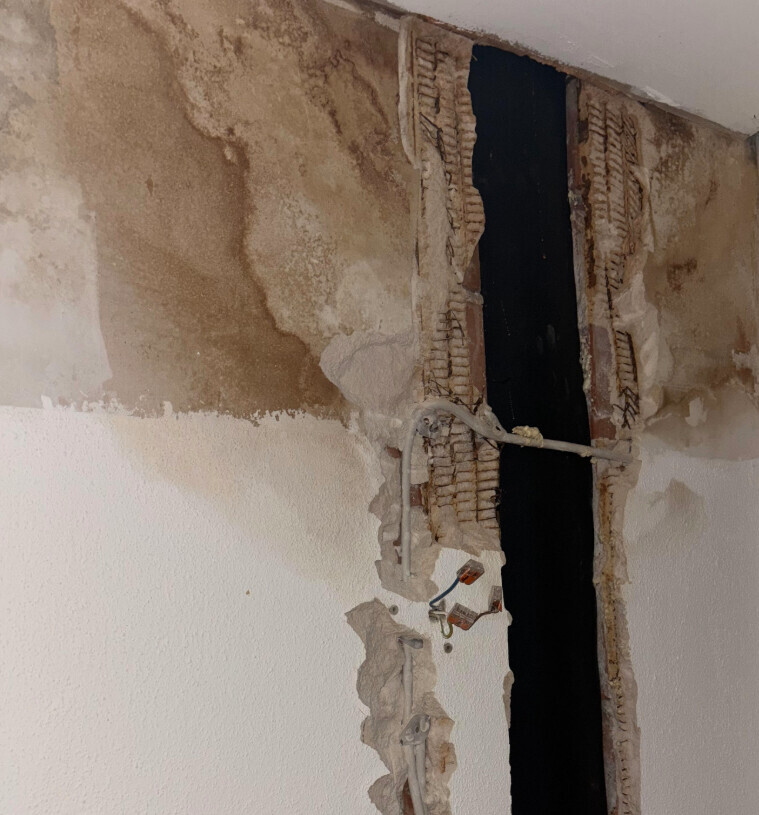
This was the situation after installing the exterior wall insulation. It’s clearly visible how the cold and resulting moisture spread at the top.
My DIY solution that worked for me:
- Open the wall
- Fill with PU foam insulation behind the pipe
- Insulate the pipe from the front/side with self-adhesive Armaflex (20mm) (0.8 inches)
- Replaster (this was tricky since the plaster layer couldn’t be very thick anymore)
==> The result is positive. The wall now has a surface temperature of around 17.5–18 degrees Celsius (63.5–64.4 °F), so no water can condense anymore.
If your pipe is damaged, of course, moisture will come from that. But you would have to open the wall for that as well. In my case, damage was ruled out. It was quite remarkable to see that in autumn, under the right weather conditions, the drain pipe looked like a wet beverage bottle taken out of the refrigerator in summer. Water was actually running down.
This was the situation after installing the exterior wall insulation. It’s clearly visible how the cold and resulting moisture spread at the top.
My DIY solution that worked for me:
- Open the wall
- Fill with PU foam insulation behind the pipe
- Insulate the pipe from the front/side with self-adhesive Armaflex (20mm) (0.8 inches)
- Replaster (this was tricky since the plaster layer couldn’t be very thick anymore)
==> The result is positive. The wall now has a surface temperature of around 17.5–18 degrees Celsius (63.5–64.4 °F), so no water can condense anymore.
If your pipe is damaged, of course, moisture will come from that. But you would have to open the wall for that as well. In my case, damage was ruled out. It was quite remarkable to see that in autumn, under the right weather conditions, the drain pipe looked like a wet beverage bottle taken out of the refrigerator in summer. Water was actually running down.
Similar topics