
ᐅ Moisture in the External Thermal Insulation Composite System (ETICS) – But Where Is It Coming From?
Created on: 26 Oct 2019 21:00
L
lolerlolerL
lolerloler26 Oct 2019 21:00Good evening dear forum members,
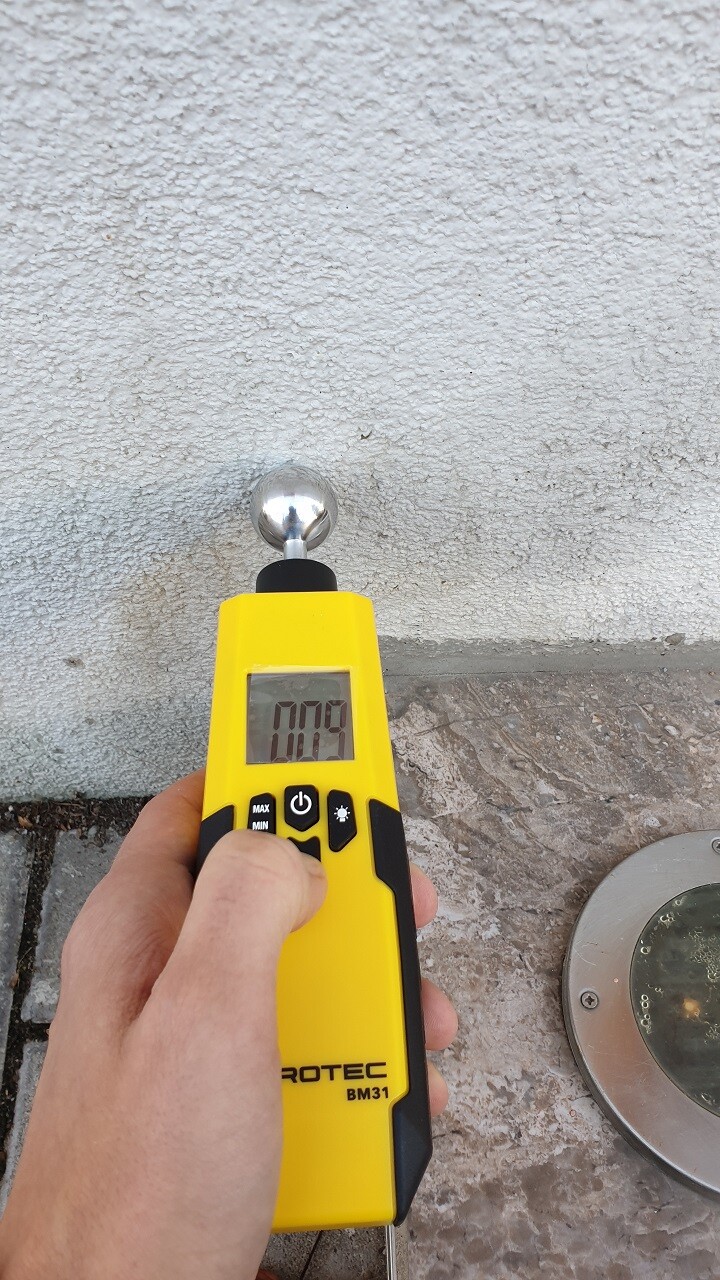
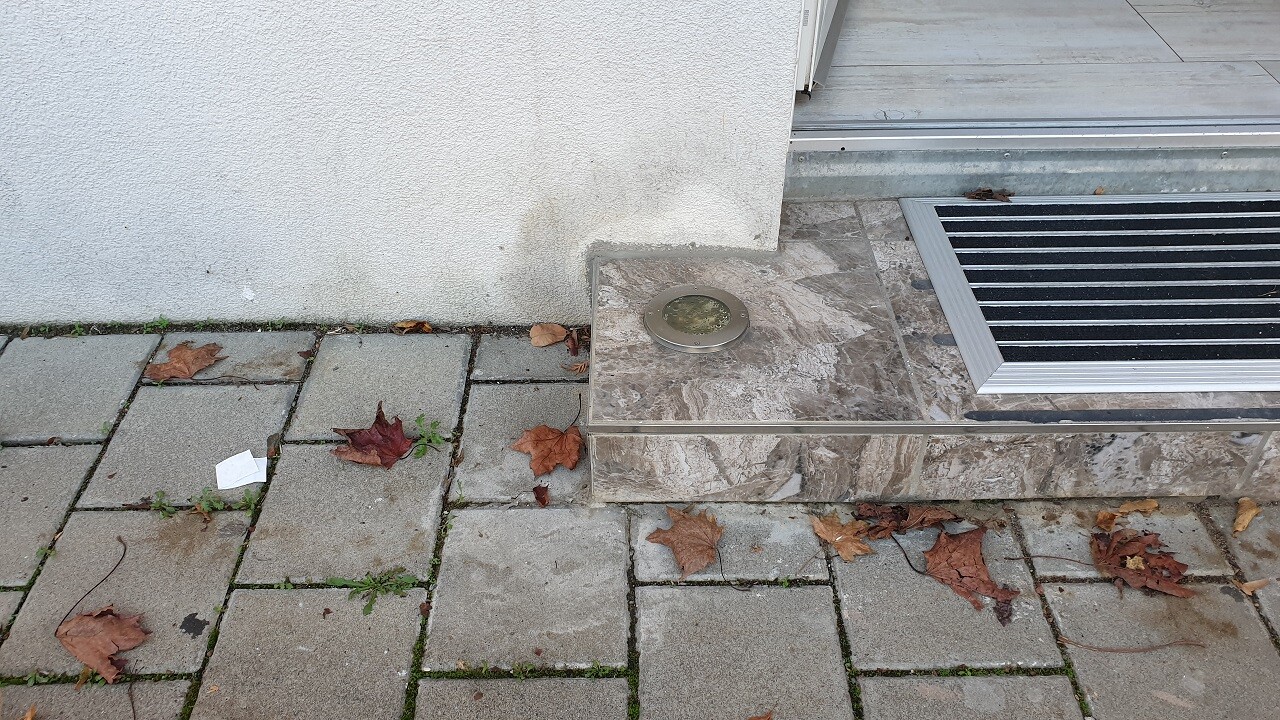
On my mid-terrace house (built in 2004), there is a circular stain right next to the entrance step that has been bothering me for a few years now and, in my opinion (perhaps just subjectively perceived), has become more visible recently, which could also be due to the colder and wetter weather. The house has 30-35 cm (12-14 inches) thick external thermal insulation composite system (ETICS) where the stain is located. On the opposite side and everywhere else (front and back of the house), there are no such spots at all. On the inside (inside the house itself) is a fully tiled guest toilet room; there is a radiator nearby, but the heating pipes go into the floor, meaning the likelihood of a burst pipe inside is almost zero. Furthermore, what confuses me is that the stain does not extend continuously downward but rather forms a circular arc around the entrance step.
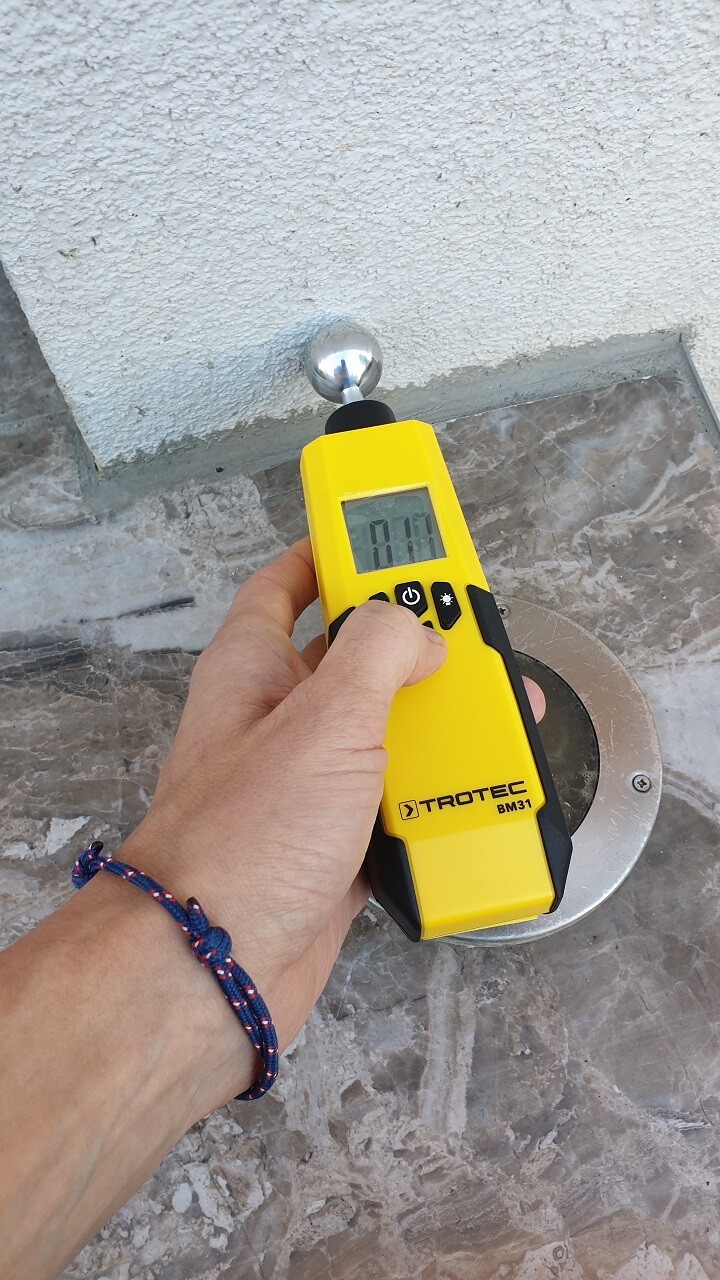
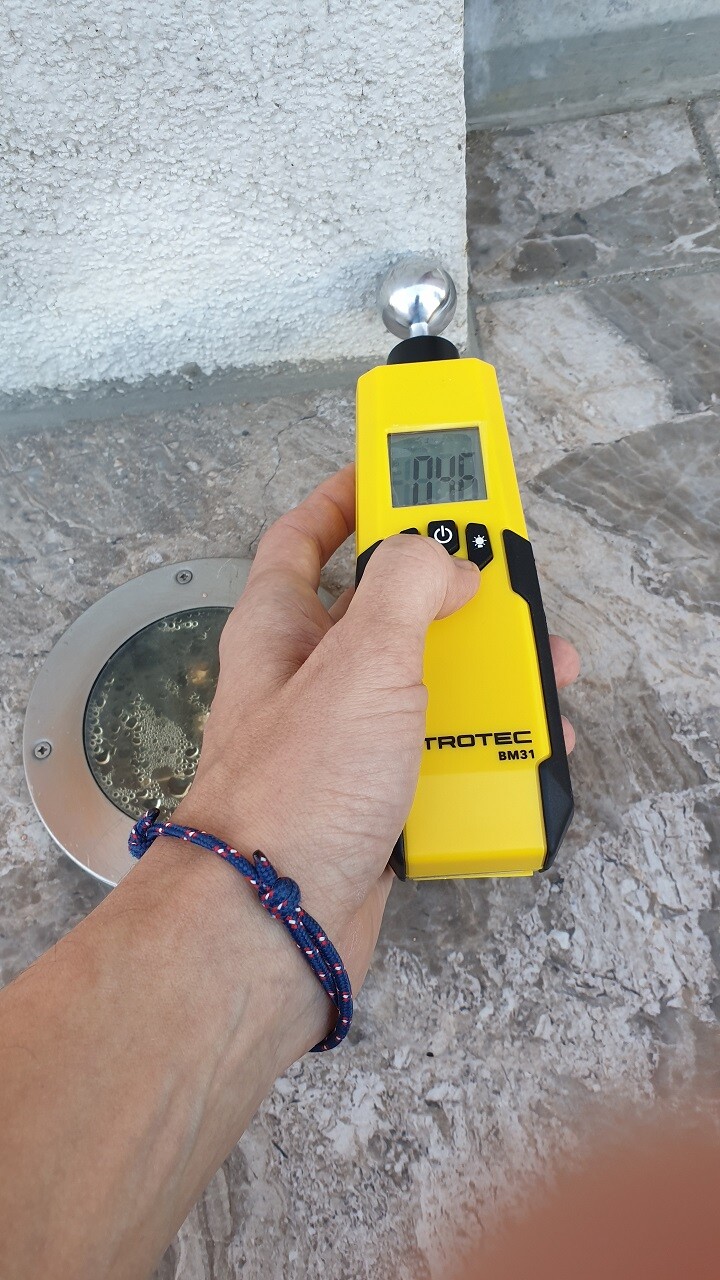
When touching it by hand and tapping, I also did not subjectively notice any difference. Therefore, I bought a moisture meter with dielectric measurement principle (5 - 40 mm (0.2 - 1.6 inches)) and took some readings. The exterior plaster seems completely intact—no cracks or similar. The results are as follows:
- On the opposite interior side (tiles of the guest toilet), no abnormalities—everything homogeneous
- On the outside, the ETICS shows moisture values around 4-8 digits from approximately 20 cm (8 inches) above ground level, so bone dry
- Near the ground on the outside, the ETICS consistently shows 20-30 digits moisture, which is probably normal (neighbors show similar values)
- In the stain itself, readings ranged between 20 and 70 digits, which apparently indicates increased moisture. However, moving the device by just 5-10 cm (2-4 inches) caused the value to drop from 70 to 10, meaning the wettest spot appears quite localized
- I applied a biocide on it, hoping it might be algae growth—but no effect
So now I have the following questions:
- How does moisture even get in there, especially in such a strange pattern or a limited area?
- How serious should this be considered?
- What should I do next, or what steps should be taken to fully clarify and then obviously eliminate the problem?
- Depending on the measures required, is it worth addressing this as soon as possible, even though the weather will get much worse, or should it wait until next year?
Since I have no knowledge about this topic at all, I would be very grateful for any help and advice.
Best regards

On my mid-terrace house (built in 2004), there is a circular stain right next to the entrance step that has been bothering me for a few years now and, in my opinion (perhaps just subjectively perceived), has become more visible recently, which could also be due to the colder and wetter weather. The house has 30-35 cm (12-14 inches) thick external thermal insulation composite system (ETICS) where the stain is located. On the opposite side and everywhere else (front and back of the house), there are no such spots at all. On the inside (inside the house itself) is a fully tiled guest toilet room; there is a radiator nearby, but the heating pipes go into the floor, meaning the likelihood of a burst pipe inside is almost zero. Furthermore, what confuses me is that the stain does not extend continuously downward but rather forms a circular arc around the entrance step.
When touching it by hand and tapping, I also did not subjectively notice any difference. Therefore, I bought a moisture meter with dielectric measurement principle (5 - 40 mm (0.2 - 1.6 inches)) and took some readings. The exterior plaster seems completely intact—no cracks or similar. The results are as follows:
- On the opposite interior side (tiles of the guest toilet), no abnormalities—everything homogeneous
- On the outside, the ETICS shows moisture values around 4-8 digits from approximately 20 cm (8 inches) above ground level, so bone dry
- Near the ground on the outside, the ETICS consistently shows 20-30 digits moisture, which is probably normal (neighbors show similar values)
- In the stain itself, readings ranged between 20 and 70 digits, which apparently indicates increased moisture. However, moving the device by just 5-10 cm (2-4 inches) caused the value to drop from 70 to 10, meaning the wettest spot appears quite localized
- I applied a biocide on it, hoping it might be algae growth—but no effect
So now I have the following questions:
- How does moisture even get in there, especially in such a strange pattern or a limited area?
- How serious should this be considered?
- What should I do next, or what steps should be taken to fully clarify and then obviously eliminate the problem?
- Depending on the measures required, is it worth addressing this as soon as possible, even though the weather will get much worse, or should it wait until next year?
Since I have no knowledge about this topic at all, I would be very grateful for any help and advice.
Best regards
Similar topics