
ᐅ Liability for defects concerning various issues after the handover of the property
Created on: 16 Oct 2018 15:17
B
bene1981
Hello,
we recently attempted the handover of the newly built property we purchased. During this process, some defects were noticed, and I am unsure whether these
a) can be legally pursued (because the seller casually mentioned that courts nowadays do not assess such issues)
b) affect the property's readiness for occupancy.
The defects that stood out to me were:
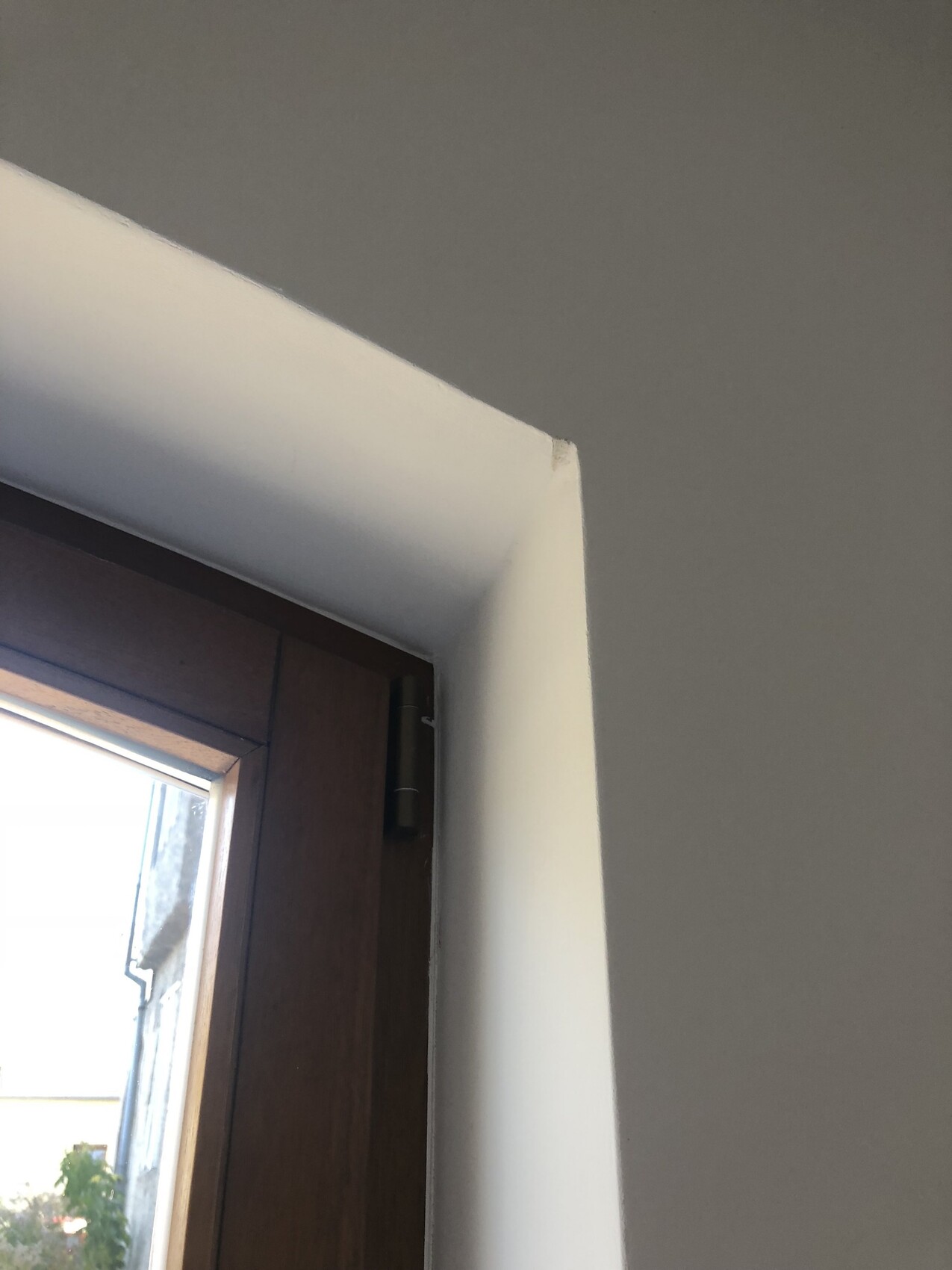
1. The lintel above the arched windows. It is designed so tightly that the windows can open exactly 90°, but the upper corners hit the edge of the lintel. In some places, the masonry is chipped, or there is a small dent in the window frame. I have also added a photo showing the edge of the masonry.
2. The terrace (wooden planks) slopes downward! From my understanding, while the substructure should be sloped to allow rainwater runoff, the wooden plank surface should be leveled. (Unfortunately, this is not visible in the photos, so I haven’t included one.)
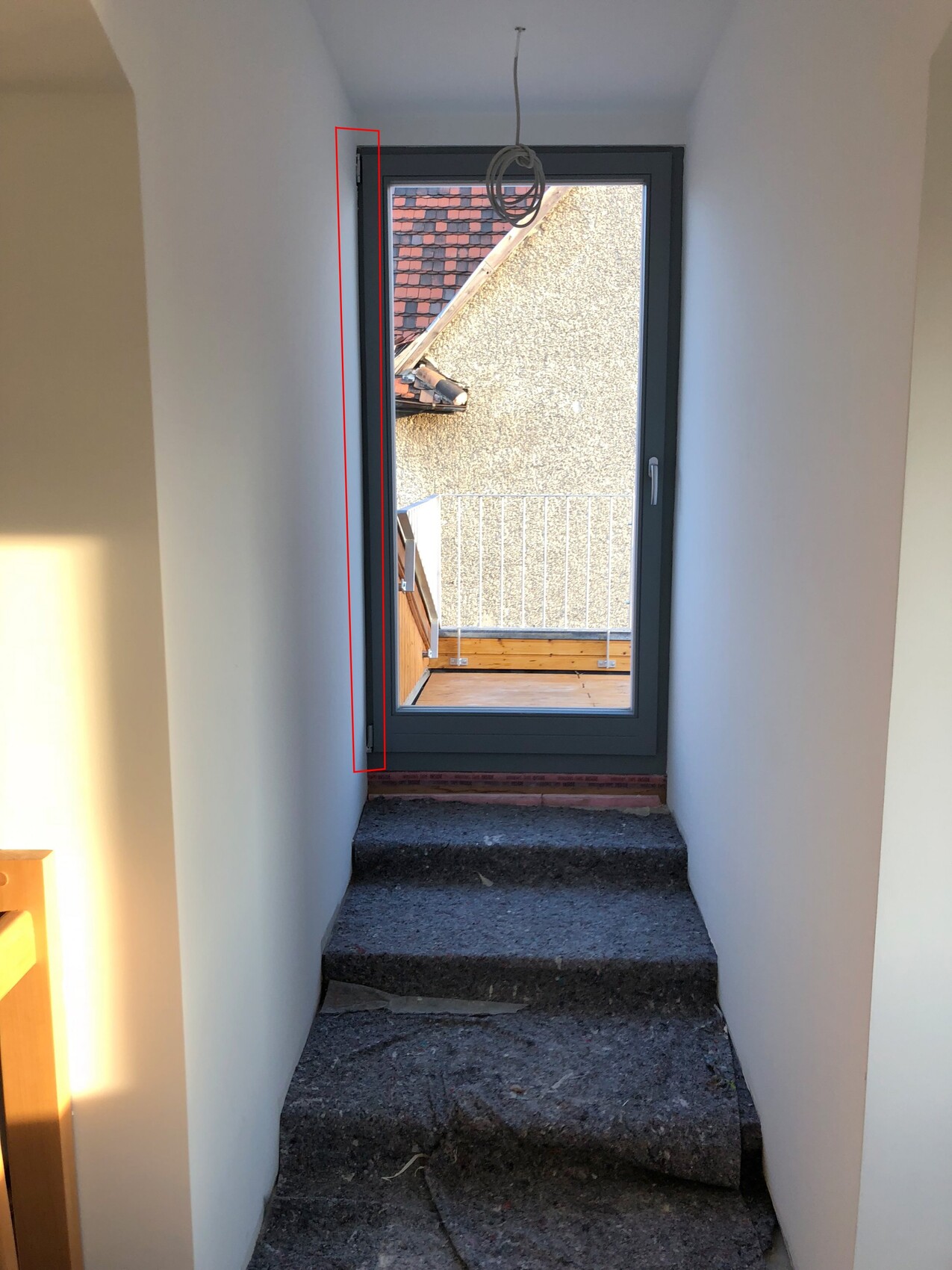
3. The patio door cannot be opened to 90°—or only with force. This is because the door’s hinge side is directly adjacent to a wall, and for the upper hinge, a recess was even milled into the wall to make space. So, I’m not sure whether the door or the wall was incorrectly installed. I have marked this area in the attached photo—you can clearly see that the gap between the bottom hinge and the wall is larger than at the top hinge, which is also why the door cannot open fully to 90°.
As I mentioned, I would like to understand what impact these defects might have on the property’s readiness for occupancy and whether such defects must be corrected or are legally acceptable for me as the buyer.
Thank you and best regards,
B
we recently attempted the handover of the newly built property we purchased. During this process, some defects were noticed, and I am unsure whether these
a) can be legally pursued (because the seller casually mentioned that courts nowadays do not assess such issues)
b) affect the property's readiness for occupancy.
The defects that stood out to me were:
1. The lintel above the arched windows. It is designed so tightly that the windows can open exactly 90°, but the upper corners hit the edge of the lintel. In some places, the masonry is chipped, or there is a small dent in the window frame. I have also added a photo showing the edge of the masonry.
2. The terrace (wooden planks) slopes downward! From my understanding, while the substructure should be sloped to allow rainwater runoff, the wooden plank surface should be leveled. (Unfortunately, this is not visible in the photos, so I haven’t included one.)
3. The patio door cannot be opened to 90°—or only with force. This is because the door’s hinge side is directly adjacent to a wall, and for the upper hinge, a recess was even milled into the wall to make space. So, I’m not sure whether the door or the wall was incorrectly installed. I have marked this area in the attached photo—you can clearly see that the gap between the bottom hinge and the wall is larger than at the top hinge, which is also why the door cannot open fully to 90°.
As I mentioned, I would like to understand what impact these defects might have on the property’s readiness for occupancy and whether such defects must be corrected or are legally acceptable for me as the buyer.
Thank you and best regards,
B
M
Mottenhausen18 Oct 2018 11:17Beveling the lintel is a good idea and can be done safely in practice. However, the company will not do this because the structural engineer would be very concerned if any modifications were made to a lintel afterwards.
I see the defects as follows: negotiating a reasonable price reduction will be best for everyone. Then you can smooth the areas yourself, set stops, and accept it. (Or ask a friend for help if you are not very interested in DIY tasks.)
I see the defects as follows: negotiating a reasonable price reduction will be best for everyone. Then you can smooth the areas yourself, set stops, and accept it. (Or ask a friend for help if you are not very interested in DIY tasks.)
B
Bieber081518 Oct 2018 22:25Standard advice: invest 300 to 500 euros and consult a construction law specialist to clarify what you have signed (pro tip for readers: it’s even better to do this before signing, but in my opinion, it’s still very well spent money afterward—you’ll become more informed).
Then you will have a clear understanding of the contractual side.
You should assume that the developer is already advised by a specialist lawyer. In my opinion, you save time and stress by putting yourself on equal footing right away. Whether you respond with or without a lawyer’s letterhead can be decided later.
Then you will have a clear understanding of the contractual side.
bene1981 schrieb:That’s a good start! The lawyer will advise you on what to do with the defect list. Then you can decide on the next steps.
We had an expert with us who created a defect list on site [...] In any case, we refused to take over.
You should assume that the developer is already advised by a specialist lawyer. In my opinion, you save time and stress by putting yourself on equal footing right away. Whether you respond with or without a lawyer’s letterhead can be decided later.