
Good day,
I registered in this forum hoping to receive good advice. 🙂
Two years ago, we renovated our 40-year-old bungalow. The bungalow has a footprint of 170 m² (1830 ft²) and is fully basemented. We only use the ground floor as living space. Above the ground floor, there is also a concrete ceiling. The exterior wall consists of facing brick, a small, uninsulated and empty cavity, and 40 cm (16 inches) of calcium silicate blocks. So, the exterior walls are not insulated.
During the renovation two years ago, the following was updated:
- New PVC windows (many sliding doors and panoramic windows) with triple glazing, brought up to modern standards
- Ceiling between the ground floor and the attic insulated with 5 cm (2 inches) of polystyrene boards (which were always there) plus an additional 30 cm (12 inches) of mineral wool. A new pitched roof was also installed for 40,000€. Since we do not use the attic, only the ceiling between the floors was insulated with mineral wool. The roof was professionally covered (there is a membrane between the tiles and the roof structure).
- Completely new heating pipes, wall radiators, and underfloor heating. The heating pipes were laid and insulated beneath the basement ceiling. The 18-year-old oil boiler from Buderus (according to the installer and chimney sweep, it has excellent emission values) was kept.
Exactly one year ago, we filled the first oil tank (5000 liters) and now I have measured the oil level. The consumption in one year (3-person household) is 3700 liters. We have large rooms to heat. The living room, dining room, and kitchen are completely open (70 m² / 750 ft²), and the heating in these rooms will now run continuously whenever we are at home. Also, three people shower daily, and in winter, underfloor heating runs in both bathrooms and the kitchen.
The house stays pleasantly cool in summer, probably due to the solid construction (reinforced concrete and calcium silicate blocks). In winter, however, it is also quite cool. We are now unsure whether we made the right decision to renovate the house. Insulating the exterior walls is an option, but it must be extremely costly.
I am a complete novice in this regard and hope for tips and advice from you! Many thanks!
I registered in this forum hoping to receive good advice. 🙂
Two years ago, we renovated our 40-year-old bungalow. The bungalow has a footprint of 170 m² (1830 ft²) and is fully basemented. We only use the ground floor as living space. Above the ground floor, there is also a concrete ceiling. The exterior wall consists of facing brick, a small, uninsulated and empty cavity, and 40 cm (16 inches) of calcium silicate blocks. So, the exterior walls are not insulated.
During the renovation two years ago, the following was updated:
- New PVC windows (many sliding doors and panoramic windows) with triple glazing, brought up to modern standards
- Ceiling between the ground floor and the attic insulated with 5 cm (2 inches) of polystyrene boards (which were always there) plus an additional 30 cm (12 inches) of mineral wool. A new pitched roof was also installed for 40,000€. Since we do not use the attic, only the ceiling between the floors was insulated with mineral wool. The roof was professionally covered (there is a membrane between the tiles and the roof structure).
- Completely new heating pipes, wall radiators, and underfloor heating. The heating pipes were laid and insulated beneath the basement ceiling. The 18-year-old oil boiler from Buderus (according to the installer and chimney sweep, it has excellent emission values) was kept.
Exactly one year ago, we filled the first oil tank (5000 liters) and now I have measured the oil level. The consumption in one year (3-person household) is 3700 liters. We have large rooms to heat. The living room, dining room, and kitchen are completely open (70 m² / 750 ft²), and the heating in these rooms will now run continuously whenever we are at home. Also, three people shower daily, and in winter, underfloor heating runs in both bathrooms and the kitchen.
The house stays pleasantly cool in summer, probably due to the solid construction (reinforced concrete and calcium silicate blocks). In winter, however, it is also quite cool. We are now unsure whether we made the right decision to renovate the house. Insulating the exterior walls is an option, but it must be extremely costly.
I am a complete novice in this regard and hope for tips and advice from you! Many thanks!
P
padersee1324 Sep 2012 17:17It is very important to me to own an environmentally friendly and, of course, cost-saving house. I have already invested 250,000 euros in this property, always choosing the best quality (the best in terms of hopefully long service life). In addition, I am certainly willing to take further steps toward environmental protection. However, it must be noted that after this amount of investment, the budget is somewhat tight. This month, the basement windows will also be replaced with new ones. The costs for an energy consultant hardly compare to those for a new roof or new windows. I am confident that I will be able to cover these costs again in the near future.
I am attaching a picture showing the gap between the masonry and the facing brick. I took this picture when the roof was being renovated.

I plan to consult an energy advisor at some point, and I sincerely thank you for your help! Of course, I am also happy to receive further suggestions.
PS: Today I ordered 4000 liters (1057 gallons) of heating oil. The cost is about 3500 euros. I am curious how many similar purchases will follow.
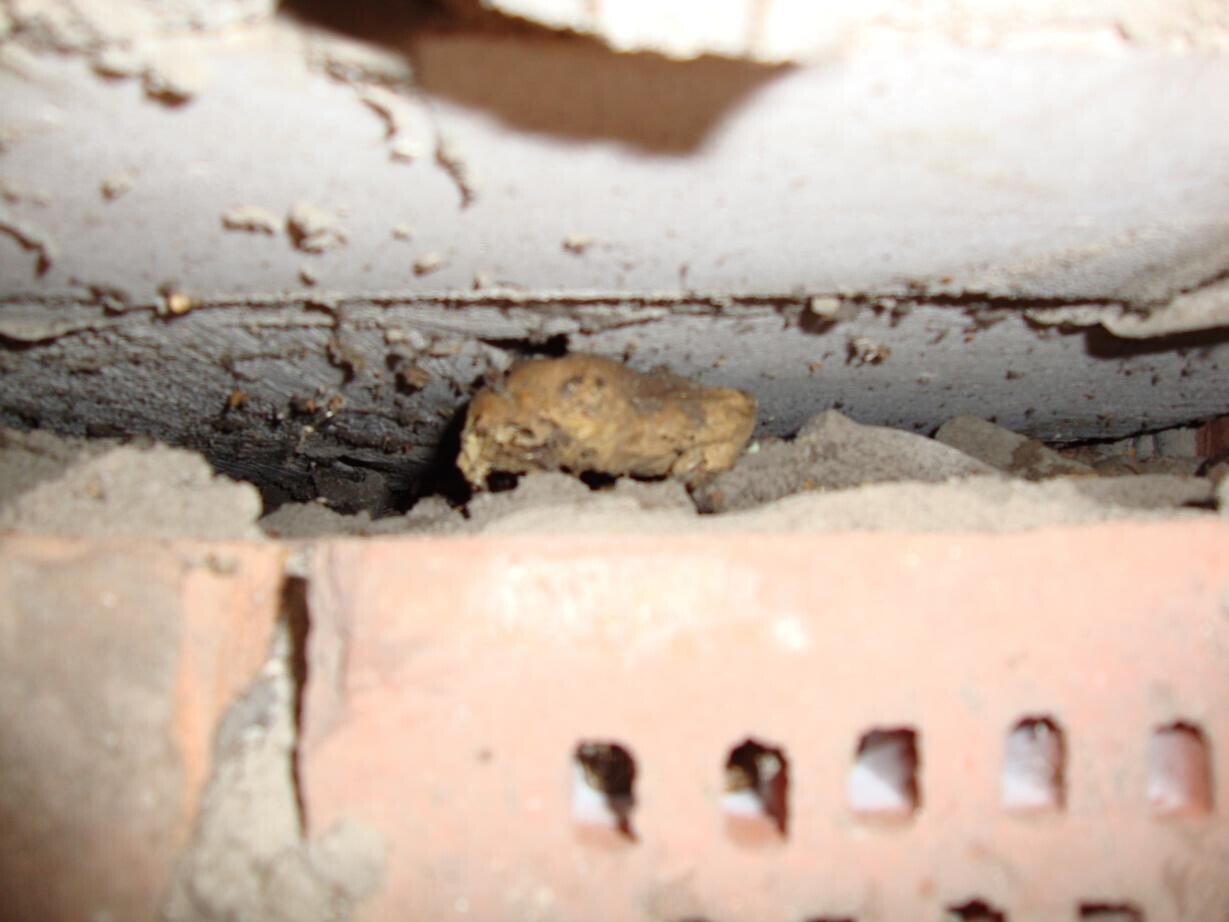
I am attaching a picture showing the gap between the masonry and the facing brick. I took this picture when the roof was being renovated.
I plan to consult an energy advisor at some point, and I sincerely thank you for your help! Of course, I am also happy to receive further suggestions.
PS: Today I ordered 4000 liters (1057 gallons) of heating oil. The cost is about 3500 euros. I am curious how many similar purchases will follow.
Hello padersee,
We also have a bungalow from 1968. Two years ago, we had an energy assessment done. It cost about 700€ (around 750 USD), with part of the cost covered at the time by the relevant funding agency.
The assessment showed that there isn’t a huge loss, or that the loss can’t be attributed to just one building component. Currently, we use about 2000 liters of oil per year for heating in our 130m² (1400 sq ft) ground floor. The ground floor walls are 30cm (12 inches) thick sand-lime brick, and above them is only an insulated flat roof with a concrete ceiling.
After the assessment, we only replaced the heating system with a modern oil condensing boiler.
New windows would save around 14%, insulating the exterior walls about 15%, and insulating the basement ceiling about 5%.
For this reason, we have decided not to take further measures for now, as it simply doesn’t pay off. When wall insulation only pays off after 30 years, these are the thoughts that come to mind. We will, however, still insulate the basement ceiling. This can be done quite easily by ourselves, is cost-effective, and provides real benefits.
You also have to consider that a 170m² (1830 sq ft) bungalow has a very large building envelope.
I would recommend getting an energy assessment so you know exactly where savings are possible. However, I don’t think you will get under 2000 liters of oil per year without significant effort.
Best regards and good luck
We also have a bungalow from 1968. Two years ago, we had an energy assessment done. It cost about 700€ (around 750 USD), with part of the cost covered at the time by the relevant funding agency.
The assessment showed that there isn’t a huge loss, or that the loss can’t be attributed to just one building component. Currently, we use about 2000 liters of oil per year for heating in our 130m² (1400 sq ft) ground floor. The ground floor walls are 30cm (12 inches) thick sand-lime brick, and above them is only an insulated flat roof with a concrete ceiling.
After the assessment, we only replaced the heating system with a modern oil condensing boiler.
New windows would save around 14%, insulating the exterior walls about 15%, and insulating the basement ceiling about 5%.
For this reason, we have decided not to take further measures for now, as it simply doesn’t pay off. When wall insulation only pays off after 30 years, these are the thoughts that come to mind. We will, however, still insulate the basement ceiling. This can be done quite easily by ourselves, is cost-effective, and provides real benefits.
You also have to consider that a 170m² (1830 sq ft) bungalow has a very large building envelope.
I would recommend getting an energy assessment so you know exactly where savings are possible. However, I don’t think you will get under 2000 liters of oil per year without significant effort.
Best regards and good luck
Similar topics