
Hello dear experts and members,
a continuous crack has appeared on the exterior facade of our newly built house (developer purchase). Since communication with the developer is now only through a lawyer, I would like to ask for your opinion on possible causes for such a crack. If, in your objective view, this might be a serious defect, I will commission an expert report.
Thank you very much for your efforts and have a nice weekend
Melusine


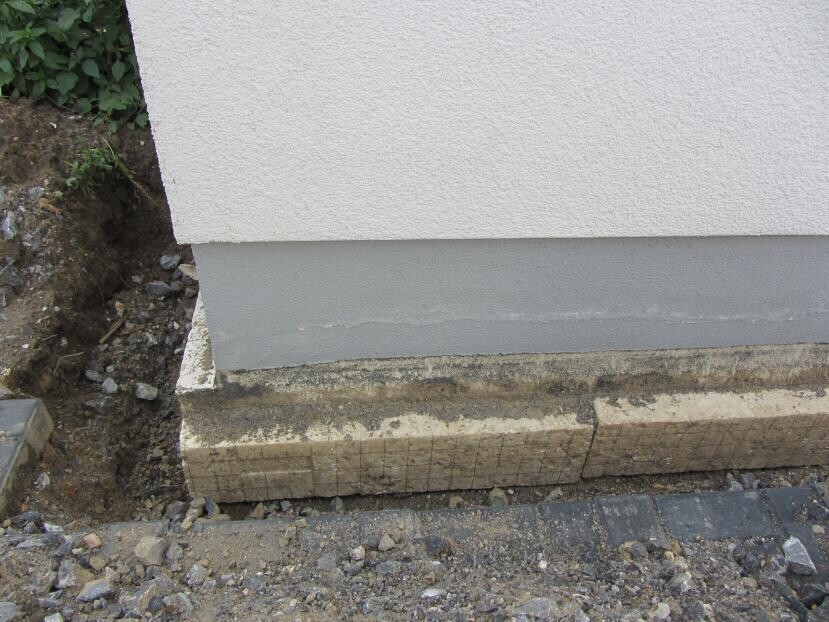
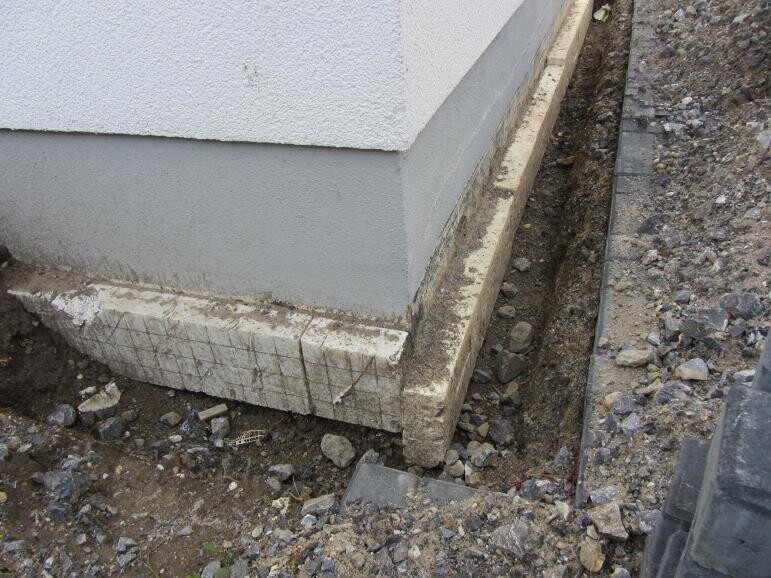
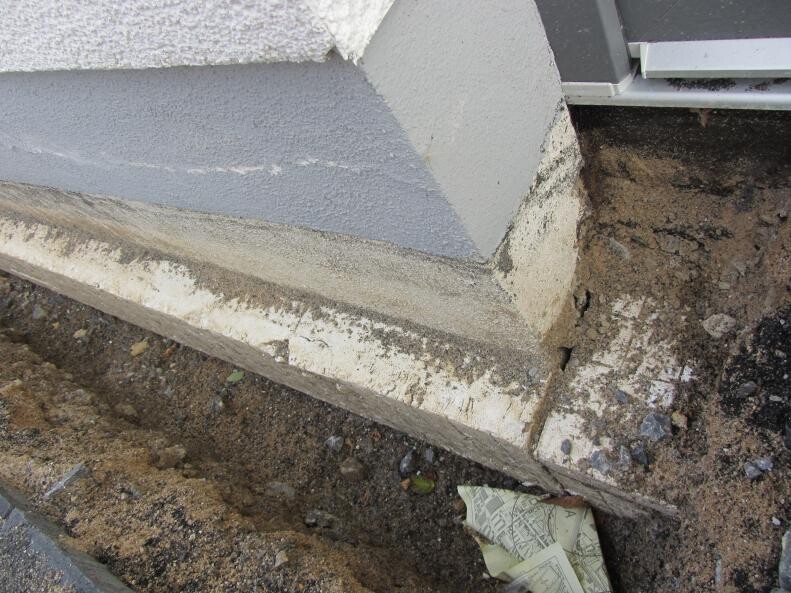
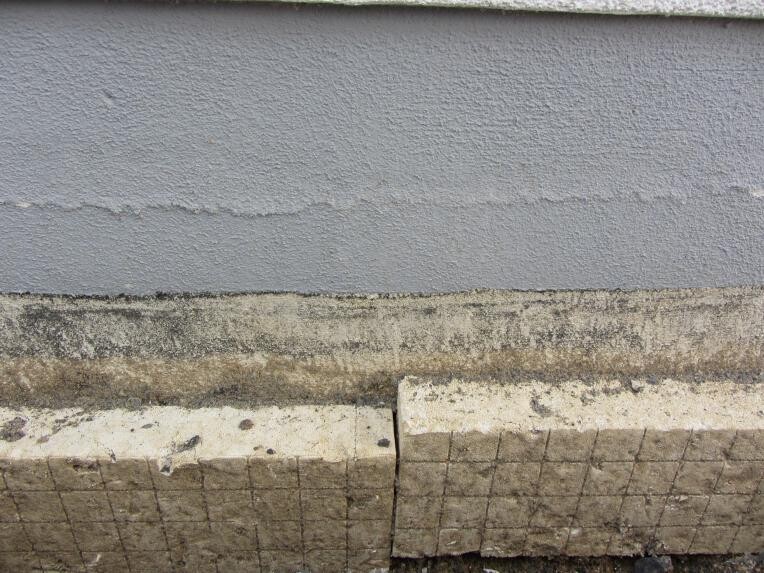
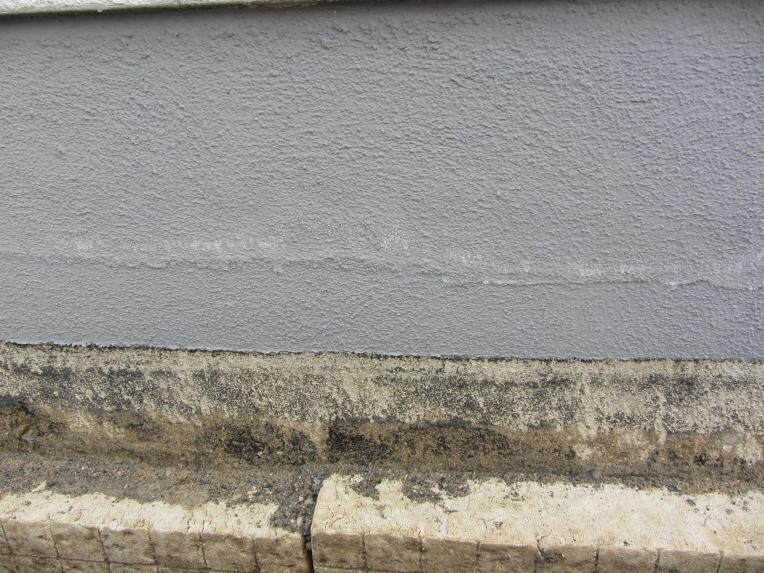
a continuous crack has appeared on the exterior facade of our newly built house (developer purchase). Since communication with the developer is now only through a lawyer, I would like to ask for your opinion on possible causes for such a crack. If, in your objective view, this might be a serious defect, I will commission an expert report.
Thank you very much for your efforts and have a nice weekend
Melusine
K
karliseppel12 Oct 2012 22:17What material was used for backfilling there? It looks like rising damp to me.
Hello karliseppel,
Thank you for your quick response. The area was simply backfilled with regular soil, and the driveway was paved right up to the exterior wall. The crack appeared about 30cm (12 inches) above the pavement. Unfortunately, it's no longer visible here, but the wall extends beyond the foundation slab. So, the house was not built exactly flush with the foundation slab.
The crack gradually developed after the driveway was paved.
On the upper floor, there is also a continuous crack on the same side. The developer said that this is a typical settlement crack that usually occurs in the area where the roof support and the masonry exterior wall meet.
Could this possibly be a sign of subsidence?
Best regards
Melusine
Thank you for your quick response. The area was simply backfilled with regular soil, and the driveway was paved right up to the exterior wall. The crack appeared about 30cm (12 inches) above the pavement. Unfortunately, it's no longer visible here, but the wall extends beyond the foundation slab. So, the house was not built exactly flush with the foundation slab.
The crack gradually developed after the driveway was paved.
On the upper floor, there is also a continuous crack on the same side. The developer said that this is a typical settlement crack that usually occurs in the area where the roof support and the masonry exterior wall meet.
Could this possibly be a sign of subsidence?
Best regards
Melusine

It could be a case of settlement, but how much can a house actually settle... don’t accept explanations like "It’s normal, that’s just how it is." That is not normal and should not happen.
Settlement cracks are common in bathroom tiles or perhaps in floor tiles and grout lines. However, when foundation work is cut corners—meaning no soil survey and no stable subsoil—that is poor workmanship.
If I understand correctly, you are generally not allowed to pave directly against the house. There must be a vapor barrier or waterproof membrane in between if you want to do that. Don’t ask me exactly what kind, I only know this from our builder, who wanted to know early on what we planned in this regard. For ground-level stone patios and paving right up to the house, he would have had to add a membrane as protection against moisture coming from below. We only installed this where the entrance landing is planned.
A house should not overhang either. There is a small tolerance, but it should not be much.
Absolutely important: get a lawyer who specializes in construction law.
Settlement cracks are common in bathroom tiles or perhaps in floor tiles and grout lines. However, when foundation work is cut corners—meaning no soil survey and no stable subsoil—that is poor workmanship.
If I understand correctly, you are generally not allowed to pave directly against the house. There must be a vapor barrier or waterproof membrane in between if you want to do that. Don’t ask me exactly what kind, I only know this from our builder, who wanted to know early on what we planned in this regard. For ground-level stone patios and paving right up to the house, he would have had to add a membrane as protection against moisture coming from below. We only installed this where the entrance landing is planned.
A house should not overhang either. There is a small tolerance, but it should not be much.
Absolutely important: get a lawyer who specializes in construction law.
K
karliseppel13 Oct 2012 09:08So – unfortunately, I can’t spot any cracks here. I see a possible efflorescence caused by moisture. Maybe you could mark a crack on a photo to better show what you mean.
Otherwise, it’s quite questionable to insulate the basement but leave the plinth area out. It’s normal for the house above to “overhang” a bit. This cantilever is structurally verified as fine and is usually done so that the basement insulation does not stick out like a plinth.
Who installed the insulation here? Was there any adjustment to the basement’s insulation values during construction, or was the basement later converted into living space?
I have no idea how to fix the thermal bridge at the plinth now. You could apply insulation boards in front of it, replaster the resulting plinth, and cover it with a metal flashing. It will look like something from 100 years ago... houses back then also had projecting plinths. It’s possible that the defined ground level is not correct here and the ground was filled too high.
Without any protection against backfilling, this is basically allowable with EPS insulation depending on the soil classification, although most people install a dimpled membrane with fleece and a slip sheet in front of it. Spending a few extra dollars saves these kinds of defects. It would also be useful to know the terrain around the building and whether there is a slope toward the house. Surface water penetration cannot be ruled out.
Was paving also included in the builder’s scope of work? Was there even a builder involved? You purchased the plot and house from them? So the property transfer tax applies to the *entire property*?
You see yourself, many possibilities, many open questions. Only a suitable lawyer can clarify the legal aspects. Even more important is an on-site technical assessment. This does not have to be a full expert report, which you might have to pay for again if a court appoints an expert during a trial. Take a local architect to look at it on an hourly basis and write a statement. They should at least be familiar with the contractual conditions of the purchase so they can incorporate that into their evaluation.
– Sand-lime brick
Otherwise, it’s quite questionable to insulate the basement but leave the plinth area out. It’s normal for the house above to “overhang” a bit. This cantilever is structurally verified as fine and is usually done so that the basement insulation does not stick out like a plinth.
Who installed the insulation here? Was there any adjustment to the basement’s insulation values during construction, or was the basement later converted into living space?
I have no idea how to fix the thermal bridge at the plinth now. You could apply insulation boards in front of it, replaster the resulting plinth, and cover it with a metal flashing. It will look like something from 100 years ago... houses back then also had projecting plinths. It’s possible that the defined ground level is not correct here and the ground was filled too high.
Without any protection against backfilling, this is basically allowable with EPS insulation depending on the soil classification, although most people install a dimpled membrane with fleece and a slip sheet in front of it. Spending a few extra dollars saves these kinds of defects. It would also be useful to know the terrain around the building and whether there is a slope toward the house. Surface water penetration cannot be ruled out.
Was paving also included in the builder’s scope of work? Was there even a builder involved? You purchased the plot and house from them? So the property transfer tax applies to the *entire property*?
You see yourself, many possibilities, many open questions. Only a suitable lawyer can clarify the legal aspects. Even more important is an on-site technical assessment. This does not have to be a full expert report, which you might have to pay for again if a court appoints an expert during a trial. Take a local architect to look at it on an hourly basis and write a statement. They should at least be familiar with the contractual conditions of the purchase so they can incorporate that into their evaluation.
– Sand-lime brick
B
Bauexperte13 Oct 2012 16:30Hello Melusine,
I am currently having trouble enlarging your pictures… but what are those brick-shaped parts in front of the exterior wall?
What "karliseppel" writes is correct in some parts, but not in others – I don’t know his training or qualifications, so I cannot say if he has just made good guesses. None of the projects I know of have a ground floor that extends beyond the upper floors – I would like to see the structural calculation for that.
What this should make clear to you is the following: do not hire an architect, but rather an expert surveyor. Even though "karliseppel" is right to some extent regarding the court-appointed nomination of a further expert in the worst case, it is well-invested money, since it does not necessarily have to lead to a lawsuit. Many disputes nowadays are settled out of court – and success depends on the competence of those involved!
Relying on the internet is like betting on the weather forecast.
Kind regards
I am currently having trouble enlarging your pictures… but what are those brick-shaped parts in front of the exterior wall?
What "karliseppel" writes is correct in some parts, but not in others – I don’t know his training or qualifications, so I cannot say if he has just made good guesses. None of the projects I know of have a ground floor that extends beyond the upper floors – I would like to see the structural calculation for that.
What this should make clear to you is the following: do not hire an architect, but rather an expert surveyor. Even though "karliseppel" is right to some extent regarding the court-appointed nomination of a further expert in the worst case, it is well-invested money, since it does not necessarily have to lead to a lawsuit. Many disputes nowadays are settled out of court – and success depends on the competence of those involved!
Relying on the internet is like betting on the weather forecast.
Kind regards
Similar topics