
ᐅ Cracks in Wall Opening Corners in EIFS Systems: Assessment
Created on: 21 Apr 2026 14:25
B
Bavilo1988B
Bavilo198821 Apr 2026 14:25Hello,
At the end of last year, our house was insulated with 18cm (7 inches) ETICS. I noticed that additional diagonal reinforcement was applied at all upper corners and window sills. Unfortunately, I can no longer say exactly how it was done, and I did not take any pictures during that step.
Now that the weather has warmed up, I have noticed small cracks in the corners of some windows and the front door. However, there are no cracks on the aluminum window sills. The site manager of the company that carried out the work, together with a technical representative from Caparol (the system manufacturer), inspected these cracks.
I was told that these cracks are common and not a cause for concern. I wanted to have this statement in writing.
Here is Caparol’s statement:
Shrinkage Cracking in Coatings
“Shrinkage cracks have been identified in the coating on your property. These cracks can occur when textured plaster surfaces are painted over. Naturally, more paint remains in the recesses of the plaster texture when rolling. Depending on weather conditions (temperature, wind), the surface of the paint dries faster than the paint in the recesses, which can cause fine cracking in those areas.
Since these cracks are only in the paint surface, the coating’s performance—meaning its resistance to driving rain, weather durability, and longevity—is in no way affected. The coating remains fully functional, and these fine cracks (crack width < 0.2 mm) are technically harmless in terms of moisture and are not visible under normal use conditions (viewing distance, vantage point). This statement is consistent with WTA Information Sheet No. 2-4, Edition 8.2008/D “Assessment and Repair of Cracked Plasters and Facades” published by the Scientific-Technical Association for Building Preservation and Restoration, and BFS Information Sheet No. 9 “Coatings on Mineral Exterior Plaster” issued by the Federal Committee for Painting and Property Protection.
This means these cracks do not represent a quality defect. The functionality of the coating remains fully intact.”
Attached are some pictures of the cracks:

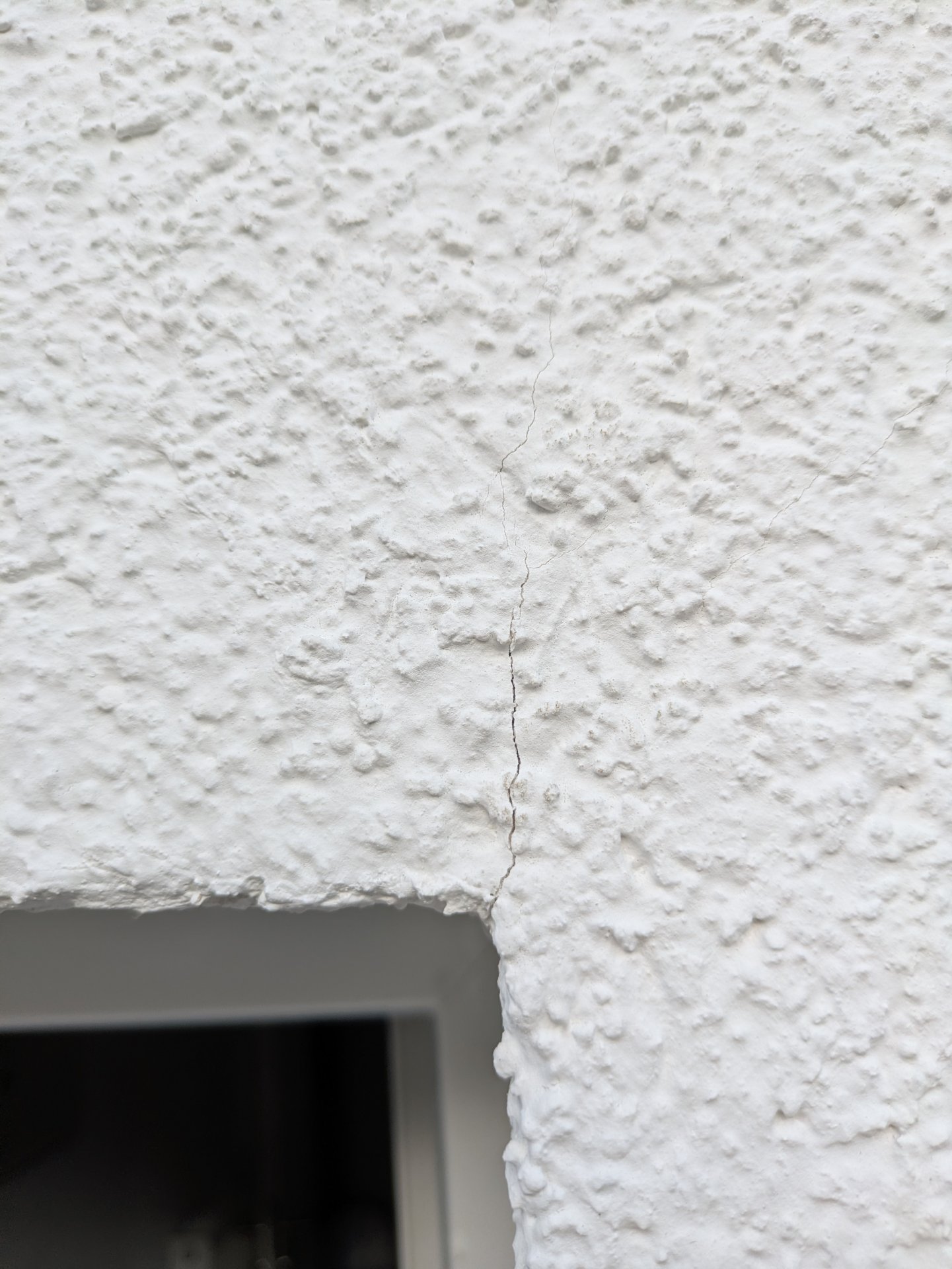
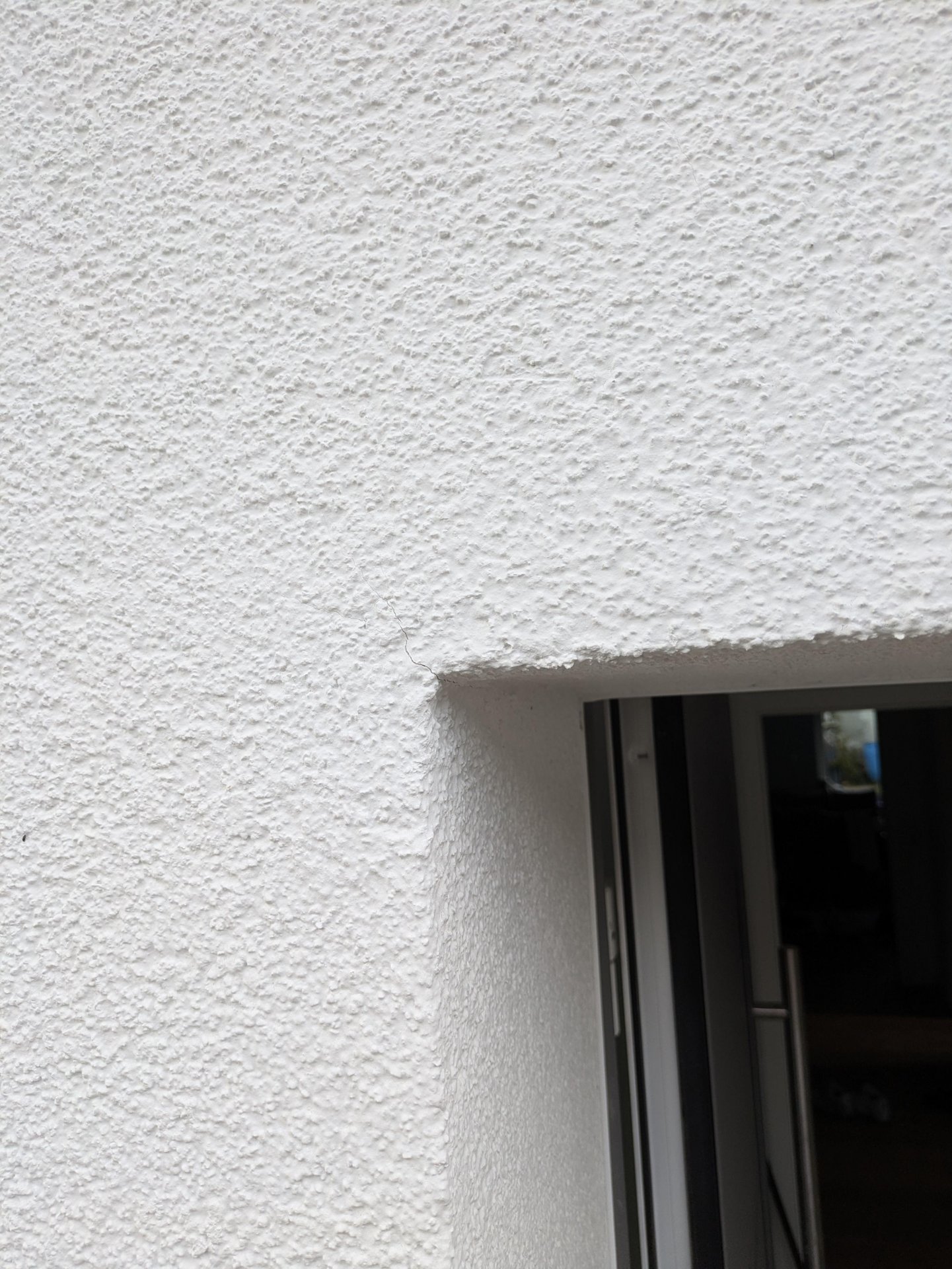
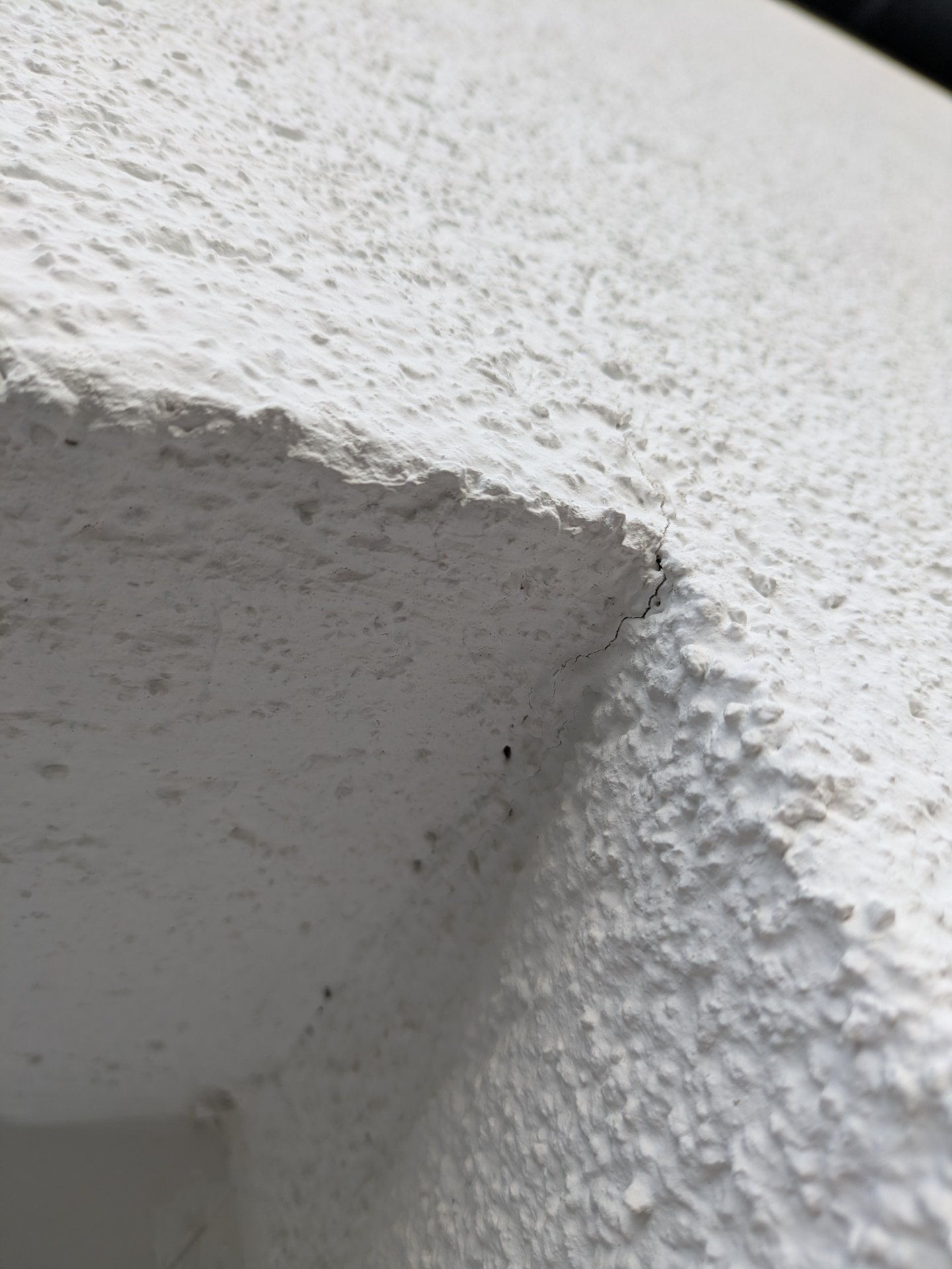
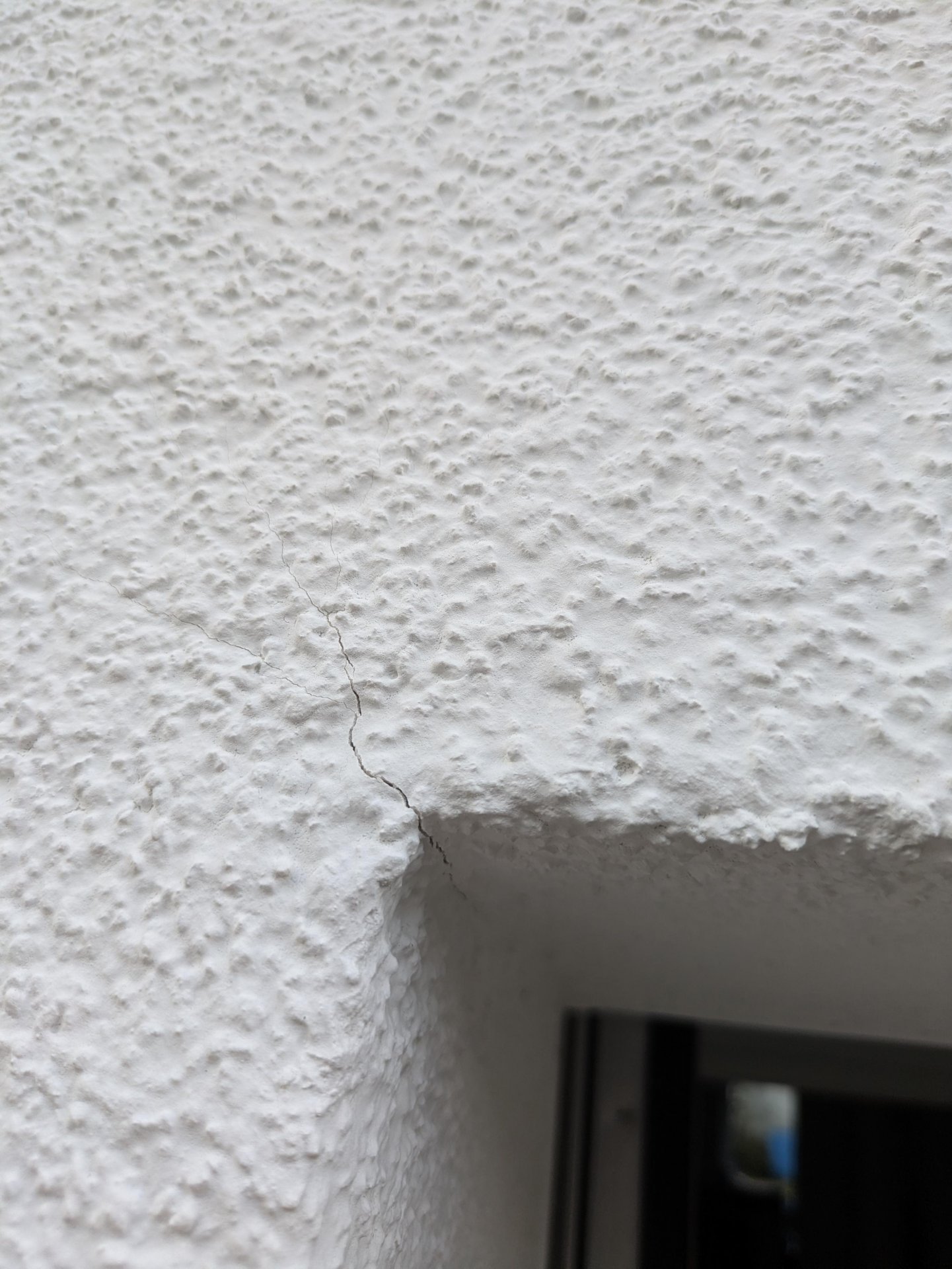
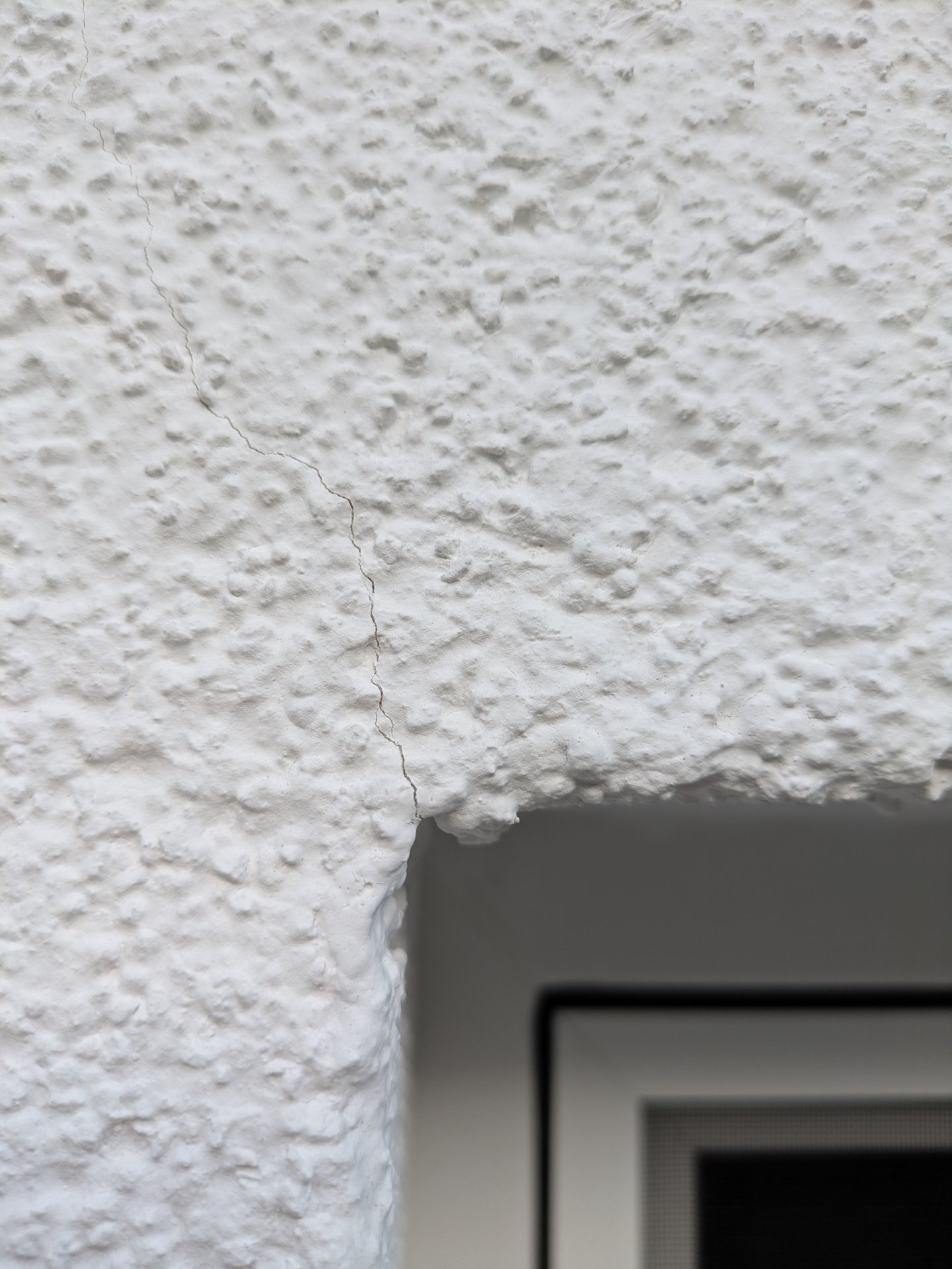
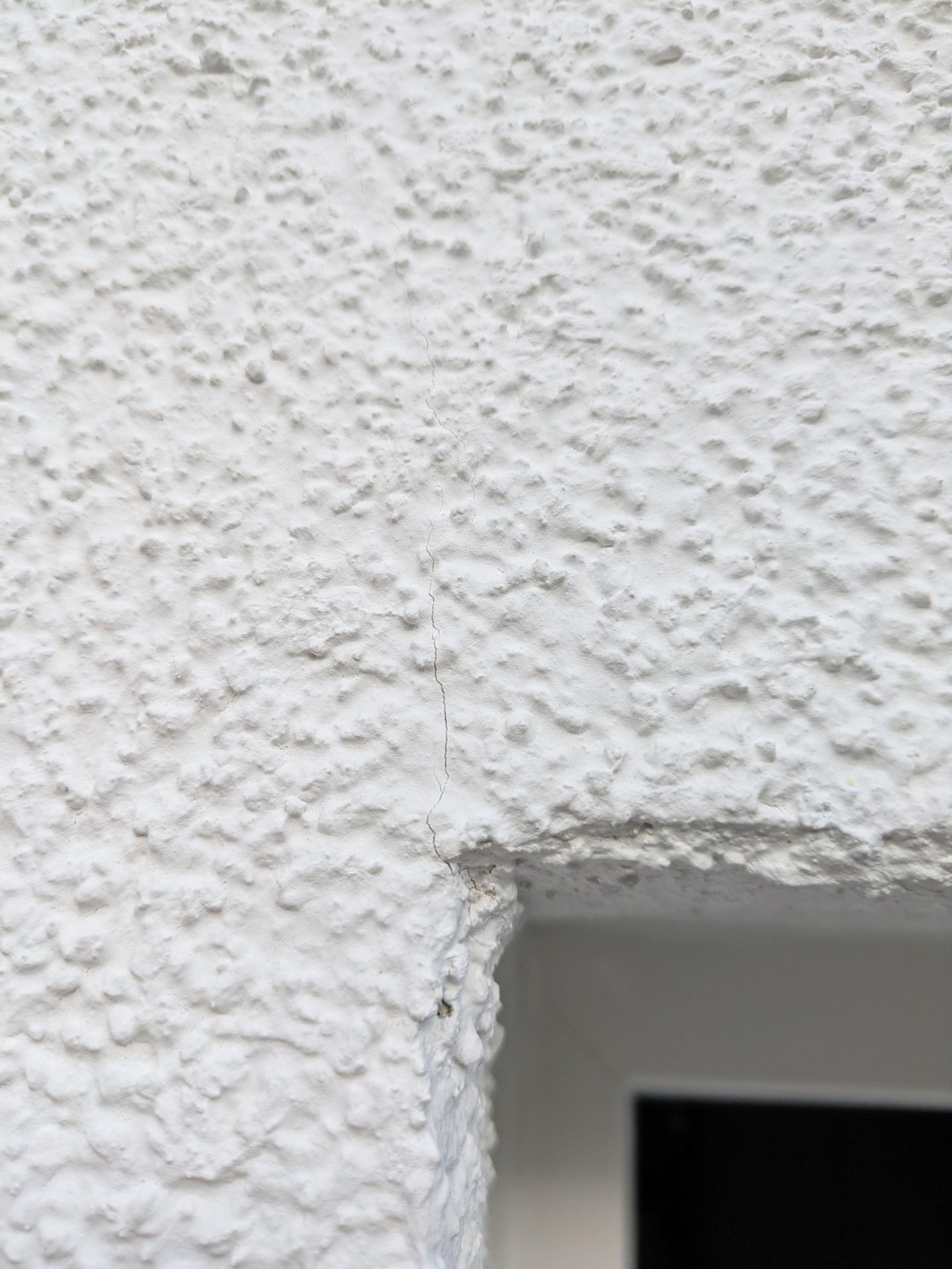

Maybe I’m missing something, but to me, it does not look like only the paint layer has cracked.
What do you think?
If larger damage occurs at exactly these spots in the near future, Caparol’s statement would effectively undermine itself.
At the end of last year, our house was insulated with 18cm (7 inches) ETICS. I noticed that additional diagonal reinforcement was applied at all upper corners and window sills. Unfortunately, I can no longer say exactly how it was done, and I did not take any pictures during that step.
Now that the weather has warmed up, I have noticed small cracks in the corners of some windows and the front door. However, there are no cracks on the aluminum window sills. The site manager of the company that carried out the work, together with a technical representative from Caparol (the system manufacturer), inspected these cracks.
I was told that these cracks are common and not a cause for concern. I wanted to have this statement in writing.
Here is Caparol’s statement:
Shrinkage Cracking in Coatings
“Shrinkage cracks have been identified in the coating on your property. These cracks can occur when textured plaster surfaces are painted over. Naturally, more paint remains in the recesses of the plaster texture when rolling. Depending on weather conditions (temperature, wind), the surface of the paint dries faster than the paint in the recesses, which can cause fine cracking in those areas.
Since these cracks are only in the paint surface, the coating’s performance—meaning its resistance to driving rain, weather durability, and longevity—is in no way affected. The coating remains fully functional, and these fine cracks (crack width < 0.2 mm) are technically harmless in terms of moisture and are not visible under normal use conditions (viewing distance, vantage point). This statement is consistent with WTA Information Sheet No. 2-4, Edition 8.2008/D “Assessment and Repair of Cracked Plasters and Facades” published by the Scientific-Technical Association for Building Preservation and Restoration, and BFS Information Sheet No. 9 “Coatings on Mineral Exterior Plaster” issued by the Federal Committee for Painting and Property Protection.
This means these cracks do not represent a quality defect. The functionality of the coating remains fully intact.”
Attached are some pictures of the cracks:
Maybe I’m missing something, but to me, it does not look like only the paint layer has cracked.
What do you think?
If larger damage occurs at exactly these spots in the near future, Caparol’s statement would effectively undermine itself.
Hi,
this "only in the coating" explanation is a classic—it sounds reassuring but leaves some questions open, don’t you think? Sure, shrinkage cracks under 0.2mm (0.008 inches) are formally considered uncritical according to WTA guidelines, but these cracks appear quite noticeably exactly at typical stress points, like corners of openings, which makes you look twice.
If the diagonal reinforcement is properly installed, visible cracks shouldn’t usually form right there, at least not extensively. The fact that there are no cracks at the aluminum window sills fits this pattern since the boundary conditions are different there. The argument about textured plaster isn’t wrong, but it feels a bit like “it’s probably fine,” especially if the cracks don’t just run within indentations.
The crucial question is: can you feel an edge with your fingernail, or does it really only look like hairline cracks? And have you looked from about 1 meter (3 feet) away to see if the lines continue or break irregularly? This often helps distinguish between coating and plaster cracks.
I would document and monitor this—take photos every few months. If any crack widens towards 0.3mm (0.01 inches), it becomes interesting, also from a legal point of view. Honestly, a written statement has some value, but it is more likely to protect the manufacturer than you, even if no one says this directly.
this "only in the coating" explanation is a classic—it sounds reassuring but leaves some questions open, don’t you think? Sure, shrinkage cracks under 0.2mm (0.008 inches) are formally considered uncritical according to WTA guidelines, but these cracks appear quite noticeably exactly at typical stress points, like corners of openings, which makes you look twice.
If the diagonal reinforcement is properly installed, visible cracks shouldn’t usually form right there, at least not extensively. The fact that there are no cracks at the aluminum window sills fits this pattern since the boundary conditions are different there. The argument about textured plaster isn’t wrong, but it feels a bit like “it’s probably fine,” especially if the cracks don’t just run within indentations.
The crucial question is: can you feel an edge with your fingernail, or does it really only look like hairline cracks? And have you looked from about 1 meter (3 feet) away to see if the lines continue or break irregularly? This often helps distinguish between coating and plaster cracks.
I would document and monitor this—take photos every few months. If any crack widens towards 0.3mm (0.01 inches), it becomes interesting, also from a legal point of view. Honestly, a written statement has some value, but it is more likely to protect the manufacturer than you, even if no one says this directly.
D
derdietmar21 Apr 2026 15:38Hello,
I don't think this can be completely avoided in these areas, even with correct installation of the reinforcement corners. I also believe that it’s the reinforcing layer that has cracked here, not just the paint.
One possible remedy could be crack-filling acrylic. Slightly widen the cracks, fill them with crack-filling acrylic, and then repaint. That’s how a facade specialist would handle it. It won’t be visible, and the crack will be sealed. Otherwise, water could penetrate and damage the plaster over time.
Best regards
I don't think this can be completely avoided in these areas, even with correct installation of the reinforcement corners. I also believe that it’s the reinforcing layer that has cracked here, not just the paint.
One possible remedy could be crack-filling acrylic. Slightly widen the cracks, fill them with crack-filling acrylic, and then repaint. That’s how a facade specialist would handle it. It won’t be visible, and the crack will be sealed. Otherwise, water could penetrate and damage the plaster over time.
Best regards
Similar topics