
ᐅ Cracks in L-shaped Concrete Blocks – What Is a Shrinkage Crack and What Constitutes a Defect?
Created on: 6 Sep 2018 13:21
D
DReffects
Good day,
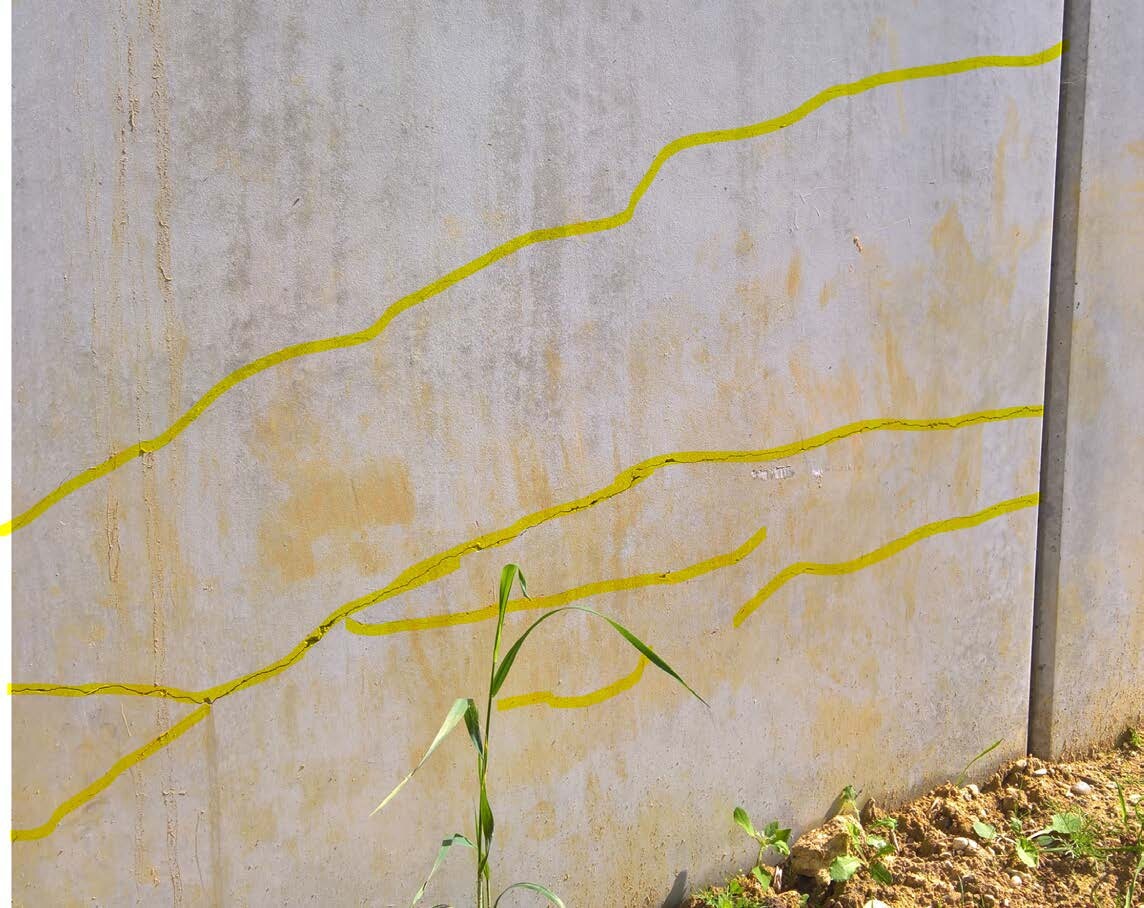
One of our L-shaped concrete blocks has developed cracks that have unfortunately grown over the past few months. The landscaping contractor says these are shrinkage cracks and are normal. Could you take a look at them?
Cracks in spring 2018:
Cracks from two weeks ago – they have increased, and water apparently leaked from the hole in the lower left third.
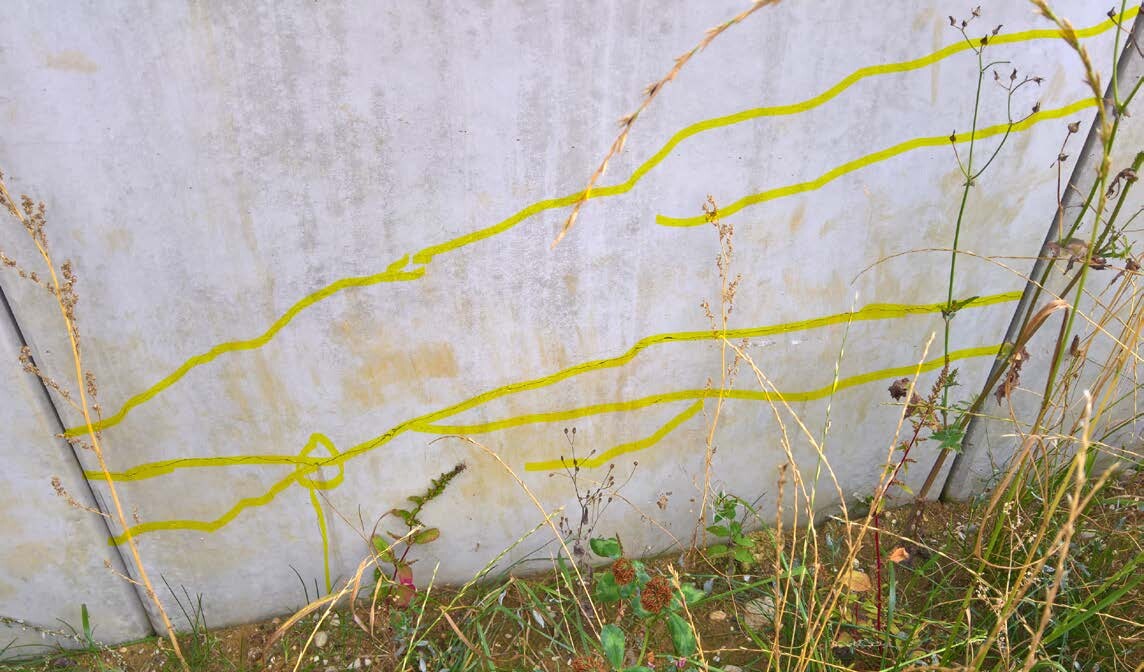
What do you think?
Thanks and best regards
One of our L-shaped concrete blocks has developed cracks that have unfortunately grown over the past few months. The landscaping contractor says these are shrinkage cracks and are normal. Could you take a look at them?
Cracks in spring 2018:
Cracks from two weeks ago – they have increased, and water apparently leaked from the hole in the lower left third.
What do you think?
Thanks and best regards
Bookstar schrieb:
Warning, non-expert opinion: I believe L-shaped concrete blocks should not show any cracks since they are not cast on site. A clean surface is expected for L-shaped blocks. That is also my (non-expert) view...The key question is whether the cracks are merely superficial or if the element is actually broken. In the latter case, it should be replaced.
It seems to me that only the one continuous and somewhat deeper crack further down is relevant; the others are clearly just surface-level.
Can you not see from the side how deep the crack goes?
A little bit of water doesn’t necessarily have to seep through from the other side (which would definitely be a problem); it might just be collecting at that spot because of the superficial crack itself. That’s how it looks to me.
P.S. I don’t really have much expertise on this; I just read up on it briefly.
It seems to me that only the one continuous and somewhat deeper crack further down is relevant; the others are clearly just surface-level.
Can you not see from the side how deep the crack goes?
A little bit of water doesn’t necessarily have to seep through from the other side (which would definitely be a problem); it might just be collecting at that spot because of the superficial crack itself. That’s how it looks to me.
P.S. I don’t really have much expertise on this; I just read up on it briefly.
apokolok schrieb:
The key question is whether the cracks are only superficial or if the element is actually broken. In the latter case, it should be replaced.
It seems to me that only the one continuous and somewhat deeper crack lower down is relevant; the others are obviously just surface cracks.
Can you not see from the side how far it goes?
A little water doesn’t necessarily have to penetrate from the other side (which would definitely be a problem); it might simply collect at the spot due to the superficial crack itself. That’s how it looks to me.
P.S. I basically have no expertise here, just did a quick bit of reading.Following my complaint about the defect, the company covered the crack with concrete compound but at the same time stated it was “not a defect.” The repair was done without prior notice – so currently, I have no way to verify how deep the crack actually is. On both the left and right sides, there are also L-shaped retaining walls.
Are there any permissible tolerances or something similar in cases like this?
As long as no water reaches the reinforcement, this is essentially just a cosmetic issue that can be fixed by filling it in.
Over time, you will notice if the piece is actually broken and the steel starts to rust; in that case, a bit of filling won’t help.
So far, it doesn’t look like that to me.
Over time, you will notice if the piece is actually broken and the steel starts to rust; in that case, a bit of filling won’t help.
So far, it doesn’t look like that to me.
Similar topics