
ᐅ Ceramin tiles (by Classen) not fully adhered with adhesive over the entire surface
Created on: 28 Apr 2024 18:42
B
Benutzer210B
Benutzer21028 Apr 2024 18:42Hello construction professionals,
How would you assess this situation: My tile installer did not fully adhere the new Ceramin tiles from Classen (400x800) across the entire surface. At the joint in a staggered pattern and also at the side joints, it often sounds hollow when tapped. The walking feel is therefore unpleasant, especially when barefoot. The tiles are not in contact with the old tiled floor in several areas (see photo). Is this a major mistake by an experienced tile installer, or does the saying apply here: “When the craftsman starts thinking”? I am very dissatisfied with the situation. Unfortunately, the new kitchen is already installed on top. Removing everything would be very complex and expensive. Injection grouting is also not possible because the joints are just 1mm (0.04 inches) wide. Drill holes would be visible. And almost the entire floor would have to be injected.
What options or rights do I have here as the client?
Thank you very much in advance.
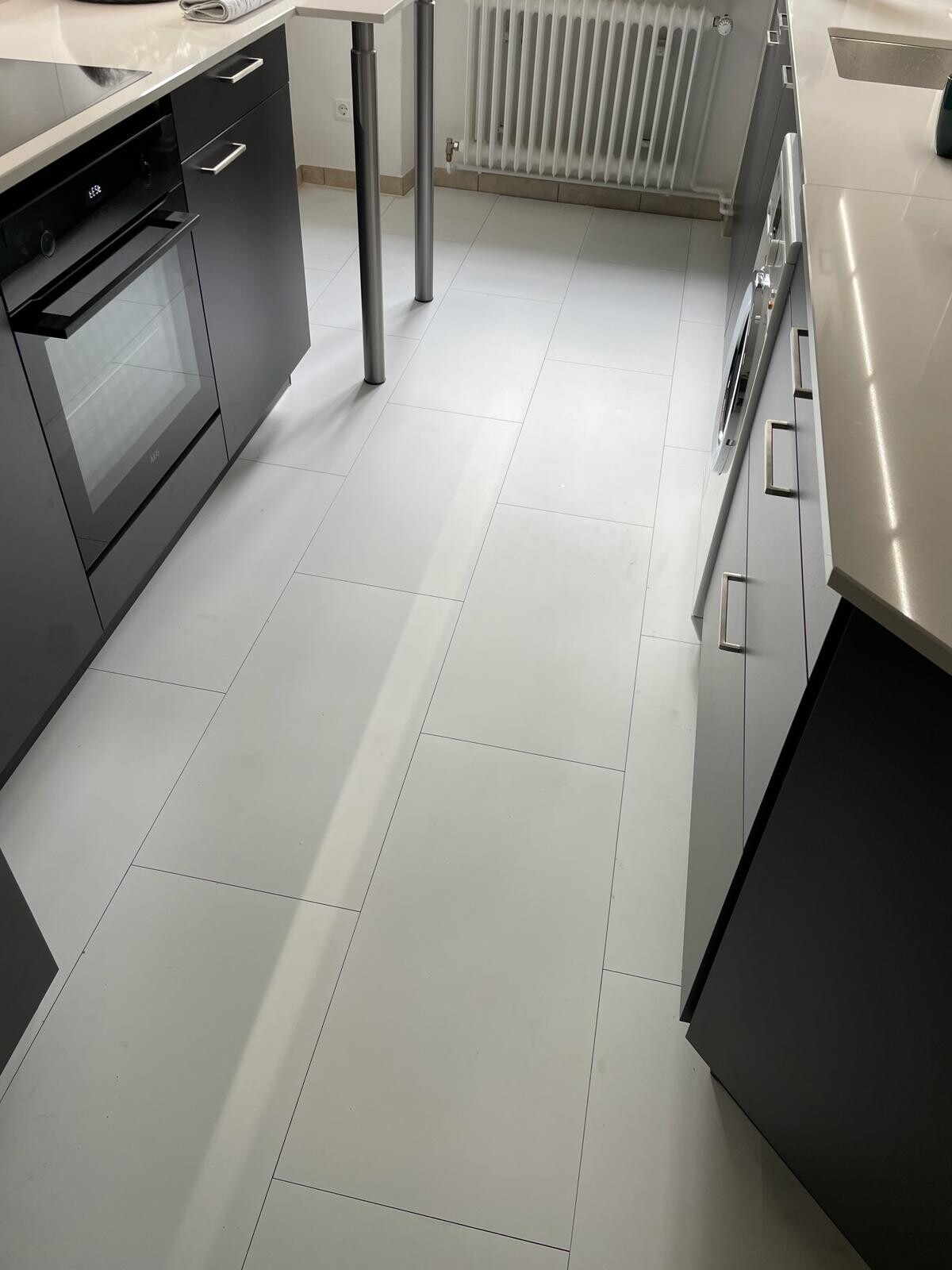
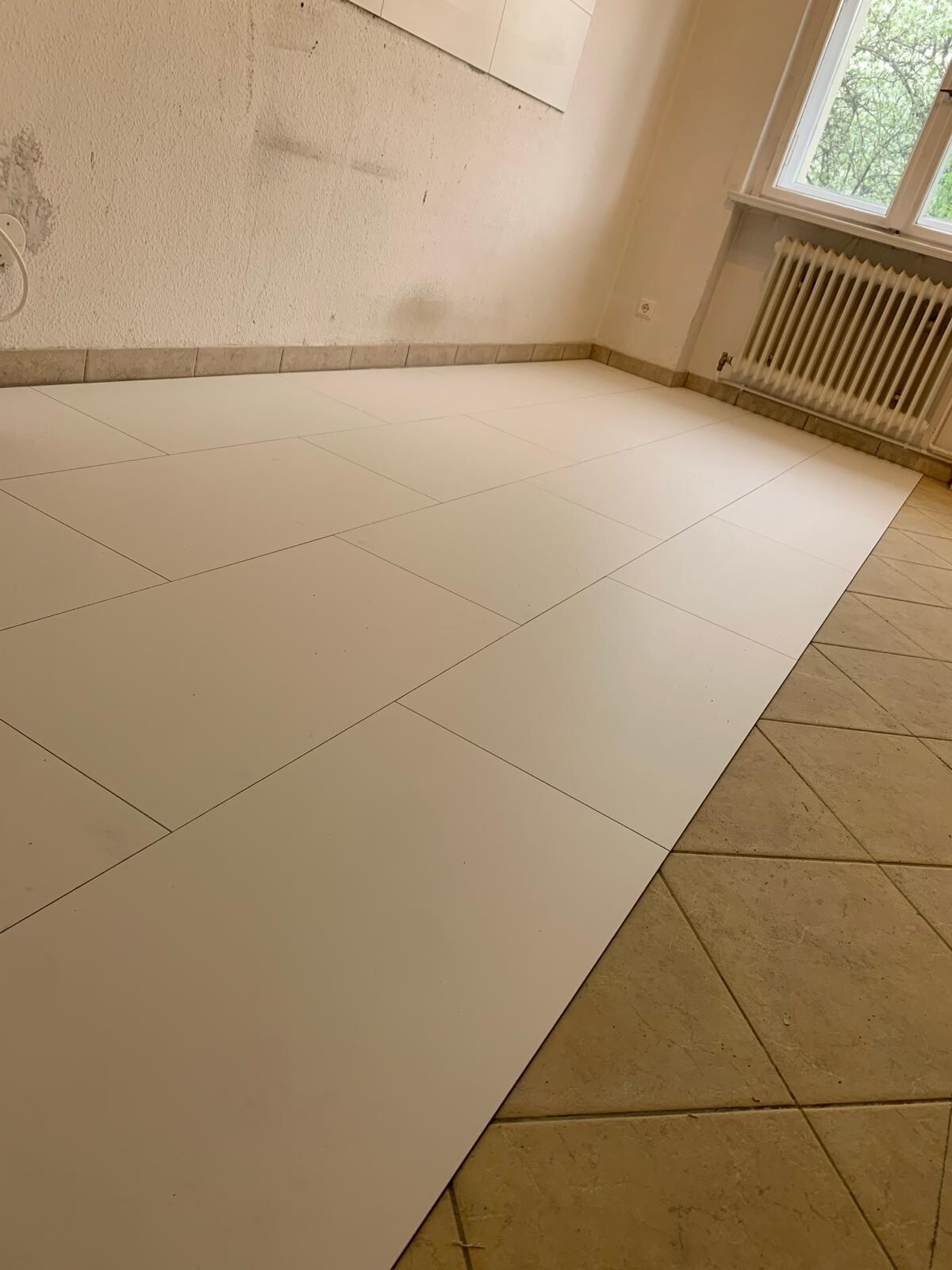

How would you assess this situation: My tile installer did not fully adhere the new Ceramin tiles from Classen (400x800) across the entire surface. At the joint in a staggered pattern and also at the side joints, it often sounds hollow when tapped. The walking feel is therefore unpleasant, especially when barefoot. The tiles are not in contact with the old tiled floor in several areas (see photo). Is this a major mistake by an experienced tile installer, or does the saying apply here: “When the craftsman starts thinking”? I am very dissatisfied with the situation. Unfortunately, the new kitchen is already installed on top. Removing everything would be very complex and expensive. Injection grouting is also not possible because the joints are just 1mm (0.04 inches) wide. Drill holes would be visible. And almost the entire floor would have to be injected.
What options or rights do I have here as the client?
Thank you very much in advance.
Fliesen_Tom schrieb:
The feel underfoot is unpleasant, especially when walking barefoot. What exactly do you mean by that? Does the tile bend (in which case the grout would already be cracking) or is it just the sound? I would expect that if you cover your ears, you wouldn’t notice the missing adhesive at all.
Fliesen_Tom schrieb:
My tiler did not fully bed the new Ceramin tiles from Classen (400x800) with adhesive. Do you happen to have any photos of the installation to see how much adhesive was actually applied?
Fliesen_Tom schrieb:
What options or rights do I have here as the client? That depends. Specifically, whether there is sufficient adhesive or not... This can only be determined with photos and/or by removing some tiles. There is a defect if the usability is impaired. Exactly how many spots or what areas in square centimeters are we talking about?
Have you already approved and paid for the work? Or reported a defect to the tiler?

Hello "Benutzer210".
First of all, it must be understood that achieving a void-free installation of tiles and slabs is already difficult to meet due to the permissible flatness tolerance limits of the substrate (the screed surface). This means that voids, in general terms, do not necessarily constitute a "defect" (a legal term that non-lawyers should be cautious about using). Whether complaints are justified depends on the extent of the voids.
The large tile size of 80 cm x 40 cm (31.5 inches x 15.7 inches) naturally raises questions. What type of Ceramin tiles are these? Megaloc or easy-lock?
The (in my opinion weak) installation instructions do not indicate that a dispersion adhesive, as commonly used for tiles and slabs, should be applied. Instead, the tiles are factory-coated on the back with a dry adhesive.
Looking further at the product information for the "Ceramin" type, it quickly becomes clear that due to the mentioned "fast installation system," this product cannot be a floor covering type known as a "ceramic covering." This is also confirmed by the note that it contains 10% recycled material.
To summarize briefly, due to the tile format, a higher degree of flatness of the screed surface is definitely required! There is no way around this, even with pure ceramic tiles. This means: grinding, vacuuming the dust, priming, and applying a leveling compound.
If this has not been done, the installer should be asked why not. Because in combination with a dry adhesive on the back and uneven surfaces, a full-surface installation of any material is impossible.
For ceramic tiles, even with large formats, a medium-bed adhesive must be used since a thin-bed adhesive would most likely fail.
In conclusion: if the flooring elements can be easily pressed down toward the installation plane under pressure, if slight audible "smacking noises" can be heard, or if the depressed surface of the element springs back after a short time, this would be the time to involve the installer and ask for clarification (but first gather all product information available on the market or online to have a basis for discussion).
---------------------
Good luck: KlaRa
First of all, it must be understood that achieving a void-free installation of tiles and slabs is already difficult to meet due to the permissible flatness tolerance limits of the substrate (the screed surface). This means that voids, in general terms, do not necessarily constitute a "defect" (a legal term that non-lawyers should be cautious about using). Whether complaints are justified depends on the extent of the voids.
The large tile size of 80 cm x 40 cm (31.5 inches x 15.7 inches) naturally raises questions. What type of Ceramin tiles are these? Megaloc or easy-lock?
The (in my opinion weak) installation instructions do not indicate that a dispersion adhesive, as commonly used for tiles and slabs, should be applied. Instead, the tiles are factory-coated on the back with a dry adhesive.
Looking further at the product information for the "Ceramin" type, it quickly becomes clear that due to the mentioned "fast installation system," this product cannot be a floor covering type known as a "ceramic covering." This is also confirmed by the note that it contains 10% recycled material.
To summarize briefly, due to the tile format, a higher degree of flatness of the screed surface is definitely required! There is no way around this, even with pure ceramic tiles. This means: grinding, vacuuming the dust, priming, and applying a leveling compound.
If this has not been done, the installer should be asked why not. Because in combination with a dry adhesive on the back and uneven surfaces, a full-surface installation of any material is impossible.
For ceramic tiles, even with large formats, a medium-bed adhesive must be used since a thin-bed adhesive would most likely fail.
In conclusion: if the flooring elements can be easily pressed down toward the installation plane under pressure, if slight audible "smacking noises" can be heard, or if the depressed surface of the element springs back after a short time, this would be the time to involve the installer and ask for clarification (but first gather all product information available on the market or online to have a basis for discussion).
---------------------
Good luck: KlaRa
Similar topics