
Hello everyone,
this seems to be a somewhat unusual question, at least my search on the topic didn’t yield any results, even on Google. Here is my situation:
Our house itself is finished, and the exterior plaster is also completely done. Now we are planning the outdoor area. At one spot, we want to raise the ground level higher than originally planned. Because of this, part of the plastered wall will be buried underground.
Now to the question:
Is it sufficient to install the typical dimpled membrane (dimple board) between the soil and the wall, directly on the already finished plaster, to protect the wall from moisture? Or would it be better to apply a bitumen coating on the plaster first?
Regards,
Toni
this seems to be a somewhat unusual question, at least my search on the topic didn’t yield any results, even on Google. Here is my situation:
Our house itself is finished, and the exterior plaster is also completely done. Now we are planning the outdoor area. At one spot, we want to raise the ground level higher than originally planned. Because of this, part of the plastered wall will be buried underground.
Now to the question:
Is it sufficient to install the typical dimpled membrane (dimple board) between the soil and the wall, directly on the already finished plaster, to protect the wall from moisture? Or would it be better to apply a bitumen coating on the plaster first?
Regards,
Toni


Yes, dimpled membranes are not waterproofing. They only provide mechanical protection.
Whether you can apply bitumen directly onto the exterior plaster depends on its composition and technical specifications. If you compare the technical data sheets of both materials, it might already be clear to a layperson whether they are compatible.
Whether you can apply bitumen directly onto the exterior plaster depends on its composition and technical specifications. If you compare the technical data sheets of both materials, it might already be clear to a layperson whether they are compatible.
Another waterproofing layer can also be applied over the plaster. There are various mortars available from plaster manufacturers that can be used for this purpose. It is important to ensure the waterproofing connects properly to the soil to prevent moisture from migrating behind it. With the limited information provided, it is difficult to assess this accurately. You should definitely do something; the dimpled membrane is just the minimum, preventing the soil from having permanent contact, but it is primarily meant to protect the waterproofing layer.
Thank you all very much in advance.
@jcan maybe the attached image will help a bit more. At the bottom (the partial moon structure at the split, this is where the dimpled membrane goes and it is plastered under the rendering. I would now like to raise the soil level by half a meter to one meter.
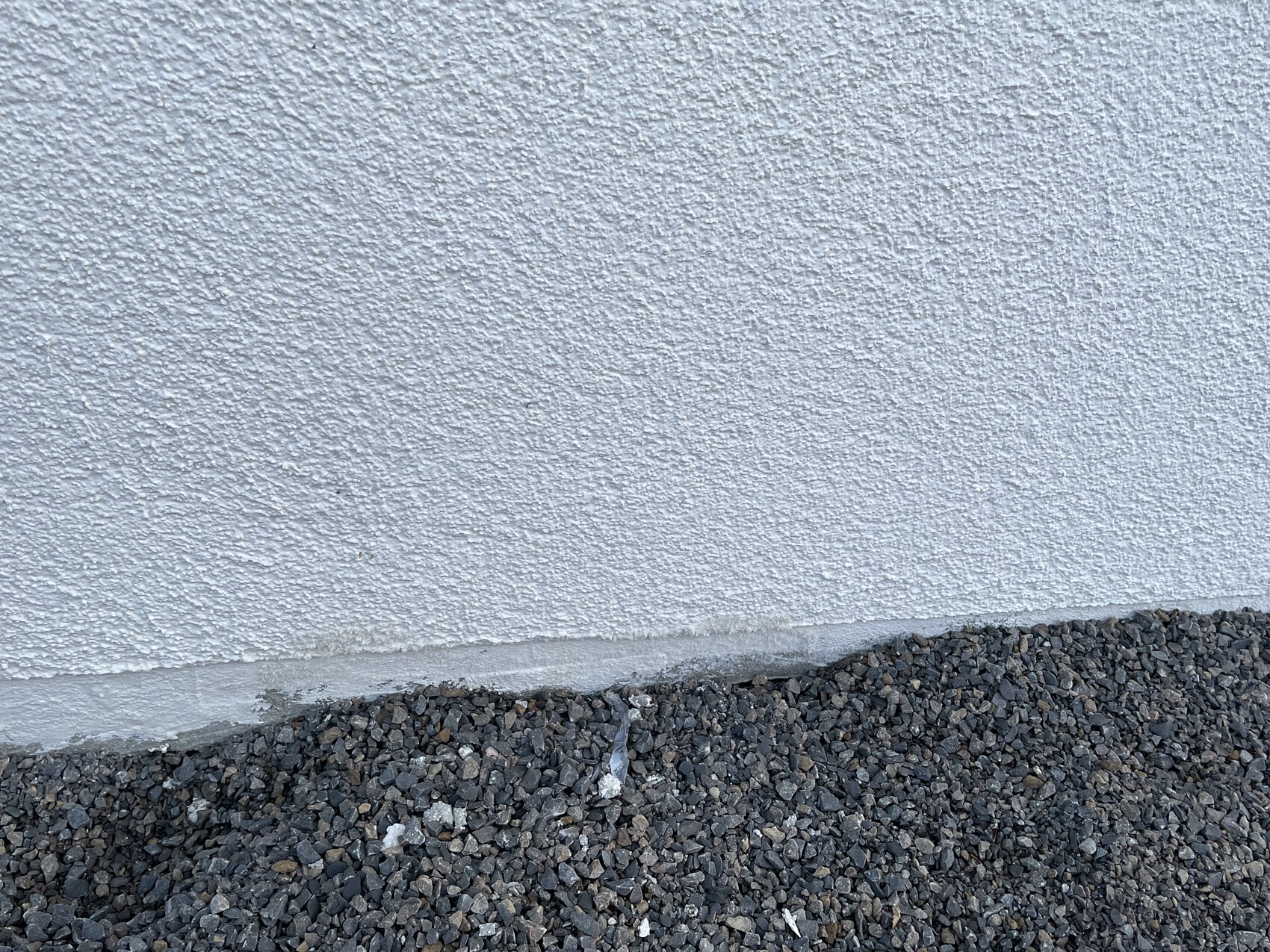
@jcan maybe the attached image will help a bit more. At the bottom (the partial moon structure at the split, this is where the dimpled membrane goes and it is plastered under the rendering. I would now like to raise the soil level by half a meter to one meter.
H
henning18112 Feb 2022 18:02Hello,
I faced the same question when my basement garage was bricked up and the driveway was filled with soil. At that time, we used bituminous thick coating along with insulation and drainage membranes. If you are backfilling soil against the render, I would also recommend using bituminous thick coating plus drainage membranes to be safe. The bituminous coating is not UV-resistant, so it should only be applied where it will be covered by soil. There is also a product called bitumen IS—be careful to check the fine print. Often, it states that it does not provide permanent protection against moisture, which would not help you. I made this mistake once and was lucky that my architect pointed it out.
I faced the same question when my basement garage was bricked up and the driveway was filled with soil. At that time, we used bituminous thick coating along with insulation and drainage membranes. If you are backfilling soil against the render, I would also recommend using bituminous thick coating plus drainage membranes to be safe. The bituminous coating is not UV-resistant, so it should only be applied where it will be covered by soil. There is also a product called bitumen IS—be careful to check the fine print. Often, it states that it does not provide permanent protection against moisture, which would not help you. I made this mistake once and was lucky that my architect pointed it out.
Similar topics