
ᐅ Corner windows and sliding doors installed correctly – thermal bridges?
Created on: 24 Jan 2023 19:27
J
joltHello everyone,
We have been living in our new build since spring. We have a bay window with a corner window. One part is fixed glazing, the other part is a tilt-and-turn window. At the corner, it feels noticeably colder with these cool outdoor temperatures. So I got a thermal imaging camera, which confirmed my impression.
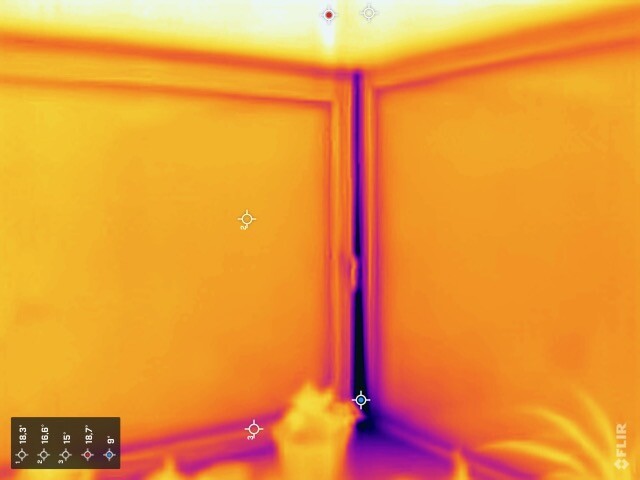
Ground floor
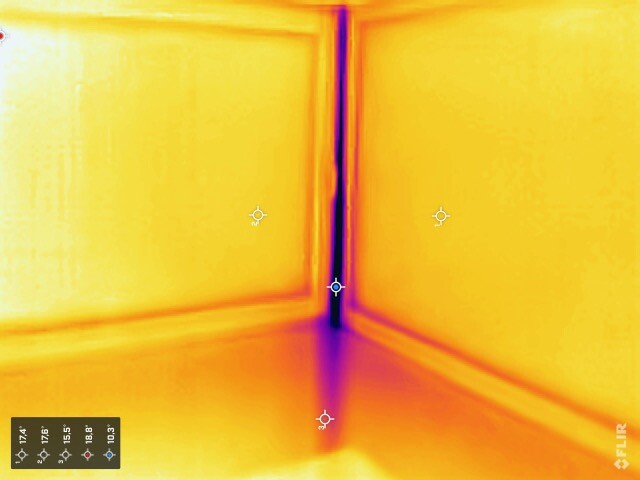
Upper floor
Is this normal, or was the connection between the two elements not done properly, or was something missed?
Furthermore, on the upper floor we have sliding patio doors in two rooms, and here the floor in front of the sashes—the movable part of the window—is noticeably colder. In this case, the window installer adjusted the sashes slightly upwards afterward to allow enough space for the flooring, as the heights otherwise wouldn’t have fit. Could this be the reason?

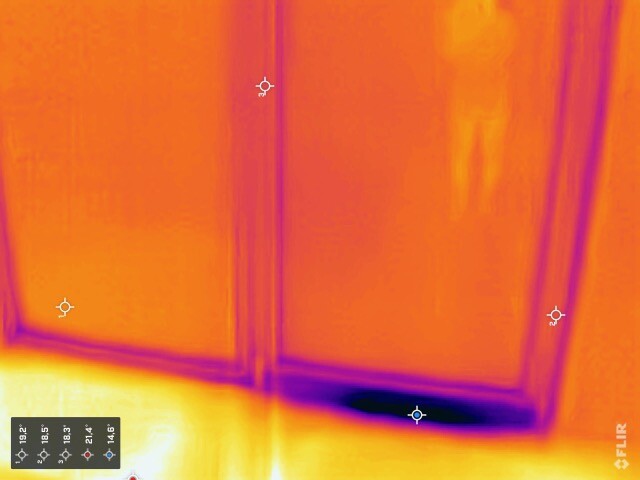
I would be very grateful for any assessments.
Thank you very much and best regards
We have been living in our new build since spring. We have a bay window with a corner window. One part is fixed glazing, the other part is a tilt-and-turn window. At the corner, it feels noticeably colder with these cool outdoor temperatures. So I got a thermal imaging camera, which confirmed my impression.
Ground floor
Upper floor
Is this normal, or was the connection between the two elements not done properly, or was something missed?
Furthermore, on the upper floor we have sliding patio doors in two rooms, and here the floor in front of the sashes—the movable part of the window—is noticeably colder. In this case, the window installer adjusted the sashes slightly upwards afterward to allow enough space for the flooring, as the heights otherwise wouldn’t have fit. Could this be the reason?
I would be very grateful for any assessments.
Thank you very much and best regards

lol, great pictures. But no one can really make sense of them ;-) How about some proper "normal" pictures of the current condition? No offense, but my crystal ball is out of the office at the moment ... (I’m guessing, a barely covered steel support in the corner to meet structural requirements and have lots of glass area, but not well insulated?)

Corners are always potential thermal bridges; however, it is not possible to determine from this alone whether they are still within the accepted standards or represent a defect.
Furthermore, it naturally depends on the contractually agreed conditions (room temperature). According to the standard (DIN 4108-2), with an indoor temperature of 20°C (68°F) and an outdoor temperature of -5°C (23°F), the minimum allowed surface temperature on the interior side of the exterior wall is 12.6°C (54.7°F), to prevent condensation.
If no other indoor temperature has been agreed upon, it should be assumed from a thermal insulation perspective that a defect exists as soon as this limit is undercut. Regarding thermal protection, the material of the exterior wall ultimately does not matter—there are no advantages or disadvantages; this temperature threshold must be met, and if the component itself cannot achieve this, additional insulation must be installed.
Furthermore, it naturally depends on the contractually agreed conditions (room temperature). According to the standard (DIN 4108-2), with an indoor temperature of 20°C (68°F) and an outdoor temperature of -5°C (23°F), the minimum allowed surface temperature on the interior side of the exterior wall is 12.6°C (54.7°F), to prevent condensation.
If no other indoor temperature has been agreed upon, it should be assumed from a thermal insulation perspective that a defect exists as soon as this limit is undercut. Regarding thermal protection, the material of the exterior wall ultimately does not matter—there are no advantages or disadvantages; this temperature threshold must be met, and if the component itself cannot achieve this, additional insulation must be installed.
Thank you for the professional input.
Nothing specific was agreed upon. With the mentioned °C values, it could already be tight for me. The pictures were taken at around 20°C (68°F) room temperature and 1-2°C (34-36°F) outside temperature. This means that at -5°C (23°F) outside temperature, the 12.6°C (54.7°F) interior wall/window temperature would be exceeded.
Basically, my main concern is whether the situation shown in the pictures is "normal" for us, or if there is a need for adjustments, and above all, what options for improvement exist.
Nothing specific was agreed upon. With the mentioned °C values, it could already be tight for me. The pictures were taken at around 20°C (68°F) room temperature and 1-2°C (34-36°F) outside temperature. This means that at -5°C (23°F) outside temperature, the 12.6°C (54.7°F) interior wall/window temperature would be exceeded.
Basically, my main concern is whether the situation shown in the pictures is "normal" for us, or if there is a need for adjustments, and above all, what options for improvement exist.
Sorry, it’s really hard to see much in the pictures. Therefore, I didn’t receive exact temperature readings.
It is “normal” in the sense that external corners always represent an energy weak point.
If the camera measures accurately and the temperatures are not maintained, it is not “normal” in terms of compliance with standards and is also dangerous, as continuous condensation failure can lead to building damage and mold over the medium to long term.
It is “normal” in the sense that external corners always represent an energy weak point.
If the camera measures accurately and the temperatures are not maintained, it is not “normal” in terms of compliance with standards and is also dangerous, as continuous condensation failure can lead to building damage and mold over the medium to long term.
Similar topics