
ᐅ Creating a Plan for Insulating an Old Building – How to Proceed?
Created on: 30 Aug 2022 10:30
T
Tobibi
Hello,
I’m currently trying to make a plan for how to best improve the insulation of our house. I hope I can write everything down clearly so that some of you might be able to give me tips or suggest different approaches.
We bought a large house from 1982, about 200 sqm (2,150 sq ft) of living space. There is an approximately 6-year-old heat pump for heating and hot water, and a small wood stove in the living room. The ground floor and first floor have underfloor heating, while three basement rooms and a converted room above the garage have radiators. These radiators have a separate heating circuit with their own flow temperature and are rarely used, actually not at all in the basement.
In the main bedroom on the first floor, the previous owner opened the ceiling a few years ago, creating a high space that goes up to the roof ridge. The roof was insulated at that time, but I don’t have any documentation on how well. The rest of the house remains in its original condition, so basically uninsulated.
The walls are solid brick. The wooden windows have double glazing. Many windows and the front door do not seal well, allowing noticeable drafts at some windows. The top floor ceiling is not concrete but made of joists, covered underneath on the first floor with drywall and boards on top. Between the joists, there appears to be rock wool insulation packed in.
We have a 9 kWp photovoltaic system with battery storage, which the previous owner also installed. As it currently stands, the electricity from the photovoltaic system cannot be used for the heat pump, only for other household electricity. There is a separate meter with a heating electricity contract. Surplus electricity is fed back into the grid.
I recently received the heating electricity bill, showing that from March 2021 to March 2022—one full year—we used about 12,500 kWh for heating and hot water, which I find quite high. I definitely want to take action, especially since electricity prices are rising sharply. I’m not an experienced DIYer, but I can assist and have very helpful father and father-in-law who have a lot of skills. So, some things could be done ourselves, although time is always a factor.
A no-brainer seems to be replacing the window seals and adjusting them so they close tightly again. I am already in contact with a company for this.
Next, I’m thinking about insulating the roller shutter boxes. I would probably get a company to do this as well.
I’m considering insulating the basement ceiling with insulation boards that can be glued or fixed with plugs. If there are instructions available, we would rather do that ourselves. Or should I focus on insulating the top floor ceiling or installing insulation between the rafters? Or both? Probably not at the same time—maybe one this year and the other in a year or two. What would be the better order?
Would it make sense to modify the photovoltaic system so that the electricity can be used for the heat pump? I would have to hire an electrician for that, which costs money. But then the electricity would be usable for heating, and there would be only one basic fee. On the other hand, the yield in winter is not very good, and I would lose the cheaper heating electricity tariff. I once tracked generated, fed-in, self-used, and purchased electricity over a longer period and basically concluded that the conversion might not be worthwhile. But now electricity prices are rising dramatically.
Insulating the facade and/or installing new windows is honestly too expensive for me right now. On the other hand, we will need to have the entire exterior repainted next year or the year after. That costs several thousand when done professionally, which would almost offset the cost of external wall insulation. But presumably, these two should go together—insulation and new windows—because doing only one is not sensible and could cause problems with condensation.
So, that turned out to be quite a long message. I hope it’s understandable. How would you proceed? If I forgot anything, just ask. I might also add a follow-up later.
Best regards,
Tobi
I’m currently trying to make a plan for how to best improve the insulation of our house. I hope I can write everything down clearly so that some of you might be able to give me tips or suggest different approaches.
We bought a large house from 1982, about 200 sqm (2,150 sq ft) of living space. There is an approximately 6-year-old heat pump for heating and hot water, and a small wood stove in the living room. The ground floor and first floor have underfloor heating, while three basement rooms and a converted room above the garage have radiators. These radiators have a separate heating circuit with their own flow temperature and are rarely used, actually not at all in the basement.
In the main bedroom on the first floor, the previous owner opened the ceiling a few years ago, creating a high space that goes up to the roof ridge. The roof was insulated at that time, but I don’t have any documentation on how well. The rest of the house remains in its original condition, so basically uninsulated.
The walls are solid brick. The wooden windows have double glazing. Many windows and the front door do not seal well, allowing noticeable drafts at some windows. The top floor ceiling is not concrete but made of joists, covered underneath on the first floor with drywall and boards on top. Between the joists, there appears to be rock wool insulation packed in.
We have a 9 kWp photovoltaic system with battery storage, which the previous owner also installed. As it currently stands, the electricity from the photovoltaic system cannot be used for the heat pump, only for other household electricity. There is a separate meter with a heating electricity contract. Surplus electricity is fed back into the grid.
I recently received the heating electricity bill, showing that from March 2021 to March 2022—one full year—we used about 12,500 kWh for heating and hot water, which I find quite high. I definitely want to take action, especially since electricity prices are rising sharply. I’m not an experienced DIYer, but I can assist and have very helpful father and father-in-law who have a lot of skills. So, some things could be done ourselves, although time is always a factor.
A no-brainer seems to be replacing the window seals and adjusting them so they close tightly again. I am already in contact with a company for this.
Next, I’m thinking about insulating the roller shutter boxes. I would probably get a company to do this as well.
I’m considering insulating the basement ceiling with insulation boards that can be glued or fixed with plugs. If there are instructions available, we would rather do that ourselves. Or should I focus on insulating the top floor ceiling or installing insulation between the rafters? Or both? Probably not at the same time—maybe one this year and the other in a year or two. What would be the better order?
Would it make sense to modify the photovoltaic system so that the electricity can be used for the heat pump? I would have to hire an electrician for that, which costs money. But then the electricity would be usable for heating, and there would be only one basic fee. On the other hand, the yield in winter is not very good, and I would lose the cheaper heating electricity tariff. I once tracked generated, fed-in, self-used, and purchased electricity over a longer period and basically concluded that the conversion might not be worthwhile. But now electricity prices are rising dramatically.
Insulating the facade and/or installing new windows is honestly too expensive for me right now. On the other hand, we will need to have the entire exterior repainted next year or the year after. That costs several thousand when done professionally, which would almost offset the cost of external wall insulation. But presumably, these two should go together—insulation and new windows—because doing only one is not sensible and could cause problems with condensation.
So, that turned out to be quite a long message. I hope it’s understandable. How would you proceed? If I forgot anything, just ask. I might also add a follow-up later.
Best regards,
Tobi
K
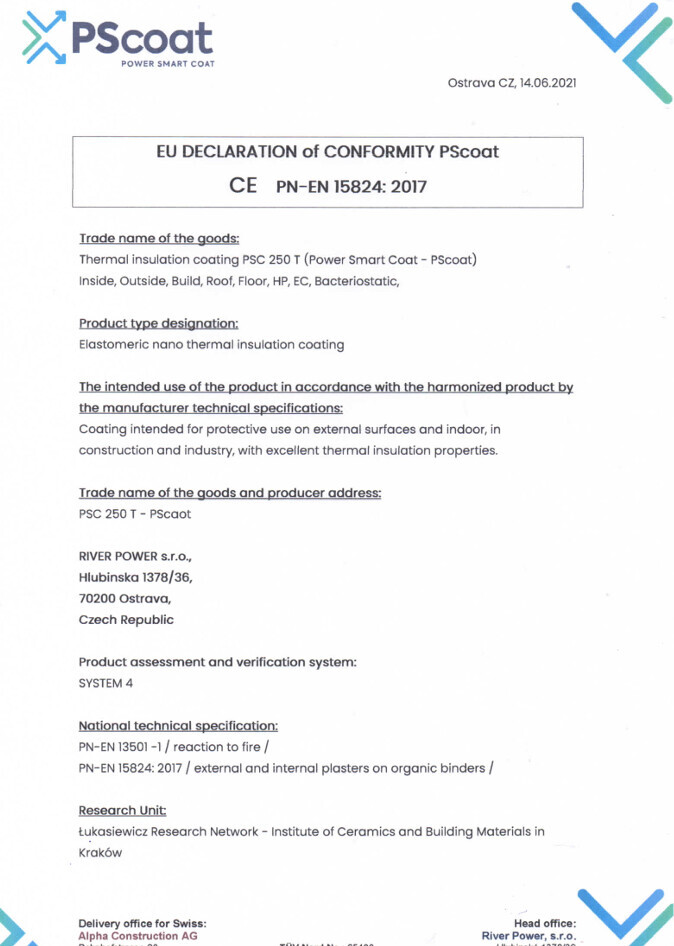
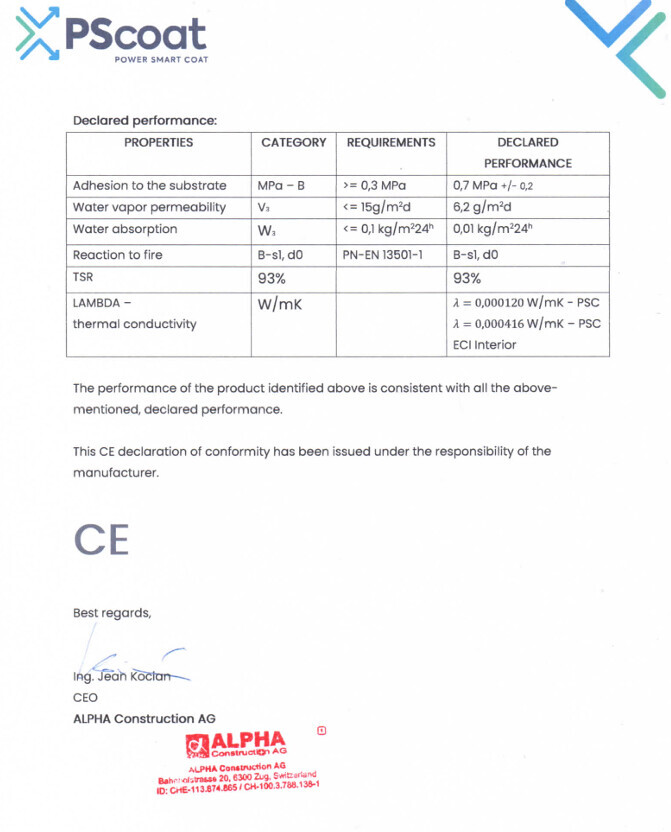
KarstenausNRW23 Dec 2022 09:16I now have the CE declaration, but there is no performance specification available. A few inconsistencies concern me, such as the incorrect font used for the CE mark and the fact that the declaration is in English. It must be submitted in German. The last two digits of the year when the CE marking was first applied are also missing. The reference number of the performance declaration is absent as well. The harmonized standard with edition (e.g., EN...) or the indication of the EAD is not included, nor is the four-digit number of the notified bodies.
Aside from that, it looks good 😉 .
If interested: I also have the TÜV and ISO certificates, application guidelines, and testing regulations available.
So, go ahead and order...
 .
.
Aside from that, it looks good 😉 .
If interested: I also have the TÜV and ISO certificates, application guidelines, and testing regulations available.
So, go ahead and order...
KarstenausNRW schrieb:
I now have the CE declaration, but there is no performance specification. I am concerned about a few inconsistencies, such as the incorrect font used for the CE mark and the fact that the declaration is in English. It must be submitted in German. Also, the last two digits of the year when the CE marking was first applied are missing. The reference number of the performance declaration is also missing. The harmonized standard with version (e.g., EN...) or the indication of the EAD is not provided, nor is the four-digit number of the notified bodies included.
Apart from that, it looks pretty good 😉 .
If interested: I also have TÜV and ISO certificates, application instructions, and testing regulations available.
So, go ahead and order...
.[ATTACH alt="1671782721119.png"]77149[/ATTACH] Did you also receive references? By now, all tire vulcanizers worldwide, as well as many churches, warehouses, historic buildings, and so on, have been insulated with this...
KarstenausNRW schrieb:
I now have the CE declaration...
.[ATTACH alt="1671782721119.png"]77149[/ATTACH] I’m not doubting the existence of the product. It may be approved and perfectly fine, for example, for insulating hot metal surfaces. But the thermal conductivity value (lambda value) promoted by Adam is not realistic. In my opinion, it has been manipulated in the "CE certificate." Why else would the font change in an official document at the “controversial” parameter?
And why does the manufacturer state a different value for the same product in their brochures?
K
KarstenausNRW23 Dec 2022 10:47Adam2112 schrieb:
Did you also receive references? I did, but almost exclusively for industrial applications. In residential construction, there are only a few photos, none of which show any details.
The references, as far as can be seen, are from 2016/2017. Furthermore, they are only from Poland/Czech Republic/Slovakia and Thailand. Apart from that, they are unverifiable, as there are no references regarding the application, the product, or the users.
B
Buschreiter23 Dec 2022 13:28Well… now what? What to do? I’m struggling with the insulation thickness of the usual material for the basement ceiling…
When it comes to insulation thickness, vacuum insulation panels are an option. They cost more and are more difficult to handle. The advantage, of course, is that you probably only need about 2 cm (1 inch).
Phew, I just checked a report from 2019 where the price was around €225 per square meter (about $21 per square foot)... That’s obviously not a real alternative...
Insulation materials with even lower thermal conductivity values (around 0.023 W/m·K or so?)
Phew, I just checked a report from 2019 where the price was around €225 per square meter (about $21 per square foot)... That’s obviously not a real alternative...
Insulation materials with even lower thermal conductivity values (around 0.023 W/m·K or so?)