
ᐅ Newly built apartment (KfW-55 standard) cannot be cooled below at least 25 °C.
Created on: 21 Aug 2022 08:52
F
Forsberg21
Hello,
I have rented out a new apartment (built in 2021, KfW-55 standard). The tenant recently informed me that since spring, the indoor temperatures have consistently been at least 25°C (77°F) or higher. On warm days, it even reaches up to 28°C (82°F), although she keeps all the aluminum shutters closed during the day (no home office). Cross-ventilation at night doesn’t bring the temperature below 25°C (77°F). She is asking for advice on how to cool the apartment down a bit during the summer.
What could be causing this?
The apartment has a decentralized ventilation system and underfloor heating, which is naturally turned off in summer.
The apartment faces southwest and has large window areas.
Could it be that the ventilation system continuously brings in warm outside air on hot days, causing the temperature to rise so much?
Should the ventilation system be turned off during the day?
But why doesn’t the apartment cool down at night, even though there seems to be cross-ventilation and the nights are cooler?
Do you have any tips? I am a bit overwhelmed.
Best regards,
Robert
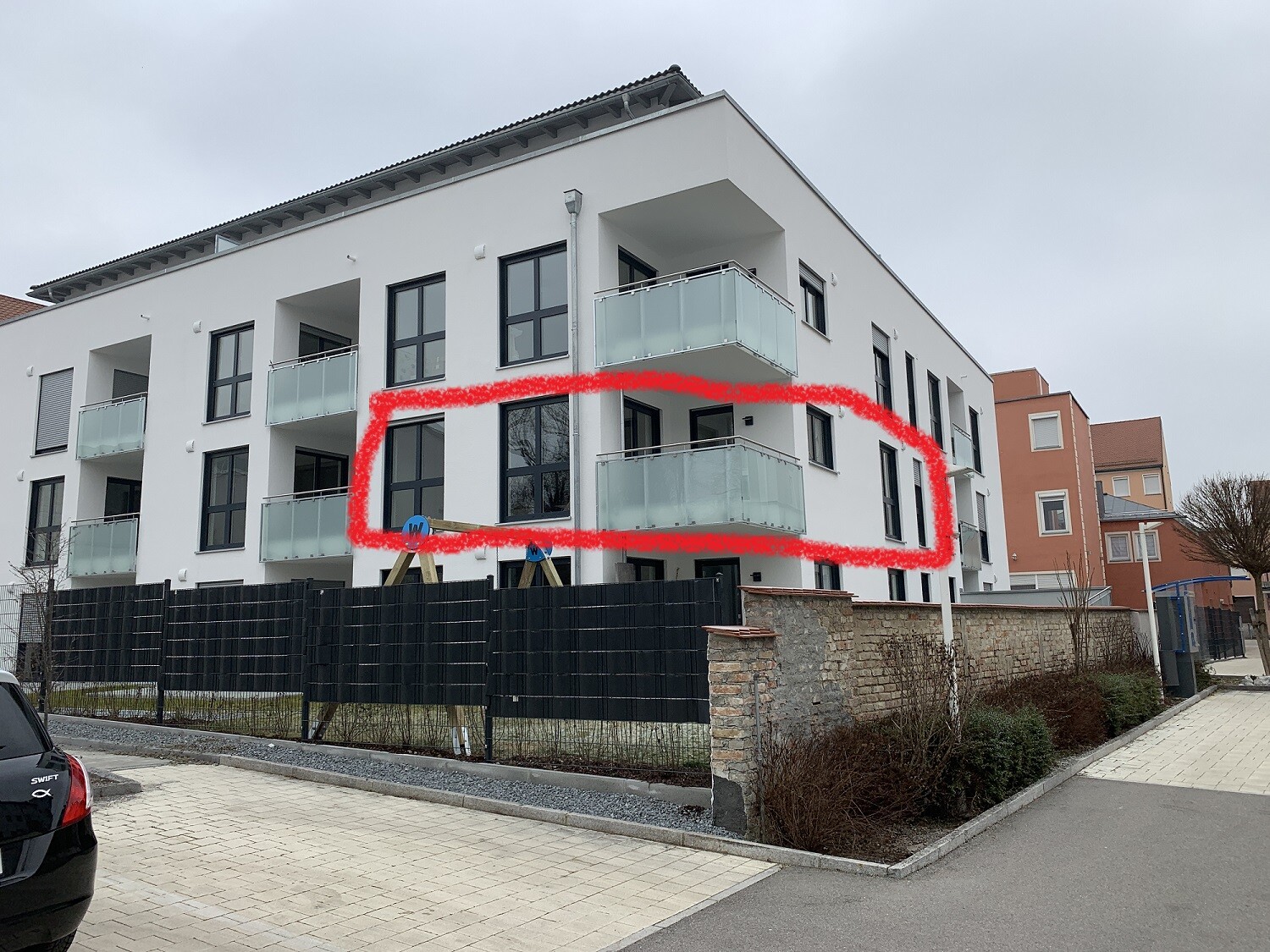

I have rented out a new apartment (built in 2021, KfW-55 standard). The tenant recently informed me that since spring, the indoor temperatures have consistently been at least 25°C (77°F) or higher. On warm days, it even reaches up to 28°C (82°F), although she keeps all the aluminum shutters closed during the day (no home office). Cross-ventilation at night doesn’t bring the temperature below 25°C (77°F). She is asking for advice on how to cool the apartment down a bit during the summer.
What could be causing this?
The apartment has a decentralized ventilation system and underfloor heating, which is naturally turned off in summer.
The apartment faces southwest and has large window areas.
Could it be that the ventilation system continuously brings in warm outside air on hot days, causing the temperature to rise so much?
Should the ventilation system be turned off during the day?
But why doesn’t the apartment cool down at night, even though there seems to be cross-ventilation and the nights are cooler?
Do you have any tips? I am a bit overwhelmed.
Best regards,
Robert
B
Bertram10021 Aug 2022 09:33Forsberg21 schrieb:
Thank you very much. It’s reassuring to hear that turning off the ventilation during the day actually helps. My tenant probably won’t be allowed to use the tip with the cloths, since it’s a homeowners’ association and they would likely complain that the exterior appearance is affected.She can still hang a cloth on the inside, especially when she is not home. Then it can look unattractive or be dark without issue.F
Forsberg2121 Aug 2022 09:48Bertram100 schrieb:
Then she can still hang a cloth from the inside. Especially if she is not at home herself. Then it can be ugly or dark without any problem.That’s true. However, I wonder why the temperature still drops in that case. I’m not familiar with this, but if the heat passes through the aluminum shutters and the window, it’s already inside the apartment. So how can a cloth hung on the inside reduce the temperature?
I just want to understand and do not doubt this measure in any way. It would be great if it really is that simple. My tenant could definitely apply this tip without any problem at the two large windows in the living room.
B
Bertram10021 Aug 2022 09:55If you want to keep the interior cool, you need to insulate the indoor spaces somehow against heat gain. Insulation is partly created by layers of still air. It’s better to manage such a still air layer on the outside, in front of the window. In this case, using shutters helps. Unfortunately, modern shutter materials don’t insulate as well as wood used to. Wood naturally contains still air layers within its structure due to its capillary composition.
If it is not possible or only partially possible to create a still air layer outside, then it can be done inside. A cloth casts a shadow. Linen or other semi-transparent fabrics also do this. This creates a quasi-still air layer between the window and the cloth on the inside. It can get quite warm there, and heat is only slowly transferred to the interior. Theoretically, it would be even better to hang two layers of cloth with some space between them.
I simply used cotton fabric from Ikea for 4 euros per meter (about 4 US dollars per yard). I hang it double (because of the air layers in between 😀) and it produces a “filtered” warm white to yellowish light in the room. At 30°C (86°F) or higher, it’s worth it for me to sit behind curtains.
At night, preferably with cross-ventilation and an HVAC system running, you can air out the warm air layers again. Then the next warm day can come.
If it is not possible or only partially possible to create a still air layer outside, then it can be done inside. A cloth casts a shadow. Linen or other semi-transparent fabrics also do this. This creates a quasi-still air layer between the window and the cloth on the inside. It can get quite warm there, and heat is only slowly transferred to the interior. Theoretically, it would be even better to hang two layers of cloth with some space between them.
I simply used cotton fabric from Ikea for 4 euros per meter (about 4 US dollars per yard). I hang it double (because of the air layers in between 😀) and it produces a “filtered” warm white to yellowish light in the room. At 30°C (86°F) or higher, it’s worth it for me to sit behind curtains.
At night, preferably with cross-ventilation and an HVAC system running, you can air out the warm air layers again. Then the next warm day can come.
F
Forsberg2121 Aug 2022 10:03Thank you very much for the clear explanation!
Do you happen to have a photo of the cotton cloth inside the window?
This issue must concern thousands of people living in new homes who are now complaining about excessively high temperatures…..
Do you happen to have a photo of the cotton cloth inside the window?
This issue must concern thousands of people living in new homes who are now complaining about excessively high temperatures…..
B
Bertram10021 Aug 2022 10:20Yes, almost everyone is surprised by how poorly a new building insulates against heat. People assume that because it’s new, it must be good. It is, but not when it comes to temperature control.
I’m attaching a photo I just took. I’ve had white linen curtains for a week now. You can see them on the curtains in the vertical strip on the far left. My regular linen curtain is hung from the ceiling and stays there all year, mainly as decoration.
Then I have the tried-and-true cheap but ugly suction cup setup mounted directly on the window. A cotton cloth hangs from it, folded double in the upper third. You can clearly see the difference in light penetration. During real heat waves, I fold as much as possible in double layers. Since I got actual curtains, triple layers. 😀 It’s not pitch dark inside, just pleasantly diffused light compared to the bright sunlight outside. If you also lower the exterior roller shutters a bit during the day (the light comes from above, so ideally the upper section covered by the shutters, maybe about 1/3 of the total height), it helps a lot.
With my multiple curtain setup, I’ve managed to keep all rooms under 25.5°C (78°F) throughout the summer. You do have to make some compromises on aesthetics. 😀 Or ask the landlord if they’ll install expensive interior blinds. 😀
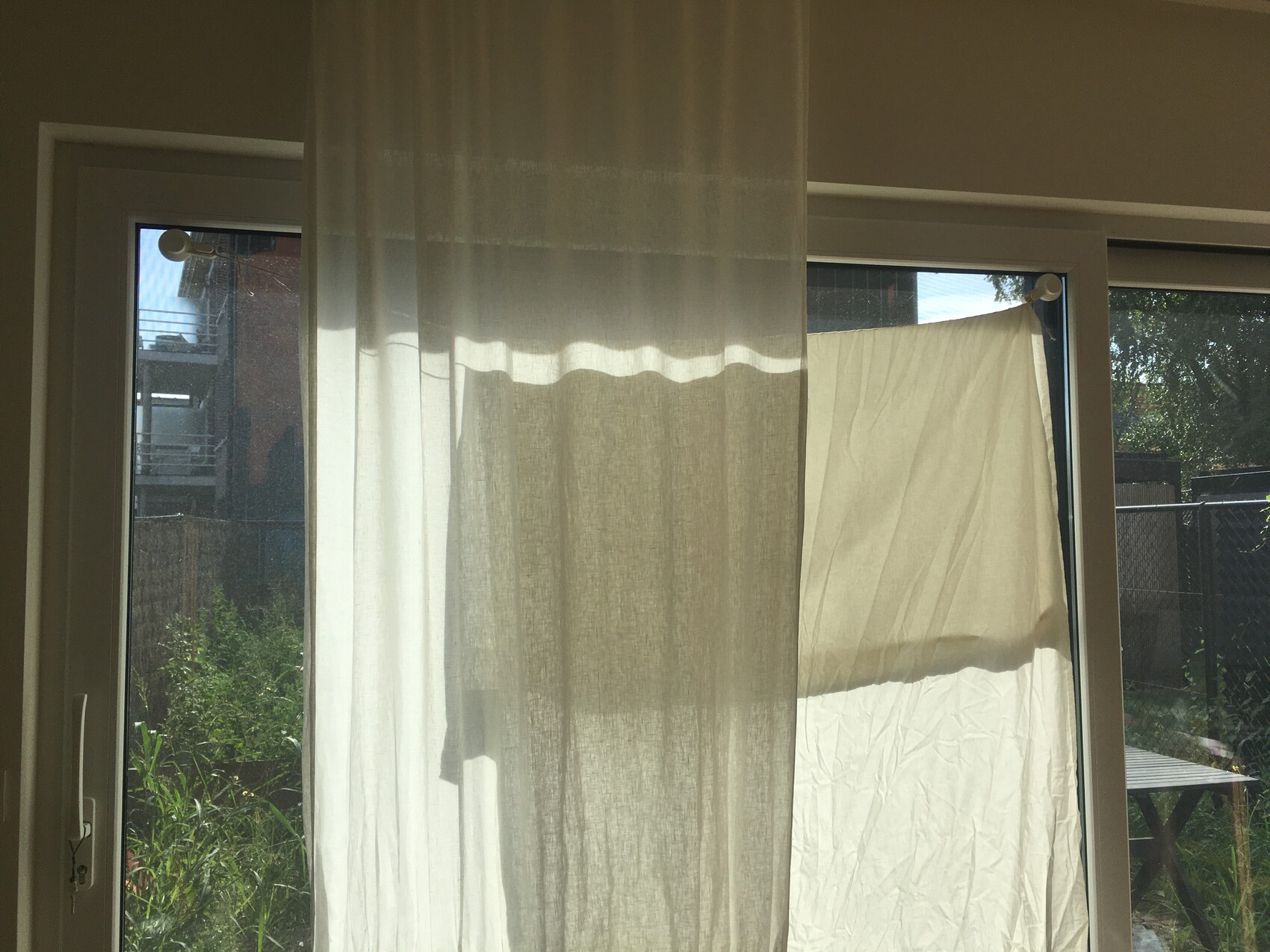
I’m attaching a photo I just took. I’ve had white linen curtains for a week now. You can see them on the curtains in the vertical strip on the far left. My regular linen curtain is hung from the ceiling and stays there all year, mainly as decoration.
Then I have the tried-and-true cheap but ugly suction cup setup mounted directly on the window. A cotton cloth hangs from it, folded double in the upper third. You can clearly see the difference in light penetration. During real heat waves, I fold as much as possible in double layers. Since I got actual curtains, triple layers. 😀 It’s not pitch dark inside, just pleasantly diffused light compared to the bright sunlight outside. If you also lower the exterior roller shutters a bit during the day (the light comes from above, so ideally the upper section covered by the shutters, maybe about 1/3 of the total height), it helps a lot.
With my multiple curtain setup, I’ve managed to keep all rooms under 25.5°C (78°F) throughout the summer. You do have to make some compromises on aesthetics. 😀 Or ask the landlord if they’ll install expensive interior blinds. 😀

Whether the heat pump has a cooling function would need to be checked. However, I find it hard to imagine this in a multi-family building. In that case, there would have to be controls in the rooms or the apartment as well, which would probably have been noticed already.
Hanging cloths in front of the windows—sorry, but as a neighbor, I would also complain. It looks like a slum, no offense intended. Exterior blinds might be an option if retrofitting them wasn’t so difficult. I see a portable air conditioner as a more likely solution (if disabling the ventilation doesn’t help)—though that is unfortunate because of the electricity consumption. Even then, you would need to check whether it’s allowed, how and if it can be installed, and which model would be suitable. But the southwest side is simply the hottest side a house can have.
Hanging cloths in front of the windows—sorry, but as a neighbor, I would also complain. It looks like a slum, no offense intended. Exterior blinds might be an option if retrofitting them wasn’t so difficult. I see a portable air conditioner as a more likely solution (if disabling the ventilation doesn’t help)—though that is unfortunate because of the electricity consumption. Even then, you would need to check whether it’s allowed, how and if it can be installed, and which model would be suitable. But the southwest side is simply the hottest side a house can have.
Similar topics