
ᐅ The garden pond is overflowing into an unknown area. How can I find out where the water is going?
Created on: 25 Feb 2022 15:38
A
ateliersiegel ateliersiegel25 Feb 2022 15:38
For a few years now, we have had a house on a slope and feel comfortable living in it.
On the east side, there is a small attached pool where goldfish live.
When it rains, water flows into it, but it never gets any fuller than usual – which means there is an overflow or a leak somewhere.
I’m surprised that it is even that watertight (considering how it looks), but it is. 😎
The wastewater does NOT go into the public sewer system but seeps away somewhere... I have no idea where that could be...
and unfortunately no idea how to find out.
When it rains and the water (presumably) flows somewhere in the garden, everything is everywhere wet, and I can’t tell if the moisture might be coming from the pool or from the rain.
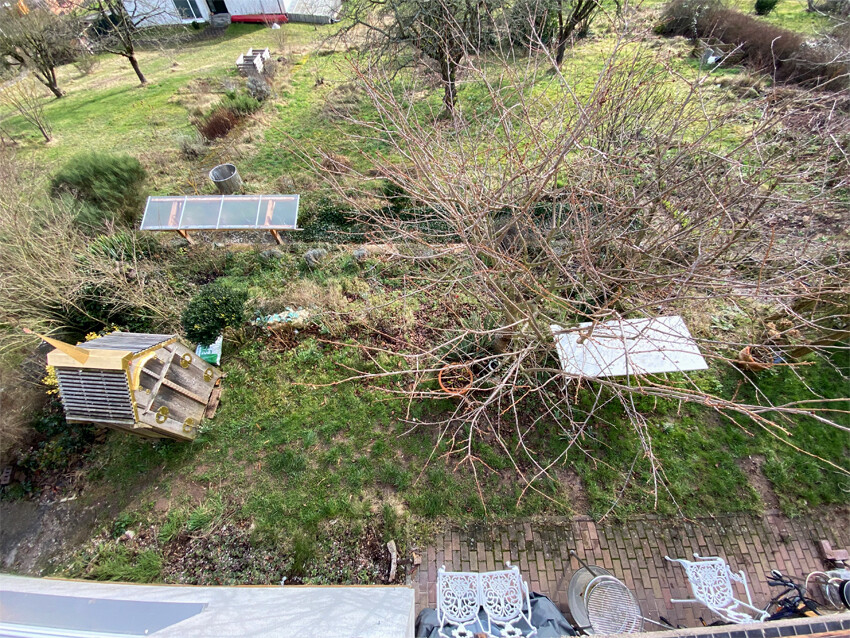
The garden is about 600 sqm (6,458 sq ft) (visible in one of the aerial photos).
I once emptied the pool almost completely (the fish and newts were temporarily kept at the neighbor’s), but the bottom is quite muddy (with lotus plants blooming repeatedly), and I couldn’t find any outlet (which should actually be at the water level).
As long as it works this way, that’s fine, but I would really like to know where the excess water goes.
I assume there is no trick (like with a bicycle tire, submerging it in water to find the leak), but I still want to give it a try: Does anyone have an idea how I could solve this mystery?
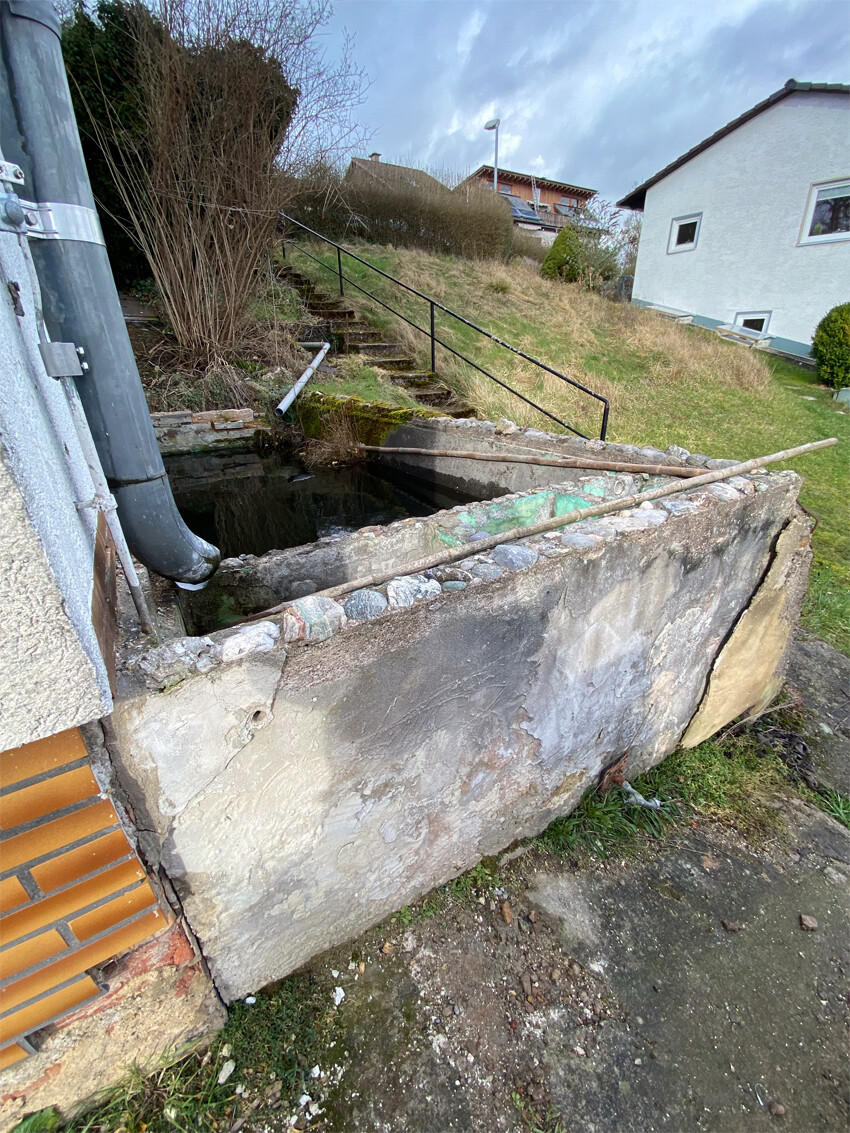
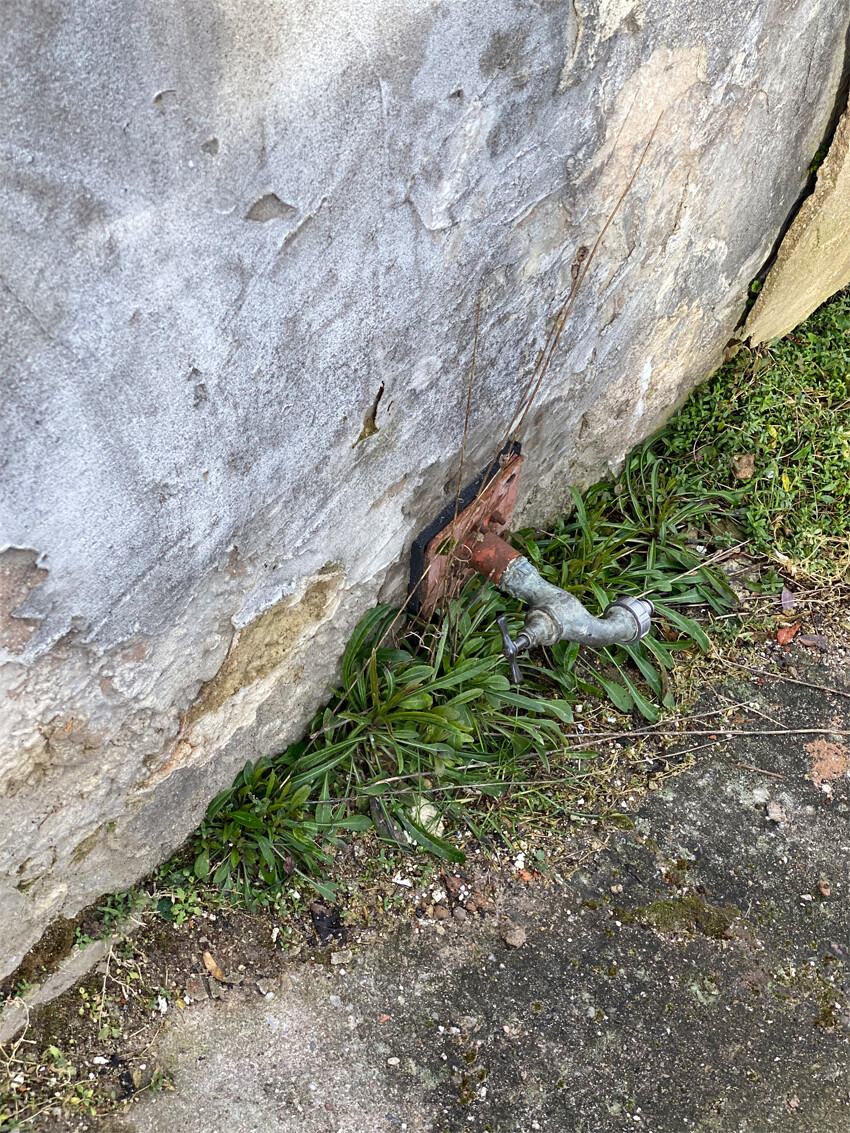
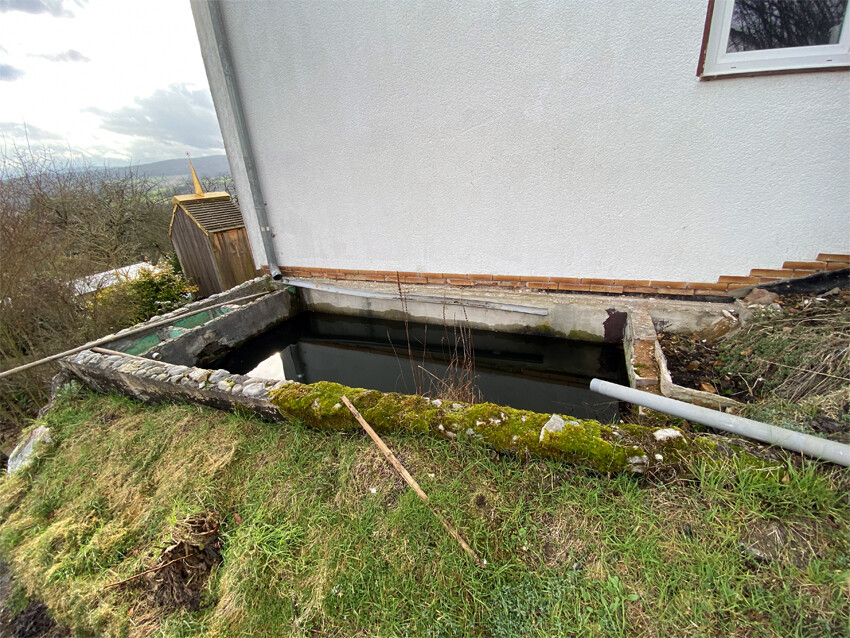
On the east side, there is a small attached pool where goldfish live.
When it rains, water flows into it, but it never gets any fuller than usual – which means there is an overflow or a leak somewhere.
I’m surprised that it is even that watertight (considering how it looks), but it is. 😎
The wastewater does NOT go into the public sewer system but seeps away somewhere... I have no idea where that could be...
and unfortunately no idea how to find out.
When it rains and the water (presumably) flows somewhere in the garden, everything is everywhere wet, and I can’t tell if the moisture might be coming from the pool or from the rain.
The garden is about 600 sqm (6,458 sq ft) (visible in one of the aerial photos).
I once emptied the pool almost completely (the fish and newts were temporarily kept at the neighbor’s), but the bottom is quite muddy (with lotus plants blooming repeatedly), and I couldn’t find any outlet (which should actually be at the water level).
As long as it works this way, that’s fine, but I would really like to know where the excess water goes.
I assume there is no trick (like with a bicycle tire, submerging it in water to find the leak), but I still want to give it a try: Does anyone have an idea how I could solve this mystery?
 KingJulien25 Feb 2022 15:47
ateliersiegel schrieb:
When it rains and the water presumably flows somewhere in the garden, it’s obviously wet everywhere, and I can’t tell if the moisture comes from the pool or from the sky. On a bright sunny day:
1. Hang the hose in and turn it on
2. Open a beer and sit down nearby
3. Watch
Even if you don’t find anything, at least you tried 😎
ateliersiegel25 Feb 2022 16:12Good idea.
I hadn't thought of that before because water is quite expensive here (Northern Hesse), which is why we are using the rainwater system.
But for this purpose, I will definitely give it some more thought 😎
Thanks
I hadn't thought of that before because water is quite expensive here (Northern Hesse), which is why we are using the rainwater system.
But for this purpose, I will definitely give it some more thought 😎
Thanks

S
Smialbuddler25 Feb 2022 16:42There is a type of leak detection dye, which is a water-soluble powder that can, for example, color your water neon pink. It is originally intended for detecting issues inside buildings. However, it should also work well in the garden to clearly show where the water from a pond travels. There are also versions that can only be seen under UV light, so everything doesn’t stay colored permanently.
Since it is also designed for roofs and terraces, it should be environmentally friendly. However, if you are concerned about fish, you would likely need to temporarily catch them and then replace the water afterwards.
Since it is also designed for roofs and terraces, it should be environmentally friendly. However, if you are concerned about fish, you would likely need to temporarily catch them and then replace the water afterwards.
ateliersiegel25 Feb 2022 19:305 buckets will hardly be enough. Since I usually don’t know of any natural source in the garden (meaning no spot where water naturally flows out), I assume much more recharge would be needed.
... but the idea of doing it “in sunshine” is probably the right one.
... but the idea of doing it “in sunshine” is probably the right one.
Similar topics