
Just out of curiosity, to better understand the slope of the heating curve, what flow temperatures do you typically run at 0°C (32°F) outdoor temperature, given a certain indoor temperature and insulation level, when using a combination of underfloor heating and a heat pump?
Background of the question:
My logic tells me that if I want, for example, 22°C (72°F) room temperature, the flow temperature must be at least 22°C (72°F) or higher, since I learned that there needs to be a temperature difference for heat transfer to occur.
So if my heating system turns on at 12°C (54°F) outdoor temperature, my flow temperature should logically start somewhere around 22°C–25°C (72°F–77°F). Accordingly, at only 5°C (41°F) outside, it should be around 27°C (81°F), and at 0°C (32°F) close to 30°C (86°F).
The system design usually takes the location and outdoor temperature down to about –12°C (10°F). If at 0°C (32°F) flow temperature is already 30°C (86°F) according to my logic, then at –12°C (10°F) the flow temperature should be about 40°C (104°F). But most underfloor heating designs for heat pumps are based on a maximum flow temperature of 35°C (95°F).
Of course, the insulation of the house and the indoor temperatures still play a role. Or is the increase in flow temperature actually so gradual that it only rises by about 0.5–1°C (1–2°F) for outdoor temperature drops in 0–5°C (0–9°F) increments?
Background of the question:
My logic tells me that if I want, for example, 22°C (72°F) room temperature, the flow temperature must be at least 22°C (72°F) or higher, since I learned that there needs to be a temperature difference for heat transfer to occur.
So if my heating system turns on at 12°C (54°F) outdoor temperature, my flow temperature should logically start somewhere around 22°C–25°C (72°F–77°F). Accordingly, at only 5°C (41°F) outside, it should be around 27°C (81°F), and at 0°C (32°F) close to 30°C (86°F).
The system design usually takes the location and outdoor temperature down to about –12°C (10°F). If at 0°C (32°F) flow temperature is already 30°C (86°F) according to my logic, then at –12°C (10°F) the flow temperature should be about 40°C (104°F). But most underfloor heating designs for heat pumps are based on a maximum flow temperature of 35°C (95°F).
Of course, the insulation of the house and the indoor temperatures still play a role. Or is the increase in flow temperature actually so gradual that it only rises by about 0.5–1°C (1–2°F) for outdoor temperature drops in 0–5°C (0–9°F) increments?
tomtom79 schrieb:
How many meters (feet) is the pipe in the bathroom?
You can increase the flow at the Taco valve and the control valve; for that, you need a square key.
And with the whisper mode activated, you also reduce the pump performance... so your hot water finds the easiest path.The Taccosetter for the bathroom is already fully open. I need to test the whisper mode; I thought it only reduces the compressor capacity.

A
Alessandro1 Nov 2021 08:41What does your hydraulic system look like?
The design for 35°C (95°F) flow temperature on NAT is already being met.
However, this usually means that a target room temperature of only 20°C (68°F) is assumed.
As a result, the bathroom is undersupplied for a temperature of 22–24°C (72–75°F). Increasing the flow rate won’t solve this.
The only solution is to raise the flow temperature.
The design for 35°C (95°F) flow temperature on NAT is already being met.
However, this usually means that a target room temperature of only 20°C (68°F) is assumed.
As a result, the bathroom is undersupplied for a temperature of 22–24°C (72–75°F). Increasing the flow rate won’t solve this.
The only solution is to raise the flow temperature.

tomtom79 schrieb:
And is the valve fully open? The actuator is usually placed on that.
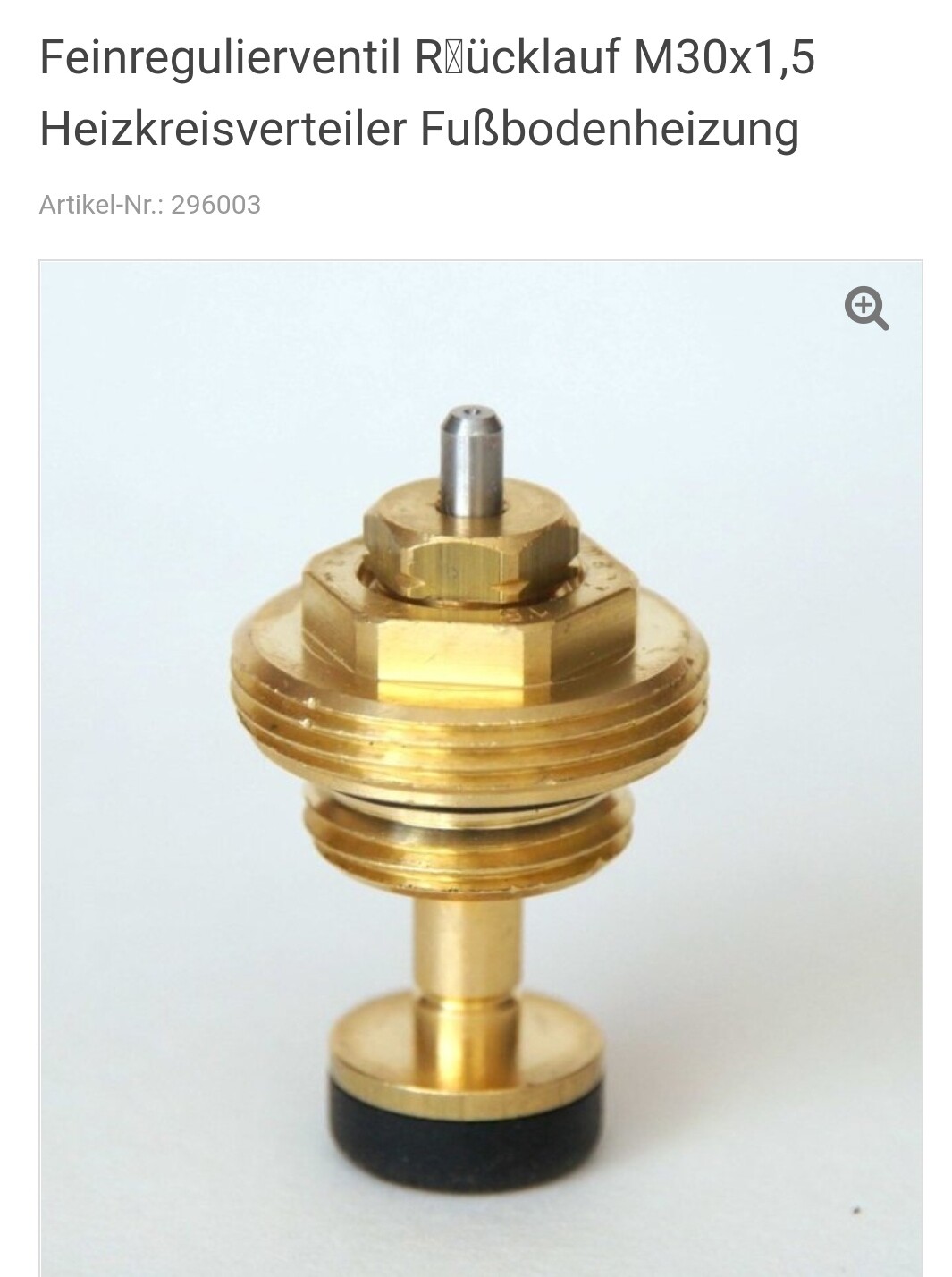
Under the actuator I have something similar, but not a hex nut—instead, it's the "radiator square spindle" for the part beneath the actuator's pin. If I turn that out, does it increase the flow, or does it simply adjust the end stop of the actuator's travel?
With my valve, I adjusted the return side but didn't notice any change in flow.
Put differently, what exactly does one have to adjust to remove the flow restriction?
Alessandro schrieb:
What does your hydraulic system look like?
The design complies with 35°C (95°F) flow temperature on NAT.
However, this usually means that the target room temperature is set at only 20°C (68°F).
This results in the bathroom being underheated for a temperature of 22-24°C (72-75°F). You won’t fix this by increasing the flow rate.
The only solution here is to raise the flow temperature... Yes, that may be true—that I can only raise the temperature in the bathroom by increasing the flow temperature. The question then is whether I should raise the flow temperature for all heating circuits to reach around 22°C (72°F) in the bathroom or just install an electric towel radiator there, which I could operate on a timer or as needed... Madame actually wants something like that anyway to hang towels and dry them faster...
Similar topics