
Just out of curiosity, to better understand the slope of the heating curve, what flow temperatures do you typically run at 0°C (32°F) outdoor temperature, given a certain indoor temperature and insulation level, when using a combination of underfloor heating and a heat pump?
Background of the question:
My logic tells me that if I want, for example, 22°C (72°F) room temperature, the flow temperature must be at least 22°C (72°F) or higher, since I learned that there needs to be a temperature difference for heat transfer to occur.
So if my heating system turns on at 12°C (54°F) outdoor temperature, my flow temperature should logically start somewhere around 22°C–25°C (72°F–77°F). Accordingly, at only 5°C (41°F) outside, it should be around 27°C (81°F), and at 0°C (32°F) close to 30°C (86°F).
The system design usually takes the location and outdoor temperature down to about –12°C (10°F). If at 0°C (32°F) flow temperature is already 30°C (86°F) according to my logic, then at –12°C (10°F) the flow temperature should be about 40°C (104°F). But most underfloor heating designs for heat pumps are based on a maximum flow temperature of 35°C (95°F).
Of course, the insulation of the house and the indoor temperatures still play a role. Or is the increase in flow temperature actually so gradual that it only rises by about 0.5–1°C (1–2°F) for outdoor temperature drops in 0–5°C (0–9°F) increments?
Background of the question:
My logic tells me that if I want, for example, 22°C (72°F) room temperature, the flow temperature must be at least 22°C (72°F) or higher, since I learned that there needs to be a temperature difference for heat transfer to occur.
So if my heating system turns on at 12°C (54°F) outdoor temperature, my flow temperature should logically start somewhere around 22°C–25°C (72°F–77°F). Accordingly, at only 5°C (41°F) outside, it should be around 27°C (81°F), and at 0°C (32°F) close to 30°C (86°F).
The system design usually takes the location and outdoor temperature down to about –12°C (10°F). If at 0°C (32°F) flow temperature is already 30°C (86°F) according to my logic, then at –12°C (10°F) the flow temperature should be about 40°C (104°F). But most underfloor heating designs for heat pumps are based on a maximum flow temperature of 35°C (95°F).
Of course, the insulation of the house and the indoor temperatures still play a role. Or is the increase in flow temperature actually so gradual that it only rises by about 0.5–1°C (1–2°F) for outdoor temperature drops in 0–5°C (0–9°F) increments?
lesmue79 schrieb:
Or is the increase in supply temperatures so gradual that it only rises by 0.5–1°C (0.9–1.8°F) with outdoor temperature jumps of 0–5°C (32–41°F) steps?Last winter you identified the heating curve at 0.1. A look in the manual answers the question. Some heat pumps even show directly on the display which supply temperature is delivered at which outdoor temperature.For the heat pump to operate efficiently, the required flow rate must be achieved. Please show the heating circuit valve with the flow rates. What are the calculated flow rates? Are the ERR (energy recovery ventilations) now disabled?
Please provide more data about your setup.
R
RotorMotor24 Oct 2021 11:30lesmue79 schrieb:
My logic tells me that if I want, for example, 22°C (72°F) room temperature, I need a supply temperature of at least 22°C (72°F) or higher, meaning there must be a temperature difference, because I learned that heat transfer requires a temperature difference? Exactly right.
lesmue79 schrieb:
So if my heating system turns on at 12°C (54°F) outside temperature, according to my logic the supply temperature should start somewhere around 22°C to 25°C (72°F to 77°F)? And accordingly, at only 5°C (41°F) outside temperature it should be around 27°C (81°F), and at 0°C (32°F) it should be close to 30°C (86°F). I don’t really see how you arrive at this specific curve or progression.
It could just as well be 23°C (73°F) supply temperature at 12°C (54°F) outside, and then 24°C (75°F) supply at 0°C (32°F) outside.
Or any other variation, really. ;-)
And you are only asking about supply temperature at certain outside temperatures and insulation levels.
But at least pipe spacing, floor coverings, flow rate, circuit length, solar (and other) gains must also be considered.
Yes, last winter (my first winter living in the house) I already tried to make rough initial adjustments. Since then, the bypass valve has remained closed, and the actuator controlled by the arau thermostat is permanently open (except in the utility room, which is already warm enough due to the photovoltaic inverter and the heating circuit pump).
Currently, I have increased the slope to 0.15 and raised the base temperature via the desired temperature setting to 22°C (71.6°F) (if that’s the correct term). According to the heat pump, the flow rate is currently about 500 liters (132 gallons). All rooms are around 21°C (69.8°F). The guest room and bedroom could be throttled further because they can be cooler, but that doesn’t make sense as the bathroom lies in between and heats both rooms as well.
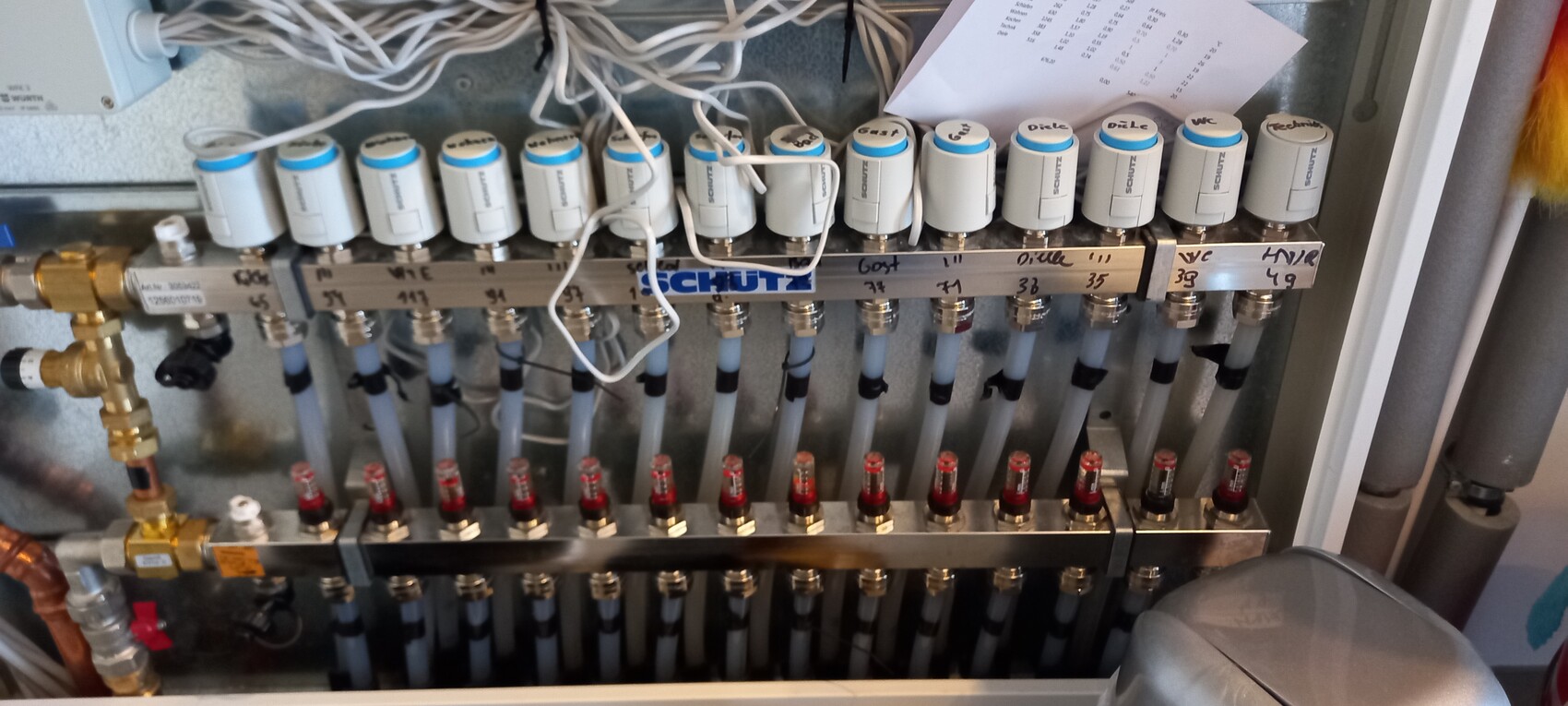
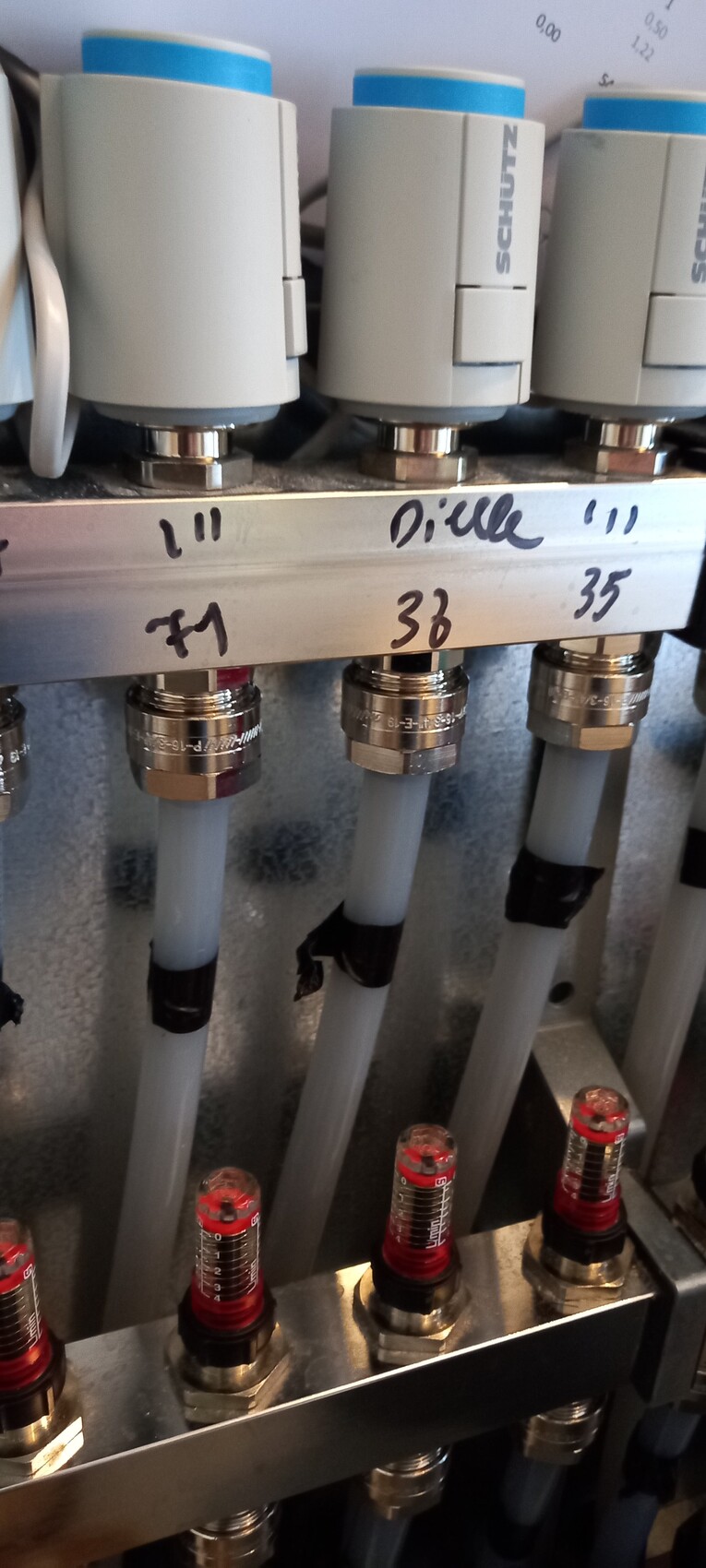
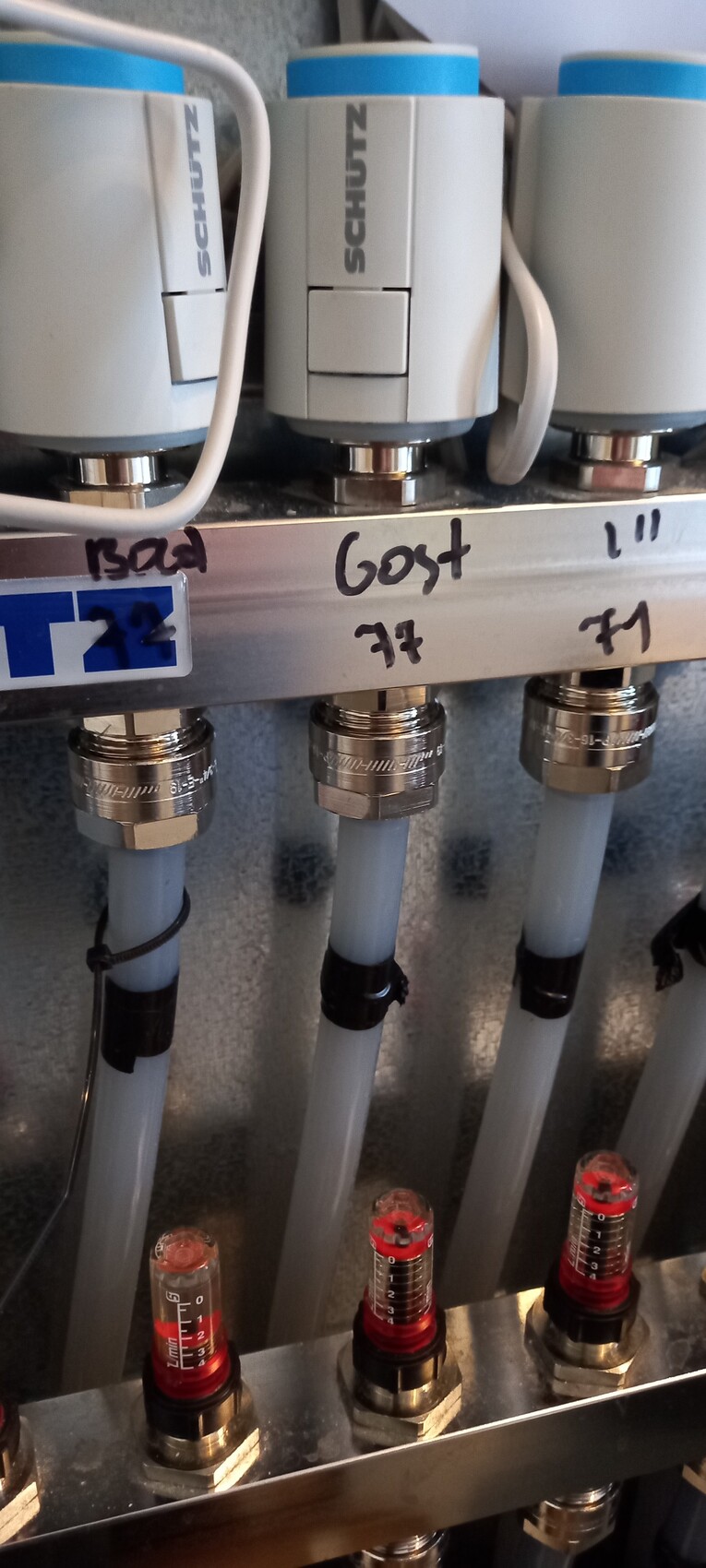
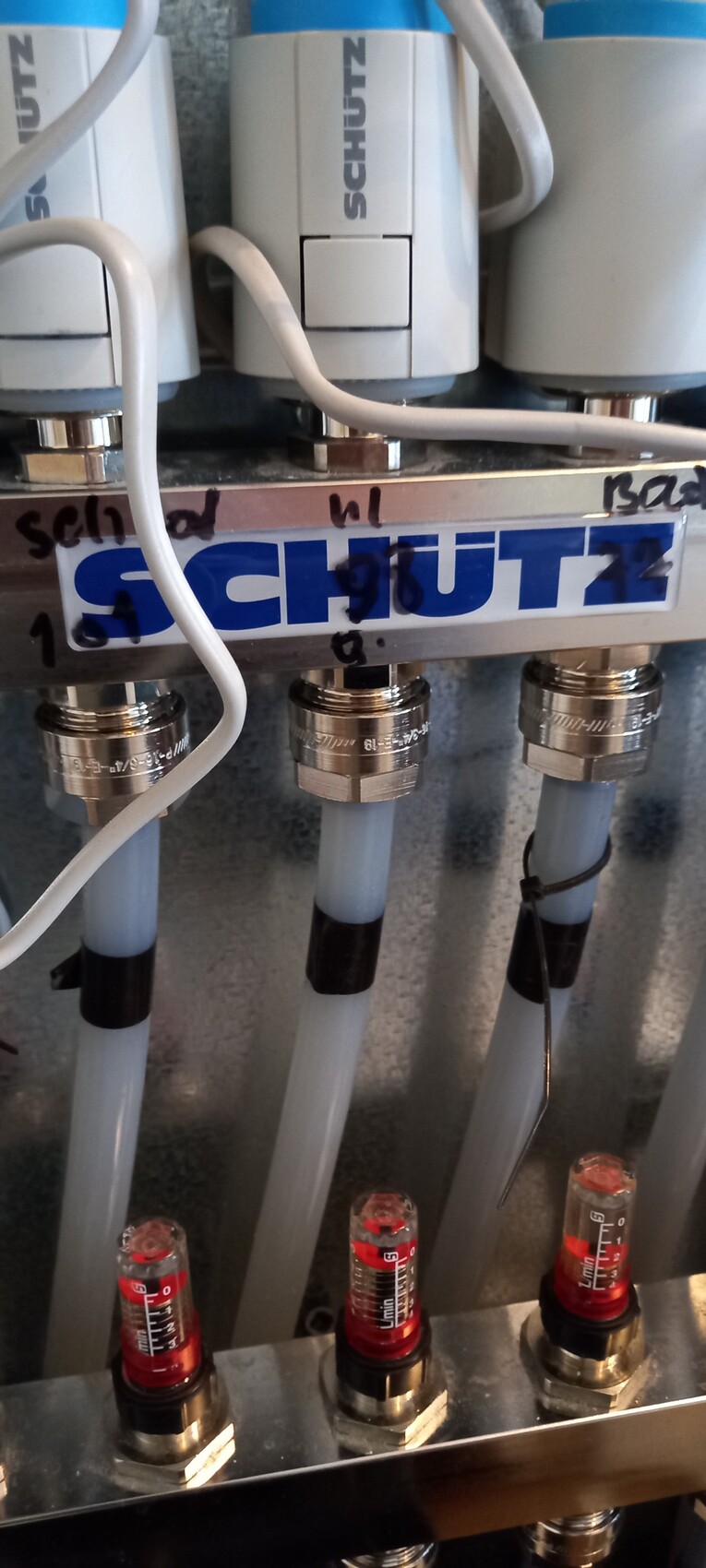
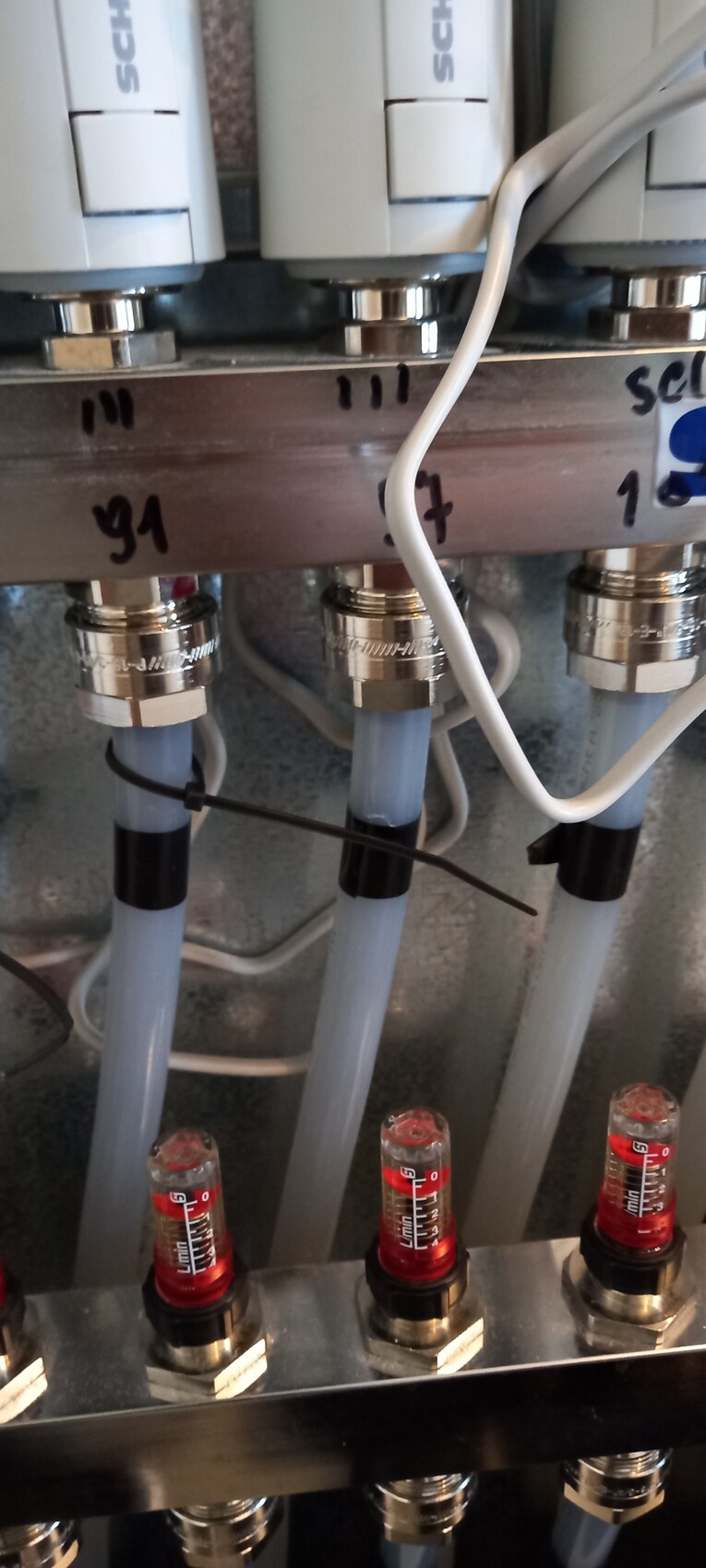
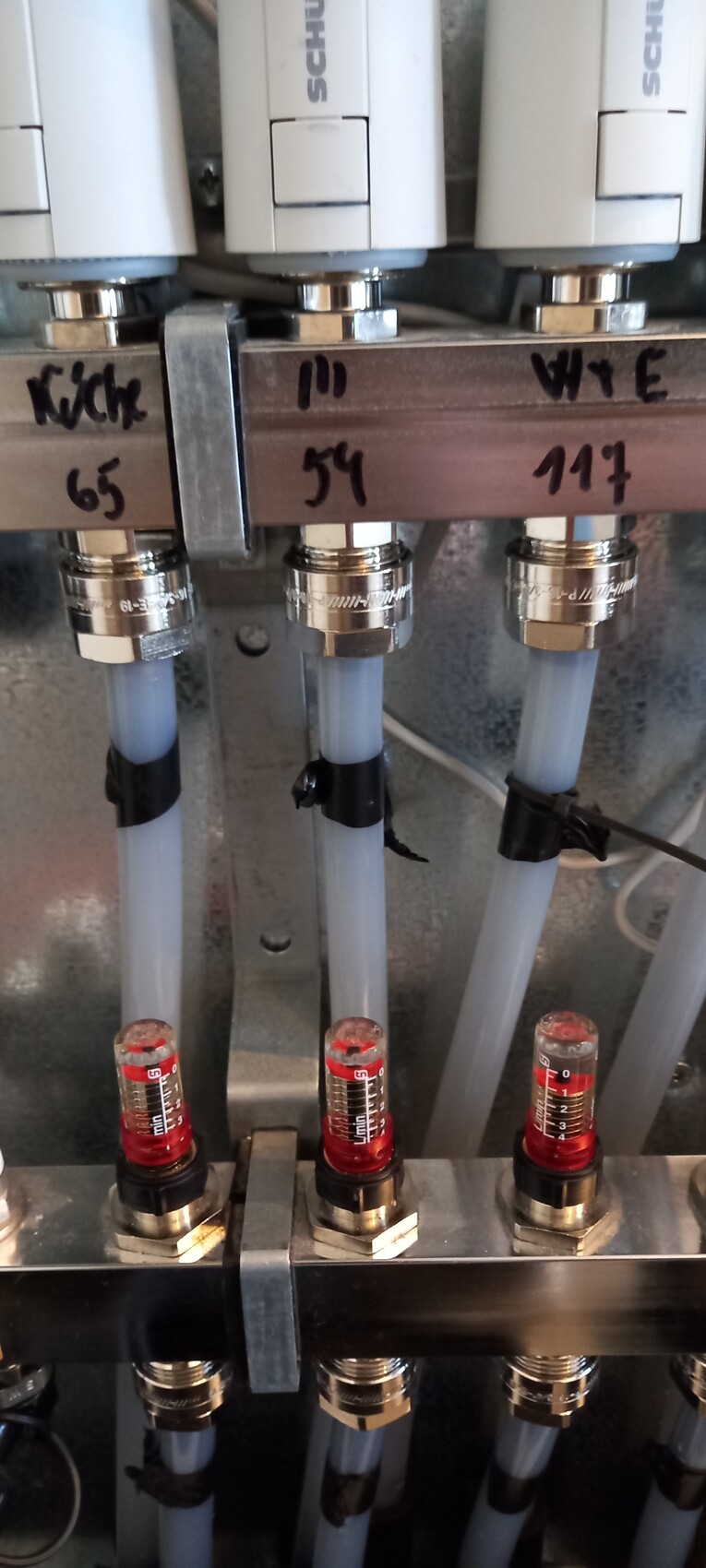
Currently, I have increased the slope to 0.15 and raised the base temperature via the desired temperature setting to 22°C (71.6°F) (if that’s the correct term). According to the heat pump, the flow rate is currently about 500 liters (132 gallons). All rooms are around 21°C (69.8°F). The guest room and bedroom could be throttled further because they can be cooler, but that doesn’t make sense as the bathroom lies in between and heats both rooms as well.
D
Daniel-Sp24 Oct 2021 13:09Are the actuators connected to a separate electrical circuit? If so, you can disconnect them and switch off the circuit breaker. This way, you save energy.
lesmue79 schrieb:
Current flow rate according to the heat pump is around 500 liters.Please add up all the values at the heating circuit distributor (HKV)! Except for the bathroom and washing/utility room, almost everything seems to be “choked off.” I don’t see more than 5 L/min (about 1.3 US gallons per minute) —> 300 there.
There’s one of those “great” buffer tanks involved again.
What values does the heating curve (supply temperature) show with the current settings?
Similar topics