
ᐅ Floating solid hardwood flooring installation—any experiences?
Created on: 19 Sep 2020 12:14
P
pagoni2020
Hello,
since we have screwed solid wood planks on joists in almost the entire house for many years and really liked it, we are now considering whether to choose solid wood planks again in the new house, but this time with underfloor heating and therefore directly on the screed.
We do not want an adhesive floor, so we are looking for experiences with floating solid wood plank installations.
since we have screwed solid wood planks on joists in almost the entire house for many years and really liked it, we are now considering whether to choose solid wood planks again in the new house, but this time with underfloor heating and therefore directly on the screed.
We do not want an adhesive floor, so we are looking for experiences with floating solid wood plank installations.
H
hampshire21 Sep 2020 09:36KingJulien schrieb:
Someone really loves their floor! That’s true enthusiasm. And that makes it worthwhile to install it just as well. Great.
nordanney schrieb:
That’s how I walk on my glued and absolutely beautiful parquet as well. There is no difference compared to floating installation. It’s similar to the "sound" of speaker cables… A typical “if I don’t understand it, it doesn’t exist” attitude. Besides what can be experienced, there are also measurable parameters that show differences in floor construction. For example, thermal conductivity – as @fach1werk correctly points out:
fach1werk schrieb:
I’m missing the physics!
If an underfloor heating system is embedded in the screed... Exactly – a floor like Scout’s is not efficiently compatible with underfloor heating.
@pagoni2020 There are alternatives to underfloor heating. Masonry stoves, wall heating, direct heat pumps, radiators (which can also be aesthetically designed, for example, by Tubes Radiatori or similar)… If you care so much about the floor, look into adapting the heating system accordingly.
Off-topic comments:
Tolentino schrieb:
Otherwise, you can measure differences. That referred to speaker cables. The comment is incorrect. At the moment you measure cables frequency-dependent, you will also find very amusing differences in the audible low-frequency range. Changes in frequency response are acoustically relevant in the audible range – what else? That most high-end cable manufacturers set their prices purely for commercial reasons rather than manufacturing costs and that cable development is mostly empirical or often not done at all is, of course, another matter. Exceptions are rare. I know the industry very well.

hampshire schrieb:
Off-topic comments:
This referred to speaker cables. The comment is incorrect. The moment you measure cables depending on frequency, you will also find some interesting differences in the audible low-frequency range. Changes in frequency response are acoustically relevant in the audible range—what else? That most high-end cable manufacturers price their products purely for commercial reasons rather than based on production costs, and that cable development is often empirical or sometimes doesn’t happen at all, is of course another matter. Exceptions are rare. I am very familiar with the industry.Yes, sorry for going off-topic. Just one more thing: I come from the audio industry. It may be true that measurable differences exist in the audible frequency range. But when various double-blind tests show that identifying a supposed difference performs no better than random choice, it remains purely theoretical. I recommend anyone who believes in this to participate in such a test. Unfortunately, it is relatively time-consuming if you really want to eliminate all other reasons for differences. And, as I said, it also depends on what is being compared. We didn’t test doorbell wire, and I actually believe there are audible differences compared to a cable with a normal cross-sectional area.
fach1werk schrieb:
For effective heat transfer, you basically need a mechanical bond. Al Tolentino schrieb:
I recommend anyone who believes in this to participate in such a test. Unfortunately, it is quite demanding if you really want to eliminate all other reasons for differences.
And, as mentioned, it also depends on what you are comparing. We didn’t test bell wire; I also believe there are actually audible differences compared to a cable with a standard conductor cross-section. I did my diploma thesis 20 years ago at the Fraunhofer Society—just one door down was the psychoacoustics group (the ones who developed the MP3 standard. K.H. Brandenburg and Dieter Seitzer were often there). When I seriously asked what they would recommend for speaker cables at home—laughter, pats on the back, “voodoo,” “we can only measure differences here, but they are not significant for test subjects,” “no more than 30 Marks, connectors should be good, cross-section not too small, the rest doesn’t matter.”
P
pagoni202021 Sep 2020 11:38HarvSpec schrieb:
Attached are some construction photos: screwed solid wood planks (oak) with underfloor heating without screed
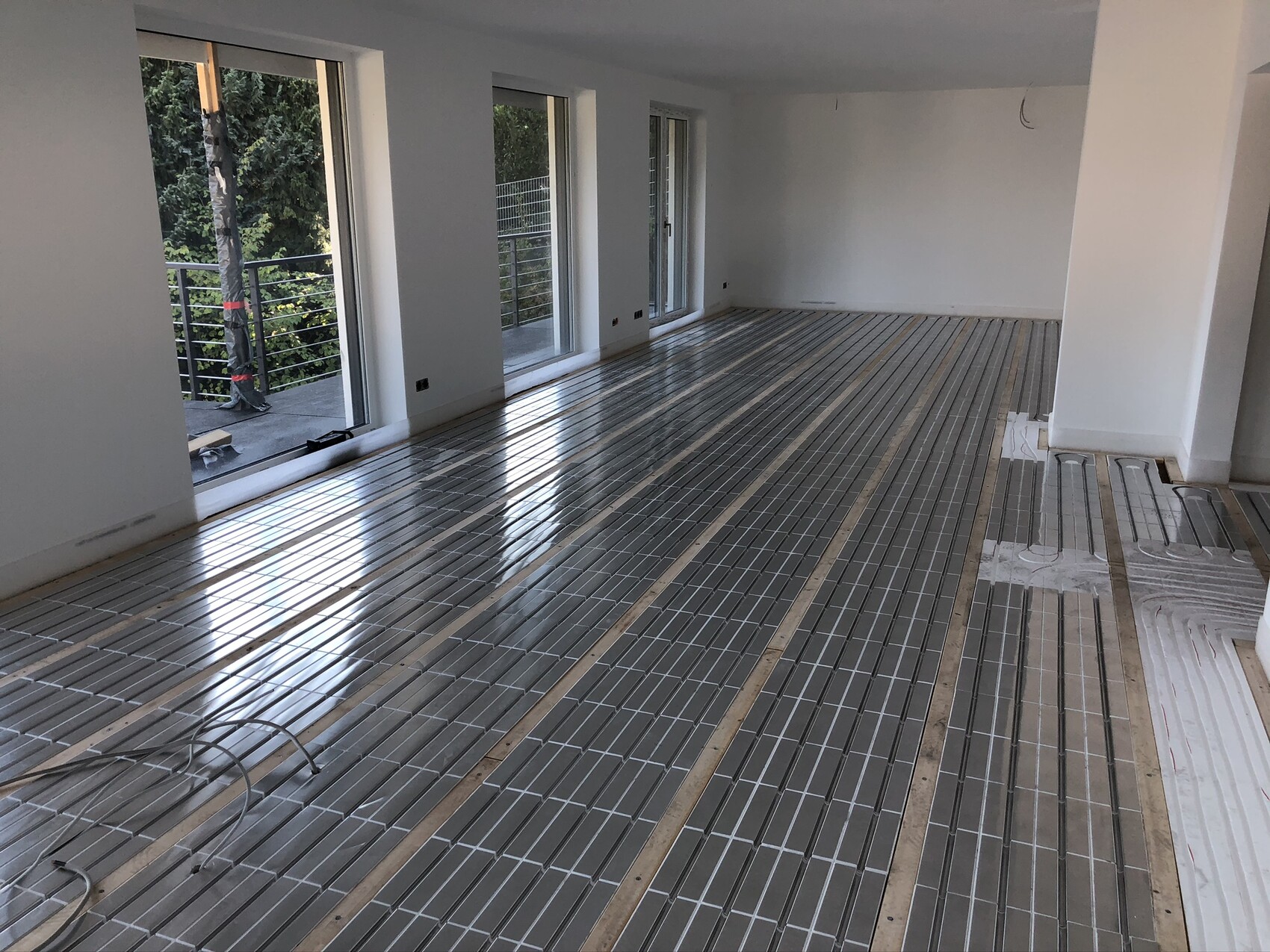
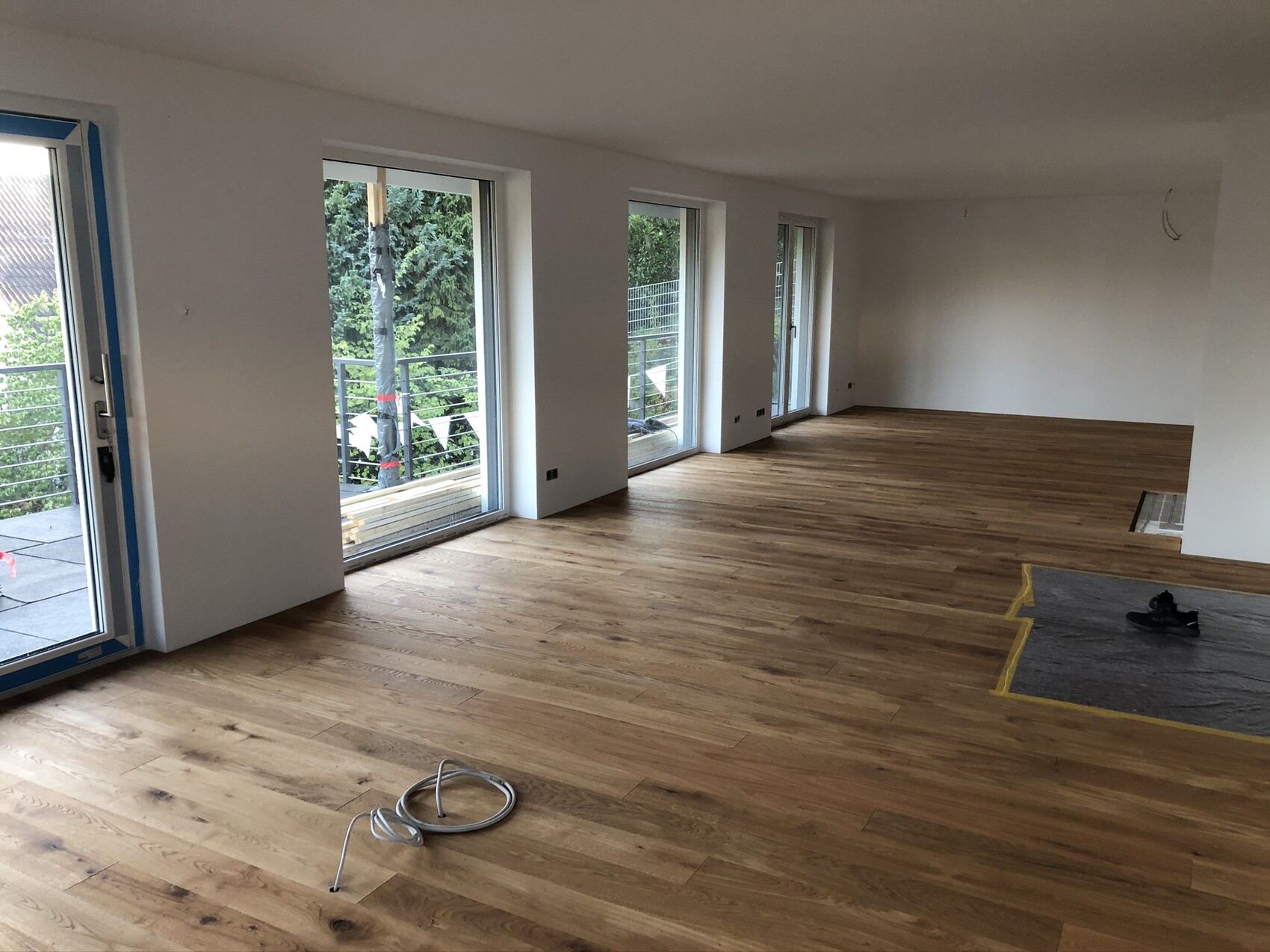
Many thanks for your photos.
As I see, you also have a new build.
I am interested in details about why you chose this solution and would appreciate some information about the floor construction, among other things. Feel free to send me a private message.
Unfortunately, PN is not an option.
This is not a new build but a major renovation of a Swedish wooden house from 1967.
The main reasons for choosing this system are:
- No moisture infiltration into the structure
- Low build-up height (5-6cm (2-2.4 inches), including floorboards and leveling layer)
We definitely wanted to install solid wood floorboards. Gluing these onto a thin-layer underfloor heating system (with leveling compound) doesn't work. Hence, the solution with joists. A positive effect: the floor has a slight springiness (really minimal), which provides a very pleasant walking experience for us. A negative effect: the floor is not completely silent—you can hear the wood move slightly when walking on it (no squeaking or anything like that, just different from glued floors), but I don’t find it problematic.
The shortened construction time by eliminating the screed is of course significant. However, this system is more expensive upfront.
Feel free to ask any questions.
This is not a new build but a major renovation of a Swedish wooden house from 1967.
The main reasons for choosing this system are:
- No moisture infiltration into the structure
- Low build-up height (5-6cm (2-2.4 inches), including floorboards and leveling layer)
We definitely wanted to install solid wood floorboards. Gluing these onto a thin-layer underfloor heating system (with leveling compound) doesn't work. Hence, the solution with joists. A positive effect: the floor has a slight springiness (really minimal), which provides a very pleasant walking experience for us. A negative effect: the floor is not completely silent—you can hear the wood move slightly when walking on it (no squeaking or anything like that, just different from glued floors), but I don’t find it problematic.
The shortened construction time by eliminating the screed is of course significant. However, this system is more expensive upfront.
Feel free to ask any questions.
Similar topics