
Hello,
my heating system has been running for just over a year now. By chance, I recently noticed discoloration on the flow meters, see picture.
I filed a defect report with the general contractor, stating that the heating water appears rusty/sludgy, as evidenced by the flow meters. Their response was a casual statement that some discoloration on the flow meters is normal to a certain extent and that if there is a serious malfunction of the underfloor heating, it will of course be fixed.
Do your flow meters look like this as well?
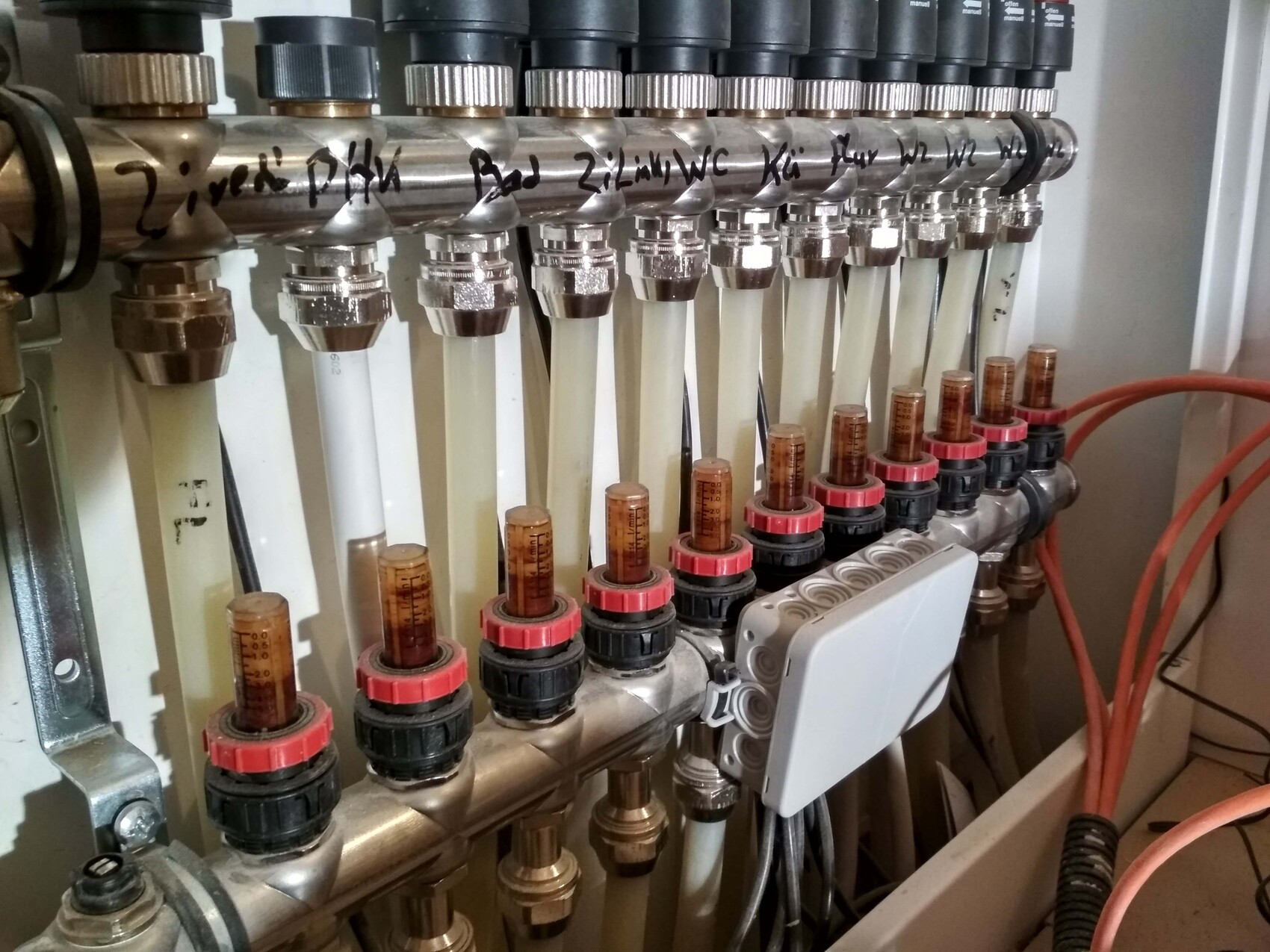
my heating system has been running for just over a year now. By chance, I recently noticed discoloration on the flow meters, see picture.
I filed a defect report with the general contractor, stating that the heating water appears rusty/sludgy, as evidenced by the flow meters. Their response was a casual statement that some discoloration on the flow meters is normal to a certain extent and that if there is a serious malfunction of the underfloor heating, it will of course be fixed.
Do your flow meters look like this as well?

cinderella21 schrieb:
I find it strange that neither a magnetic dirt separator nor a microbubble separator was installed in our system. This is by no means strange but common practice. If not ordered, it will not be installed. Since it is not always necessary.
cinderella21 schrieb:
And I wonder why a standard steel towel radiator was installed and regular carbon steel pipes from the manifold of the underfloor heating on the upper floor to the towel radiator in the bathroom. Is this faulty work? No, this is not faulty work, but also not high-level engineering. As you were advised, have the circuits flushed, filled with demineralized (DI) water, and if possible add a corrosion inhibitor to the system.
The steel pipes and radiator are obviously not ideal, but they meet standard regulations. Here you can and should take action yourself and, if necessary, replace everything with higher-quality materials.
Also, check the expansion vessel. It is often made of simple steel as well.
C
cinderella2126 Jan 2019 18:03And who is supposed to pay for that?
We don’t have the money to have the floor removed and replace the pipes. That costs at least 10,000 euros (or more).
We don’t have the money to have the floor removed and replace the pipes. That costs at least 10,000 euros (or more).
cinderella21 schrieb:
And who is supposed to pay for that?
We don’t have the money to tear out the floor and replace the pipes. That’s at least 10,000 euros if not more.Why? Flushing is done through the heating circuit distributor, and the dirt separator is installed somewhere in the technical area on an accessible section of the supply or, preferably, the return line.
Flushing and refilling takes about one day of work plus a few cubic meters of water.
The dirt separator costs around 100 euros plus one hour of installation.
Add travel costs, so it totals roughly 500–600 euros plus tax.

C
cinderella2127 Jan 2019 09:19Mycraft wrote that it makes sense to replace the pipes, which is why I mentioned the minimum cost of 10,000 euros.
If we now flush, refill, install a sludge separator, and have regular maintenance performed, will our heating system have a normal lifespan, or should I expect that the pipes or the entire system will be corroded through after a few years?
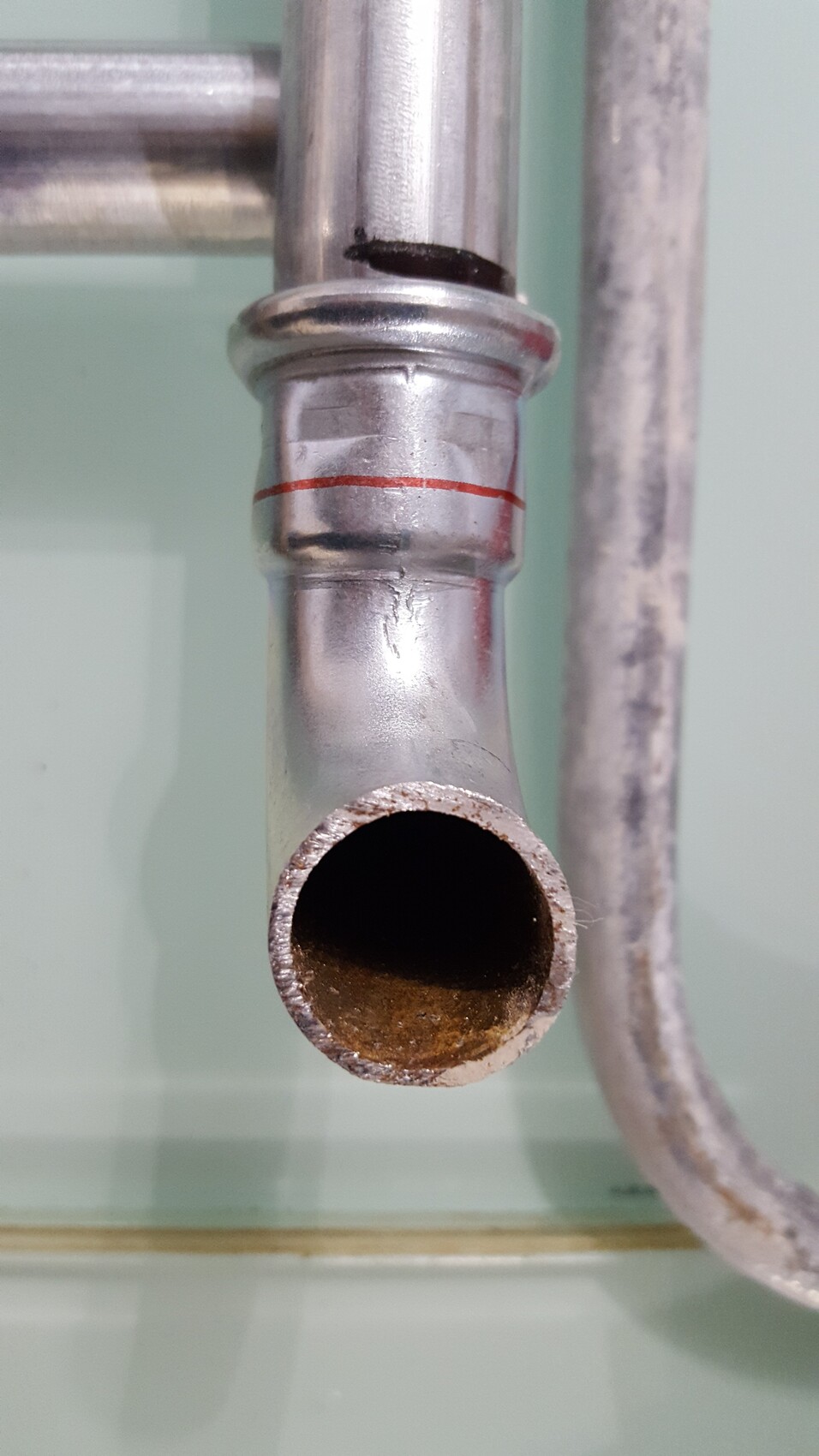
The picture shows a pipe that was replaced after water damage (due to material or workmanship failure) because it started to rust from the outside. The building insurance is currently investigating who is responsible.
Is it normal for a carbon steel pipe to look like this inside, or should I be concerned?
If we now flush, refill, install a sludge separator, and have regular maintenance performed, will our heating system have a normal lifespan, or should I expect that the pipes or the entire system will be corroded through after a few years?
The picture shows a pipe that was replaced after water damage (due to material or workmanship failure) because it started to rust from the outside. The building insurance is currently investigating who is responsible.
Is it normal for a carbon steel pipe to look like this inside, or should I be concerned?
Similar topics