
Hello everyone,
This is my first post in the forum. I have mostly been reading as a guest in the past to gather information on various topics. Now, I’m hoping to get some feedback because I’m really unsure.
We moved into our new end-of-terrace house near Singen (Htw) at the end of February and are mostly satisfied. However, I’m concerned about the electrical installation:
In our electrical panel, we have three fuses, and I have had to replace one of them several times (two were 10 A fuses, which were replaced by 16 A fuses, and one was a 16 A fuse). This past weekend, for the first time, a 16 A fuse blew, so nothing worked anymore. Unfortunately, I don’t know when it happened because we only noticed it in the morning while showering—no hot water, since the heat pump had no power.
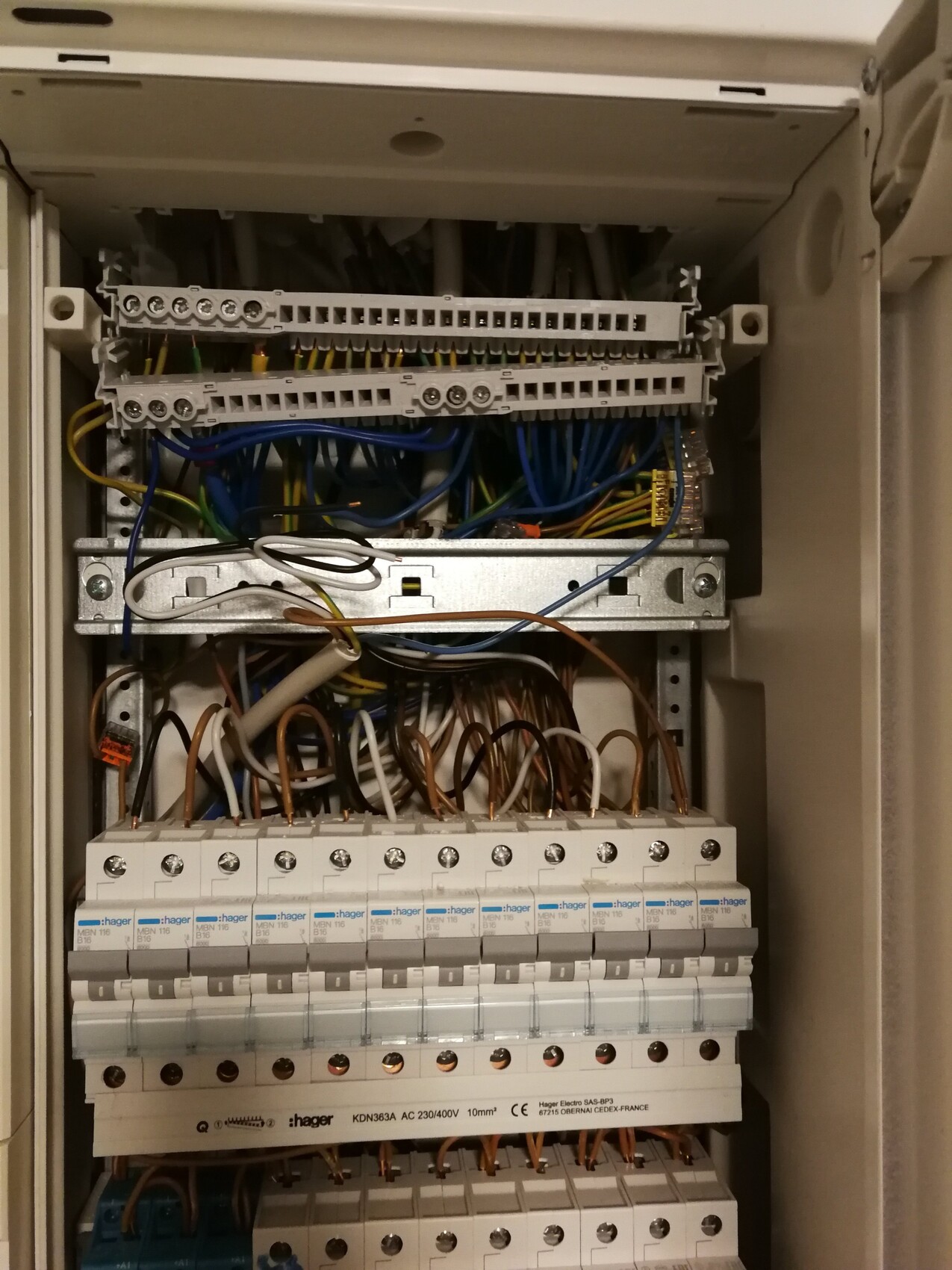
I then looked into the distribution box and removed the cover behind the fuses. You can see the result in the attachment.
What do you think? Is this common or is it poor workmanship? I have no knowledge of electrical work, and the local electrician only said the measurements are all good and that everything else is just cosmetic... is he right?
Thanks in advance for your feedback, I hope you can help me a bit.
Best regards,
SimKN
This is my first post in the forum. I have mostly been reading as a guest in the past to gather information on various topics. Now, I’m hoping to get some feedback because I’m really unsure.
We moved into our new end-of-terrace house near Singen (Htw) at the end of February and are mostly satisfied. However, I’m concerned about the electrical installation:
In our electrical panel, we have three fuses, and I have had to replace one of them several times (two were 10 A fuses, which were replaced by 16 A fuses, and one was a 16 A fuse). This past weekend, for the first time, a 16 A fuse blew, so nothing worked anymore. Unfortunately, I don’t know when it happened because we only noticed it in the morning while showering—no hot water, since the heat pump had no power.
I then looked into the distribution box and removed the cover behind the fuses. You can see the result in the attachment.
What do you think? Is this common or is it poor workmanship? I have no knowledge of electrical work, and the local electrician only said the measurements are all good and that everything else is just cosmetic... is he right?
Thanks in advance for your feedback, I hope you can help me a bit.
Best regards,
SimKN
K
Knallkörper23 Apr 2018 22:03Google: Expert in Electrical Engineering
Or: Take the notes from this thread (loose terminals, loose wires, too many wires in one switch, undersized circuit protection) and send a defect notice to the installer. By registered mail and with a deadline for correction within 10 working days, for example.
Or: Take the notes from this thread (loose terminals, loose wires, too many wires in one switch, undersized circuit protection) and send a defect notice to the installer. By registered mail and with a deadline for correction within 10 working days, for example.
B
Bieber081524 Apr 2018 08:15Apparently, this is quite a mess. As usual, there are two aspects to consider:
1.) The Technical Aspect
You can consult someone who knows about this. It could be a certified electrician you know, but preferably not just a friend of a relative who likes to tinker in their free time (unless they are a certified electrician). Even better would be an official, appointed expert (phone directory, online search, trade chamber, professional associations, etc.).
2.) The Legal Aspect
Unfortunately, formal mistakes can cause you to lose your rights to defect correction! In that case, you may be right but still won’t get compensated and will have to bear the loss yourself. This is hard to believe for the naive layperson, but it’s true. Therefore, it is important to clearly understand the legal situation (Who hired whom? What was agreed? What law applied? Has the work been accepted?) and to report defects properly and within the deadline. If you cannot answer these questions, seek advice from a construction law specialist attorney (phone directory, online search, bar association, etc.).
1.) The Technical Aspect
You can consult someone who knows about this. It could be a certified electrician you know, but preferably not just a friend of a relative who likes to tinker in their free time (unless they are a certified electrician). Even better would be an official, appointed expert (phone directory, online search, trade chamber, professional associations, etc.).
2.) The Legal Aspect
Unfortunately, formal mistakes can cause you to lose your rights to defect correction! In that case, you may be right but still won’t get compensated and will have to bear the loss yourself. This is hard to believe for the naive layperson, but it’s true. Therefore, it is important to clearly understand the legal situation (Who hired whom? What was agreed? What law applied? Has the work been accepted?) and to report defects properly and within the deadline. If you cannot answer these questions, seek advice from a construction law specialist attorney (phone directory, online search, bar association, etc.).
So, I have approached the builder again and listed everything that is (at a minimum) not in order.
Thank you very much for your feedback on this.
But from a safety perspective, I don't have to worry that all of this will "fail" at some point, right?
I only know electrical cabinets from industrial settings, and there they look completely different...
Thank you very much for your feedback on this.
But from a safety perspective, I don't have to worry that all of this will "fail" at some point, right?
I only know electrical cabinets from industrial settings, and there they look completely different...
