
ᐅ Underfloor heating with an air-to-water heat pump. House gets too warm when the sun is shining.
Created on: 4 Dec 2019 14:18
C
chewbacca123
Hello everyone,
I have a general question.
We moved into our new build four months ago. The living area on the ground floor has three large floor-to-ceiling windows facing south. We have underfloor heating and an air-to-water heat pump.
It provides a really comfortable temperature inside the house, but we have a problem – whenever the sun is shining in winter, even if it’s -2°C (28°F) outside, the temperature suddenly rises to 24°C (75°F) in the living room. It gets uncomfortably warm in here, and the underfloor heating can’t be turned down quickly.
Should we assume that the large floor-to-ceiling windows are responsible for the heat gain? A photo of the south-facing side of the house is attached.
What would you do – always lower all the blinds as soon as sunlight is forecast? That seems quite annoying...
We have motorized blinds controlled by Somfy. Would you consider buying a sensor that automatically lowers the blinds at a certain temperature?
Thanks in advance for your replies.
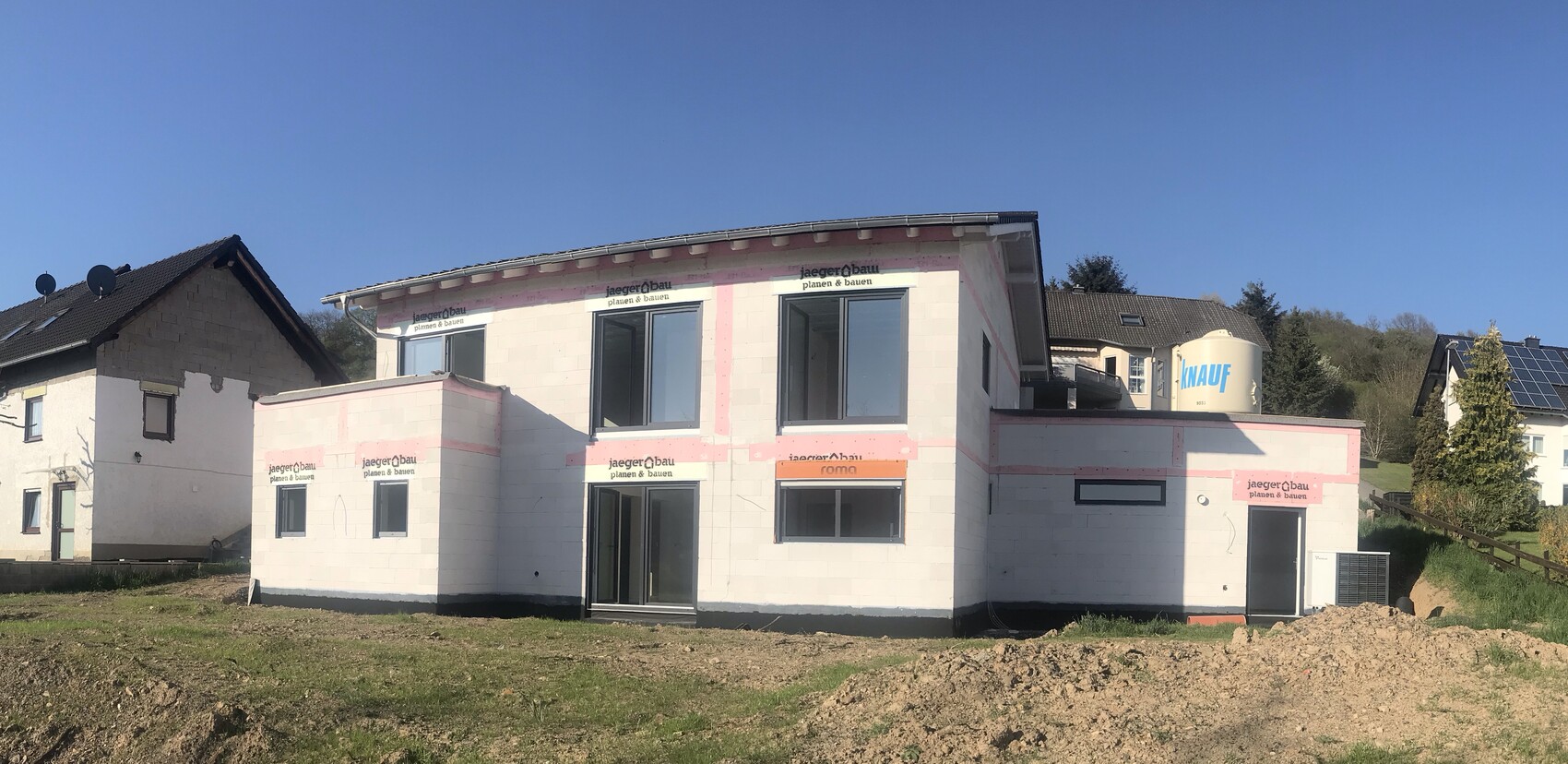
I have a general question.
We moved into our new build four months ago. The living area on the ground floor has three large floor-to-ceiling windows facing south. We have underfloor heating and an air-to-water heat pump.
It provides a really comfortable temperature inside the house, but we have a problem – whenever the sun is shining in winter, even if it’s -2°C (28°F) outside, the temperature suddenly rises to 24°C (75°F) in the living room. It gets uncomfortably warm in here, and the underfloor heating can’t be turned down quickly.
Should we assume that the large floor-to-ceiling windows are responsible for the heat gain? A photo of the south-facing side of the house is attached.
What would you do – always lower all the blinds as soon as sunlight is forecast? That seems quite annoying...
We have motorized blinds controlled by Somfy. Would you consider buying a sensor that automatically lowers the blinds at a certain temperature?
Thanks in advance for your replies.
D
Daniel-Sp10 Jan 2020 17:47M4rvin schrieb:
I'm curious about that, I've already tried, but I can't get a flow rate above 1.8 anywhere!Do you have a modulating heat pump?D
Daniel-Sp10 Jan 2020 19:30Although the percentage distribution in the heating circuits may vary with different HUP outputs, you will perform the hydraulic balancing later during operation. However, initially, the calculated hydraulic balancing must be done at full HUP capacity.

 chewbacca12313 Jan 2020 12:32
So, following Daniel’s advice, I reduced the efficiency pump to 5V.
With a heating curve of 29.5-22-0, we have now achieved optimal temperatures in the bathroom at 21.4°C (70.5°F). The hallways are almost completely throttled down to a flow of 0.5 liters per minute (0.13 gallons per minute), and they still reach almost 23°C (73.4°F), which is acceptable.
If I reduce the heating curve by 0.5, the bathroom temperature drops back down to only 20.8°C (69.4°F) after 24 hours.
The living area is at 22°C (71.6°F) and the bedroom at 20.2°C (68.4°F).
I’m really happy, and the compressor still only activates 3-4 times per day.
The heat pump runs continuously for 1-3 hours per day.
A really great result that satisfies me very much.
The overheating protection is now 99% closed.
With a heating curve of 29.5-22-0, we have now achieved optimal temperatures in the bathroom at 21.4°C (70.5°F). The hallways are almost completely throttled down to a flow of 0.5 liters per minute (0.13 gallons per minute), and they still reach almost 23°C (73.4°F), which is acceptable.
If I reduce the heating curve by 0.5, the bathroom temperature drops back down to only 20.8°C (69.4°F) after 24 hours.
The living area is at 22°C (71.6°F) and the bedroom at 20.2°C (68.4°F).
I’m really happy, and the compressor still only activates 3-4 times per day.
The heat pump runs continuously for 1-3 hours per day.
A really great result that satisfies me very much.
The overheating protection is now 99% closed.

So few volts? Are you referring to the nominal and minimum values? What is the voltage difference?
What is the run-on time?
According to the CSV file, I currently have an average runtime of 1.18 hours.
2 domestic hot water cycles.
The heating was running 2-3 times per day. I have heard two different approaches here: one is to use a setback at night to shift the screed heating to a warmer part of the day. The other says this is nonsense because the cycle duration during the day is extended. However, it makes sense to extend the cycle time if the heat output to the screed is properly adjusted.
What is the run-on time?
According to the CSV file, I currently have an average runtime of 1.18 hours.
2 domestic hot water cycles.
The heating was running 2-3 times per day. I have heard two different approaches here: one is to use a setback at night to shift the screed heating to a warmer part of the day. The other says this is nonsense because the cycle duration during the day is extended. However, it makes sense to extend the cycle time if the heat output to the screed is properly adjusted.