
ᐅ How to Repair a Crack in the Screed Before Installing Hardwood Flooring
Created on: 8 Apr 2026 11:42
E
erwind2
Hello,
In an existing building, after removing the laminate flooring, I noticed a crack in the hallway that extends across the entire width of the hallway.
The plan is to install glued-in hardwood flooring afterwards. Should I repair this crack, and if so, how?
Regards
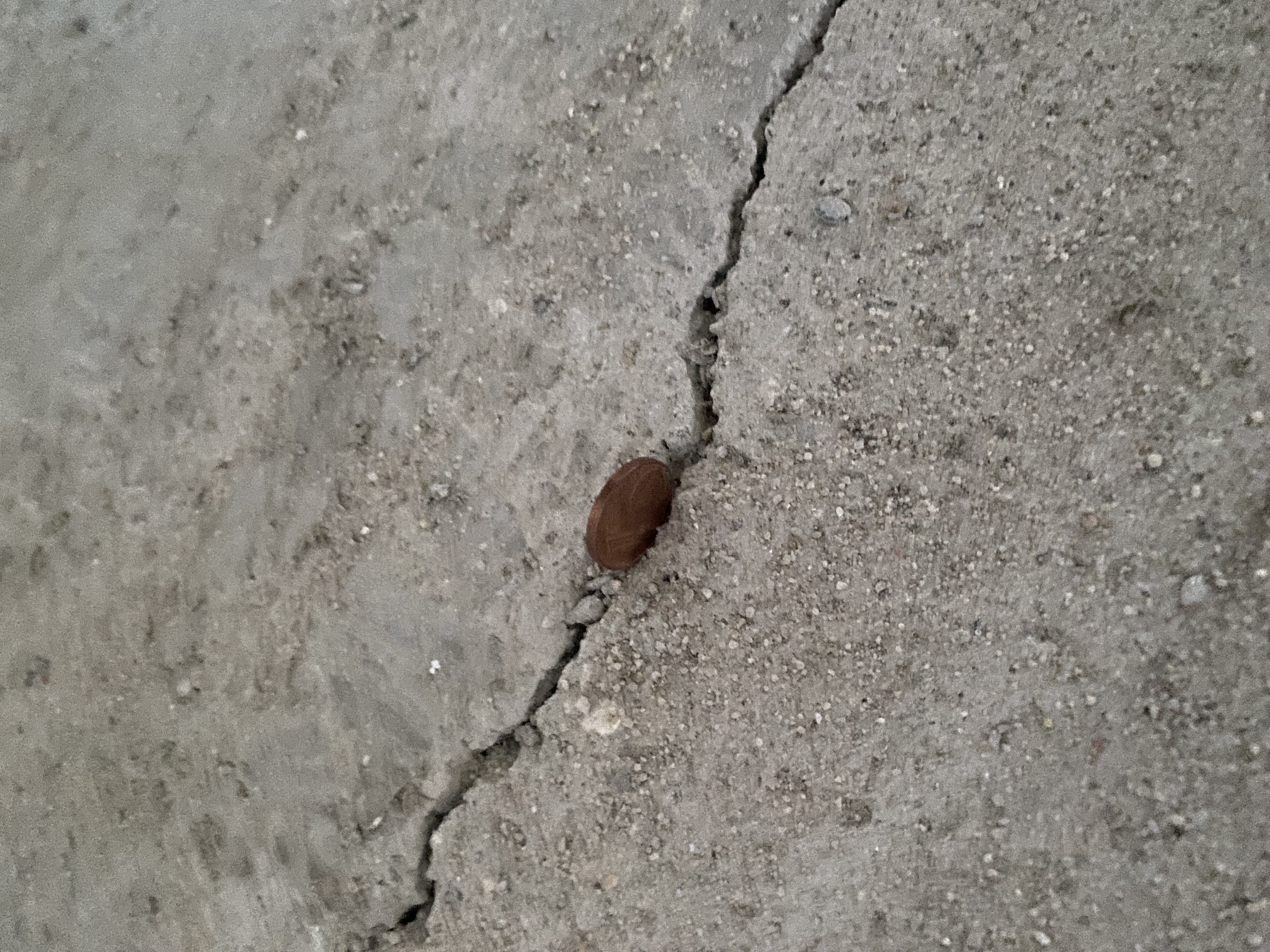
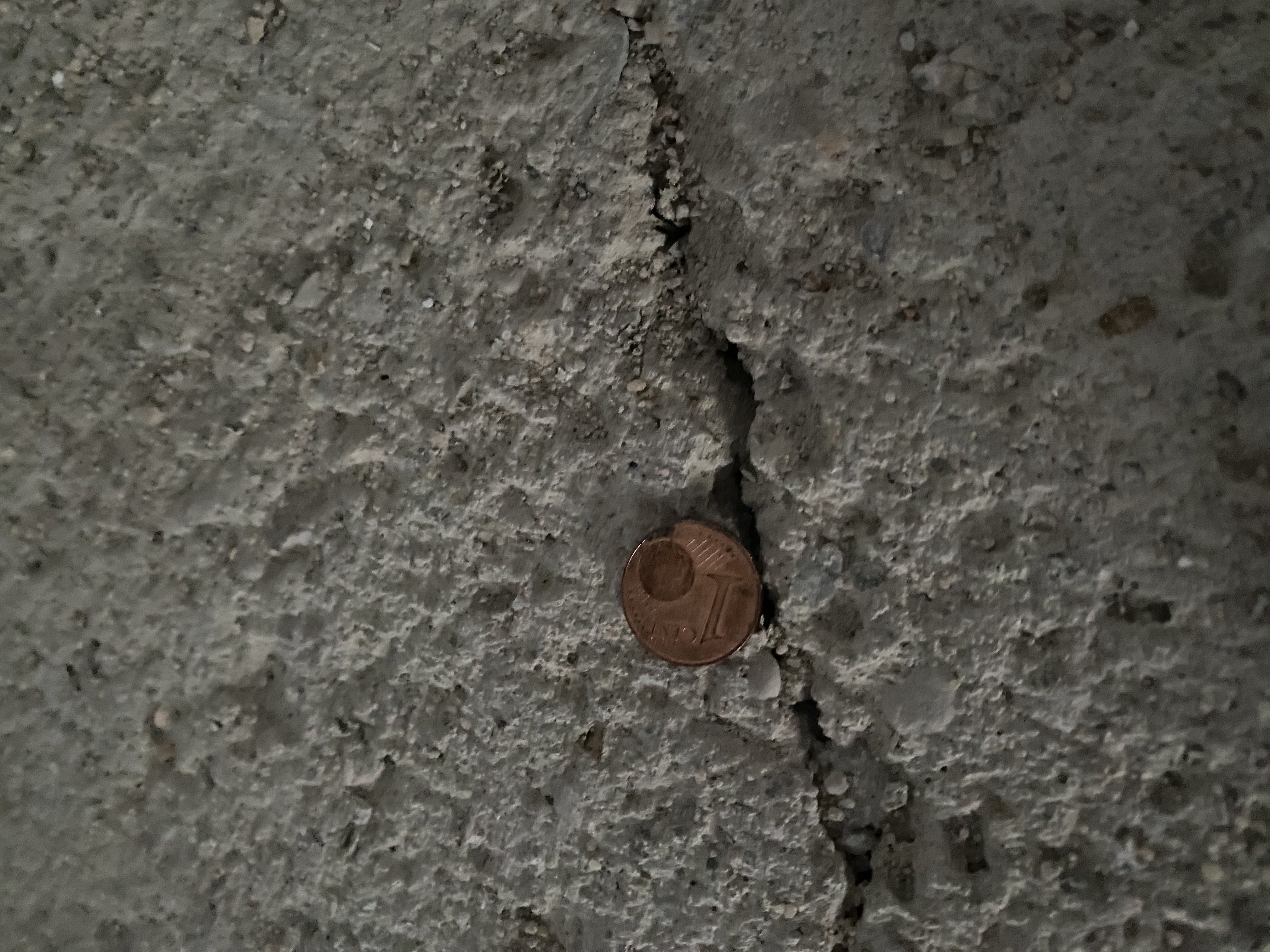

In an existing building, after removing the laminate flooring, I noticed a crack in the hallway that extends across the entire width of the hallway.
The plan is to install glued-in hardwood flooring afterwards. Should I repair this crack, and if so, how?
Regards
Thank you for the tip. I am installing engineered wood flooring, so the surface will be sanded after installation, which allows for minor irregularities to be smoothed out.
I am aware that the screed should ideally be as level as possible, even with engineered wood flooring. I checked the screed with a straightedge and, in my opinion, the unevenness is minimal. I have not used leveling compound so far. In another room, I successfully installed the floor using the same approach (whether it actually works without leveling compound or will cause issues remains to be seen over the years :-)).
I am aware that the screed should ideally be as level as possible, even with engineered wood flooring. I checked the screed with a straightedge and, in my opinion, the unevenness is minimal. I have not used leveling compound so far. In another room, I successfully installed the floor using the same approach (whether it actually works without leveling compound or will cause issues remains to be seen over the years :-)).
N
nordanney12 Apr 2026 18:59erwind2 schrieb:
I am aware that even with laminate flooring, the screed should ideally be as level as possible. You can’t usually compensate for more than 1 mm (0.04 inches) with adhesive, if at all. This applies to any type of wood flooring. And from the pictures, the screed does not look ready for installation.
Don’t say we didn’t warn you (which doesn’t mean something will definitely go wrong – but the risk is high) ;-)
D
derdietmar13 Apr 2026 08:54Hello,
The cracks in the screed need to be filled. For this, slots must be cut perpendicular to the crack (approximately every 10 cm (4 inches)). Steel connectors (staples) are inserted into these slots. Finally, all slots and the crack are filled and sealed with two-component resin.
There are ready-made repair kits available that contain all necessary components (filling material, sand, staples).
Without the repair, your floor covering will separate from the screed, leading to hollow spots or worse, and the cracks will cause your floor covering to pull apart.
Best regards
The cracks in the screed need to be filled. For this, slots must be cut perpendicular to the crack (approximately every 10 cm (4 inches)). Steel connectors (staples) are inserted into these slots. Finally, all slots and the crack are filled and sealed with two-component resin.
There are ready-made repair kits available that contain all necessary components (filling material, sand, staples).
Without the repair, your floor covering will separate from the screed, leading to hollow spots or worse, and the cracks will cause your floor covering to pull apart.
Best regards
Today, I measured the deviations using a 1.8m (6 ft) straightedge, a ruler, and a spirit level. All deviations were within the range of 0–4mm (0–0.16 inches). At one point, I found an 8mm (0.31 inches) deviation, which I plan to sand down using a concrete planer.
My amateur opinion is that, based on these measurements, applying a leveling compound when installing laminate flooring without tongue and groove seems excessive. For prefinished tongue and groove parquet, I can still see the necessity. However, I am open to being corrected. So, should I apply a full-area leveling compound?
My amateur opinion is that, based on these measurements, applying a leveling compound when installing laminate flooring without tongue and groove seems excessive. For prefinished tongue and groove parquet, I can still see the necessity. However, I am open to being corrected. So, should I apply a full-area leveling compound?
B
Balanceist14 Apr 2026 18:21erwind2 schrieb:
Hello,
in an existing building, after removing the laminate flooring, I found a crack in the hallway that extends across the entire width of the hallway.
Then Yes, for cracks in the screed, the screed must be bonded or resin-treated. The cracks need to be completely filled. For large cracks, screed staples can be used.
Similar topics