
K
karlleutz19 Jul 2022 00:54Dear forum members,
Since 2015, we have been living in a prefabricated house (timber frame construction). Recently, we had an external stainless steel chimney retrofitted.
For this, a wall opening with a diameter of about 20-25 cm (8-10 inches) was created.
A Schrader Coolblock was installed for the chimney pipe. The chimney pipe passes through this block.
We had to cut through the vapor barrier for this. Now my question is, how can I properly seal this barrier again?
The barrier is installed about 3 cm (1 inch) deep from the interior wall. First comes the drywall, then a chipboard panel, and then the vapor barrier.
We would essentially need to close it around the chimney pipe. The opening was made cleanly, meaning the vapor barrier edges would have to be exposed by carefully removing drywall and chipboard to reveal some of the membrane, so that an additional piece of vapor barrier could possibly be glued on with sealing tape.
After that, a round piece of drywall and a round piece of chipboard (in the shape of a donut) would need to be installed. Here I am wondering how I can properly install and bond these two pieces?
Lots of questions — from the outside, the opening is well insulated, but the inside work must be done by us.
P.S. Currently, the vapor barrier is open over a 20 cm (8 inch) area. Moisture shouldn’t be a problem. I assume it needs to be sealed as soon as possible, right?
Best regards
Since 2015, we have been living in a prefabricated house (timber frame construction). Recently, we had an external stainless steel chimney retrofitted.
For this, a wall opening with a diameter of about 20-25 cm (8-10 inches) was created.
A Schrader Coolblock was installed for the chimney pipe. The chimney pipe passes through this block.
We had to cut through the vapor barrier for this. Now my question is, how can I properly seal this barrier again?
The barrier is installed about 3 cm (1 inch) deep from the interior wall. First comes the drywall, then a chipboard panel, and then the vapor barrier.
We would essentially need to close it around the chimney pipe. The opening was made cleanly, meaning the vapor barrier edges would have to be exposed by carefully removing drywall and chipboard to reveal some of the membrane, so that an additional piece of vapor barrier could possibly be glued on with sealing tape.
After that, a round piece of drywall and a round piece of chipboard (in the shape of a donut) would need to be installed. Here I am wondering how I can properly install and bond these two pieces?
Lots of questions — from the outside, the opening is well insulated, but the inside work must be done by us.
P.S. Currently, the vapor barrier is open over a 20 cm (8 inch) area. Moisture shouldn’t be a problem. I assume it needs to be sealed as soon as possible, right?
Best regards
 KingJulien19 Jul 2022 08:02
Please upload a photo so we don’t have to strain our imagination as much 😉
K
karlleutz19 Jul 2022 08:37Sorry, I’m currently on my way to work. Here are the pictures.
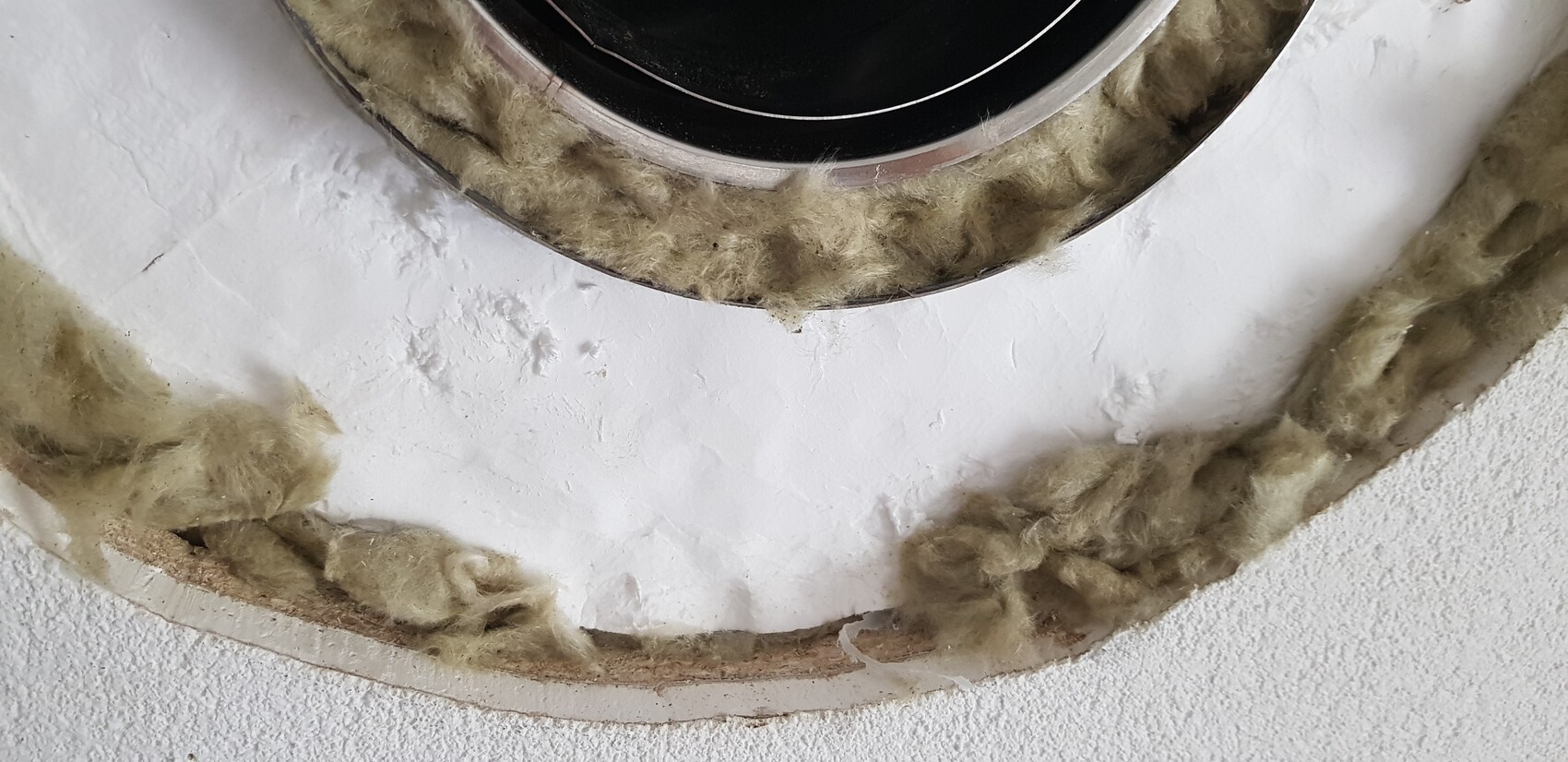

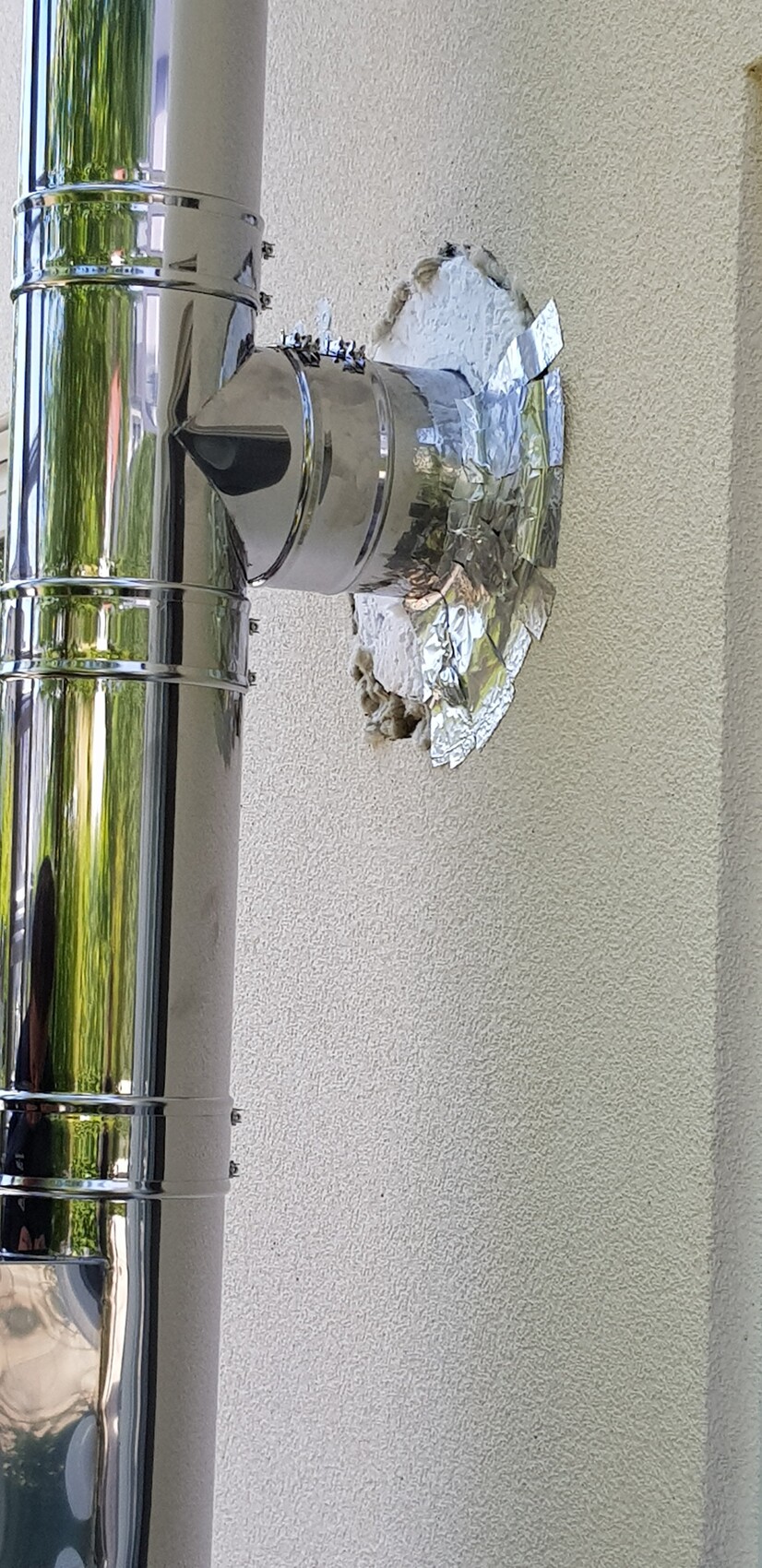
KingJulien19 Jul 2022 09:13To be honest, I don’t have a better idea than you. But you are probably not the first person to retrofit a fireplace in a timber frame house. I would suggest asking a house builder, stove installer, or roofer...

Currently, I would be much more concerned about the external waterproofing, even though it is clear that this is not finished yet. However, using aluminum tape on the chimney pipe and then sticking the plaster over it does not seem to me to be an optimal or sufficient solution.
Wouldn’t a (permanently elastic) cartridge sealant (NOT silicone!) applied all around to seal tightly against the Coolblock and the plaster have been better? If water currently gets behind the waterproofing (the aluminum adhesive tape?), the mineral insulation will first get wet, and then over time, the house will gradually suffer damage in that area. My brother’s son-in-law is a master carpenter (in a company that builds timber frame and solid wood houses) who regularly tells such horror stories.
I also strongly recommend talking to the house builder to ensure this area is properly sealed, both externally and internally, especially regarding any possible warranties.
P.S. What did the chimney inspector say? They are required to approve the whole thing...
Wouldn’t a (permanently elastic) cartridge sealant (NOT silicone!) applied all around to seal tightly against the Coolblock and the plaster have been better? If water currently gets behind the waterproofing (the aluminum adhesive tape?), the mineral insulation will first get wet, and then over time, the house will gradually suffer damage in that area. My brother’s son-in-law is a master carpenter (in a company that builds timber frame and solid wood houses) who regularly tells such horror stories.
I also strongly recommend talking to the house builder to ensure this area is properly sealed, both externally and internally, especially regarding any possible warranties.
P.S. What did the chimney inspector say? They are required to approve the whole thing...
K
karlleutz23 Jul 2022 12:18Hello everyone,
thank you for your contributions.
So, I have made some progress...
-The company I hired has an excellent reputation, and they are usually reluctant to provide offers for prefabricated houses.
-I looked up the silver foil online, and the material also sounds reliable in terms of quality. Below are the product features:
Advance offers a wide range of foil adhesive tapes with acrylic adhesives that increase their adhesion over time and can detach easily if only left for a short period.
Our tapes were developed for various applications and guarantee extra performance and resistance to extreme temperatures.
Advantages:
• Provide excellent adaptability
• Are water-repellent and provide a complete vapor barrier
• All Advance foil tapes have a white silicone-coated release liner and unwind very easily
• All Advance tapes are fully tempered and as soft as the manufacturing processes allow
• All adhesive tapes are easily tearable
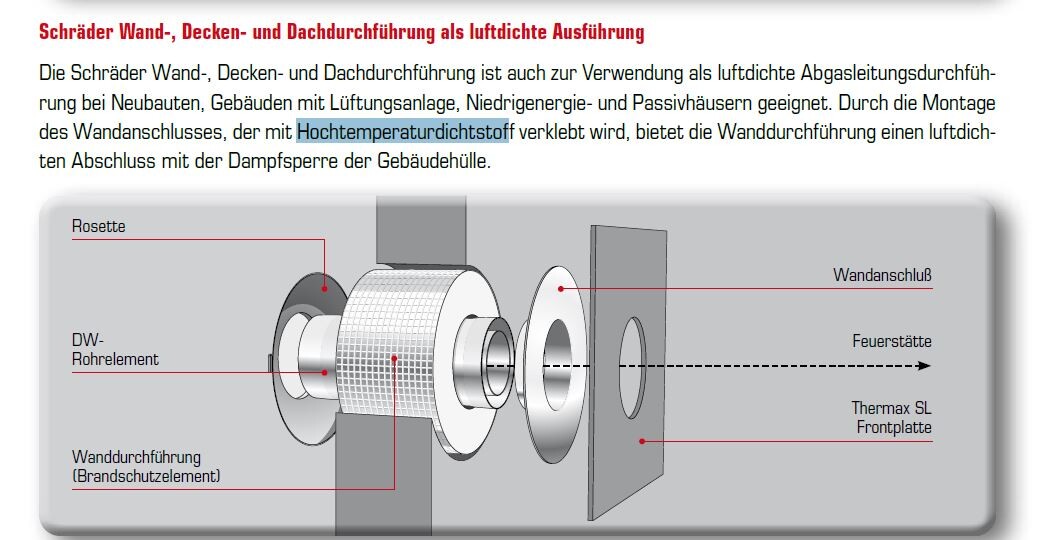
-In attachment image 1 you can see the installation manual from Schräder. On Monday, an interior architect is coming to discuss everything further.
I still have some questions regarding the vapor retarder. It is still unclear to me how this can be attached to the Coolblock. I assume that the usual adhesive tapes cannot be used here. I have asked Schräder about this. The manual mentions high-temperature sealant. This means some kind of silicone will probably need to be used, and I am still unsure exactly where (on the white surface) the vapor retarder can be glued to the Coolblock.
I also have open questions regarding the size of the fire protection board. Those things are not exactly attractive, and I assume at least a 70 x 70 cm (28 x 28 inches) board will be hanging on the living room wall. This raises the question of whether it would be better to cover the entire wall, 2.40 m (7 ft 10 in) high by 2.20 m (7 ft 3 in) wide, completely with one or two boards and then simply paint it white...
Perhaps someone here has experience with this.
Best regards
thank you for your contributions.
So, I have made some progress...
-The company I hired has an excellent reputation, and they are usually reluctant to provide offers for prefabricated houses.
-I looked up the silver foil online, and the material also sounds reliable in terms of quality. Below are the product features:
Advance offers a wide range of foil adhesive tapes with acrylic adhesives that increase their adhesion over time and can detach easily if only left for a short period.
Our tapes were developed for various applications and guarantee extra performance and resistance to extreme temperatures.
Advantages:
• Provide excellent adaptability
• Are water-repellent and provide a complete vapor barrier
• All Advance foil tapes have a white silicone-coated release liner and unwind very easily
• All Advance tapes are fully tempered and as soft as the manufacturing processes allow
• All adhesive tapes are easily tearable
-In attachment image 1 you can see the installation manual from Schräder. On Monday, an interior architect is coming to discuss everything further.
I still have some questions regarding the vapor retarder. It is still unclear to me how this can be attached to the Coolblock. I assume that the usual adhesive tapes cannot be used here. I have asked Schräder about this. The manual mentions high-temperature sealant. This means some kind of silicone will probably need to be used, and I am still unsure exactly where (on the white surface) the vapor retarder can be glued to the Coolblock.
I also have open questions regarding the size of the fire protection board. Those things are not exactly attractive, and I assume at least a 70 x 70 cm (28 x 28 inches) board will be hanging on the living room wall. This raises the question of whether it would be better to cover the entire wall, 2.40 m (7 ft 10 in) high by 2.20 m (7 ft 3 in) wide, completely with one or two boards and then simply paint it white...
Perhaps someone here has experience with this.
Best regards
Similar topics