
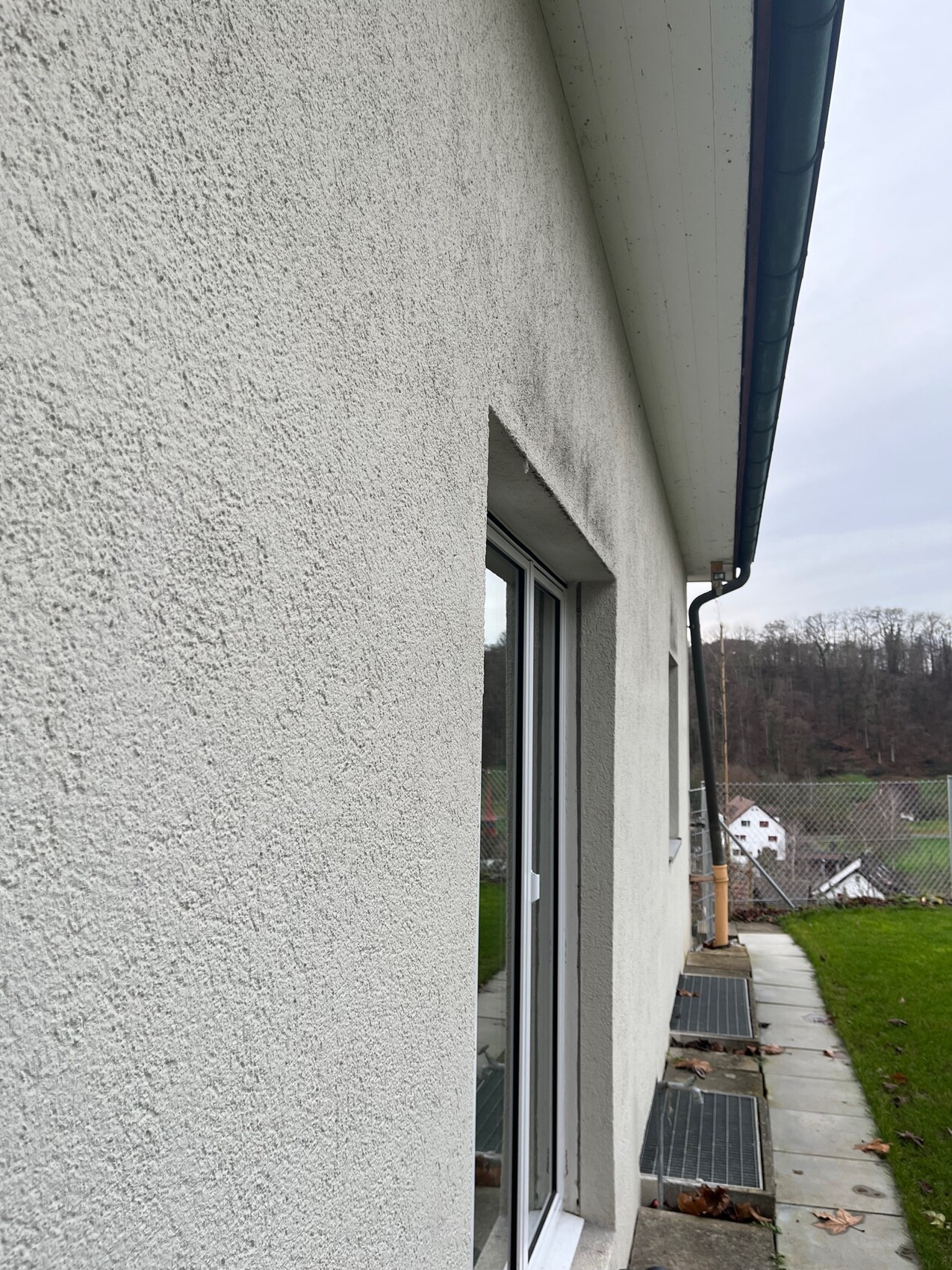
Hello everyone, I would like to do some of the work myself (preparation for façade renovation) by removing my old 5 cm (2 inch) EPS insulation, which is plastered and embedded in an old "Hasen?" metal mesh. Has anyone done something like this before? Which tools are best suited for this? The wall underneath is brick, so I find an angle grinder or rotary hammer too risky. Maybe an angle grinder with a steel or wire brush? Thanks and best regards
K
KarstenausNRW20 Mar 2023 10:42I wouldn’t do anything at all, but as @guckuck2 suggests, just add the next layer of insulation. Simple, efficient, and cost-effective.
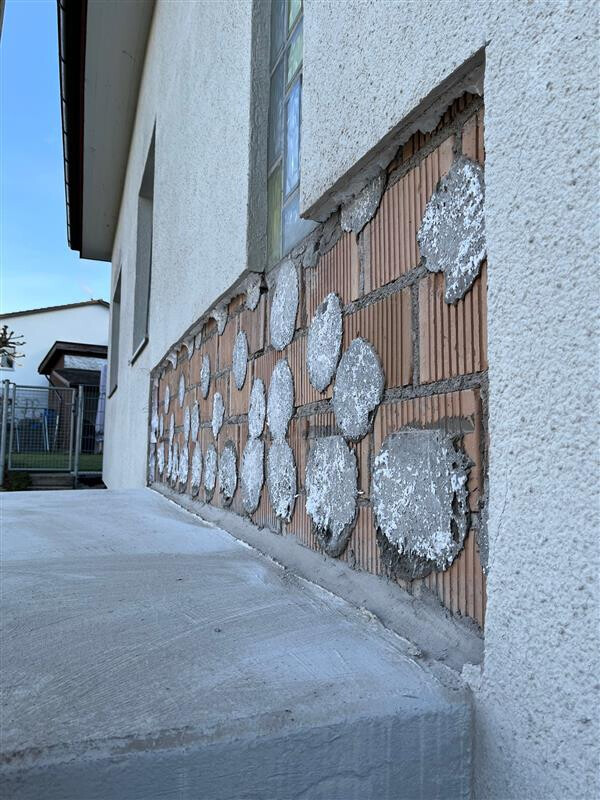
For the approximately 2 m² (21.5 ft²), I spent about 2 hours yesterday. The tool of choice was a small pickaxe from the hardware store. I was also able to quite cleanly separate the EPS from the plaster (I’m not even sure if this is necessary here in Switzerland, as I believe everything is usually incinerated). Most of the time is spent on the separation, and it must not be windy, otherwise the EPS can quickly blow around. What worries me, however, is that the EPS seems to have been glued to the façade with cement—see the gray patches. I cannot remove them without damaging the bricks. Question: does this create a thermal bridge with the new façade because the wood fiber insulation (Gutex Thermo) cannot be applied evenly, or can this be ignored?
Similar topics