
ᐅ Roof Covering and Choosing a Solar Installer – Making the Decision?
Created on: 10 Aug 2022 18:21
E
Elias_dee
Hello everyone,
I am about to decide whether to hire a solar installer. I am building a turnkey single-family house with a general contractor in the 84xxx area, featuring a gable roof with a 25° pitch, oriented north/south. There are no skylights, chimney, or other obstructions on the roof, so conditions are optimal.
I am having some difficulty even requesting quotes and now have at least two offers. I would appreciate help evaluating and choosing between them (both the company and whether to include the north side). I have not asked for a battery system but might consider adding one later if it becomes more affordable.
So, first I am facing the question: include north side or not? I can fit about 25 modules on each side, resulting in roughly 10 kWp. PVGIS estimates around 10,000 kWh for south and about 7,000 kWh for north.
Offer 1 comes from a solar installer with many years of experience, who not only works on single-family houses but also builds large-scale systems in the megawatt range. My general contractor, who is building the house turnkey, also has long-standing experience with this installer and recommends them.
Offer 1 details:
- 20.5 kWp
- 50 x Q-Cells Q-Peak ML G10 410 heat pump compatible modules
- 50 x SolarEdge Power Optimizers, S440 Worldwide (v1)
- SolarEdge StorEdge three-phase inverters: SE10K-RWS-EU-APAC/AUS (v1) and SE7K-RWS-EU-APAC (v1)
- SolarEdge Smart Meter for self-consumption monitoring
- All other materials, installation, and commissioning services included
- Cost: €31,980 net, which equals approximately €1,560 net per kWp — reasonable for today, not really cheap but not very expensive either
Now to Offer 2. This offer is from a very small and new electrical company I found through a neighbor's recommendation. The company does not even have a finished website yet because it is so new, but they have already done electrical work in the development area (not sure about PV though). Two different neighbors have told me this company is good.
Offer 2 details:
- 20.9 kWp
- 51 x JinkoSolar Tiger NE HC N-Type black solar modules JKM410N-54HL4-B
- 2 x SMA inverters STP10.0-3SE-40
- 1 x SMA Sunny Home Manager HM-20
- Other materials are not specified here, but all installation, planning, and commissioning services are included
- Cost: €25,570 net, equaling approximately €1,223 net per kWp
My questions now:
- What do you generally think about the materials used?
- Are the SolarEdge power optimizers in Offer 1 really necessary? I expect practically no shading from trees, chimney, or anything else given the location
- Company 2 is probably a bit risky, but the price is really attractive. Is it worth taking the risk here?
- Does installing modules on the north side make sense at all in the case of Offer 1? If I calculate north and south separately, south obviously makes sense in both cases. North seems worthwhile (based on my calculation) only with Offer 2... with Offer 1 I would be running at a loss.
I would be very grateful for a brief assessment!
Best regards
I am about to decide whether to hire a solar installer. I am building a turnkey single-family house with a general contractor in the 84xxx area, featuring a gable roof with a 25° pitch, oriented north/south. There are no skylights, chimney, or other obstructions on the roof, so conditions are optimal.
I am having some difficulty even requesting quotes and now have at least two offers. I would appreciate help evaluating and choosing between them (both the company and whether to include the north side). I have not asked for a battery system but might consider adding one later if it becomes more affordable.
So, first I am facing the question: include north side or not? I can fit about 25 modules on each side, resulting in roughly 10 kWp. PVGIS estimates around 10,000 kWh for south and about 7,000 kWh for north.
Offer 1 comes from a solar installer with many years of experience, who not only works on single-family houses but also builds large-scale systems in the megawatt range. My general contractor, who is building the house turnkey, also has long-standing experience with this installer and recommends them.
Offer 1 details:
- 20.5 kWp
- 50 x Q-Cells Q-Peak ML G10 410 heat pump compatible modules
- 50 x SolarEdge Power Optimizers, S440 Worldwide (v1)
- SolarEdge StorEdge three-phase inverters: SE10K-RWS-EU-APAC/AUS (v1) and SE7K-RWS-EU-APAC (v1)
- SolarEdge Smart Meter for self-consumption monitoring
- All other materials, installation, and commissioning services included
- Cost: €31,980 net, which equals approximately €1,560 net per kWp — reasonable for today, not really cheap but not very expensive either
Now to Offer 2. This offer is from a very small and new electrical company I found through a neighbor's recommendation. The company does not even have a finished website yet because it is so new, but they have already done electrical work in the development area (not sure about PV though). Two different neighbors have told me this company is good.
Offer 2 details:
- 20.9 kWp
- 51 x JinkoSolar Tiger NE HC N-Type black solar modules JKM410N-54HL4-B
- 2 x SMA inverters STP10.0-3SE-40
- 1 x SMA Sunny Home Manager HM-20
- Other materials are not specified here, but all installation, planning, and commissioning services are included
- Cost: €25,570 net, equaling approximately €1,223 net per kWp
My questions now:
- What do you generally think about the materials used?
- Are the SolarEdge power optimizers in Offer 1 really necessary? I expect practically no shading from trees, chimney, or anything else given the location
- Company 2 is probably a bit risky, but the price is really attractive. Is it worth taking the risk here?
- Does installing modules on the north side make sense at all in the case of Offer 1? If I calculate north and south separately, south obviously makes sense in both cases. North seems worthwhile (based on my calculation) only with Offer 2... with Offer 1 I would be running at a loss.
I would be very grateful for a brief assessment!
Best regards
E
Elias_dee26 Mar 2023 23:19Hi, I would like to thank everyone again for the help in this thread. Our modules have now been installed, and I didn’t want to miss the chance to show you the system—see photos attached.
The inverters will be installed later, once the house electrical system is set up (but they are already in stock).
In one year, I will give you a report on how many kWh I was able to generate. PVGIS estimates about 10,000 kWh on the south side / 7,000 kWh on the north side. The location is Lower Bavaria.
Details:
Modules: 58 x Q.PEAK DUO-G9 350
Inverters: 1 x Fronius Symo Gen24 10.0 & 1 x Fronius Symo 10.0
Storage: none [IMG alt=""]https://static.xx.fbcdn.net/images/emoji.php/v9/t59/1.5/16/1f60b.png[/IMG]
Planned use: household electricity, heat pump, hybrid vehicle, feed-in (of course)
PS: And before anyone asks – I know you can build over sanitary vents, but we didn’t do that...

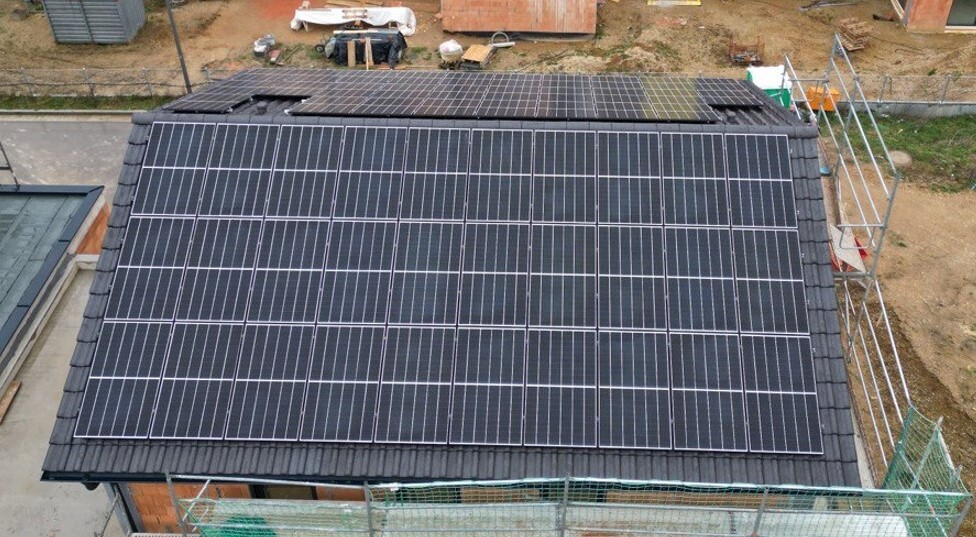
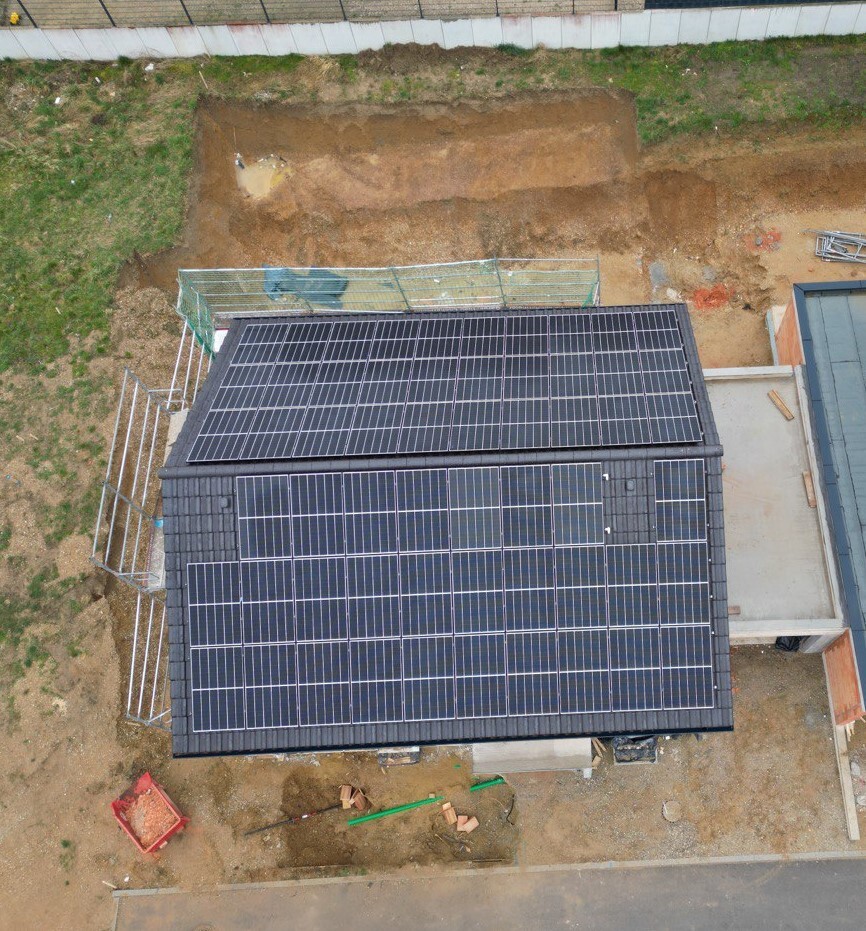
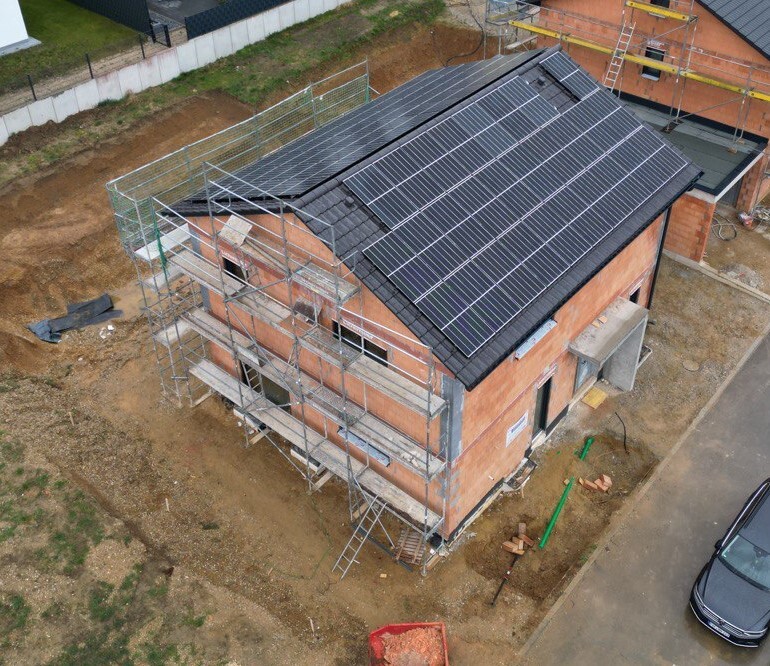
The inverters will be installed later, once the house electrical system is set up (but they are already in stock).
In one year, I will give you a report on how many kWh I was able to generate. PVGIS estimates about 10,000 kWh on the south side / 7,000 kWh on the north side. The location is Lower Bavaria.
Details:
Modules: 58 x Q.PEAK DUO-G9 350
Inverters: 1 x Fronius Symo Gen24 10.0 & 1 x Fronius Symo 10.0
Storage: none [IMG alt=""]https://static.xx.fbcdn.net/images/emoji.php/v9/t59/1.5/16/1f60b.png[/IMG]
Planned use: household electricity, heat pump, hybrid vehicle, feed-in (of course)
PS: And before anyone asks – I know you can build over sanitary vents, but we didn’t do that...

E
Elias_dee27 Mar 2023 09:18kati1337 schrieb:
Looks great, that adds up to quite a few kWp.
Would you be willing to share the final price you ended up paying, including everything? Thanks! I really like it too :-)
Sure: The system cost just under €28,000 (about $30,000) total, including everything, which comes to around €1360 / kWp (about $1480 / kWp). That includes all components and no self-installed work. I would have liked to help out, but I have so many other things going on with the build right now, so this arrangement works well for me.
B
Bausparfuchs27 Mar 2023 09:41Congratulations on your great system.
However, it was built too expensively and is not very practical without storage. With current electricity prices, a photovoltaic system without a battery storage simply does not make sense. Even though many experts in other forums see it differently, no one admits to having been mistaken.
As you can see, you built at a high cost. The solar installer is happy because the profit margin with storage is smaller. Anyway.
With a consumption of 10,000 kWh, your system will probably allow you to use 2,000–3,000 kWh of self-consumption. The rest will be paid back as feed-in compensation.
At 8.5 cents per kWh and 14,000 kWh fed in, that might be around 1,200 euros. Plus the savings from the 3,000 kWh, which could be another 1,500 euros in electricity costs. That makes a total annual saving of 2,700 euros, meaning the system would pay off in about 10 years.
A 10 kW battery would save you 3,000 kWh per year of electricity from the grid. Roughly calculated, that would bring another 1,500 euros in savings. Over 20 years, that would add up to 30,000 euros. The battery would have paid for itself after about 5 years.
I have a battery and would install it again anytime. I have been completely off-grid and without any grid supply for one week. I expect to remain so until mid to late October, with only a few exceptional days.
From 4:00 p.m. (16:00), the battery takes over and covers the base load—TV, PC, lighting, refrigerator, etc. About 5 kWh from the battery is enough until the next morning. If it rains, the house network draws the remaining 5 kWh from the battery. Otherwise, it covers its demand from the photovoltaic system until 4:00 p.m. (16:00). I control the electric water heating with a timer, set daily from 10:00 a.m. to 3:00 p.m. (10:00 to 15:00). Laundry and dishwasher also run only during that time.
So, you have a large photovoltaic system on your roof, but you can only use about 30 percent of the electricity it produces. You need to generate 6 kWh to cover 1 kWh of your own consumption. Of course, storage makes more sense today than ever before. 😉
However, it was built too expensively and is not very practical without storage. With current electricity prices, a photovoltaic system without a battery storage simply does not make sense. Even though many experts in other forums see it differently, no one admits to having been mistaken.
As you can see, you built at a high cost. The solar installer is happy because the profit margin with storage is smaller. Anyway.
With a consumption of 10,000 kWh, your system will probably allow you to use 2,000–3,000 kWh of self-consumption. The rest will be paid back as feed-in compensation.
At 8.5 cents per kWh and 14,000 kWh fed in, that might be around 1,200 euros. Plus the savings from the 3,000 kWh, which could be another 1,500 euros in electricity costs. That makes a total annual saving of 2,700 euros, meaning the system would pay off in about 10 years.
A 10 kW battery would save you 3,000 kWh per year of electricity from the grid. Roughly calculated, that would bring another 1,500 euros in savings. Over 20 years, that would add up to 30,000 euros. The battery would have paid for itself after about 5 years.
I have a battery and would install it again anytime. I have been completely off-grid and without any grid supply for one week. I expect to remain so until mid to late October, with only a few exceptional days.
From 4:00 p.m. (16:00), the battery takes over and covers the base load—TV, PC, lighting, refrigerator, etc. About 5 kWh from the battery is enough until the next morning. If it rains, the house network draws the remaining 5 kWh from the battery. Otherwise, it covers its demand from the photovoltaic system until 4:00 p.m. (16:00). I control the electric water heating with a timer, set daily from 10:00 a.m. to 3:00 p.m. (10:00 to 15:00). Laundry and dishwasher also run only during that time.
So, you have a large photovoltaic system on your roof, but you can only use about 30 percent of the electricity it produces. You need to generate 6 kWh to cover 1 kWh of your own consumption. Of course, storage makes more sense today than ever before. 😉
R
RotorMotor27 Mar 2023 10:16Bausparfuchs schrieb:
With electricity prices like these, a solar power system without a battery simply doesn’t make sense. Even if many experts in other forums think otherwise. No one admits to being wrong. A clear case of, what are all these people getting wrong here?!
Bausparfuchs schrieb:
As you can see, you also built at a high cost. The solar technician is happy because the profit margin with a battery is smaller. Doesn’t matter. What nonsense.
Bausparfuchs schrieb:
With a consumption of 10,000 kWh, your system might allow self-consumption of maybe 2,000 to 3,000 kWh. How do you get such an absurdly high consumption for a new build?
Bausparfuchs schrieb:
A 10 kWh battery would save you 3,000 kWh annually from the grid. Yes, sure, 300 cycles; if you’re lucky maybe 200.
You even write below that you mostly get 5 kWh from the battery.
That would actually be more like 150 cycles.
And what about all the losses a battery causes?
Bausparfuchs schrieb:
A 10 kWh battery would save you 3,000 kWh of grid electricity annually. Roughly calculated, that would bring an additional 1,500 € in savings. Over 20 years, that would add up to 30,000 €. The battery would have paid off after 5 years. So, 2,000 kWh x (29 cents/kWh - 8.5 cents/kWh) = 410 €
At about 7,000 € for the battery, that’s a payback period of 17 years.
For a component that might only last 10 years, not great.
And from an energy and CO2 perspective, a battery never really pays off.
Bausparfuchs schrieb:
That adds up to 2,700 € savings annually, and the system would pay for itself in about 10 years. Compared to that, this is really great!
A 10-year ROI for something that lasts much longer is actually very good.
And energy-wise, it’s paid back after just 2 years.
Bausparfuchs schrieb:
So you have a huge solar system on your roof, but you only use about 30 percent of the electricity it generates yourself. You need to produce 6 kWh to cover the purchase of 1 kWh. Of course, a battery makes more sense today than ever. 😉 Check comparison sites. Electricity is available again for under 30 cents/kWh (in most regions).
With an 8.5 cents/kWh return, that doesn’t make 6:1 but 3.5:1, and I think he can easily achieve that with his system! :-)
B
Bookstar8727 Mar 2023 10:50Bausparfuchs schrieb:
Congratulations on your great system.
But it’s built too expensively and is hardly practical without storage. With electricity prices like these, a photovoltaic system without a battery simply doesn’t make sense. Even though many experts in other forums think differently. Nobody admits to being mistaken.
As you can see, you also built it at a high cost. The solar installer is happy because the profit margin with storage is smaller. Whatever.
With a 10,000 kWh consumption, your system will probably allow for 2,000 to 3,000 kWh of self-consumption. The rest will be paid back as feed-in compensation.
At 8.5 cents per kWh and 14,000 kWh feed-in, that might be around 1,200 euros. Plus the savings from the 3,000 kWh, maybe another 1,500 euros in electricity costs. That totals about 2,700 euros saved annually, and the system would pay for itself in roughly 10 years.
A 10 kWh battery would save you 3,000 kWh annually on grid consumption. Roughly calculated, it would bring another 1,500 euros in savings. That would add up to 30,000 euros over 20 years. The battery would have paid for itself in about 5 years.
I have a battery and would install it again anytime. I have been completely self-sufficient and off-grid for one week now. And I will remain so, except for a few rare days, until mid to late October.
Starting at 4:00 p.m., the battery takes over and covers the base load—TV, PC, lighting, refrigerator, etc. About 5 kWh from the battery is enough to last until the next morning. If it rains, the household grid draws the remaining 5 kWh from the battery. Otherwise, the demand until 4:00 p.m. is supplied by the photovoltaic system. I control electric water heating with a timer, running daily from 10:00 a.m. to 3:00 p.m. Laundry and dishwasher are also used only during that time.
So you have a huge photovoltaic system on the roof, but you can only use about 30 percent of its electricity yourself. You have to produce 6 kWh to cover the cost of 1 kWh bought. Of course, a battery makes more sense today than ever. 😉Absolutely right. It’s better to install a battery and build a system only half as large. More than 10 kWp doesn’t make much sense for a single-family house, even with an electric car. The payback will thank you. Batteries have become highly economical nowadays.Plus, there is island mode and backup power operation. What I personally value even more is that I don’t have to adjust my lifestyle and consumption to certain times of day. A battery is the best thing ever, and good ones easily last 15 to 20 years.
Similar topics