
Hello,
maybe someone can offer an explanation.
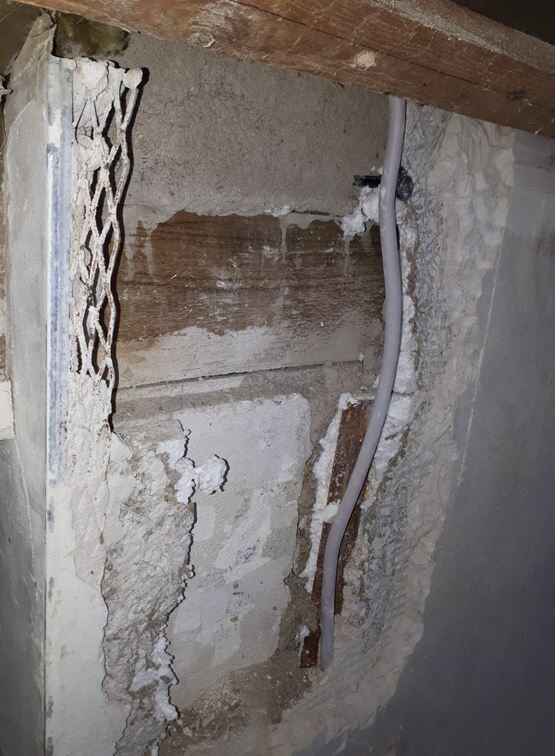
On an interior wall, an area of about 30 x 40 cm (12 x 16 inches) had to have the plaster including insulation (polystyrene foam) removed down to the base wall of the exterior structure. In total, about 4-5 cm (1.5-2 inches) were removed.
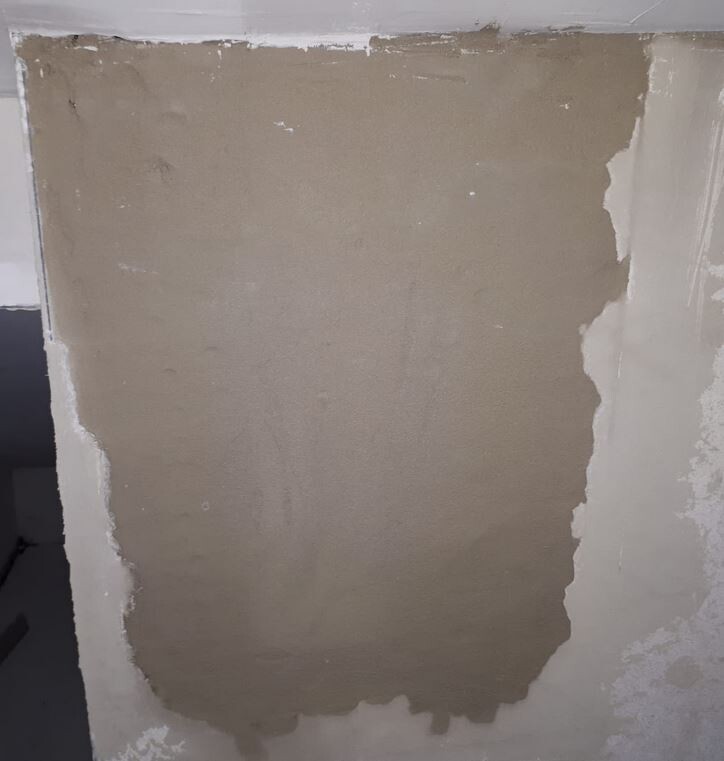
Afterwards, new insulation was applied to the wall, and the rest was covered with plaster.
The next day, it was wallpapered with standard textured wallpaper and painted with silicate paint.
The wall was dry beforehand. There are no pipes running there or any other sources of moisture.
Two months later, I happened to notice a crack in the wallpaper exactly around the border of this area. Then I measured the moisture level with a Trotec device and was surprised.
Normal wall values are around 20 digits, but in the new area, it went up to 60-70 digits.
The values increase precisely where the new plaster is behind the wallpaper.
The professional company responsible was informed and inspected the site, but they had no explanation except to tear it open and redo it.
All my logic says that since no external moisture can be coming in, the problem must be in the plaster itself.
But no metal or anything else that could distort the readings was incorporated.
The surface temperature matches the rest of the wall (18-19°C / 64-66°F), which also suggests that the new insulation is working correctly.
Does anyone have an explanation why there is still residual moisture detectable after two months? I have also specifically applied heat to the area to improve the readings, so far without success.
Photos were taken the day of the repair.
maybe someone can offer an explanation.
On an interior wall, an area of about 30 x 40 cm (12 x 16 inches) had to have the plaster including insulation (polystyrene foam) removed down to the base wall of the exterior structure. In total, about 4-5 cm (1.5-2 inches) were removed.
Afterwards, new insulation was applied to the wall, and the rest was covered with plaster.
The next day, it was wallpapered with standard textured wallpaper and painted with silicate paint.
The wall was dry beforehand. There are no pipes running there or any other sources of moisture.
Two months later, I happened to notice a crack in the wallpaper exactly around the border of this area. Then I measured the moisture level with a Trotec device and was surprised.
Normal wall values are around 20 digits, but in the new area, it went up to 60-70 digits.
The values increase precisely where the new plaster is behind the wallpaper.
The professional company responsible was informed and inspected the site, but they had no explanation except to tear it open and redo it.
All my logic says that since no external moisture can be coming in, the problem must be in the plaster itself.
But no metal or anything else that could distort the readings was incorporated.
The surface temperature matches the rest of the wall (18-19°C / 64-66°F), which also suggests that the new insulation is working correctly.
Does anyone have an explanation why there is still residual moisture detectable after two months? I have also specifically applied heat to the area to improve the readings, so far without success.
Photos were taken the day of the repair.

M
Mottenhausen17 Dec 2018 11:48It depends on how the wallpaper was applied, specifically which wallpaper adhesive was used and how thickly it was applied.
M
Mottenhausen17 Dec 2018 14:15Then maybe we should first discuss whether drying out through the wallpapered side into the room would be desirable in this case or not. And I still stand by this: even the best vapor-permeable paint is useless if the wallpaper has already been applied with plenty of paste and all pores are sealed from behind.
Or do you really think that the moisture will somehow manage to get out on its own, and now we just paint over it with something 100% waterproof?
Or do you really think that the moisture will somehow manage to get out on its own, and now we just paint over it with something 100% waterproof?
Similar topics