
ᐅ Renovation of Internal Roof Gutter / Parapet – Corrosion Issues & Standing Water in Salt-Influenced Coastal Air
Created on: 27 Apr 2026 20:06
R
RB25DETTHello everyone,
I need professional advice for the renovation of our holiday villa on the island of Pag (Croatia). The house is located very close to the sea (aggressive saltwater air, extreme Bura winds).
The situation:
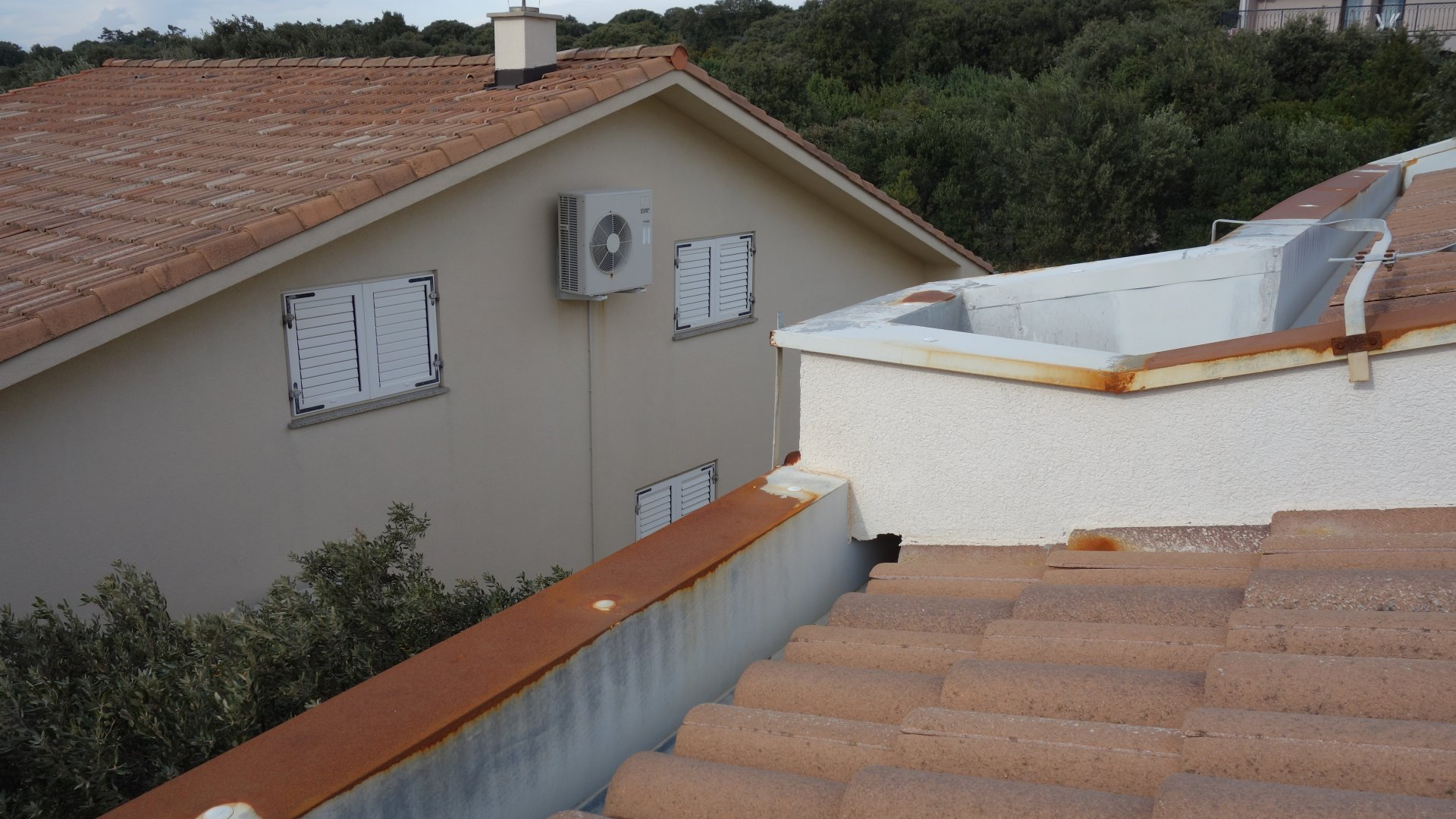
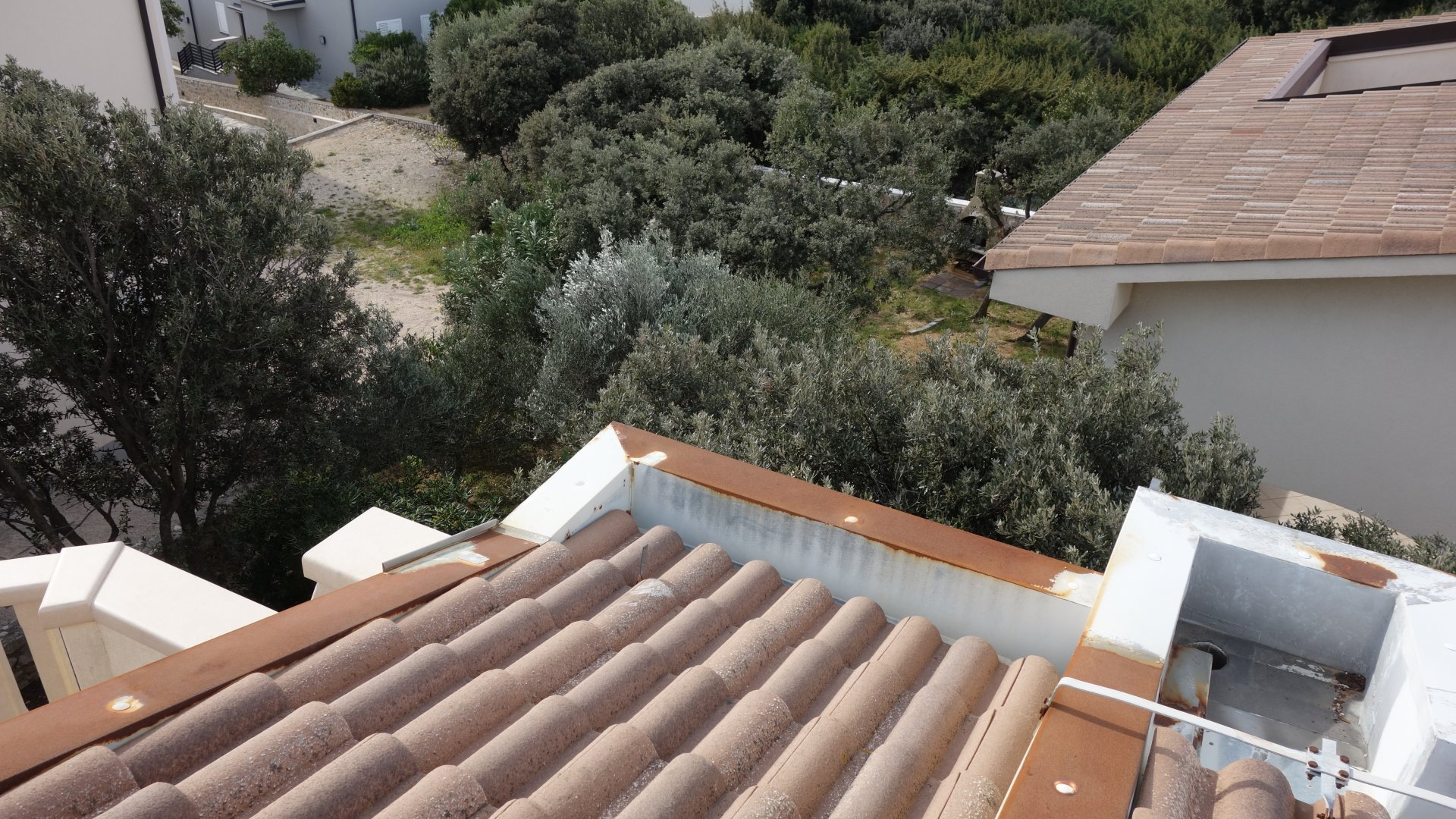
The house is about 10 years old. The roof was constructed with a continuous, internal gutter (behind a parapet). These gutters are made of galvanized sheet metal, which was laid into concrete channels. Unfortunately, the sheet metal joints were riveted at that time. Some parts of the sheets are even concreted over due to the construction.
The problem:
After only 3 years, moisture damage and flaking plaster appeared on the interior corners of the first floor, now also on the ground floor, and for the past 2–3 years the basement has shown moisture problems with swelling floors and thickly swollen door frames in the floor area.
The main issue here is corrosion of the galvanized sheet metal caused by the salt and the mechanical weakening due to riveting.
Additionally, the poor construction includes areas with little to no slope. Saltwater rain regularly pools in the gutter, accelerating the rusting process (especially at the rivet points).
We attempted repairs ourselves using liquid plastic at the critical points, but unfortunately, this only lasted about 1.5 years before the walls became wet again.
We have already consulted several roofers, and there appear to be two main repair options.
The first would be to completely remove everything and rebuild it using aluminum (partially plastic coated), but this is a huge effort because some sheets are concreted over, and the costs range from approximately 15,000 to 20,000 euros.
The second option (favored and recommended by most contractors) is to sand off all rust and seal everything completely with a special liquid plastic (e.g., Unilastik) designed specifically for flat roofs.
This costs only about 6,000 to 8,000 euros, but I have a bad feeling about leaving so much “preserved rust” underneath. The warranties offered don’t matter much to me; I don’t care about 2 to 5 years — this needs to last 20 years or more! I don’t want to pay around 10,000 euros every few years for the roof seal.
Now my questions about these two options:
Option “Coating” (approx. 6,000–8,000 euros): Mechanically sanding off rust and sealing the entire gutter with special liquid plastic (Unilastik or similar).
Option “Reconstruction” (approx. 15,000–20,000 euros): Complete removal of the old sheets (some chiseling work necessary) and rebuilding with aluminum sheets, ideally plastic-coated.
Does the “smaller solution” (coating over rust) have any chance of lasting 15 to 20 years in this climate, or will the rust continue to spread under the plastic? Is it really common practice to repair like this — especially leaving heavily rusted material underneath? Won’t this attack the plastic from below or inside over time or create a hollow space (since some salt will surely remain in the rust pores)?
The slope must be corrected regardless of the solution. For the reconstruction option, the slope should be adjusted, for example with slope insulation or screed, before the new sheets are installed. For the coating option, it was suggested to use polystyrene/insulation boards or similar materials to shape the correct slope. What are your views on this?
Material compatibility: Is a liquid plastic system based on polyester or PU even approved for a salty marine environment on a rusted substrate?
Alternative EPDM?! Is it feasible to line the gutter with an EPDM membrane (high-quality rubber)? It is very durable and UV resistant, but installing it “in one piece” (fewer seams/rivets) will probably be difficult or impossible here?
Are there any experiences with EPDM liners in salty environments as an alternative to sheet metal, especially when the rust cannot be completely removed from salt and air inclusions?
Or are there possibly better options or solutions for our “designed roof,” where the drainage runs are predetermined by the concrete topology, which are more reliable from a building physics standpoint...?
Thank you very much in advance for your input!
I need professional advice for the renovation of our holiday villa on the island of Pag (Croatia). The house is located very close to the sea (aggressive saltwater air, extreme Bura winds).
The situation:
The house is about 10 years old. The roof was constructed with a continuous, internal gutter (behind a parapet). These gutters are made of galvanized sheet metal, which was laid into concrete channels. Unfortunately, the sheet metal joints were riveted at that time. Some parts of the sheets are even concreted over due to the construction.
The problem:
After only 3 years, moisture damage and flaking plaster appeared on the interior corners of the first floor, now also on the ground floor, and for the past 2–3 years the basement has shown moisture problems with swelling floors and thickly swollen door frames in the floor area.
The main issue here is corrosion of the galvanized sheet metal caused by the salt and the mechanical weakening due to riveting.
Additionally, the poor construction includes areas with little to no slope. Saltwater rain regularly pools in the gutter, accelerating the rusting process (especially at the rivet points).
We attempted repairs ourselves using liquid plastic at the critical points, but unfortunately, this only lasted about 1.5 years before the walls became wet again.
We have already consulted several roofers, and there appear to be two main repair options.
The first would be to completely remove everything and rebuild it using aluminum (partially plastic coated), but this is a huge effort because some sheets are concreted over, and the costs range from approximately 15,000 to 20,000 euros.
The second option (favored and recommended by most contractors) is to sand off all rust and seal everything completely with a special liquid plastic (e.g., Unilastik) designed specifically for flat roofs.
This costs only about 6,000 to 8,000 euros, but I have a bad feeling about leaving so much “preserved rust” underneath. The warranties offered don’t matter much to me; I don’t care about 2 to 5 years — this needs to last 20 years or more! I don’t want to pay around 10,000 euros every few years for the roof seal.
Now my questions about these two options:
Option “Coating” (approx. 6,000–8,000 euros): Mechanically sanding off rust and sealing the entire gutter with special liquid plastic (Unilastik or similar).
Option “Reconstruction” (approx. 15,000–20,000 euros): Complete removal of the old sheets (some chiseling work necessary) and rebuilding with aluminum sheets, ideally plastic-coated.
Does the “smaller solution” (coating over rust) have any chance of lasting 15 to 20 years in this climate, or will the rust continue to spread under the plastic? Is it really common practice to repair like this — especially leaving heavily rusted material underneath? Won’t this attack the plastic from below or inside over time or create a hollow space (since some salt will surely remain in the rust pores)?
The slope must be corrected regardless of the solution. For the reconstruction option, the slope should be adjusted, for example with slope insulation or screed, before the new sheets are installed. For the coating option, it was suggested to use polystyrene/insulation boards or similar materials to shape the correct slope. What are your views on this?
Material compatibility: Is a liquid plastic system based on polyester or PU even approved for a salty marine environment on a rusted substrate?
Alternative EPDM?! Is it feasible to line the gutter with an EPDM membrane (high-quality rubber)? It is very durable and UV resistant, but installing it “in one piece” (fewer seams/rivets) will probably be difficult or impossible here?
Are there any experiences with EPDM liners in salty environments as an alternative to sheet metal, especially when the rust cannot be completely removed from salt and air inclusions?
Or are there possibly better options or solutions for our “designed roof,” where the drainage runs are predetermined by the concrete topology, which are more reliable from a building physics standpoint...?
Thank you very much in advance for your input!
And here are the pictures from two weeks before Easter:

In the meantime, one of the side guide plates was completely torn off over the winter by strong winds:

...and you can see how rust is now spreading into the expensive stone below the missing drip edge... :-(
Here you can see the over-concreted/rendered gutter areas:
Below, in this attached half-hexagon section, was the first and most severe water ingress. You can see our numerous repairs here:
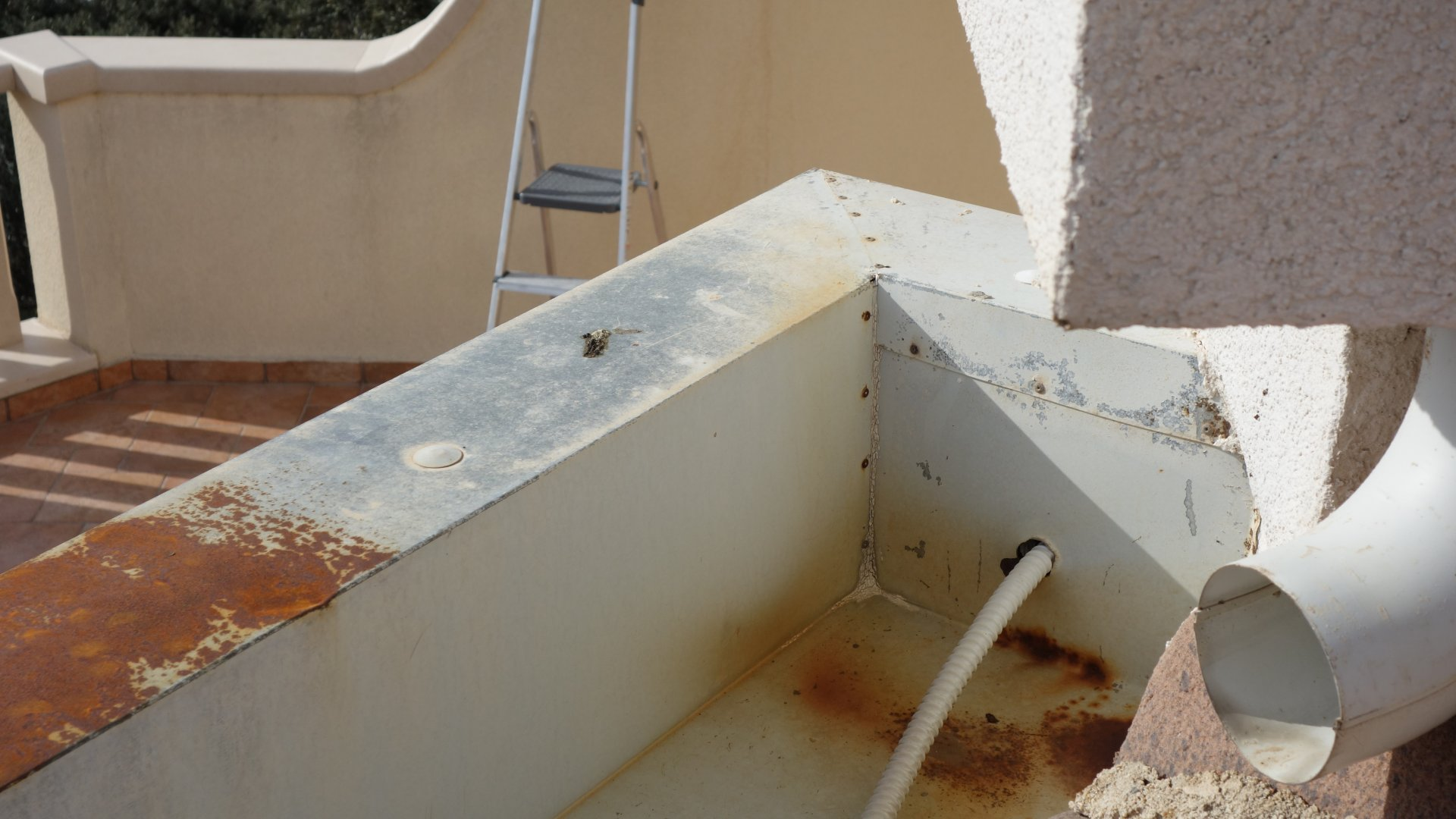
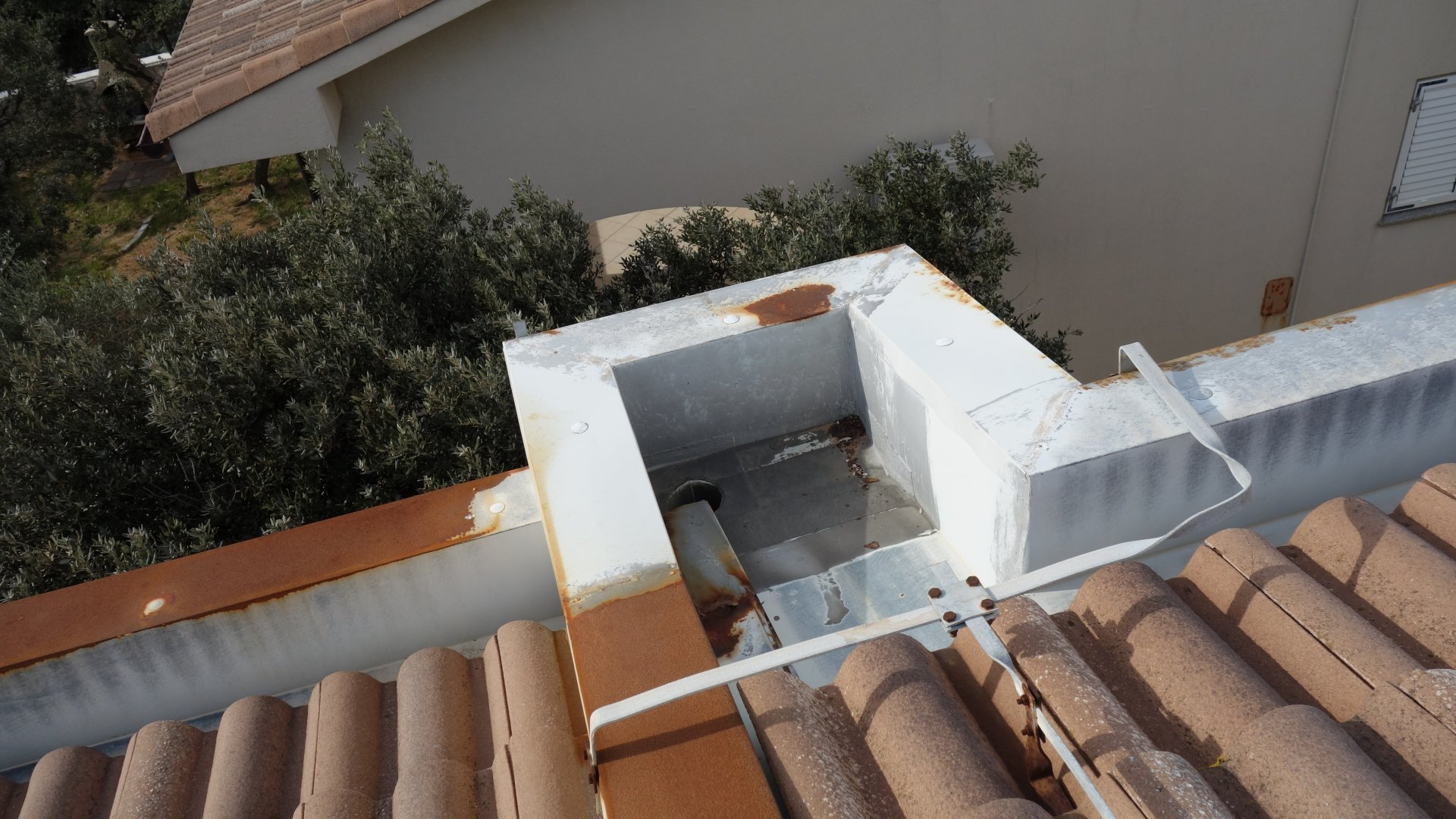
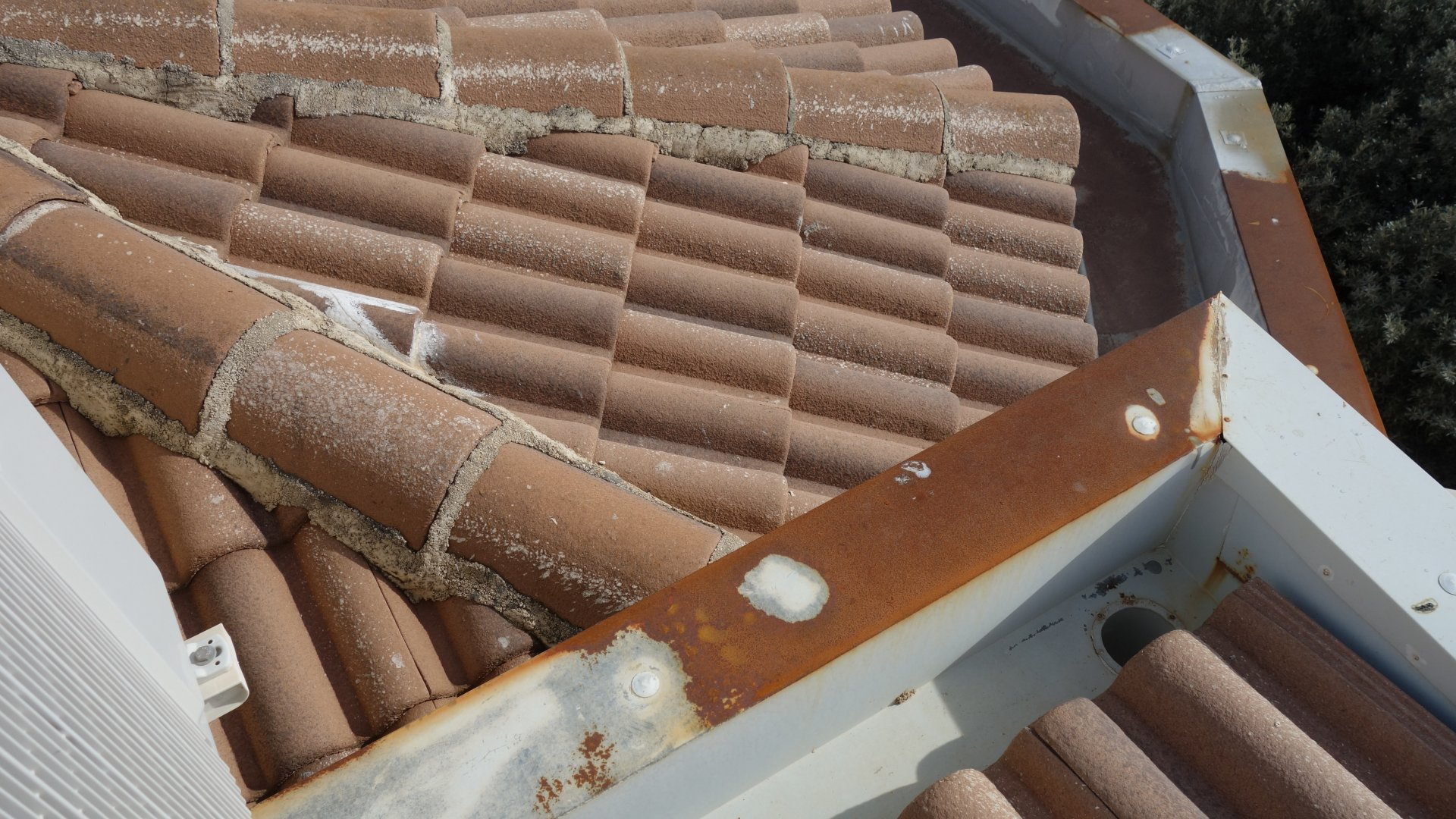
There is also a recessed gutter running completely around the dormers:
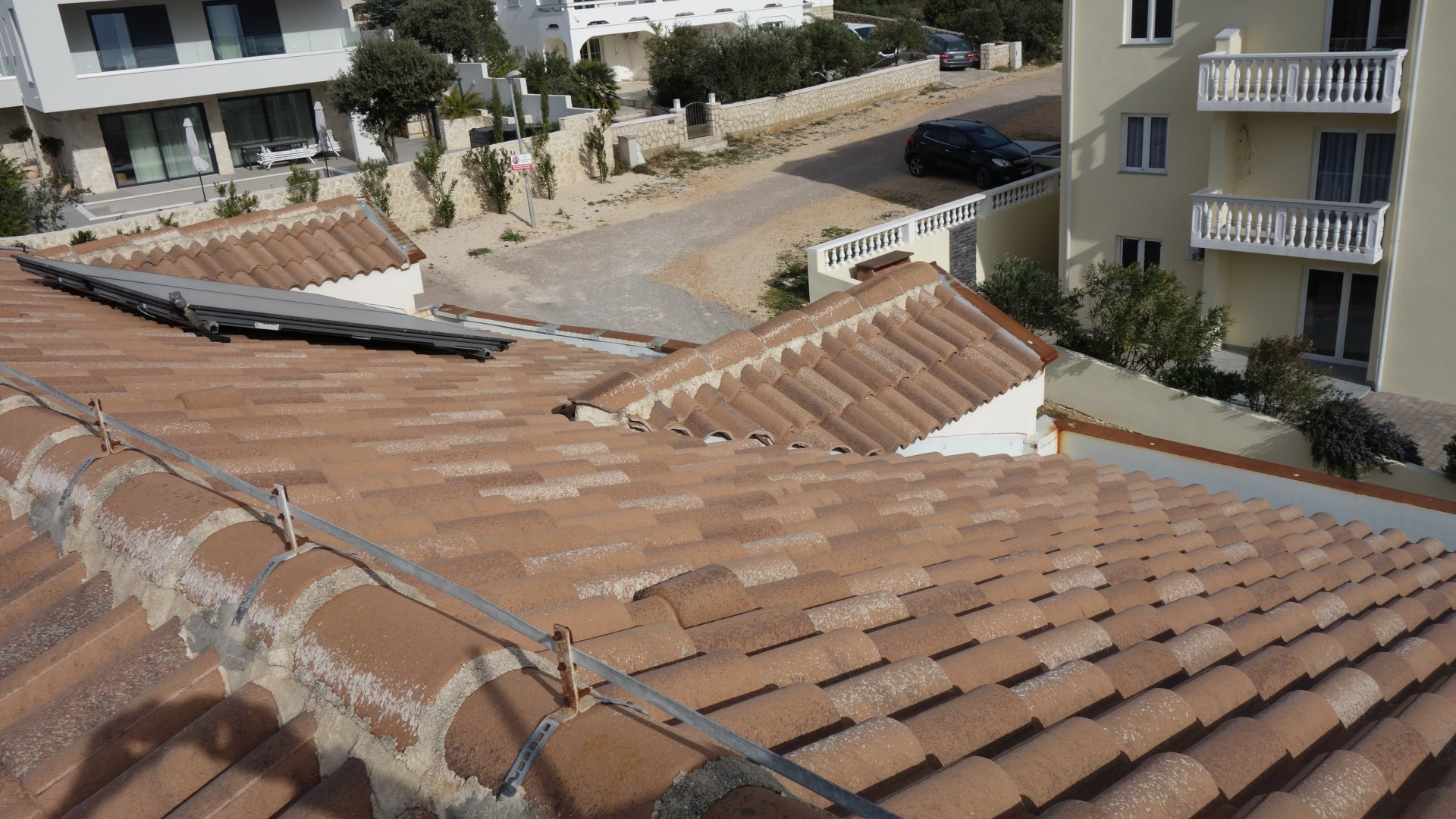
In the meantime, one of the side guide plates was completely torn off over the winter by strong winds:
...and you can see how rust is now spreading into the expensive stone below the missing drip edge... :-(
Here you can see the over-concreted/rendered gutter areas:
Below, in this attached half-hexagon section, was the first and most severe water ingress. You can see our numerous repairs here:
There is also a recessed gutter running completely around the dormers:
Similar topics