
ᐅ Protection Against Mold Growth in Glass Wool / Cavity Insulation
Created on: 18 Jul 2012 18:43
F
frogggerHello,
you often hear that glass wool / cavity insulation must never get wet; due to mold and the loss of thermal insulation performance.
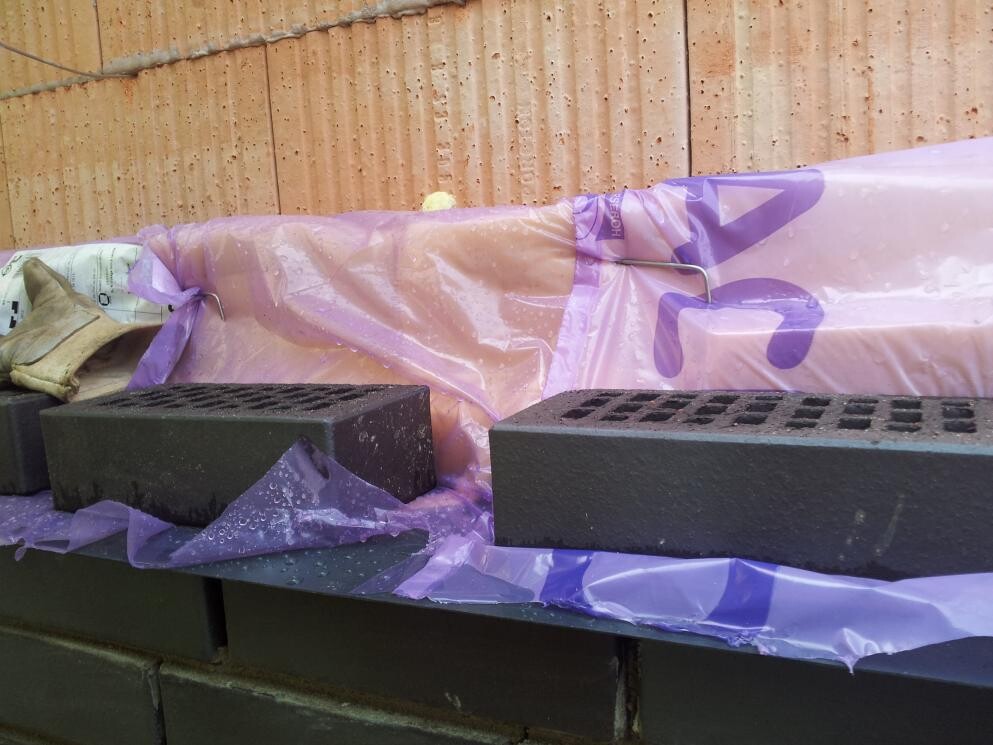
Now, my foreman said it is enough to cover the glass wool and brickwork with a foil. See photo.
My question to the experts: is that really sufficient??? The roof is not installed yet, unfortunately, because it would interfere with the bricklaying above...
Because, honestly, the water running down the wall (and right now it’s raining quite a lot!) definitely runs down the wall and past the foil into the glass wool.
My foreman says he has been doing it this way for 40 years. He also says it will dry again.

???
What do you think?
Thanks in advance!
Best regards
you often hear that glass wool / cavity insulation must never get wet; due to mold and the loss of thermal insulation performance.
Now, my foreman said it is enough to cover the glass wool and brickwork with a foil. See photo.
My question to the experts: is that really sufficient??? The roof is not installed yet, unfortunately, because it would interfere with the bricklaying above...
Because, honestly, the water running down the wall (and right now it’s raining quite a lot!) definitely runs down the wall and past the foil into the glass wool.
My foreman says he has been doing it this way for 40 years. He also says it will dry again.
???
What do you think?
Thanks in advance!
Best regards
H
Häuslebauer402 Aug 2012 15:01Basically, you are right that the material mostly loses its insulating properties when it becomes damp to a certain extent. However, by now there are supposedly, at least some manufacturers claim, insulation wool that nearly regains 100% of its insulating capacity after drying. I’m not sure if that can be trusted. Someone with expertise on this should really speak up. But experts are hard to find here...
Similar topics