
D
Dennis6745 Dec 2016 21:51Hello everyone,
my single-family house is currently in the drying phase.
In our living area, we have an open interior pitched roof.
At the moment, our construction drying is being done with several construction dehumidifiers, but the relative humidity is still quite high, sometimes 76%.
Now, moisture has appeared in some areas between the vapor retarder and the insulation.
Apparently, the vapor retarder is not 100% airtight. The insulation seems damp in some spots.
I spoke with our architect, who said that under the current weather conditions this is normal, vapor retarders can never be completely airtight, but this is not a serious issue.
The moisture can dry out again through the vapor-permeable upper membrane toward the roof tiles.
I am currently very uncertain whether this can really be considered normal and have concerns about mold and wood damage.
What are your experiences? Is action required here or is this really a usual process?
Looking forward to your answers.
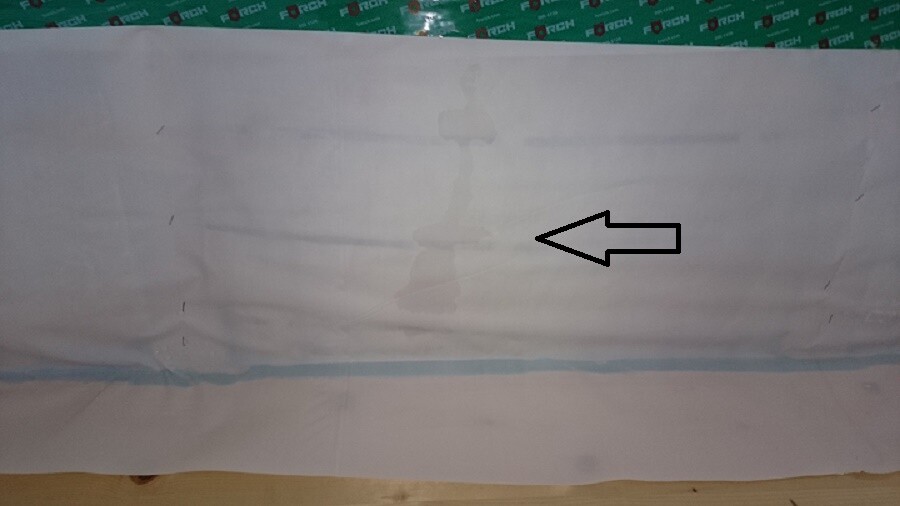
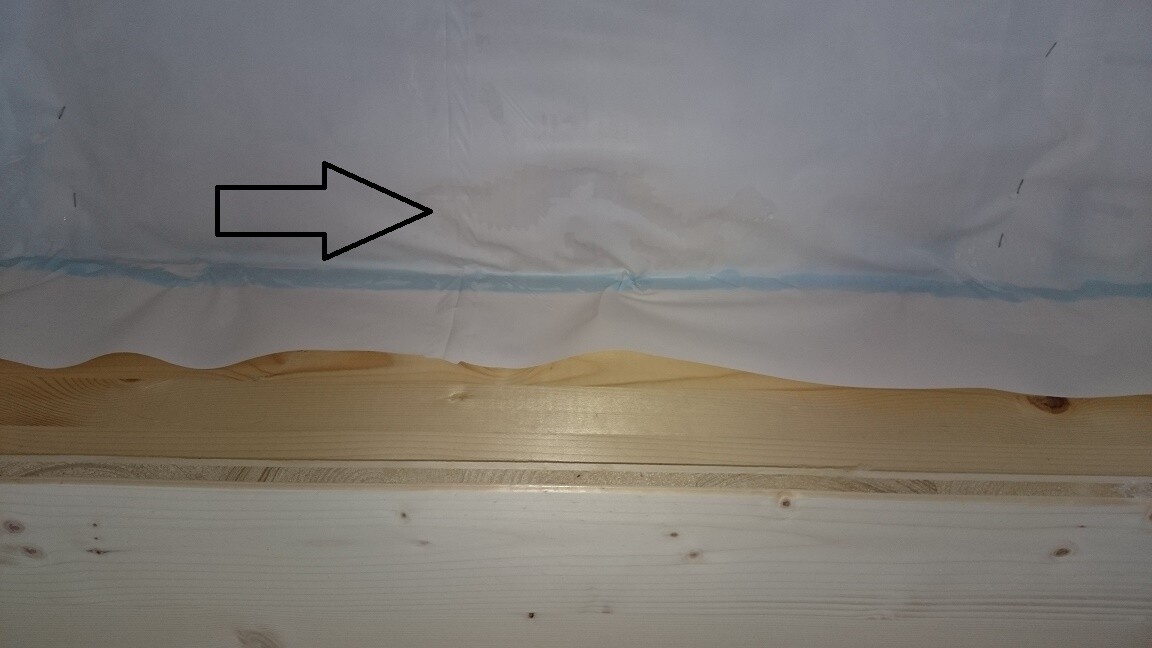
my single-family house is currently in the drying phase.
In our living area, we have an open interior pitched roof.
At the moment, our construction drying is being done with several construction dehumidifiers, but the relative humidity is still quite high, sometimes 76%.
Now, moisture has appeared in some areas between the vapor retarder and the insulation.
Apparently, the vapor retarder is not 100% airtight. The insulation seems damp in some spots.
I spoke with our architect, who said that under the current weather conditions this is normal, vapor retarders can never be completely airtight, but this is not a serious issue.
The moisture can dry out again through the vapor-permeable upper membrane toward the roof tiles.
I am currently very uncertain whether this can really be considered normal and have concerns about mold and wood damage.
What are your experiences? Is action required here or is this really a usual process?
Looking forward to your answers.

Ask the architect for the vapor diffusion resistance values (sd-values) of the internal vapor retarder and the external breather membrane, if one has been installed. The vapor retarder should have a significantly higher diffusion resistance than the breather membrane. A vapor retarder is not a vapor barrier, so even during periods of high humidity after the screed installation or interior plaster work, moisture will enter the space between the rafters. Ideally, an interior vapor retarder with variable moisture permeability should be used, which allows drying back out during the summer. Even better would be the installation of a wood fiber underlay board as the top layer of the rafter structure instead of the breather membrane. This underlay board can absorb moisture peaks and transport moisture away through capillary action. Condensation can also form on the underside of the vapor-permeable breather membrane in winter, as moisture may accumulate in the eaves area. The architect should explain these relationships to you or provide proof of the building physics compliance.
K
Knallkörper6 Dec 2016 15:16An unventilated roof structure is considered moisture-safe if the underlay (the vapor-permeable membrane) has an Sd value of less than 0.3 m (1 ft), and the interior vapor barrier has an Sd value of at least 2 m (6.6 ft).
Perhaps you can find type designations on the material installed in your project.
Perhaps you can find type designations on the material installed in your project.
D
Dennis6748 Dec 2016 21:21Hello everyone,
thank you for your responses.
I hired a building inspector to visit the construction site.
It looks bad; according to the report, the insulation is "soaking wet," there was a strong unpleasant smell when opening the vapor barrier, and early-stage mold is already present.
Now the vapor barrier has to be removed, all insulation taken out, and mold remediation must be carried out—meaning disinfection and possibly even sanding down the beams.
I still can’t quite believe it; until now, I had a really good feeling about our general contractor, but now this mess.
Well, at least I have established the facts now, and things are moving forward.
I’m curious how the general contractor will respond and what will happen next.
See you soon
thank you for your responses.
I hired a building inspector to visit the construction site.
It looks bad; according to the report, the insulation is "soaking wet," there was a strong unpleasant smell when opening the vapor barrier, and early-stage mold is already present.
Now the vapor barrier has to be removed, all insulation taken out, and mold remediation must be carried out—meaning disinfection and possibly even sanding down the beams.
I still can’t quite believe it; until now, I had a really good feeling about our general contractor, but now this mess.
Well, at least I have established the facts now, and things are moving forward.
I’m curious how the general contractor will respond and what will happen next.
See you soon
U
Username_wahl22 Jan 2017 09:36Hello, what exactly was the cause of the problem?
Similar topics