
ᐅ Installing an interior windowsill: what preparations are necessary?
Created on: 5 Dec 2020 10:10
K
kuruemeruK
kuruemeru5 Dec 2020 10:10Hello everyone,
We have completely replaced our facade. Previously, it consisted only of wood, thin wooden panels, and wooden windows. New windows have now been installed, and the facade has been reinforced. On the outside, an aluminum window sill was added and supported with mortar, which is not even fully sealed. There is quite a bit of air coming through. 🙄
We now want to install interior window sills made of stone.
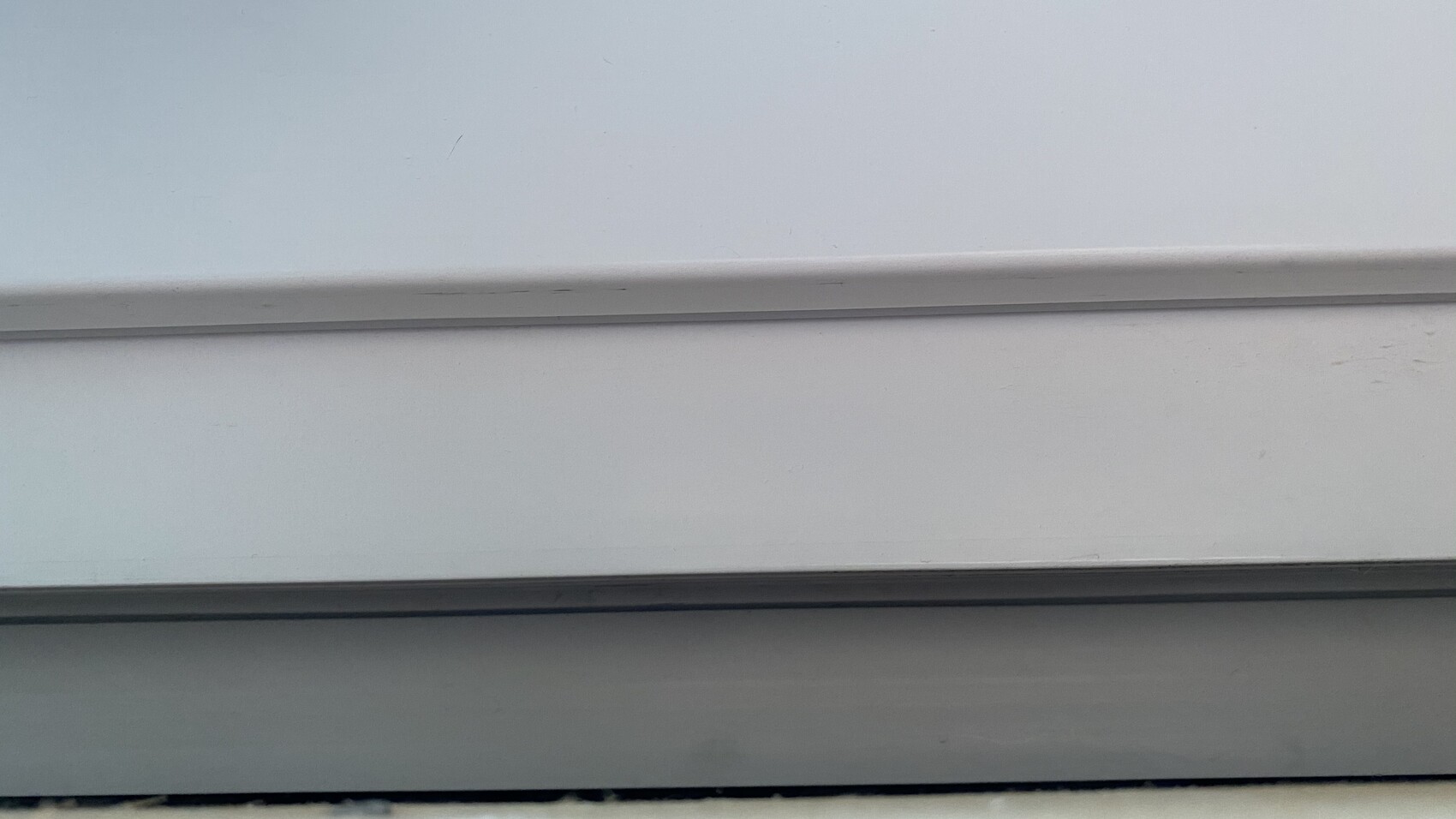
Currently, a wooden strip is placed on top of the masonry, and beneath the window, the bare stone with holes is still visible.
What precautions should be taken?
I think just filling the gaps with foam would be the wrong approach. Should insulation, for example XPS (extruded polystyrene), be glued here? Can the window sill then be bonded directly, or is more work necessary? I want to avoid thermal bridges and mold formation.
I would appreciate your advice.



We have completely replaced our facade. Previously, it consisted only of wood, thin wooden panels, and wooden windows. New windows have now been installed, and the facade has been reinforced. On the outside, an aluminum window sill was added and supported with mortar, which is not even fully sealed. There is quite a bit of air coming through. 🙄
We now want to install interior window sills made of stone.
Currently, a wooden strip is placed on top of the masonry, and beneath the window, the bare stone with holes is still visible.
What precautions should be taken?
I think just filling the gaps with foam would be the wrong approach. Should insulation, for example XPS (extruded polystyrene), be glued here? Can the window sill then be bonded directly, or is more work necessary? I want to avoid thermal bridges and mold formation.
I would appreciate your advice.
kuruemeru schrieb:
There’s a lot of air leaking through here. 🙄OMG Did you install this yourself? That’s just not acceptable.
kuruemeru schrieb:
I want to avoid thermal bridges and mold growth.Then the windows should have been installed properly in the first place. I have no idea how this can be fixed. If air is coming in, moisture is bound to follow soon.
Then the windows should have been installed properly in the first place.
K
kuruemeru5 Dec 2020 11:40No, I don’t do that myself. It was done by a window installer and a mason. I also don’t think it’s ideal, but I trusted the craftsmanship here.
What would have been the right way to do it?
What would have been the right way to do it?
kuruemeru schrieb:
What would have been done correctly? Try searching for RAL installation, airtightness, driving rain resistance, proper window installation, or similar terms. Then you will see how a proper installation looks. What you have is poor workmanship.
K
kuruemeru5 Dec 2020 12:54The problem is that after the wall frame was installed, the windows were placed in front of the lower wall. I know that the sides were properly sealed with sealing tape. The mason then filled in underneath with mortar, which looks rather untidy and certainly does not comply with RAL standards. But the damage is done, and I need a solution that doesn’t involve ripping everything out. Surely it should be possible to fix this afterwards using sealing tape, foam insulation, or insulation panels to correct the issue to a satisfactory extent.
K
kuruemeru5 Dec 2020 12:57If necessary, remove the mortar below the windows and replace it with something appropriate. But before proceeding incorrectly, I wanted to ask first.
Similar topics