
Hello, I hope this is the right forum for discussing soundproofing.
I recently moved into a newly built apartment, first occupant. Soon after, the petite neighbor above moved in as well, but unfortunately her footsteps are not so light. Every step is not only audible to me but also physically felt, causing pain in my ear. I am now experiencing acute hearing problems. This worries me both for my health and the possibility of not being able to stay here any longer (which actually isn’t really an option since I spent six months searching for an apartment in a metropolitan area). On top of that, I now hear every sound much more intensely. This includes street noise and even just my refrigerator. The room is quite large and combines the kitchen, living room, and office area. I do hear the footsteps in the bedroom as well, but since it is smaller, it seems less noticeable there. Overall, there is a relatively strong sound presence, which I assume is mainly due to the fully plastered and unpainted walls combined with the hardwood floor.
Next week, a team of construction workers will come to assess the impact noise problem. The (65m² (700 sq ft)) apartment costs about 400,000 Euros, so technically there shouldn’t be such an issue regardless of how heavy the upstairs neighbor walks. At least she has now switched off her subwoofer...
However, I don’t want to fully rely on the construction team. They might consider the noise normal, so I’m planning to take some countermeasures myself. But first, I’m trying to understand how exactly this strong, painful sound wave is generated. Is it the room amplifying the vibrations until they reach my ear, or is it the large ceiling surface directly radiating the sound at that intensity?
The current plan includes installing curtains to reduce street noise. Then, on the large plastered (no wallpaper) walls, I will hang “huge” acoustic panels covered with fabric. Additionally, I want to place tall bookshelves and cover as much of the floor as possible with thick, plush carpet. This way, I would cover almost all walls and floors with sound-absorbing materials.
Focusing on the ceiling seems logical at first glance, but it’s rather difficult to soundproof. One idea is to install relatively large ceiling lights, some of which I would partially fill with acoustic foam:
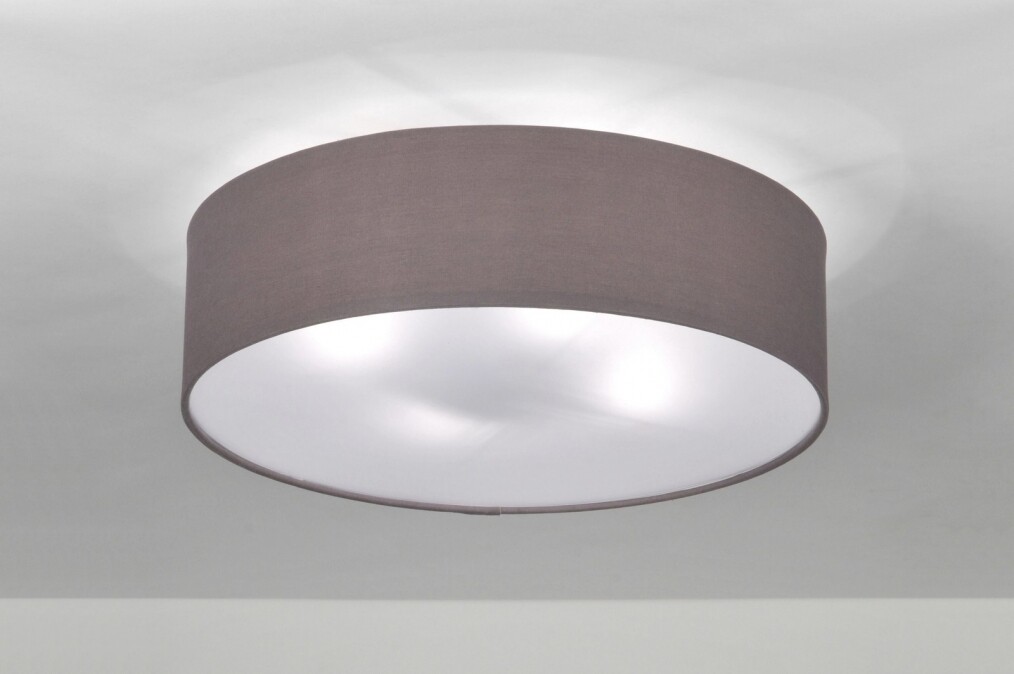
Is there anyone here who can relate to my problem and perhaps has dealt with it themselves? An explanation of how impact noise behaves would already be very helpful to take effective countermeasures.
I recently moved into a newly built apartment, first occupant. Soon after, the petite neighbor above moved in as well, but unfortunately her footsteps are not so light. Every step is not only audible to me but also physically felt, causing pain in my ear. I am now experiencing acute hearing problems. This worries me both for my health and the possibility of not being able to stay here any longer (which actually isn’t really an option since I spent six months searching for an apartment in a metropolitan area). On top of that, I now hear every sound much more intensely. This includes street noise and even just my refrigerator. The room is quite large and combines the kitchen, living room, and office area. I do hear the footsteps in the bedroom as well, but since it is smaller, it seems less noticeable there. Overall, there is a relatively strong sound presence, which I assume is mainly due to the fully plastered and unpainted walls combined with the hardwood floor.
Next week, a team of construction workers will come to assess the impact noise problem. The (65m² (700 sq ft)) apartment costs about 400,000 Euros, so technically there shouldn’t be such an issue regardless of how heavy the upstairs neighbor walks. At least she has now switched off her subwoofer...
However, I don’t want to fully rely on the construction team. They might consider the noise normal, so I’m planning to take some countermeasures myself. But first, I’m trying to understand how exactly this strong, painful sound wave is generated. Is it the room amplifying the vibrations until they reach my ear, or is it the large ceiling surface directly radiating the sound at that intensity?
The current plan includes installing curtains to reduce street noise. Then, on the large plastered (no wallpaper) walls, I will hang “huge” acoustic panels covered with fabric. Additionally, I want to place tall bookshelves and cover as much of the floor as possible with thick, plush carpet. This way, I would cover almost all walls and floors with sound-absorbing materials.
Focusing on the ceiling seems logical at first glance, but it’s rather difficult to soundproof. One idea is to install relatively large ceiling lights, some of which I would partially fill with acoustic foam:
Is there anyone here who can relate to my problem and perhaps has dealt with it themselves? An explanation of how impact noise behaves would already be very helpful to take effective countermeasures.

Hello questioner.
You have purchased a property, a building that must meet certain requirements for sound insulation among other things.
In my professional experience, I have dealt with several residential buildings where the effectiveness of the sound insulation was questioned. Sometimes justifiably, but sometimes not.
I don’t believe in simple “home remedies” such as covering your head with a blanket or installing ceiling lights with built-in impact sound insulation. Why? Because these measures neither clarify the situation nor provide a real solution.
It was rightly pointed out whether you alone are sensitive to noise or if your friends are as well. While this probably does not give an objective assessment, it can provide some indications.
Ultimately, only an acoustic report can offer objective clarification and legal certainty.
A residential property is not like a bicycle that you can simply leave unused in a corner if it doesn’t work.
A property represents an asset, and its use is closely linked to quality of life. Therefore, in case of doubt, clarification must be sought from a sound insulation expert who uses an appropriate standardized tapping machine and the necessary equipment to measure sound pressure levels in both apartments.
Is it elaborate? Certainly!
But there is no other way if you want to avoid having a sound performance that is “less than perfect” from a technical standpoint.
I can fully understand this! But for DIY enthusiasts, the limits are clear here. Without professionals who are not involved with the property, there is no solution.
--------------
Regards, KlaRa
You have purchased a property, a building that must meet certain requirements for sound insulation among other things.
In my professional experience, I have dealt with several residential buildings where the effectiveness of the sound insulation was questioned. Sometimes justifiably, but sometimes not.
I don’t believe in simple “home remedies” such as covering your head with a blanket or installing ceiling lights with built-in impact sound insulation. Why? Because these measures neither clarify the situation nor provide a real solution.
It was rightly pointed out whether you alone are sensitive to noise or if your friends are as well. While this probably does not give an objective assessment, it can provide some indications.
Ultimately, only an acoustic report can offer objective clarification and legal certainty.
A residential property is not like a bicycle that you can simply leave unused in a corner if it doesn’t work.
A property represents an asset, and its use is closely linked to quality of life. Therefore, in case of doubt, clarification must be sought from a sound insulation expert who uses an appropriate standardized tapping machine and the necessary equipment to measure sound pressure levels in both apartments.
Is it elaborate? Certainly!
But there is no other way if you want to avoid having a sound performance that is “less than perfect” from a technical standpoint.
I can fully understand this! But for DIY enthusiasts, the limits are clear here. Without professionals who are not involved with the property, there is no solution.
--------------
Regards, KlaRa
H
HilfeHilfe8 May 2017 16:02Did you buy it or rent it? If you are renting, then you should move out.
KlaRa schrieb:
Hello questioner.
[...]
Ultimately, only an acoustic report can provide objective clarification and legal certainty.
A residential property is not like a bicycle that you can just put aside unused if it doesn’t work.
A property represents value, and its use is closely linked to quality of life. Therefore, in case of doubt, the issue must be clarified by a noise control expert who measures with an appropriate standardized tapping machine and the corresponding equipment to record sound pressure levels in both apartments.
Complex? Certainly!
But there is no other way if you want to avoid a substandard sound insulation performance from a technical perspective.
[...] Hello, just out of curiosity... roughly how much should one expect to pay for something like this? And where can you find such an expert? They don’t seem to be available everywhere.
Hello "nms_hs".
The total costs depend on the hourly rate of the expert, the travel time and distance, and ultimately the actual time required for on-site inspections, evaluations, and the preparation of a test report or a more detailed expert opinion.
You can find these professionals by contacting the expert services department of a chamber of commerce and industry (IHK) or, less commonly, a chamber of crafts (HWK), and inquiring specifically about an acoustic consultant.
-----------------------------------
Regards, KlaRa
The total costs depend on the hourly rate of the expert, the travel time and distance, and ultimately the actual time required for on-site inspections, evaluations, and the preparation of a test report or a more detailed expert opinion.
You can find these professionals by contacting the expert services department of a chamber of commerce and industry (IHK) or, less commonly, a chamber of crafts (HWK), and inquiring specifically about an acoustic consultant.
-----------------------------------
Regards, KlaRa
Similar topics