
Hello everyone,
I have a few questions regarding sound insulation in a semi-detached house. I have already read a lot about noise issues in semi-detached homes.
The reason I need to deal with this is that after moving, we are now facing similar problems ourselves.
For the past two years, we lived in a semi-detached house (built in 2015) with neighbors who are a family with one child (2 years old). We did not have any noise problems there. Of course, you could hear the child crying loudly sometimes, but it was never really disturbing.
Now we have moved again, into another semi-detached house (built in 2020), and are plagued by many noise issues.
The house is very noisy. We hear a lot from the neighbors; here is what we hear from them:
- Normal conversations are sometimes audible (especially in the evening when everything is quiet, these can be heard very clearly)
- Loud conversations are clearly audible (disturbing even when the radio or TV is on)
- Very loud impact noise from footsteps (clearly audible, especially from the upper floor)
- Bed creaking noises
- Closing of doors (I can hear exactly which room the neighbors enter and where the door is being closed)
- Water sounds
- Setting down items on the floor or furniture
At first, we suspected the neighbors were very loud, but they have now even taken precautions (closing windows once we go to bed, closing room doors, they even bought a soundproofing panel). Unfortunately, these measures had little effect. Now both the neighbors and we suspect the issue lies with the building itself.
Together with the neighbors, we have already tried to locate the source of the noise transmission but without success. What stands out is that impact noise from the upper floor is the most noticeable; the staircase seems to cause fewer issues.
A few key facts about the building:
- New semi-detached house built in 2020, designed in an urban villa style
- Party wall is double-layered with a separating gap (on the outside you can see something in the gap)
- We suspect the roof beams run continuously through both units
- The entire house is tiled throughout
I also tried measuring decibel levels with an app but without much success. After talking to the neighbors, I was even allowed to try recording the noise, but that also did not help. Although the sound levels on the recordings showed peaks and changes, it does not sound like it does in reality.
We have now scheduled an appointment with the landlord for the upcoming weekend.
As preparation for this appointment, I am reaching out to you all to possibly get some tips on what exactly to pay attention to or what questions/points to raise.
Both parties in the house are interested in solving the problem (if it’s even possible) because we cannot live or sleep properly like this, and the other party of course also wants to live normally and not have me contacting them about noise every day.
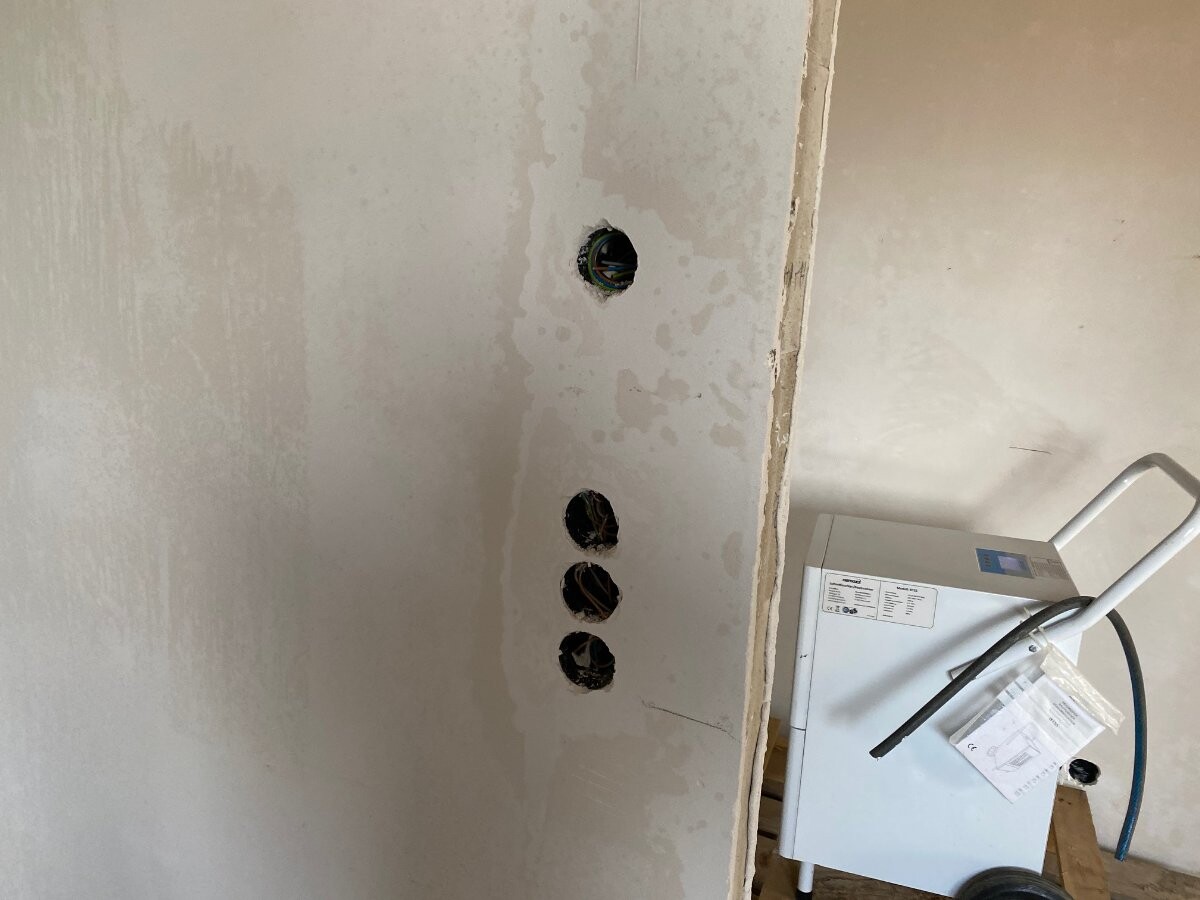
I am attaching a few pictures I have available.
Thank you in advance for your answers.
Regards,
Dennis
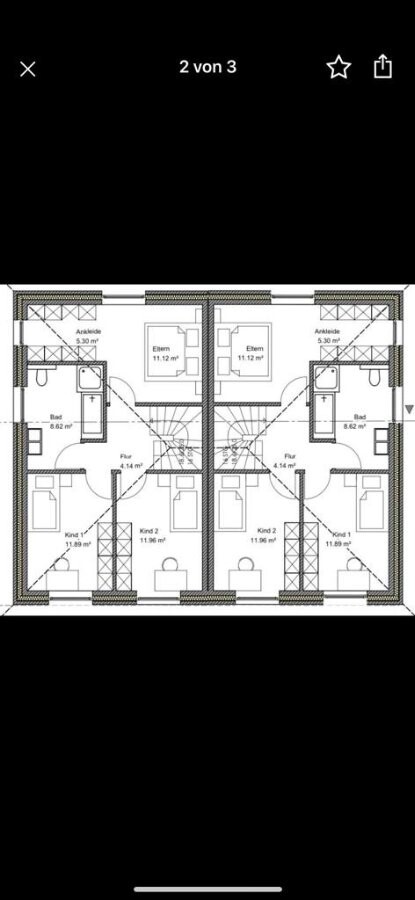
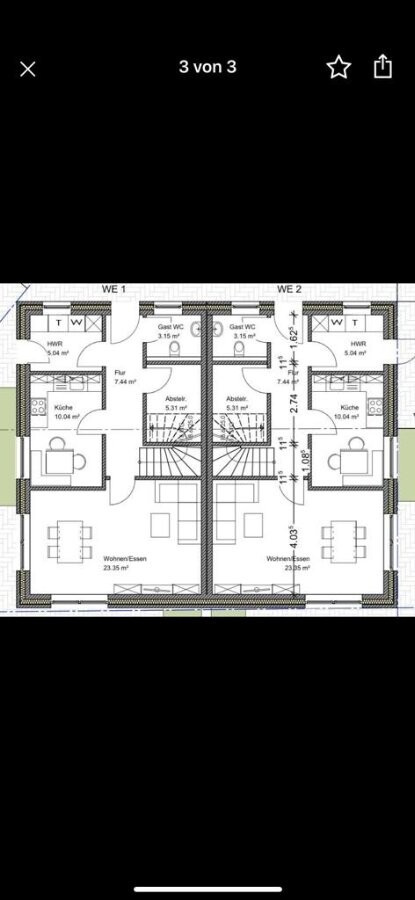
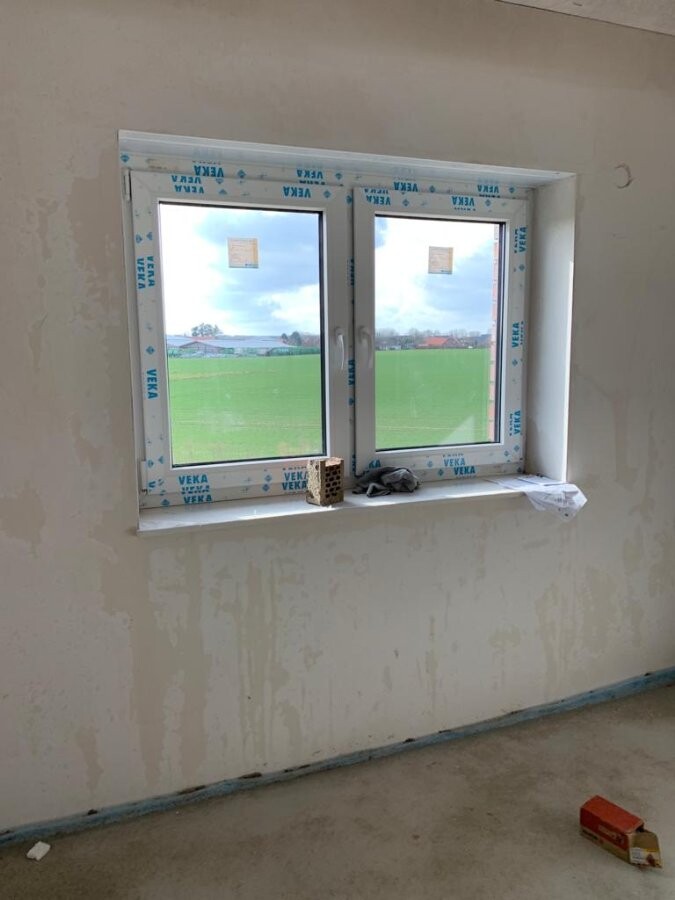
I have a few questions regarding sound insulation in a semi-detached house. I have already read a lot about noise issues in semi-detached homes.
The reason I need to deal with this is that after moving, we are now facing similar problems ourselves.
For the past two years, we lived in a semi-detached house (built in 2015) with neighbors who are a family with one child (2 years old). We did not have any noise problems there. Of course, you could hear the child crying loudly sometimes, but it was never really disturbing.
Now we have moved again, into another semi-detached house (built in 2020), and are plagued by many noise issues.
The house is very noisy. We hear a lot from the neighbors; here is what we hear from them:
- Normal conversations are sometimes audible (especially in the evening when everything is quiet, these can be heard very clearly)
- Loud conversations are clearly audible (disturbing even when the radio or TV is on)
- Very loud impact noise from footsteps (clearly audible, especially from the upper floor)
- Bed creaking noises
- Closing of doors (I can hear exactly which room the neighbors enter and where the door is being closed)
- Water sounds
- Setting down items on the floor or furniture
At first, we suspected the neighbors were very loud, but they have now even taken precautions (closing windows once we go to bed, closing room doors, they even bought a soundproofing panel). Unfortunately, these measures had little effect. Now both the neighbors and we suspect the issue lies with the building itself.
Together with the neighbors, we have already tried to locate the source of the noise transmission but without success. What stands out is that impact noise from the upper floor is the most noticeable; the staircase seems to cause fewer issues.
A few key facts about the building:
- New semi-detached house built in 2020, designed in an urban villa style
- Party wall is double-layered with a separating gap (on the outside you can see something in the gap)
- We suspect the roof beams run continuously through both units
- The entire house is tiled throughout
I also tried measuring decibel levels with an app but without much success. After talking to the neighbors, I was even allowed to try recording the noise, but that also did not help. Although the sound levels on the recordings showed peaks and changes, it does not sound like it does in reality.
We have now scheduled an appointment with the landlord for the upcoming weekend.
As preparation for this appointment, I am reaching out to you all to possibly get some tips on what exactly to pay attention to or what questions/points to raise.
Both parties in the house are interested in solving the problem (if it’s even possible) because we cannot live or sleep properly like this, and the other party of course also wants to live normally and not have me contacting them about noise every day.
I am attaching a few pictures I have available.
Thank you in advance for your answers.
Regards,
Dennis
ypg schrieb:
That could be the cause! Floating screed and installing everything floating is not without reason. Often, DIY work done by amateurs is to blame. But the mentioned slab foundation could also be the issue. When a house is built only for rental purposes, cost savings often come first, sometimes at the expense of good workmanship. Is there any way to check/test this?
I’m curious to see what the landlord has to say. Unfortunately, we don’t see a real future here. Of course, it’s frustrating after just 2 months and all the effort plus the costs, but this situation cannot be accepted long-term.
Thanks for your replies!
K
knalltüte5 Jul 2020 16:47Well, the soundproofing—or rather the lack of it—has its limits according to the (DIN) standards, as I recently learned.
There are limits that must be respected. Exactly where these limits lie and how they are measured or verified can certainly be explained by a specialist. However, the landlord will likely not hire one at their own expense.
Significantly improving soundproofing afterward is, as already mentioned, a hardly affordable task.
However, the landlord might be interested in finding out whether applicable standards were not met, in order to hold the party responsible (the architect?) accountable.
For you, the possible consequences could be a) a rent reduction, b) relocation, or c) staying in the property with repairs made.
If standards were not met, your current landlord might have to or should contribute to your moving costs, as they are responsible for the involuntary move.
Certainly an interesting legal situation.
There are limits that must be respected. Exactly where these limits lie and how they are measured or verified can certainly be explained by a specialist. However, the landlord will likely not hire one at their own expense.
Significantly improving soundproofing afterward is, as already mentioned, a hardly affordable task.
However, the landlord might be interested in finding out whether applicable standards were not met, in order to hold the party responsible (the architect?) accountable.
For you, the possible consequences could be a) a rent reduction, b) relocation, or c) staying in the property with repairs made.
If standards were not met, your current landlord might have to or should contribute to your moving costs, as they are responsible for the involuntary move.
Certainly an interesting legal situation.
ypg schrieb:
That could definitely be the reason! Floating screed exists for a reason, and everything is installed floating for good cause. Often, problems are caused by DIY work done by amateurs.
But the foundation slab mentioned can also be the cause. When building a house solely for rental purposes, cost savings are usually prioritized, sometimes at the expense of quality workmanship. Just out of curiosity: what exactly could be wrong with the foundation slab that causes this issue?
I don’t want to say you’re overly sensitive... You’ve already lived in a duplex, and it wasn’t like this there!
About 10 years ago I moved into an apartment but moved out right away because it was really bad—I literally couldn’t sleep.
You could hear conversations through the wall to the neighbors,
when the son was on the phone with his mother I heard everything, even when someone above went to the bathroom or when the underground garage door was used...
I asked the previous tenant how he managed to tolerate it—answer: he was often away on work assignments and didn’t notice anything...
The fact is, modern houses somehow feel more echoey than before... maybe it’s because of the open, spacious layouts and cold floors like tile combined with minimalist living… in the past, everyone had curtains, carpets, and bookshelves…
I solved the problem in another apartment the same way: when it was empty it was terrible... putting in carpets and curtains—problem gone...
Well, I grew up in a semi-detached house, built sometime in the 1980s, I think. It was obviously built very solidly – you could only hear noise if the neighbors were really shouting, and even then I’m not sure it was through the wall and not just through the windows.
Our semi-detached house from 2019 has the following separation:
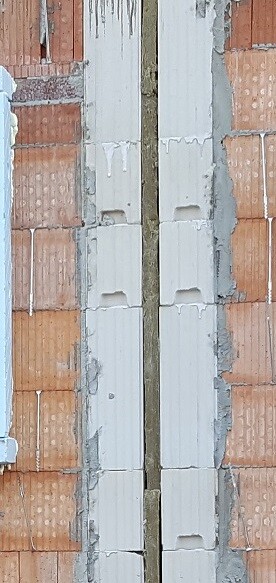
Here, the floor and all the ceiling slabs are carefully separated. Our neighbors have a concrete staircase, we have a wooden one. We don’t hear anything from them (maybe just a little water running if we’re both in the bathroom at the same time at night), and they only hear us if someone stomps down the stairs.
What you’re describing is definitely not normal, so don’t let anyone tell you that you’re too sensitive. I just suspect there might not be a satisfactory solution, although I would want to pursue it as a landlord because all future tenants could have a similar problem.
Our semi-detached house from 2019 has the following separation:
Here, the floor and all the ceiling slabs are carefully separated. Our neighbors have a concrete staircase, we have a wooden one. We don’t hear anything from them (maybe just a little water running if we’re both in the bathroom at the same time at night), and they only hear us if someone stomps down the stairs.
What you’re describing is definitely not normal, so don’t let anyone tell you that you’re too sensitive. I just suspect there might not be a satisfactory solution, although I would want to pursue it as a landlord because all future tenants could have a similar problem.
Müllerin schrieb:
Well, I grew up in a semi-detached house built—I’m not sure exactly when, probably sometime in the 1980s. It was obviously built very solidly; you could only hear anything if the neighbors were really shouting—and even then, I’m not sure whether the sound came through the windows rather than the wall…
And our 2019 semi-detached house has the following separation:
[ATTACH alt="2018 03 09 - 01.jpg"]48951[/ATTACH]
The floor and all ceiling slabs are very carefully separated. Our neighbors have a concrete staircase, we have a wooden one.
We don’t hear them (maybe sometimes at night when we’re both using the bathroom there’s some water running noise), and they only hear us if someone stomps down the stairs.
What you describe is definitely not normal, don’t let anyone tell you that you are too sensitive. I suspect, however, that there may be no satisfactory solution, although I, as a landlord, would want to look into it because all future tenants might have a similar issue. I can’t say whether it looked like that at any point, but from the outside, it doesn’t seem like there is any insulation of that sort installed.
H
HilfeHilfe5 Jul 2020 19:15You have an advantage: tenants! So just move out.
Similar topics