
Hi,
we want to order our paving stones and terrace slabs today and complete the work this year.
For the pathways, the splash guard (30cm (12 inches) wide filled with gravel), and the terrace, we are using a 6x20/25x100 deep curb stone.
That’s the plan, at least.
For the driveway, we are using an 8cm (3 inches) deep curb stone.
In total, there are about 70m (230 feet) of deep curb stones.
My wife’s uncle, who is helping us and works in road construction at the city, said it’s enough to set only the joints in concrete.
I’m a bit skeptical about that.
What do you think? How much concrete would we approximately need if we want to do it properly?
And which type of concrete should we use exactly?
Portland cement concrete, screed concrete, mortar, or fast-setting concrete?
Are these 30kg (66 pounds) bags suitable for this?
Thanks in advance!
we want to order our paving stones and terrace slabs today and complete the work this year.
For the pathways, the splash guard (30cm (12 inches) wide filled with gravel), and the terrace, we are using a 6x20/25x100 deep curb stone.
That’s the plan, at least.
For the driveway, we are using an 8cm (3 inches) deep curb stone.
In total, there are about 70m (230 feet) of deep curb stones.
My wife’s uncle, who is helping us and works in road construction at the city, said it’s enough to set only the joints in concrete.
I’m a bit skeptical about that.
What do you think? How much concrete would we approximately need if we want to do it properly?
And which type of concrete should we use exactly?
Portland cement concrete, screed concrete, mortar, or fast-setting concrete?
Are these 30kg (66 pounds) bags suitable for this?
Thanks in advance!

Good morning @apokolok
I just checked the OBI website again; they usually explain things quite well there. For mixing concrete yourself, they give a different quantity ratio—the 4:1 is correct, but I was referring to the amount of gravel.
They state that for 10cm (5 inches) depth over 10 meters (33 feet) length, you would need 1972kg (about 4345 lbs) of gravel. That’s almost 2 tons just for 10 meters.
But I actually need 70 meters (230 feet) for the deep curbs. Where is my mistake in thinking?
I even believe that 10cm (5 inches) is far too little under the deep curb and the two back supports.
I just checked the OBI website again; they usually explain things quite well there. For mixing concrete yourself, they give a different quantity ratio—the 4:1 is correct, but I was referring to the amount of gravel.
They state that for 10cm (5 inches) depth over 10 meters (33 feet) length, you would need 1972kg (about 4345 lbs) of gravel. That’s almost 2 tons just for 10 meters.
But I actually need 70 meters (230 feet) for the deep curbs. Where is my mistake in thinking?
I even believe that 10cm (5 inches) is far too little under the deep curb and the two back supports.
So, my building materials supplier also offers cement and gravel, but he says they don’t have a dump truck (or trucks in general?). In any case, the delivery costs 90€ and would therefore be more expensive than the ready-mixed bags of concrete.
He also calculated for about 40 bags and said that the joints would be sufficient.
However, I plan to pour concrete for the entire driveway, not just the joints.
He also calculated for about 40 bags and said that the joints would be sufficient.
However, I plan to pour concrete for the entire driveway, not just the joints.
Alright, then use the ready-mixed concrete.
The difference at OBI probably comes from the fact that they fully embed the blocks in concrete, meaning they basically set the blocks into the concrete, and the concrete also forms a footing.
But that is seriously overkill; you’re not building an industrial yard for heavy traffic.
The blocks are placed on gravel at the appropriate height.
On the earth side, you hardly need any concrete at all; on the ‘open’ side, you make a concrete fillet, in the garden only at the joints, on the driveway continuously.
The 40 bags should be enough, and if it’s not, you can always buy more.
The difference at OBI probably comes from the fact that they fully embed the blocks in concrete, meaning they basically set the blocks into the concrete, and the concrete also forms a footing.
But that is seriously overkill; you’re not building an industrial yard for heavy traffic.
The blocks are placed on gravel at the appropriate height.
On the earth side, you hardly need any concrete at all; on the ‘open’ side, you make a concrete fillet, in the garden only at the joints, on the driveway continuously.
The 40 bags should be enough, and if it’s not, you can always buy more.
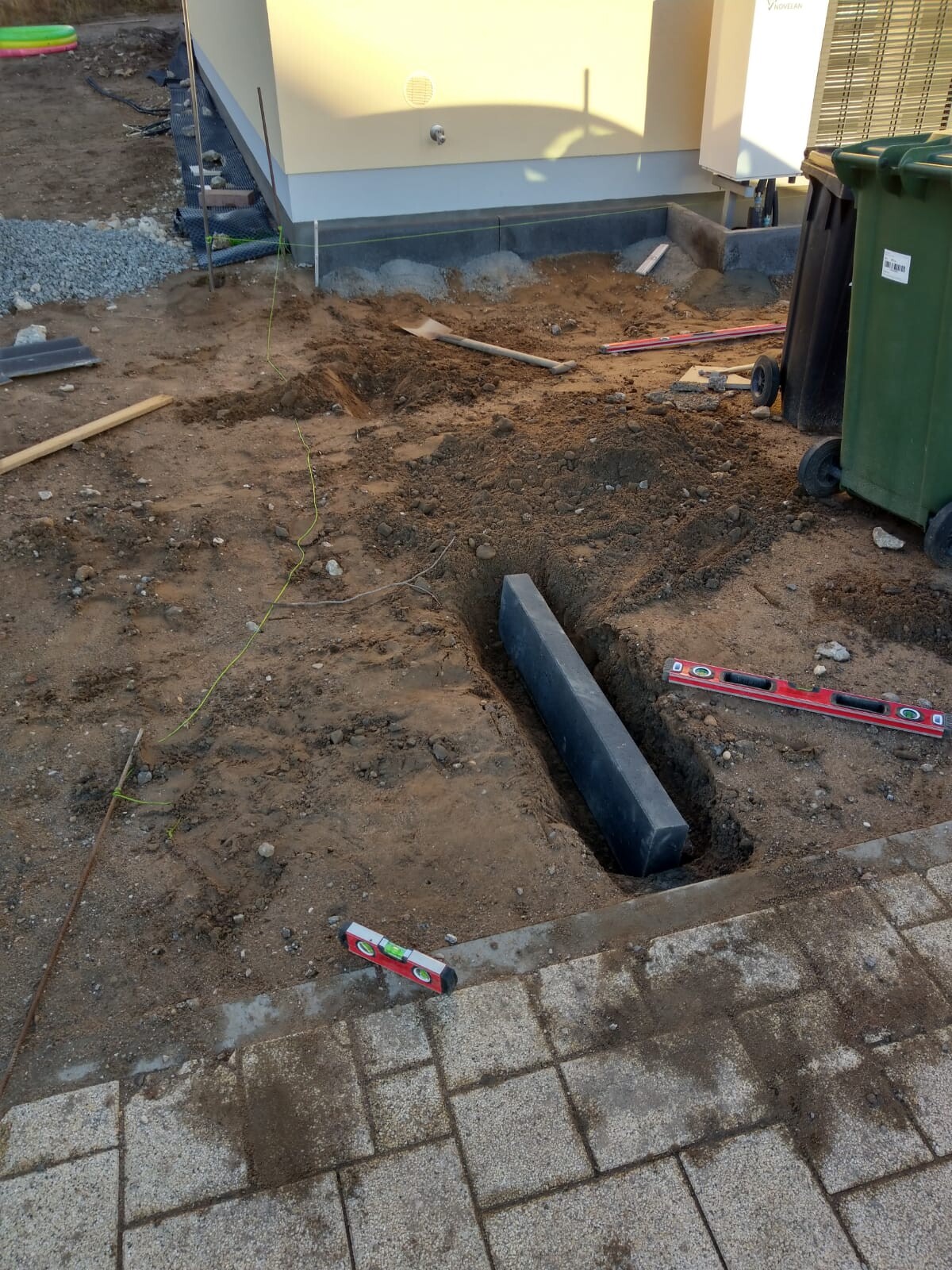
Hi everyone, and especially @apokolok, I have another question.
I have now concreted the terrace and the splash protection around the house.
Now I’m moving on to the driveway.
I am using 8x20x100 cm (3x8x39 inches) curb stones.
If I remember correctly, the entire area was compacted back when the plot was built up for the house.
In any case, several heavy containers, trucks, and excavators have already been on it multiple times.
So I assume it is definitely compacted now.
1.
I want to set the curb stone into the ground—where should I start? From the street side towards the house, or from the house towards the street?
2.
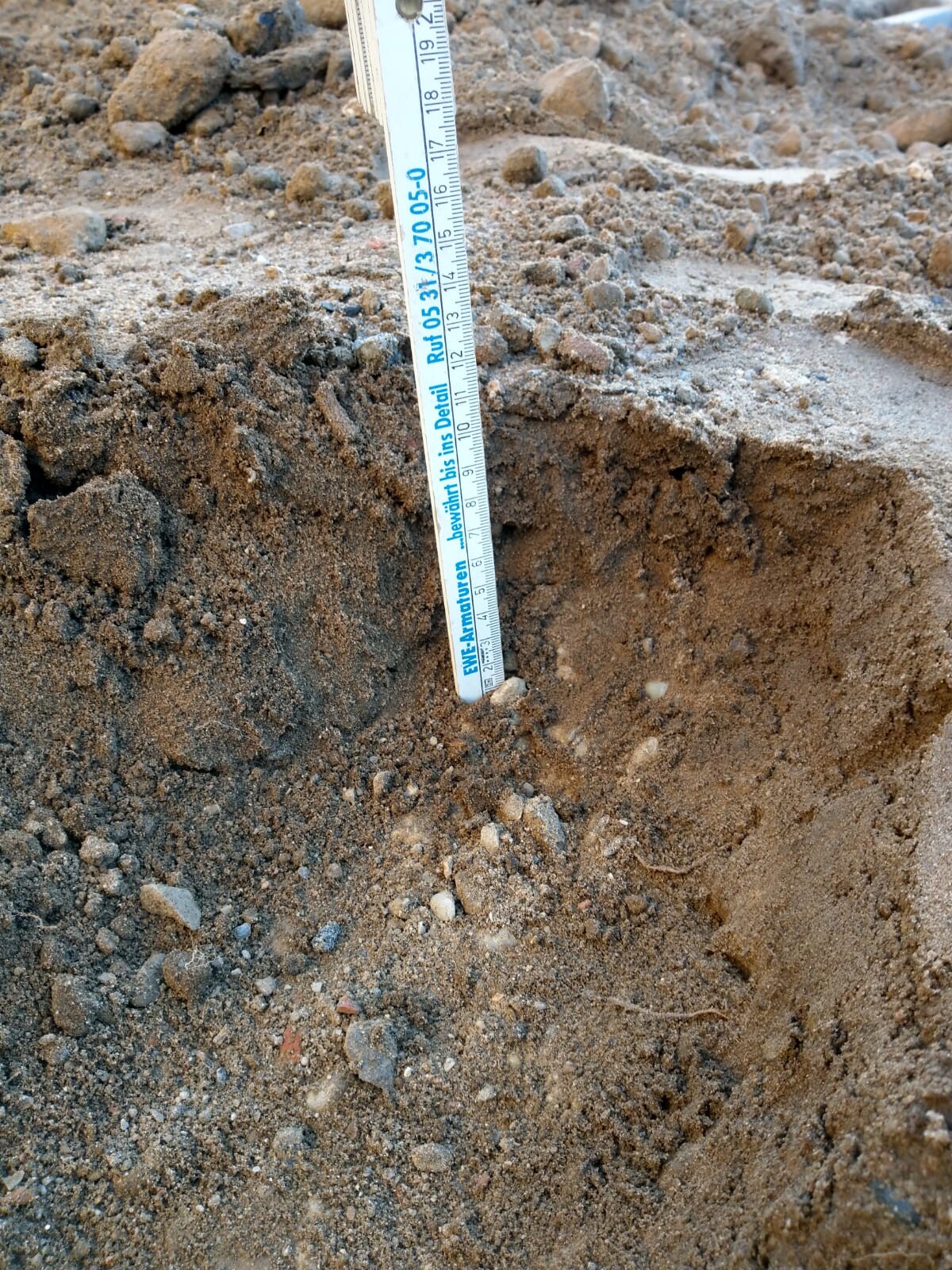
How deep should I dig here? That is, how deep should the concrete bed be where the curb stone will rest?
Related to this, question 3: Should I dig down to the gravel layer, then refill and compact, or just dig a trench, pour concrete, and set the curb stone on top?
3. The entire area has about 10 cm (4 inches) of soil on top of the gravel, due to many works and soil deliveries.
a. Does this soil need to be completely removed and replaced with gravel?
b. Or can I simply add the necessary gravel on top of the existing soil and compact it?
This applies both for the curb stones and for the driveway/garage area.
I have now concreted the terrace and the splash protection around the house.
Now I’m moving on to the driveway.
I am using 8x20x100 cm (3x8x39 inches) curb stones.
If I remember correctly, the entire area was compacted back when the plot was built up for the house.
In any case, several heavy containers, trucks, and excavators have already been on it multiple times.
So I assume it is definitely compacted now.
1.
I want to set the curb stone into the ground—where should I start? From the street side towards the house, or from the house towards the street?
2.
How deep should I dig here? That is, how deep should the concrete bed be where the curb stone will rest?
Related to this, question 3: Should I dig down to the gravel layer, then refill and compact, or just dig a trench, pour concrete, and set the curb stone on top?
3. The entire area has about 10 cm (4 inches) of soil on top of the gravel, due to many works and soil deliveries.
a. Does this soil need to be completely removed and replaced with gravel?
b. Or can I simply add the necessary gravel on top of the existing soil and compact it?
This applies both for the curb stones and for the driveway/garage area.
I’ll start from the end.
The soil needs to be removed, then continue building up from the load-bearing, compacted crushed stone base. That means adding more crushed stone, and under the paving, place an additional 1–2 cm (about 0.5–1 inch) layer of finer gravel at the end so you can tap the stones level.
If the curbstones are placed on the compacted crushed stone, in my opinion there is no need for concrete underneath; it’s sufficient to concrete around the edges.
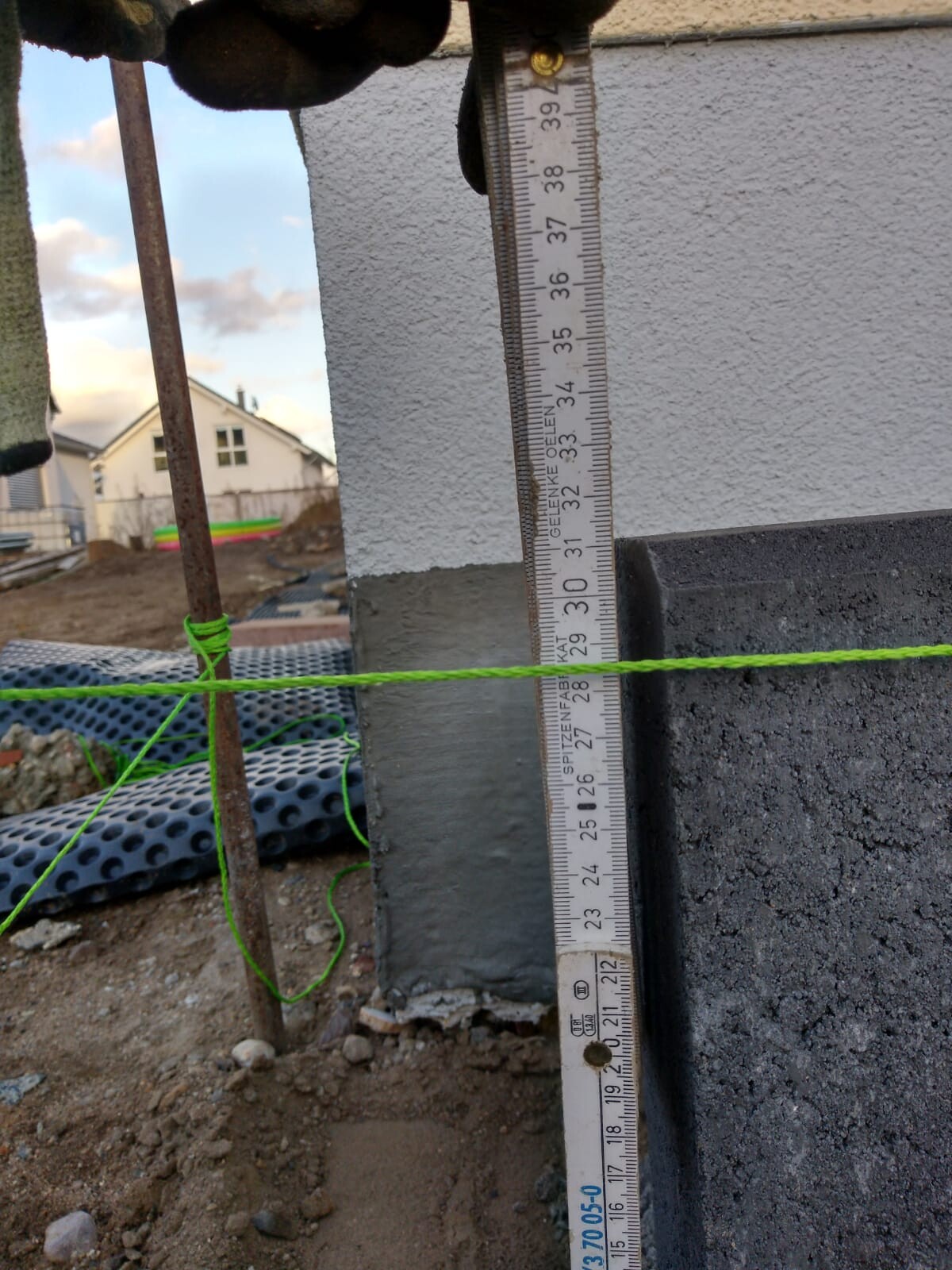
To get the correct height for the stones, you should definitely stretch a string line aligned with the string at the house and the street.
Where you start doesn’t really matter; it depends on whether you want the whole (uncut) curbstone on the house side or the street side.
The soil needs to be removed, then continue building up from the load-bearing, compacted crushed stone base. That means adding more crushed stone, and under the paving, place an additional 1–2 cm (about 0.5–1 inch) layer of finer gravel at the end so you can tap the stones level.
If the curbstones are placed on the compacted crushed stone, in my opinion there is no need for concrete underneath; it’s sufficient to concrete around the edges.
To get the correct height for the stones, you should definitely stretch a string line aligned with the string at the house and the street.
Where you start doesn’t really matter; it depends on whether you want the whole (uncut) curbstone on the house side or the street side.
Similar topics