
Hello everyone,
A few months ago, we bought an apartment with a finished basement. The basement windows face an embankment, so they receive natural daylight. About 5-10 cm (2-4 inches) below the windows, there is a splash guard made of large gravel.
Now to my question:
The house is 25 years old, and the embankment is quite overgrown. When it rains, water runs down the embankment and from the balcony on the first floor into the splash guard. Since sediment and plant debris are always carried along, a considerable amount of soil has accumulated there when you remove the top layers of the large gravel.
Does a splash guard like this need to be dug out or renewed from time to time? And would it make sense to install edging stones in front of the splash guard to at least hold back the soil washed down from the embankment?
Best regards,
Robert
A few months ago, we bought an apartment with a finished basement. The basement windows face an embankment, so they receive natural daylight. About 5-10 cm (2-4 inches) below the windows, there is a splash guard made of large gravel.
Now to my question:
The house is 25 years old, and the embankment is quite overgrown. When it rains, water runs down the embankment and from the balcony on the first floor into the splash guard. Since sediment and plant debris are always carried along, a considerable amount of soil has accumulated there when you remove the top layers of the large gravel.
Does a splash guard like this need to be dug out or renewed from time to time? And would it make sense to install edging stones in front of the splash guard to at least hold back the soil washed down from the embankment?
Best regards,
Robert
Photos… sure, that would be useful. Here you can see a before/after comparison in one picture. At the top, I already mentioned that the material has to be removed, no question about that.
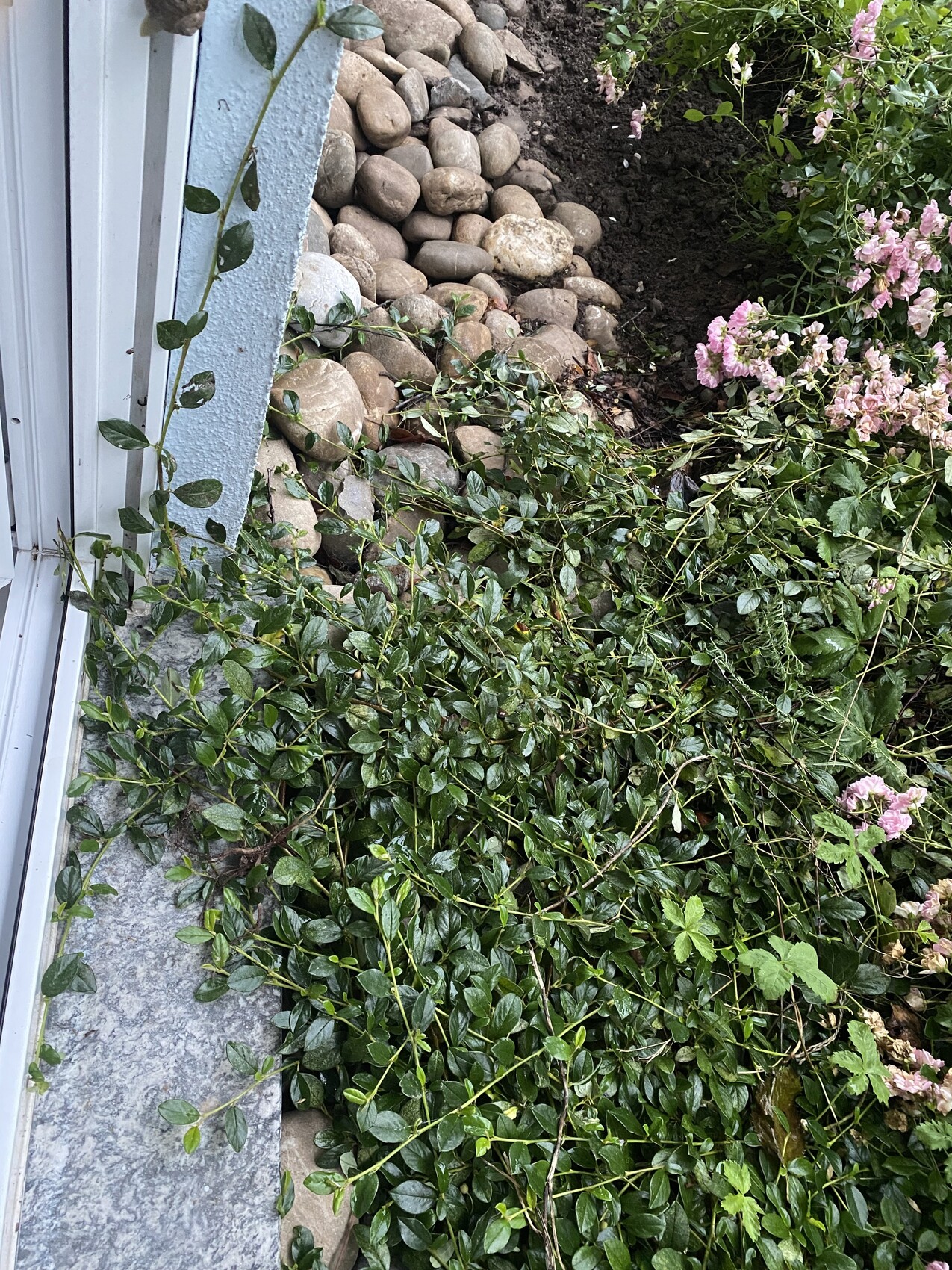
My question refers to the already exposed area. Yesterday, during the rain, I noticed that soil is being washed into the splash guard as it comes down the slope (photo 2). So the water is brown. Would it make sense to install some kind of barrier, for example, made of edging stones at the spot marked in the second picture? Or is that a bad idea?
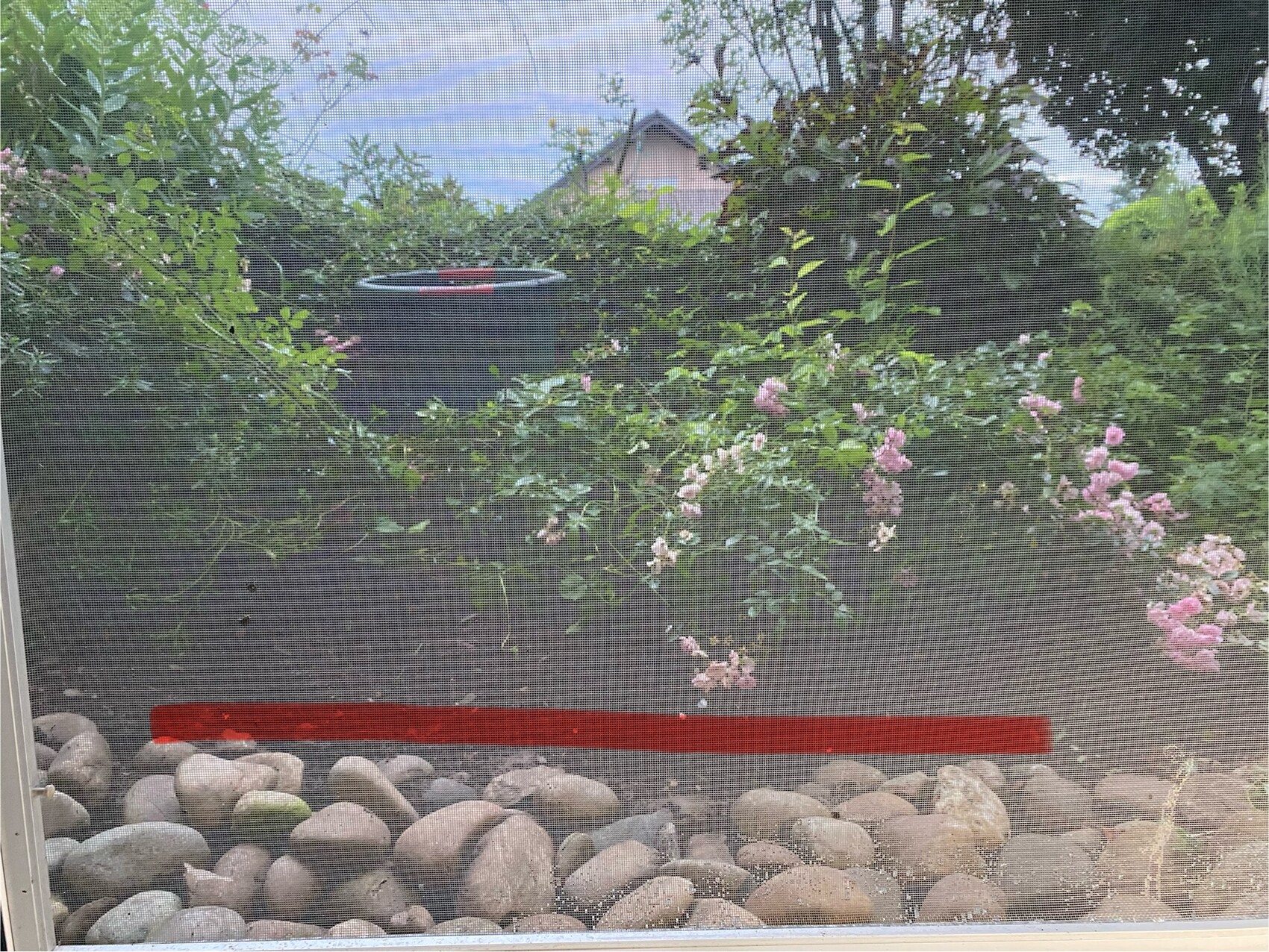
My question refers to the already exposed area. Yesterday, during the rain, I noticed that soil is being washed into the splash guard as it comes down the slope (photo 2). So the water is brown. Would it make sense to install some kind of barrier, for example, made of edging stones at the spot marked in the second picture? Or is that a bad idea?
I would actually install a barrier in front of the splash guard. If water can get in during "normal" rainfall, what happens during heavy rain? Ideally, no water should run down at all during "normal" rainfall. Is water coming from further up the garden? Does a terrace or path drain into the embankment? Take a look.
If you do install a barrier, I would remove the soil from the splash guard and fill it with cleaned stones.
If you do install a barrier, I would remove the soil from the splash guard and fill it with cleaned stones.
ypg schrieb:
If I’m not mistaken, that’s an evergreen ground cover, a cotoneaster.
It’s specifically used to hold the soil in the flower bed under the shrub rose and prevent it from washing away during rain.
You could have left it or just trimmed it into shape. Thanks for the advice. It grows downward, so I didn’t remove it but “trimmed it.” Admittedly, a bit more aggressively than maybe necessary because there was a lot of ivy underneath, which I absolutely don’t want since it has already caused damage in several places on the house. But good to know—I’ll be more careful with the remaining 10 meters (about 33 feet) of cotoneaster.
haydee schrieb:
I actually would have put a barrier in front of the splash guard. If water is getting in during “normal” rainfall, what happens during heavy rain? Ideally, no water should run down at all in “normal” rain. Is water coming there from higher up in the garden? Does a terrace or pathway drain into the slope? Check that out.
If you do put a barrier, I would clear the soil away from the splash guard and fill it with cleaned stones. Yes, a balcony drains into the slope, which is why there’s been a funny bucket there since yesterday that spreads the water out somewhat. I’m also considering the best way to handle that. Extending the balcony drainage is difficult—it’s already 0.5 meters (20 inches) long and would need at least another meter (about 39 inches). Plus: the balcony belongs to a co-owner.
Similar topics