
ᐅ Granite cobblestones set with crushed sand jointing – stones are loose
Created on: 4 Apr 2023 18:39
N
Nicolas910N
Nicolas9104 Apr 2023 18:39Hello dear forum,
In my new build, the landing, access path, and two parking spaces were recently paved with 8/11mm (–/0.4 inches) granite setts.
Afterwards, the joints were wet-filled with crushed sand, then compacted using a vibrating plate over two consecutive days.
The stones are now almost everywhere so firmly set that I cannot move them even a millimeter, except in the areas where the cars park and enter the property.
There, the stones repeatedly become loose, and I can move them several millimeters.
Since I was provided with enough crushed sand, my curiosity got the better of me, and recently I chose a day with forecasted rain. I spread loose crushed sand over the area where the cars usually stand, swept it in, and waited for the rain, which began about an hour after I finished. I then let the area dry and refrained from walking or driving on it for several days.
However, as soon as I drive on the area again with my car, the same problem appears: loose stones where I have driven.
Why won’t the crushed sand lock in properly?
At my request, the landscape gardener came back to the site and inspected everything. He told me that slight movement of the stones on a new installation is completely normal and that it will settle over time and then stop.
Can I trust this statement? Since I am a layperson in construction, this is my first house, and consequently my first paved surface, I would like to gather some opinions here that either reassure me or encourage me to take further action. If needed, I can gladly attach a photo.
Thank you very much so far!
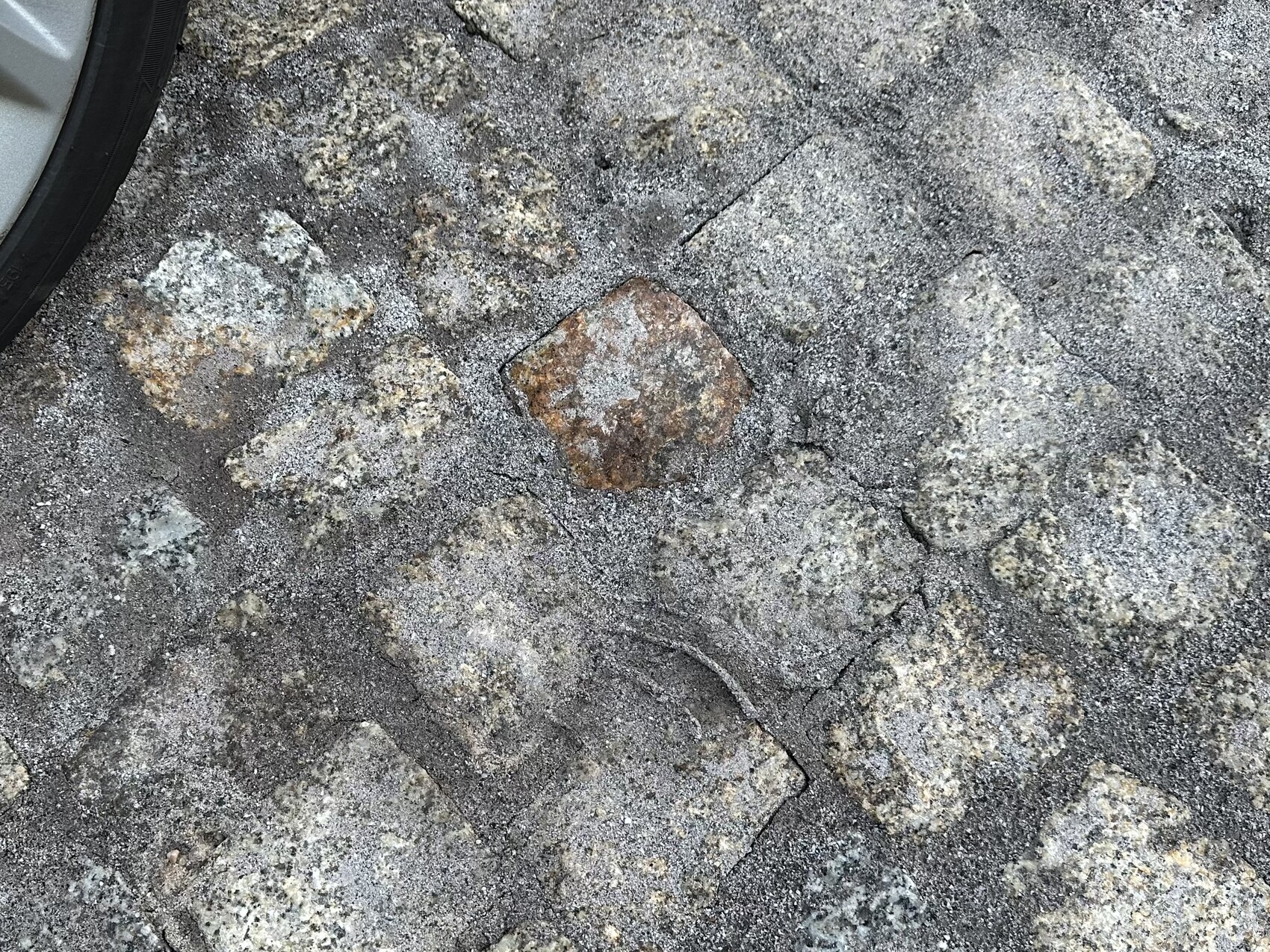
In my new build, the landing, access path, and two parking spaces were recently paved with 8/11mm (–/0.4 inches) granite setts.
Afterwards, the joints were wet-filled with crushed sand, then compacted using a vibrating plate over two consecutive days.
The stones are now almost everywhere so firmly set that I cannot move them even a millimeter, except in the areas where the cars park and enter the property.
There, the stones repeatedly become loose, and I can move them several millimeters.
Since I was provided with enough crushed sand, my curiosity got the better of me, and recently I chose a day with forecasted rain. I spread loose crushed sand over the area where the cars usually stand, swept it in, and waited for the rain, which began about an hour after I finished. I then let the area dry and refrained from walking or driving on it for several days.
However, as soon as I drive on the area again with my car, the same problem appears: loose stones where I have driven.
Why won’t the crushed sand lock in properly?
At my request, the landscape gardener came back to the site and inspected everything. He told me that slight movement of the stones on a new installation is completely normal and that it will settle over time and then stop.
Can I trust this statement? Since I am a layperson in construction, this is my first house, and consequently my first paved surface, I would like to gather some opinions here that either reassure me or encourage me to take further action. If needed, I can gladly attach a photo.
Thank you very much so far!
N
Nicolas9104 Apr 2023 20:32Philfuel schrieb:
It was the same with our cobblestone paving. It settled down.Thank you very much for your reply! That is reassuring. In your case, did very small gaps (<1mm) also initially appear at the heavily loaded stones, meaning the joint no longer fully filled the space and the stone wobbled? Unfortunately, this issue is often linked to an incorrect subbase, which, of course, would not be ideal.
A
Allthewayup4 Apr 2023 20:39This is unavoidable to some extent. If the base layer directly beneath—the gravel layer—is too thick, the stones will shift more than they would with a very thin layer of gravel. Gravel is only moderately suitable for compaction and ideally should only be used to even out minor irregularities of 2-3cm (1-1¼ inches). Sometimes, however, 5-6cm (2-2½ inches) get applied, which is not ideal for a driveway and the corresponding paving. If the joints lose material when driven over, this indicates a gravel layer that is too thick, causing the jointing sand to fall into the voids within the gravel, which, as mentioned, can only be compacted to a limited extent. But since this is not the case for you, I assume the stone movement is only minor and will settle over time.
N
Nicolas9104 Apr 2023 22:13Thank you very much for your very helpful response!
What would a solution look like for me if the problem unexpectedly persists?
Would I then need to refill the loose joints from time to time? Could I, for example, repair the joints with 1-3mm (0.04-0.12 inches) gravel or with joint mortar for paving to stabilize them, or is that not advisable?
What would a solution look like for me if the problem unexpectedly persists?
Would I then need to refill the loose joints from time to time? Could I, for example, repair the joints with 1-3mm (0.04-0.12 inches) gravel or with joint mortar for paving to stabilize them, or is that not advisable?
A
Allthewayup4 Apr 2023 22:56If the base layer is indeed the problem, repeatedly adding joint sand only treats the symptoms.
In your case, I would first put some use on the paving over a period of time, and if the joints settle again and become deeper, add sand once more. The joints are quite wide with this type of paving. This is ideal for infiltration but comes with the downside of lacking interlock support. A good paver should have explained this to you during the consultation.
In your case, I would first put some use on the paving over a period of time, and if the joints settle again and become deeper, add sand once more. The joints are quite wide with this type of paving. This is ideal for infiltration but comes with the downside of lacking interlock support. A good paver should have explained this to you during the consultation.
Similar topics