
Hello
we are planning a new semi-detached house.
We want to install a photovoltaic system later on.
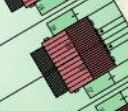
We will get the right half shown in the photo. Orientation is southwest.
The photovoltaic system will of course be installed on the southwest side facing the garden.
The black area is the 3x5 m (10x16 ft) terrace, which will later be covered with a fixed terrace roof measuring 4 m (13 ft) deep and 5.5 m (18 ft) wide.
My question is whether it will still be possible to install a photovoltaic system on the roof once the fixed terrace roof is there?
If the terrace roof is on the southwest side in the garden, it will no longer be possible to set up scaffolding.
For maintenance or in case of problems, access to the photovoltaic system will be necessary later on (is access without scaffolding not possible?)
Or can the photovoltaic system be installed without scaffolding?
The house will have a gable roof and 2.5 full stories.
we are planning a new semi-detached house.
We want to install a photovoltaic system later on.
We will get the right half shown in the photo. Orientation is southwest.
The photovoltaic system will of course be installed on the southwest side facing the garden.
The black area is the 3x5 m (10x16 ft) terrace, which will later be covered with a fixed terrace roof measuring 4 m (13 ft) deep and 5.5 m (18 ft) wide.
My question is whether it will still be possible to install a photovoltaic system on the roof once the fixed terrace roof is there?
If the terrace roof is on the southwest side in the garden, it will no longer be possible to set up scaffolding.
For maintenance or in case of problems, access to the photovoltaic system will be necessary later on (is access without scaffolding not possible?)
Or can the photovoltaic system be installed without scaffolding?
The house will have a gable roof and 2.5 full stories.
OWLer schrieb:
If I calculate for the tax office that with depreciation I don’t make a profit at 6.x cents/kWh, shouldn’t it still be possible to classify it as a hobby activity? Yes, of course. However, all income and expenses must be taken into account, especially self-consumption.
You need to be careful.
For income tax purposes, systems up to 10 kWp are generally accepted as hobby activities without further scrutiny. Above 10 kWp, the tax office MAY require a profit forecast. Up to roughly 30 kWp, this forecast will almost always be negative (calculated over 20 years), which is why the discussion tends to center around 30 kWp.
The easiest approach is to call the tax office and ask how they handle these cases. Especially with systems between 11 and 15 kWp, many are accepted as hobby activities without needing evidence.
For income tax purposes, systems up to 10 kWp are generally accepted as hobby activities without further scrutiny. Above 10 kWp, the tax office MAY require a profit forecast. Up to roughly 30 kWp, this forecast will almost always be negative (calculated over 20 years), which is why the discussion tends to center around 30 kWp.
The easiest approach is to call the tax office and ask how they handle these cases. Especially with systems between 11 and 15 kWp, many are accepted as hobby activities without needing evidence.

That’s what I meant somewhere on the last pages. From a business perspective, including discounting, photovoltaic systems don’t make sense by any standard practice. Simply breaking even on expenses just within depreciation should not be considered economically viable by the tax authorities. Therefore, it is classified as a hobby. If I had dealt with this earlier and spoken with the tax office, I wouldn’t have just 9.51 kWp on the roof but would have covered all available areas.
Evolith schrieb:
Up to roughly 30 kWp, it will always have a negative return (calculated over 20 years), which is why the discussion is focused on around 30 kWp.I don’t understand why that should be the case. Unless you consider some absurd rip-off offers, it should always be possible to make a profit.And I still don’t get what makes falling into passive hobby status so desirable. Would you rather make a loss than pay tax on some profit?
By the way, this is not about economic viability at all, but about the intention to generate profit. Even a plausible intention is enough, regardless of what happens in between. I don’t know anyone who buys a photovoltaic system purely for green conviction while expecting to lose money on it every year for the next 20 years.
D
Deliverer25 Jan 2022 19:47That’s how it is in Germany. Before I hand something over to someone, I’d rather keep it to myself! ;-)
Fuchur schrieb:
I don’t understand why that should be the case. If you avoid some downright ridiculous rip-off offers, it should always be possible to make a profit.
And I still don’t get what’s so desirable about falling into “hobby-loss” status. Would you rather take a loss than pay income tax on any profit?
By the way, this isn’t about profitability at all, but about the intention to generate profit ("Gewinnerzielungsabsicht"). The mere plausible intention is sufficient, regardless of what happens in between. I don’t know anyone who buys a photovoltaic system purely out of green conviction, knowing they will pay extra every year for the next 20 years. The hobby-loss calculation is not about classic profitability as we usually understand it, but from an income tax perspective. Profit here refers very narrowly to whether selling electricity results in a positive cash flow. Since most of the actual benefit comes from self-consumption, it’s quite easy for any typical private system to be calculated as negative. (Depreciation spread over 20 years alone wipes out any profit from selling electricity.) Using depreciation as a way to reduce your taxes should always be approached cautiously. There are several tricky pitfalls, and it isn’t worthwhile in every case. Most of this will need to be clarified by a tax advisor, and since you are self-employed, it can get expensive quite quickly.
Value-added tax (VAT) is simpler in this regard. Through standard taxation, you can reclaim input tax (VAT paid on purchases), but then you also have to charge VAT on sales.
Similar topics