
ᐅ Exterior plaster is uneven, window sills are too short, insulation system is not airtight.
Created on: 30 Dec 2020 23:02
H
Hemingway84
Preface:
We are building a 190 sqm (2,045 sq ft) city villa to KfW 55 energy efficiency standard with a large general contractor (GC) from Königslutter in the Berlin metropolitan area. The GC uses various subcontractors, who in turn work with their own subcontractors (some of whom also hire further subcontractors). So far, several construction defects have occurred. Serious defects were only prevented through our intervention (for example, the formwork for the intermediate ceiling was several centimeters too low and was literally raised five minutes before the concrete was poured). Unfortunately, the site manager is incompetent, thin-skinned, and unobservant. From day one, he has only offered pointless comments and a lack of motivation. He has never recognized defects on his own and has only reluctantly addressed those we reported, often trying to downplay them with standardized phrases.
As a result, we are on site as often as possible because we are constantly on high alert due to the defects encountered so far. Our involvement has already improved or, from our perspective, salvaged many situations. We have also hired a construction supervisor who has occasionally added value, although his passion seems more for photographing the construction than for identifying defects. Sometimes, a simple tape measure or spirit level helps—at least for us.
Our building project is further complicated by the fact that my wife was diagnosed with cancer a few months after purchasing the land and signing the construction contract. A cruel blow of fate, with chemotherapy and all related side effects, framed by the external circumstances of the ongoing COVID-19 pandemic. The loss of income is unfortunate but was anticipated in the financing—albeit as possible parental leave rather than a long-term illness. Nevertheless, it all makes the situation more stressful than it would have been otherwise.
Main section:
We are approaching the completion of the build; the screed drying will finish next week (the scheduled handover is at the end of January, so we just miss out on the VAT reduction). Ninety percent of the house price has already been paid; only the final invoice, expected in the coming weeks, remains outstanding.
At the end of November, the exterior render was applied. At that time and for the days following, outside temperatures did not exceed 5°C (41°F), with some nights dropping below freezing. According to the render manufacturer (Alsecco), the silicate render used may only be applied at temperatures above 5°C (41°F), and temperatures must remain above this threshold in the following days. If not, the render cannot cure properly, which may lead to issues with strength and durability.
One day before the rendering work began, we sent an informal notice of concern to the GC and their construction manager regarding the weather forecast. The subcontractor responded that there was no need to worry and voluntarily offered an additional one year warranty.
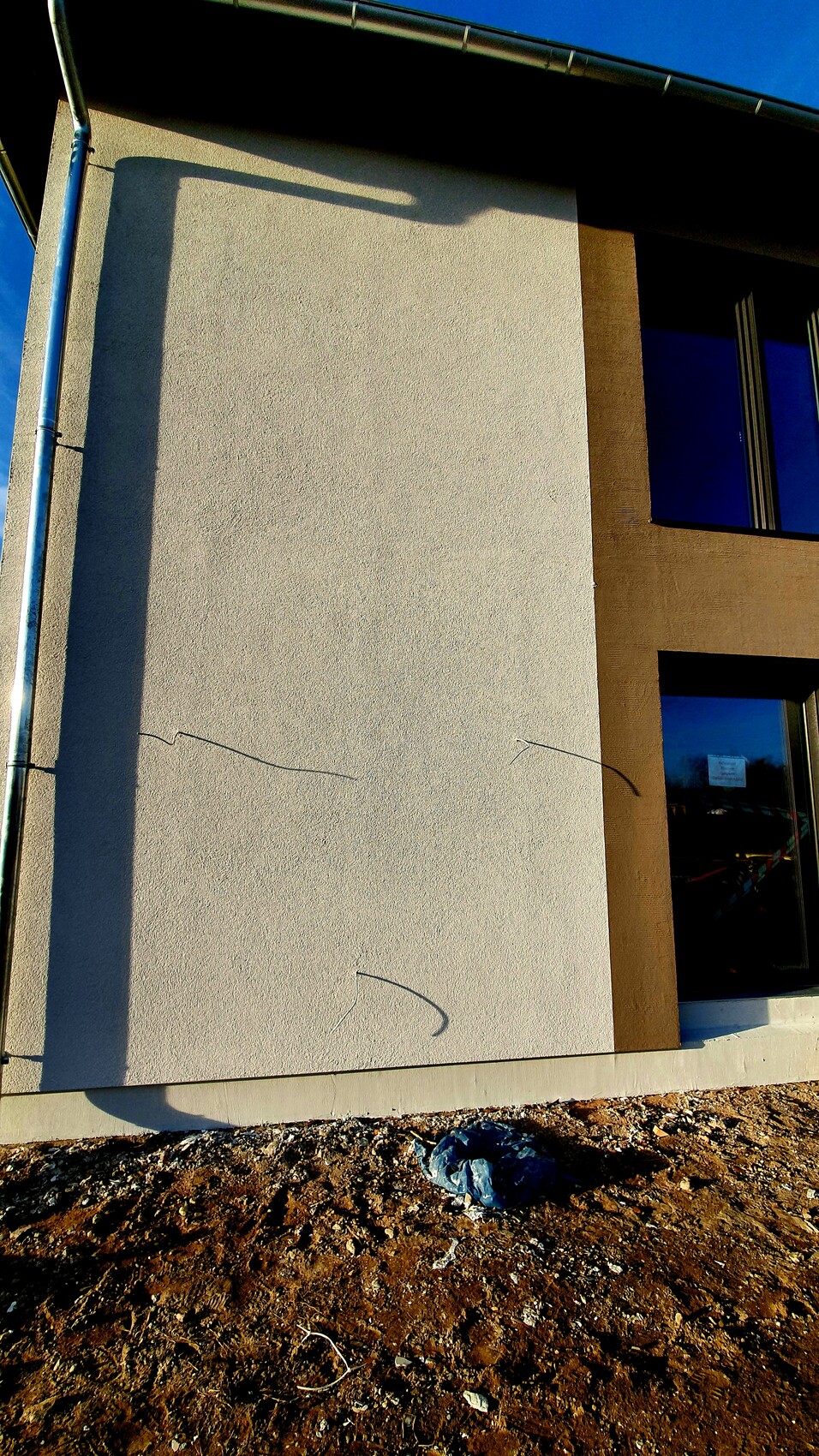
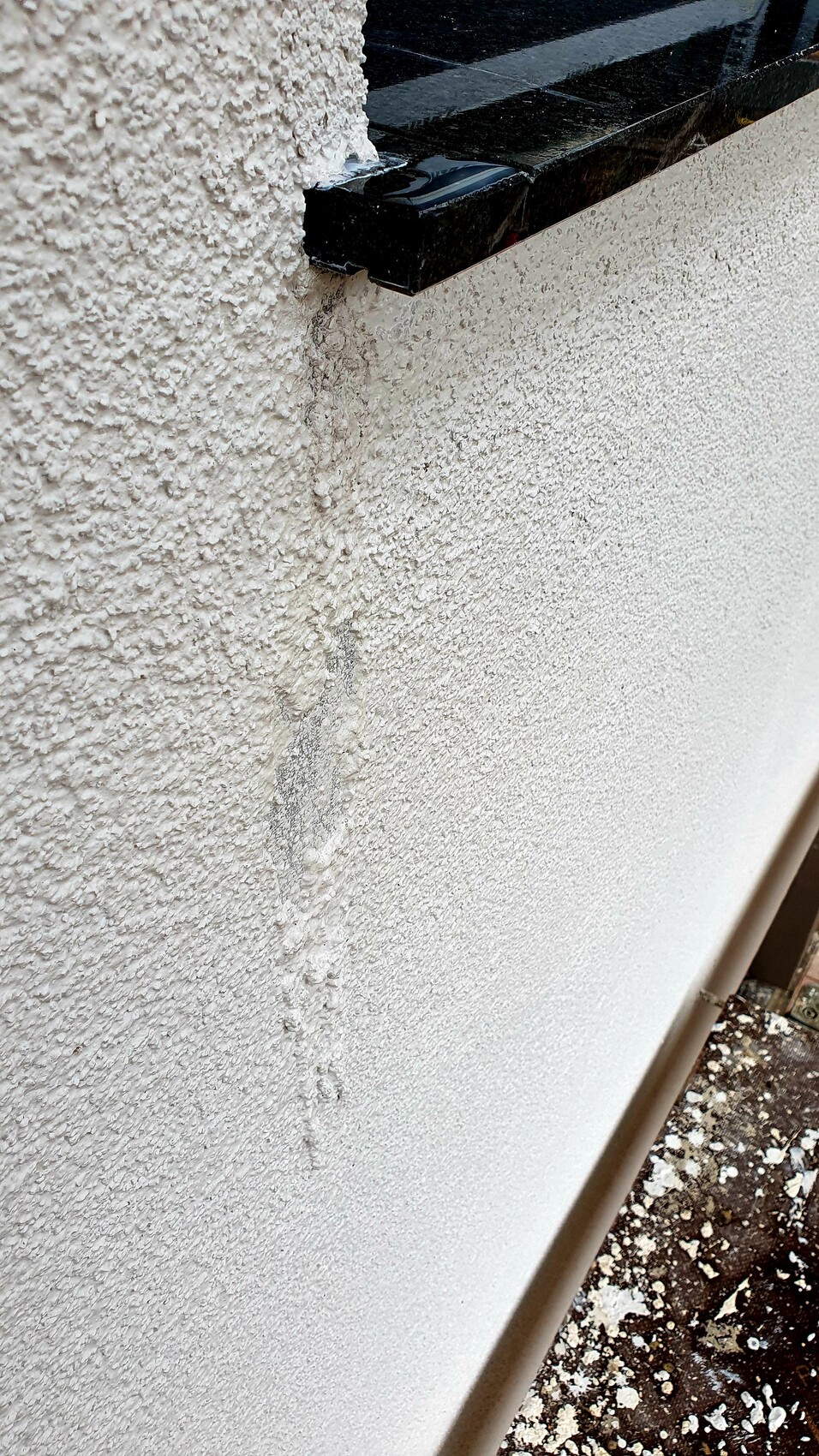
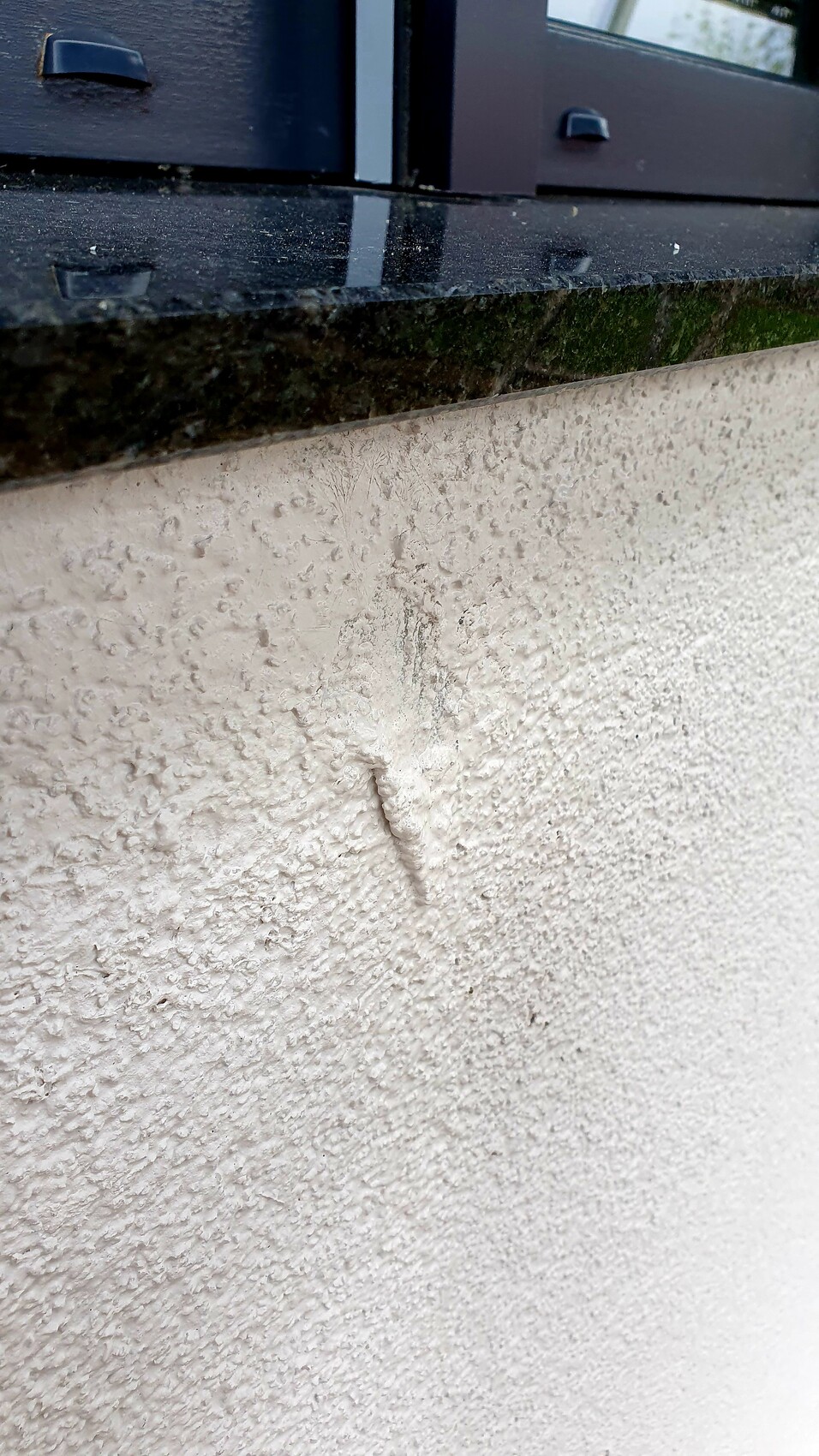
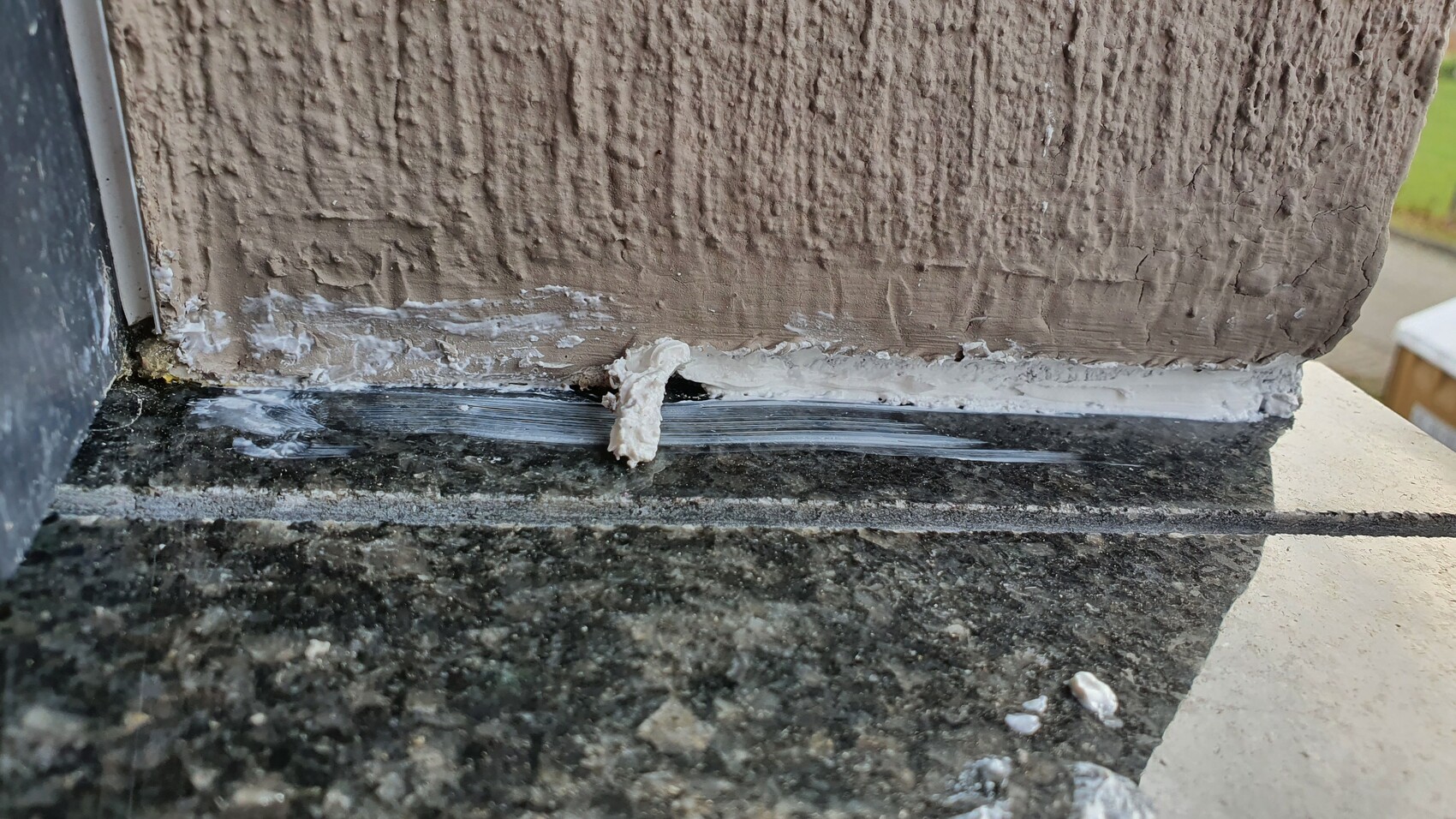
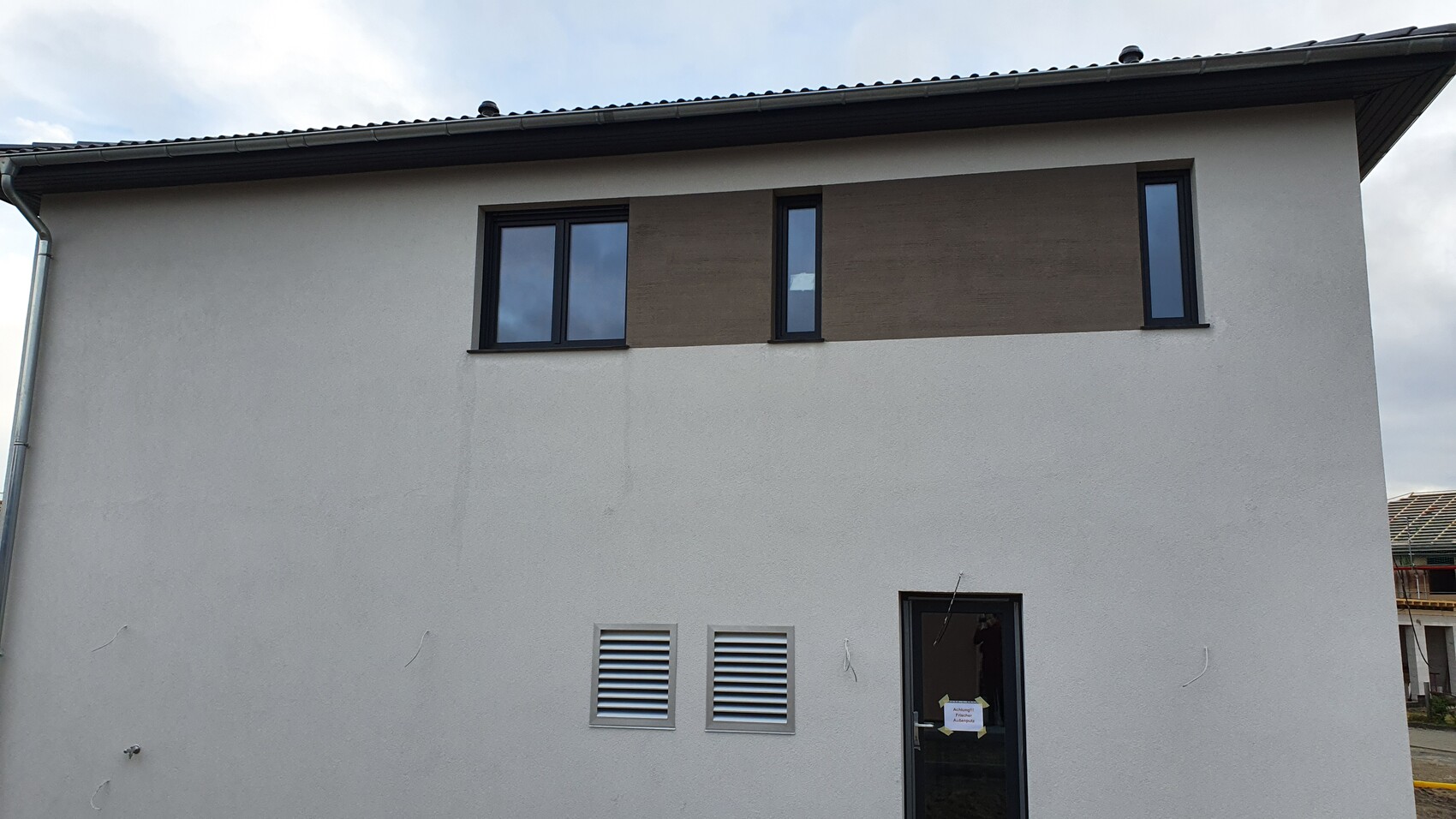
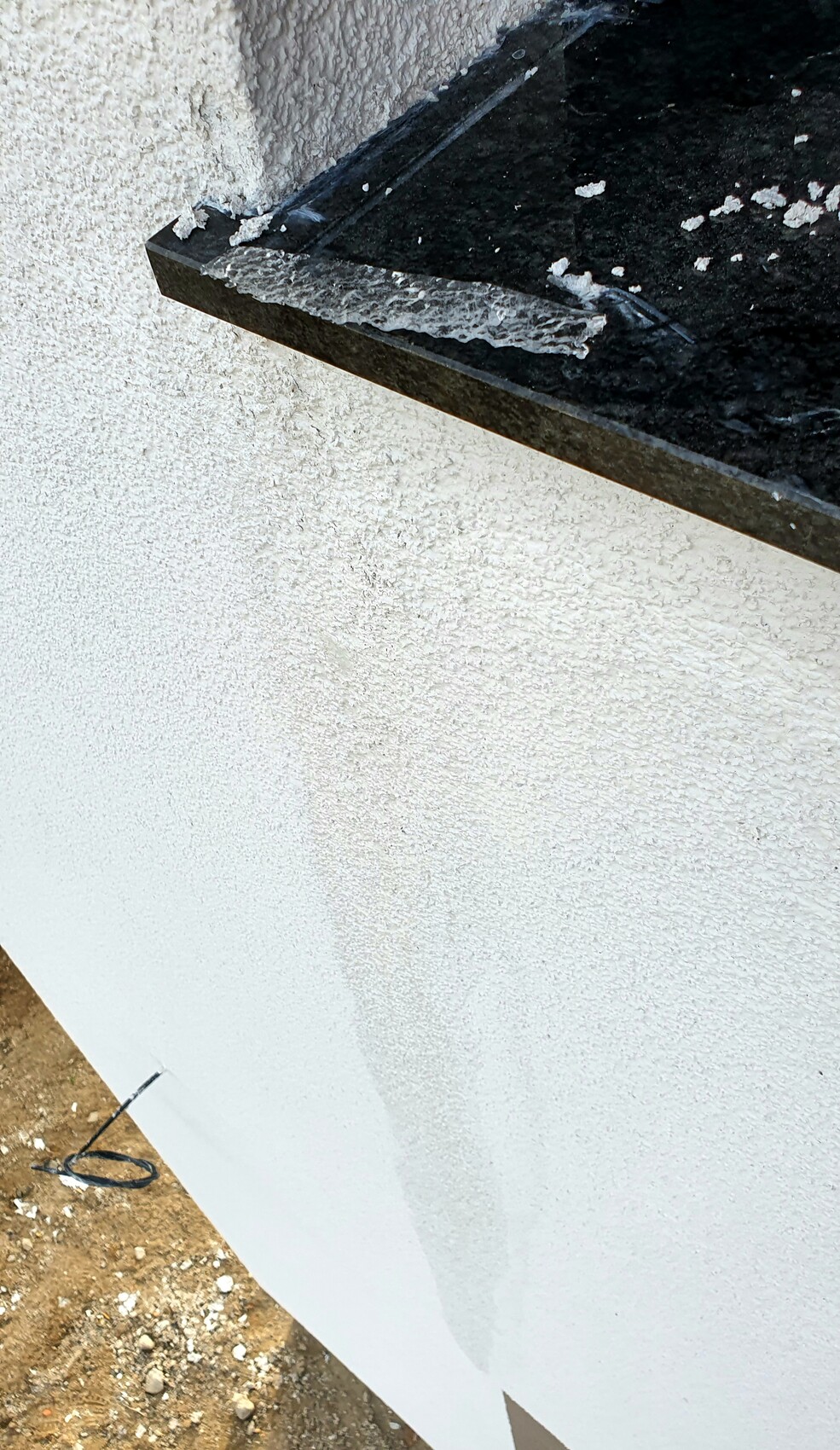
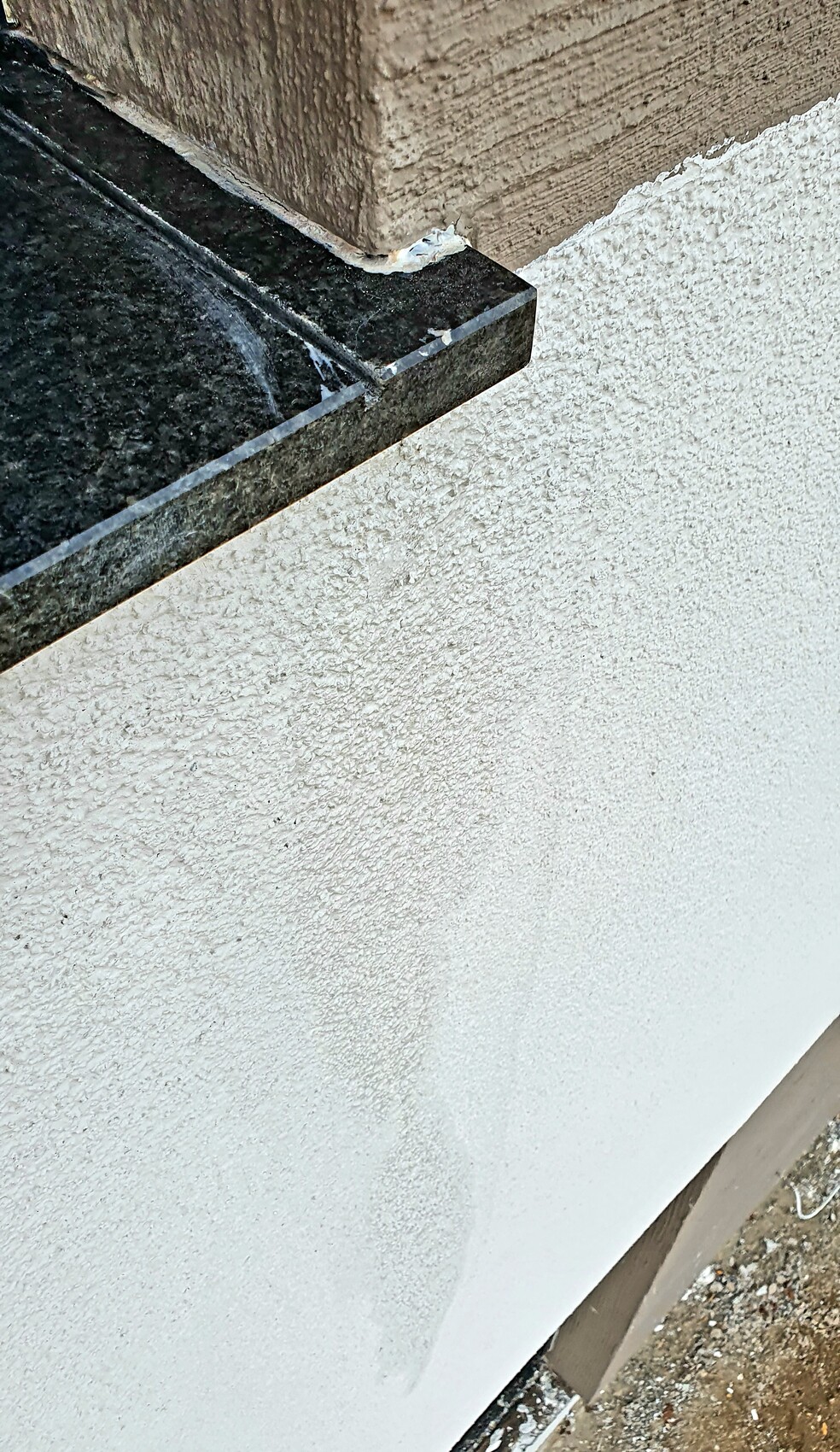
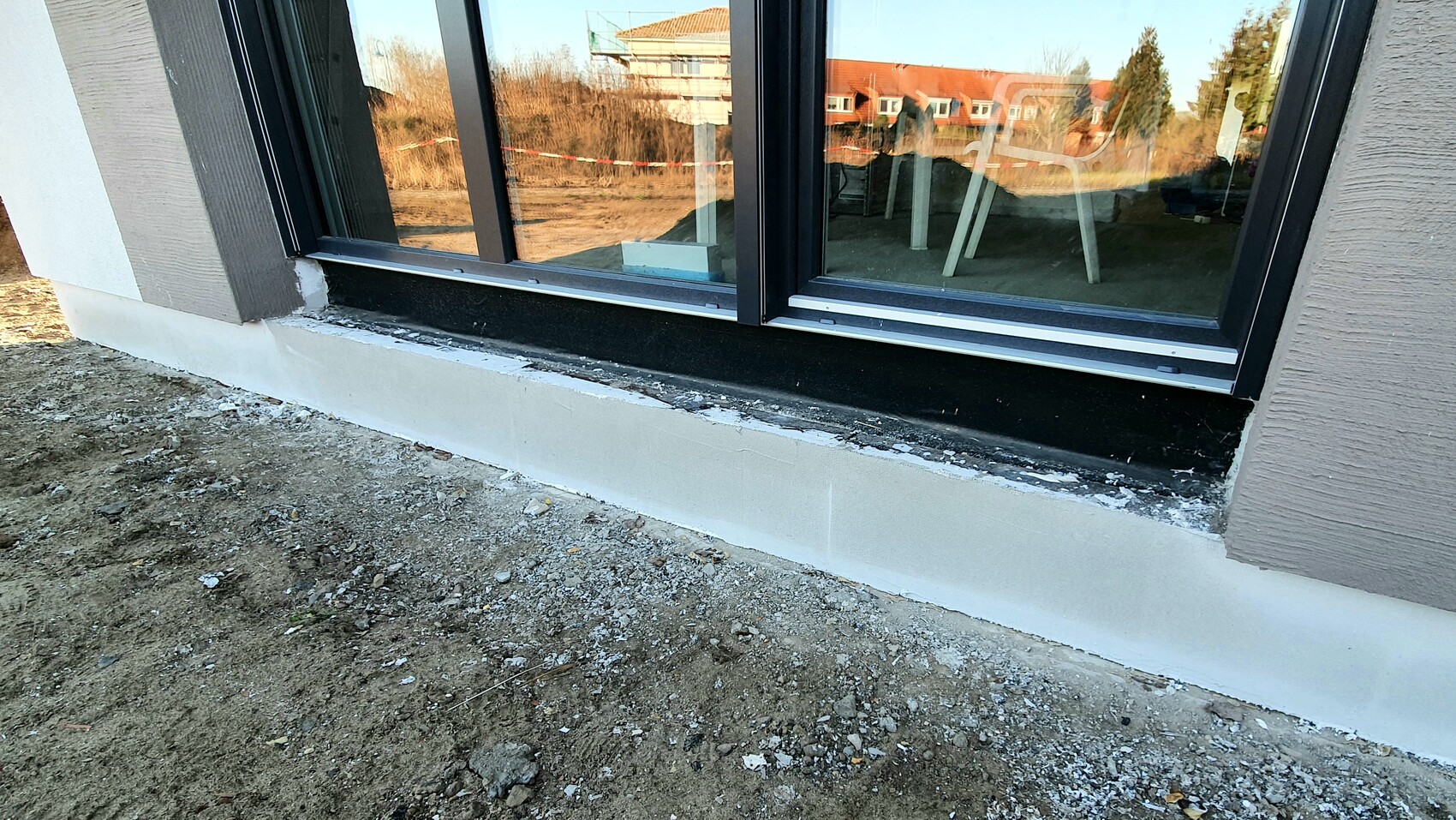
The rendering was completed, but even after one week, the exterior render was still soft. In some areas, it “slid,” particularly on the window sills. Please refer to the attached photos for details.
The same subcontractor who applied the external render installed the window sills shortly before (but only after installing the external thermal insulation composite system (ETICS) and the facade reinforcement). The window sills are crooked and uneven. Some also appear to be too short. On average, they protrude only 2–3 cm (1 inch) from the facade. Some are more uneven, for example with one side 1.5 cm (0.6 inch) and the other side 3 cm (1.2 inches). The drip groove on the underside is often flush with the facade. During installation, alcohol was consumed on site, as evidenced by several dozen small drink containers scattered near the scaffolding. It was also apparently easier to cut our up to 3 m (10 ft) long window sills with an angle grinder to fit them into a car, but sealing the joints afterward was forgotten.
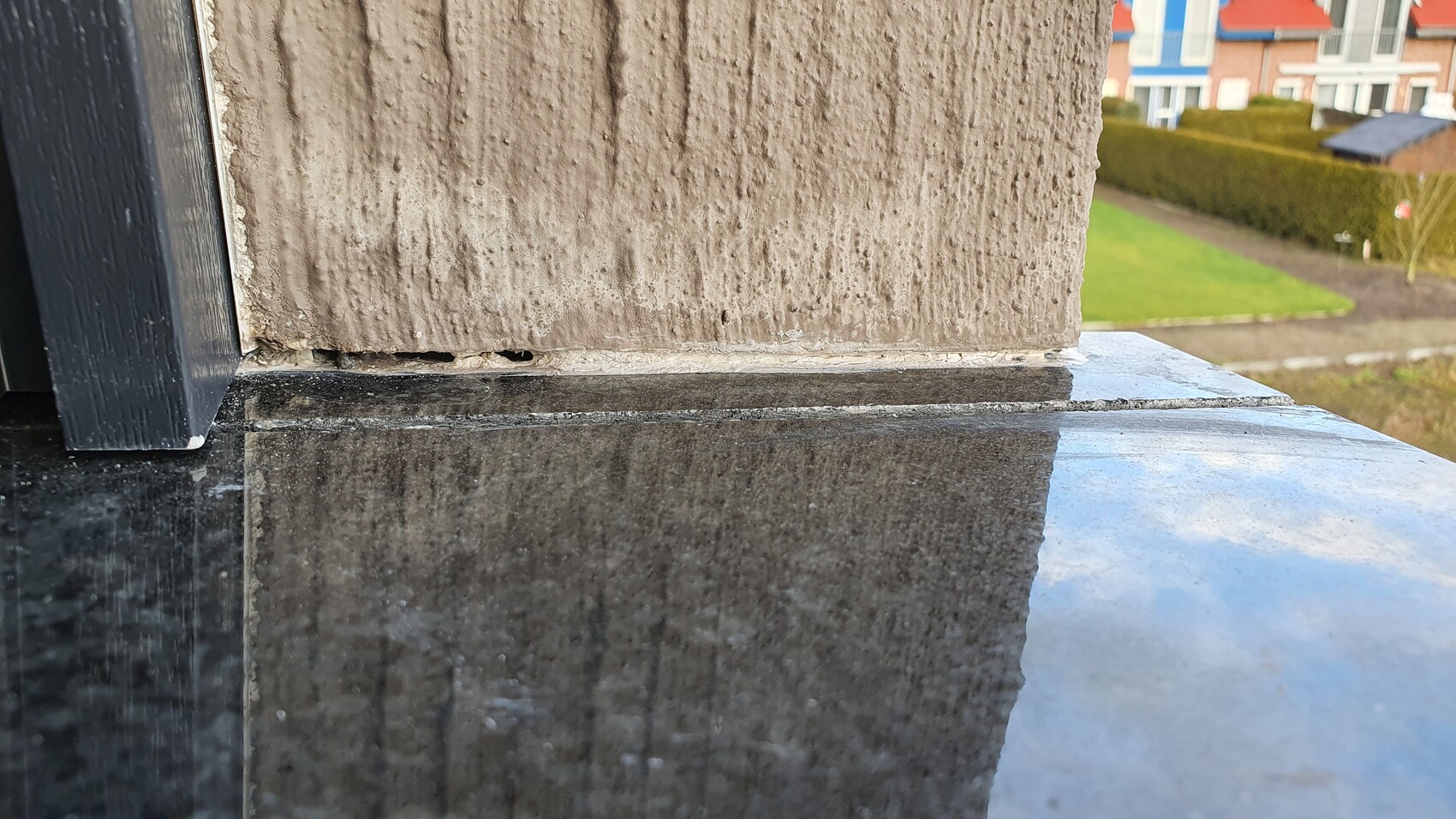
The window sills show no visible sealing. According to trade associations, with an ETICS system, there should be two layers of sealing at the window sills. We can see none. It also seems strange that the window sills were cut into the ETICS. The unnecessarily large gaps created were either left unfilled or only filled with silicone or similar, which after more than four weeks remains soft and uncured.
Water constantly accumulates at the edges of the window sills, running down the facade, further softening the render and freezing in places with the render. Where does this water come from? The screed heating program is still running inside, providing warmth. Could this be a sign of leakage around the windows? Indoor humidity is being actively controlled with three drying units, currently below 40% relative humidity. We suspect leakage because at the most affected window corner inside, we found significant residual moisture along with slight bulging of the interior plaster. Elsewhere, the interior plaster appears superficially dry.
The house base was also poorly finished by the same subcontractor. A very thinly scratched-on reinforcing plaster cannot be the waterproof rendering against moisture as specified in the contract. The layer is simply too thin and, according to photos, remains damp even without rain.
Outlook:
What happens next? The defects have been reported, documented with photos, and recorded. Should we still carry out a conditional acceptance with these defects, or refuse acceptance entirely? We would like to move in by the end of February, as my wife begins her follow-up treatment after chemotherapy in March and does not want the stress of moving to undo all her recovery. The potential double burden is not insignificant.
The render is visibly deteriorated and crumbly, patchy, and simply poorly done. In our opinion, it must be completely removed and redone. The window sills should also be removed and replaced because they are too short and partially cut with an angle grinder without technical necessity. We are particularly worried about the sealing and possible damage to the ETICS. Who knows what will happen in a few years.
Next week, at our own expense, we will engage a publicly appointed expert in painting and decorating to assess the severity of the damage and necessary repairs. From our experience, we expect little or no support from the GC or site manager. We intend to stand firm and will not accept repair work or financial compensation. At this point, we only see one solution: starting over completely. This would be very expensive and could become particularly interesting regarding payment of the final invoice.
The GC has only provided us with a 5% retention guarantee for completion, which likely would not cover a full re-execution of the defective work (and according to the contract text, may only be retained after handover for serious defects). Referring to this guarantee, he has already indicated that he insists on full payment upon acceptance, as we have this guarantee as security and it could be increased or extended.
Any advice, comments, ideas, or suggestions are welcome. I just needed to vent a bit. Sometimes you really feel helpless and lost as a client.

We are building a 190 sqm (2,045 sq ft) city villa to KfW 55 energy efficiency standard with a large general contractor (GC) from Königslutter in the Berlin metropolitan area. The GC uses various subcontractors, who in turn work with their own subcontractors (some of whom also hire further subcontractors). So far, several construction defects have occurred. Serious defects were only prevented through our intervention (for example, the formwork for the intermediate ceiling was several centimeters too low and was literally raised five minutes before the concrete was poured). Unfortunately, the site manager is incompetent, thin-skinned, and unobservant. From day one, he has only offered pointless comments and a lack of motivation. He has never recognized defects on his own and has only reluctantly addressed those we reported, often trying to downplay them with standardized phrases.
As a result, we are on site as often as possible because we are constantly on high alert due to the defects encountered so far. Our involvement has already improved or, from our perspective, salvaged many situations. We have also hired a construction supervisor who has occasionally added value, although his passion seems more for photographing the construction than for identifying defects. Sometimes, a simple tape measure or spirit level helps—at least for us.
Our building project is further complicated by the fact that my wife was diagnosed with cancer a few months after purchasing the land and signing the construction contract. A cruel blow of fate, with chemotherapy and all related side effects, framed by the external circumstances of the ongoing COVID-19 pandemic. The loss of income is unfortunate but was anticipated in the financing—albeit as possible parental leave rather than a long-term illness. Nevertheless, it all makes the situation more stressful than it would have been otherwise.
Main section:
We are approaching the completion of the build; the screed drying will finish next week (the scheduled handover is at the end of January, so we just miss out on the VAT reduction). Ninety percent of the house price has already been paid; only the final invoice, expected in the coming weeks, remains outstanding.
At the end of November, the exterior render was applied. At that time and for the days following, outside temperatures did not exceed 5°C (41°F), with some nights dropping below freezing. According to the render manufacturer (Alsecco), the silicate render used may only be applied at temperatures above 5°C (41°F), and temperatures must remain above this threshold in the following days. If not, the render cannot cure properly, which may lead to issues with strength and durability.
One day before the rendering work began, we sent an informal notice of concern to the GC and their construction manager regarding the weather forecast. The subcontractor responded that there was no need to worry and voluntarily offered an additional one year warranty.
The rendering was completed, but even after one week, the exterior render was still soft. In some areas, it “slid,” particularly on the window sills. Please refer to the attached photos for details.
The same subcontractor who applied the external render installed the window sills shortly before (but only after installing the external thermal insulation composite system (ETICS) and the facade reinforcement). The window sills are crooked and uneven. Some also appear to be too short. On average, they protrude only 2–3 cm (1 inch) from the facade. Some are more uneven, for example with one side 1.5 cm (0.6 inch) and the other side 3 cm (1.2 inches). The drip groove on the underside is often flush with the facade. During installation, alcohol was consumed on site, as evidenced by several dozen small drink containers scattered near the scaffolding. It was also apparently easier to cut our up to 3 m (10 ft) long window sills with an angle grinder to fit them into a car, but sealing the joints afterward was forgotten.
The window sills show no visible sealing. According to trade associations, with an ETICS system, there should be two layers of sealing at the window sills. We can see none. It also seems strange that the window sills were cut into the ETICS. The unnecessarily large gaps created were either left unfilled or only filled with silicone or similar, which after more than four weeks remains soft and uncured.
Water constantly accumulates at the edges of the window sills, running down the facade, further softening the render and freezing in places with the render. Where does this water come from? The screed heating program is still running inside, providing warmth. Could this be a sign of leakage around the windows? Indoor humidity is being actively controlled with three drying units, currently below 40% relative humidity. We suspect leakage because at the most affected window corner inside, we found significant residual moisture along with slight bulging of the interior plaster. Elsewhere, the interior plaster appears superficially dry.
The house base was also poorly finished by the same subcontractor. A very thinly scratched-on reinforcing plaster cannot be the waterproof rendering against moisture as specified in the contract. The layer is simply too thin and, according to photos, remains damp even without rain.
Outlook:
What happens next? The defects have been reported, documented with photos, and recorded. Should we still carry out a conditional acceptance with these defects, or refuse acceptance entirely? We would like to move in by the end of February, as my wife begins her follow-up treatment after chemotherapy in March and does not want the stress of moving to undo all her recovery. The potential double burden is not insignificant.
The render is visibly deteriorated and crumbly, patchy, and simply poorly done. In our opinion, it must be completely removed and redone. The window sills should also be removed and replaced because they are too short and partially cut with an angle grinder without technical necessity. We are particularly worried about the sealing and possible damage to the ETICS. Who knows what will happen in a few years.
Next week, at our own expense, we will engage a publicly appointed expert in painting and decorating to assess the severity of the damage and necessary repairs. From our experience, we expect little or no support from the GC or site manager. We intend to stand firm and will not accept repair work or financial compensation. At this point, we only see one solution: starting over completely. This would be very expensive and could become particularly interesting regarding payment of the final invoice.
The GC has only provided us with a 5% retention guarantee for completion, which likely would not cover a full re-execution of the defective work (and according to the contract text, may only be retained after handover for serious defects). Referring to this guarantee, he has already indicated that he insists on full payment upon acceptance, as we have this guarantee as security and it could be increased or extended.
Any advice, comments, ideas, or suggestions are welcome. I just needed to vent a bit. Sometimes you really feel helpless and lost as a client.
 Hausbau08158 Jan 2021 21:47
Today is one of those days I’d rather just check off, drown the pain, or whatever you want to call it. As I said, that’s not really my style. On Wednesday, I received an attorney’s invoice related to a matter that was resolved back in February 2019, and although we won decisively in court, it was completely pointless since the general contractor demolished his property and sold it off to nowhere. Goodbye €129,000 (about $140,000). The general contractor is still renovating and happily moving forward with houses 2 and 3.
And now the attorney is sending me this invoice — just for filing the enforcement of the court settlement from September 19, 2019. Mind you, this is only for the enforcement phase; the settlement fees have long been paid. Looking back at the entire timeline (I reviewed all the documents again today to understand the basis of this invoice), it’s clear how we’ve been taken for a ride from start to finish. Especially by the general contractor, but also by his lawyer, and at this point, I’d almost say by my own attorney and the court as well. If the lawyer and the court had acted just a bit sooner (we’re talking about a mere six weeks), the situation would be a lot different now, and we would have fewer worries. Instead, our general contractor was able to quietly dissolve his company without any legal consequences. He must have been laughing all the way through. More details in my thread: Das Fleischerhaus. Admittedly, this text sounds like it was written under the influence, but it’s really just frustration.
And now the attorney is sending me this invoice — just for filing the enforcement of the court settlement from September 19, 2019. Mind you, this is only for the enforcement phase; the settlement fees have long been paid. Looking back at the entire timeline (I reviewed all the documents again today to understand the basis of this invoice), it’s clear how we’ve been taken for a ride from start to finish. Especially by the general contractor, but also by his lawyer, and at this point, I’d almost say by my own attorney and the court as well. If the lawyer and the court had acted just a bit sooner (we’re talking about a mere six weeks), the situation would be a lot different now, and we would have fewer worries. Instead, our general contractor was able to quietly dissolve his company without any legal consequences. He must have been laughing all the way through. More details in my thread: Das Fleischerhaus. Admittedly, this text sounds like it was written under the influence, but it’s really just frustration.
Hausbau08159 Jan 2021 07:02Me neither. But what surprises me even more is that a notary certifies the sale of a limited liability company (LLC) when it is clearly a company going under. The certification states that the buyer does not speak German. Although it is legally prohibited to sell an insolvent company, nobody actually checks this. And in our case, it was obvious. There are also documents showing that the general contractor had already been removed as managing director in May 2019. So how was he still able in September 2019 to enter into a court settlement and issue invoices signed by him as managing director?

Hausbau0815 schrieb:
There are also documents showing that the general contractor (GC) was removed as managing director (MD) already in May 2019. So why was he still able to enter into a court settlement in September 2019 and issue invoices signed by him as MD? Then he was not authorized to do so. If he did it anyway, he committed fraud (and it may be worth investigating whether the managing director at that time was complicit). I would also consider suing the judge here—at the very least to recover the court costs of the settlement. If the commercial register already stated back then that the MD had been removed, the judge should not have accepted him as the company’s representative anymore. For legal entities, which cannot act “on their own,” it is the judge’s duty of care to verify the legitimacy of the representative. The judge does not have to question an official record (commercial register), but if it already showed that Mr. X was no longer MD at that time, then from my point of view, the judge may have even aided and abetted fraud.
https://www.instagram.com/11antgmxde/
https://www.linkedin.com/company/bauen-jetzt/
Hausbau08159 Jan 2021 12:4411ant schrieb:
I would also sue the judge here—at least hold them liable for the court costs of the settlement. Have you ever tried to sue a judge? 🙂
I only saw the documents in January 2020, so after the sale. In my opinion, at least the lawyers from GU2 acted unlawfully, among other things because they postponed the appointments until the resignation of their mandate, giving him enough time to sell the property.
Hausbau0815 schrieb:
Have you ever tried to sue a judge?Personally, I haven’t (yet), but I have heard of such cases several times. And official liability does not stop at the courts. Independence is not a free pass for negligence (duties of care are not recommendations).https://www.instagram.com/11antgmxde/
https://www.linkedin.com/company/bauen-jetzt/