
ᐅ Are large vertical joints in the structural shell still acceptable, or do they count as defects?
Created on: 14 Dec 2020 11:59
K
Kishihmen
Hello everyone,
In our house construction project managed by a general contractor, the masonry subcontractor was changed. The previous mason worked very neatly, but was replaced due to the slow pace of work (4 months for building the basement).
The new mason is now working very quickly, but in my opinion also quite roughly. In particular, I have noticed very large joints between the bricks. So my question to the experts is: Are these gaps in the masonry still within acceptable standards or even normal, or should we raise this issue directly with the mason or general contractor while the damage is still limited?
A few additional details:
- The building is a terraced house (row house)
- The walls are built with 36.5cm (14 inches) Poroton clay blocks
If I have forgotten any important information, please ask.
Thanks in advance for your assessment and support.
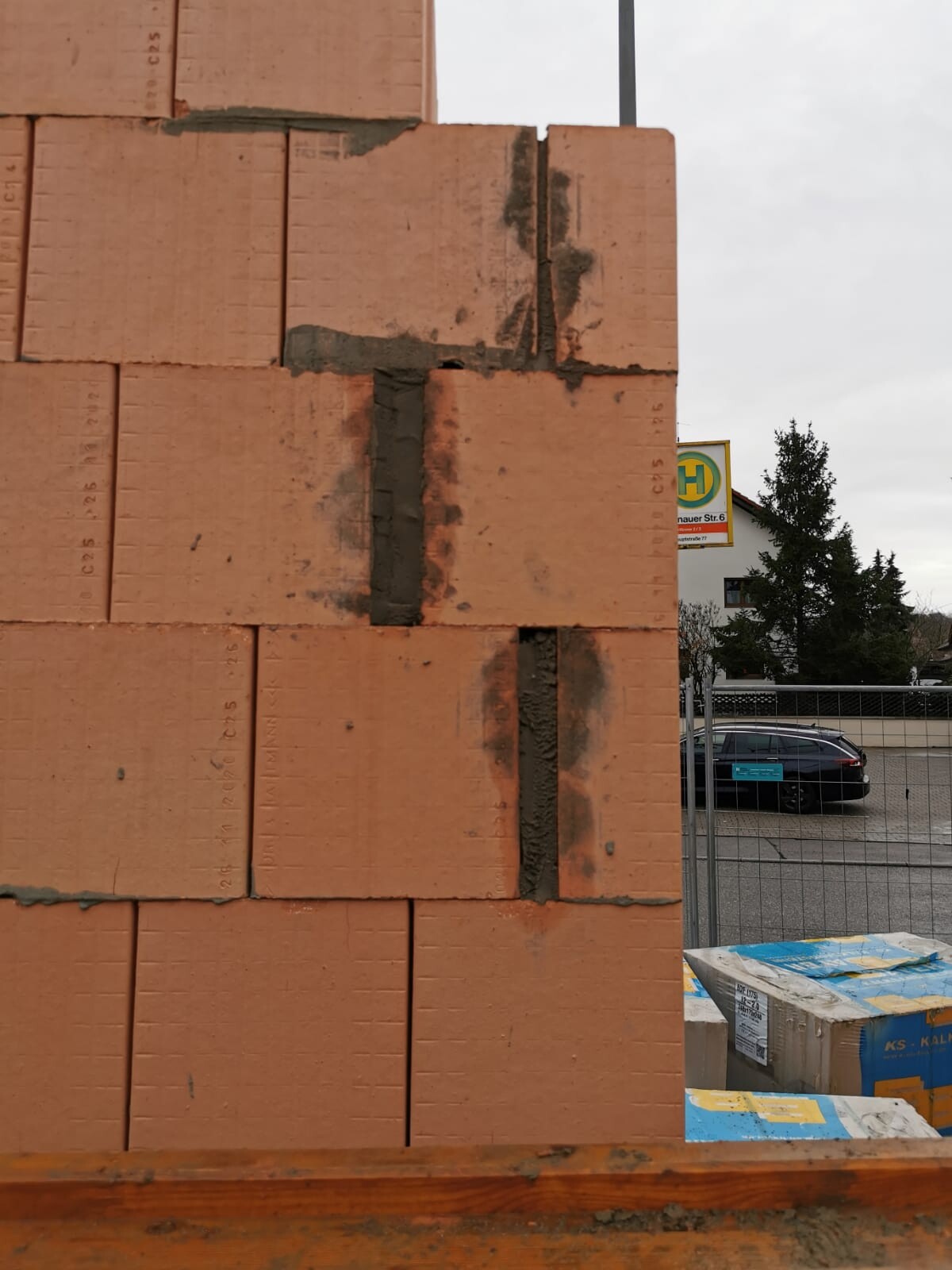
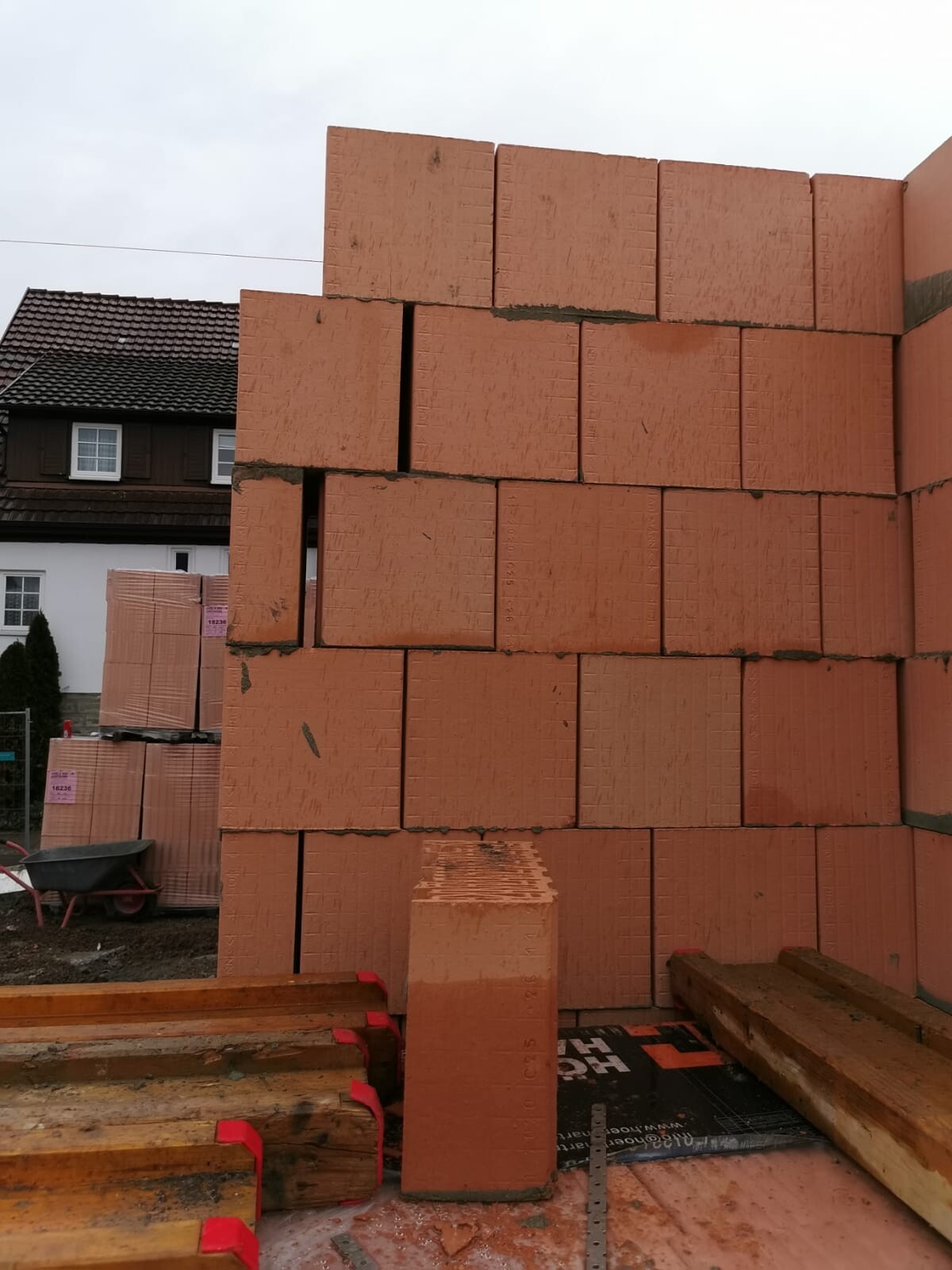
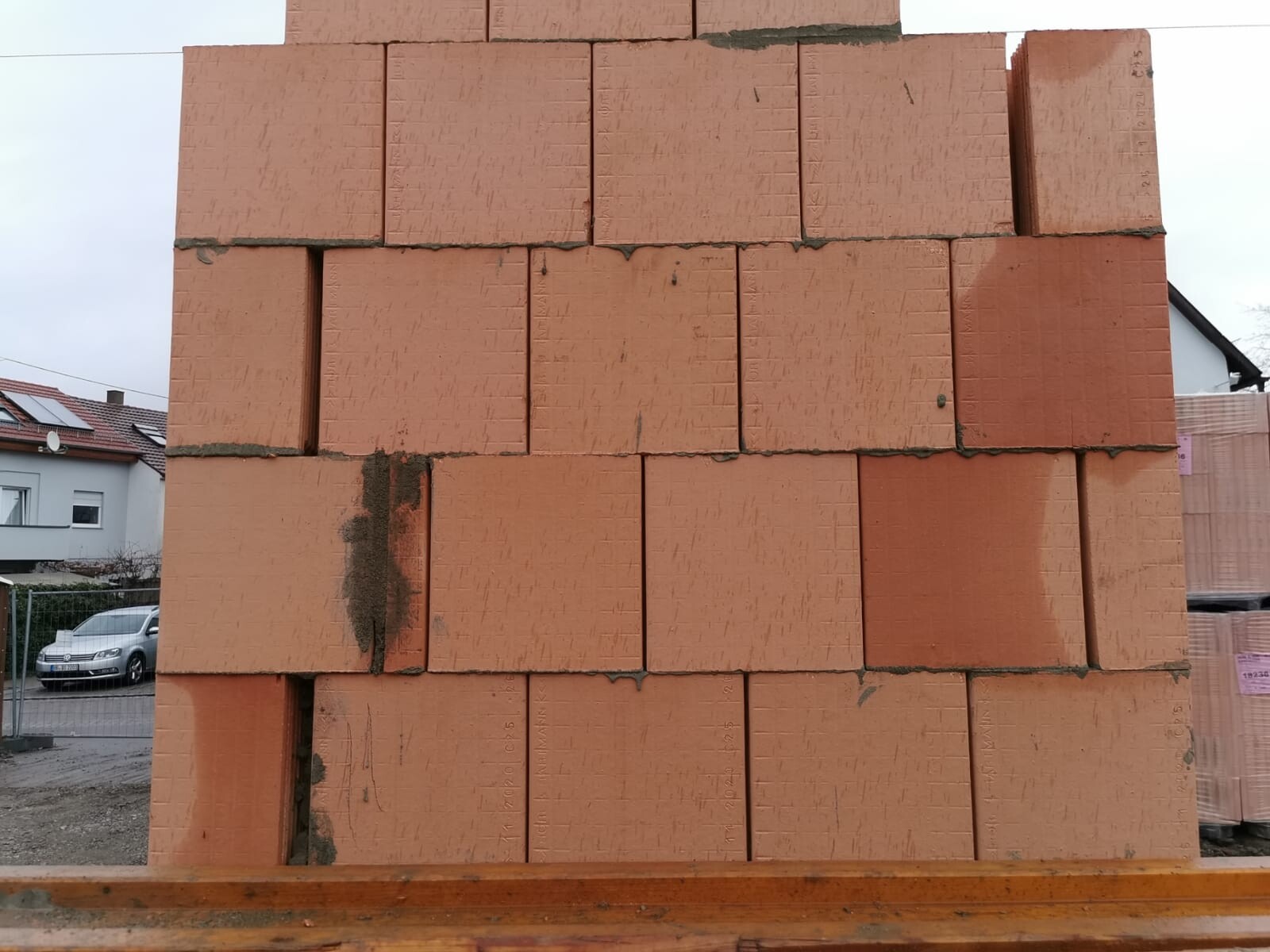
In our house construction project managed by a general contractor, the masonry subcontractor was changed. The previous mason worked very neatly, but was replaced due to the slow pace of work (4 months for building the basement).
The new mason is now working very quickly, but in my opinion also quite roughly. In particular, I have noticed very large joints between the bricks. So my question to the experts is: Are these gaps in the masonry still within acceptable standards or even normal, or should we raise this issue directly with the mason or general contractor while the damage is still limited?
A few additional details:
- The building is a terraced house (row house)
- The walls are built with 36.5cm (14 inches) Poroton clay blocks
If I have forgotten any important information, please ask.
Thanks in advance for your assessment and support.

Kishihmen schrieb:
The structural builder refers to the processing instructions from the brick manufacturer. They state:
Gap closure for butt joints 15–50 mm (0.6–2 inches). Butt joints up to 20 mm (0.8 inches) can be filled with insulating lightweight mortar (maxit Therm 825). Correct, filled. This does NOT mean just stuffing them with mortar when access is limited to only two sides – but also from above and obviously BEFORE the next layer. They must think laypeople are extremely naive.
https://www.instagram.com/11antgmxde/
https://www.linkedin.com/company/bauen-jetzt/
K
Kishihmen23 Dec 2020 09:3411ant schrieb:
Correct, fully pointed. This does NOT mean just filling the gaps with mortar when you can only access two sides anymore – but also from above and, logically, BEFORE the next course. They probably think laypeople are extremely clueless. Yes, they definitely do 🙁
Bookstar schrieb:
Absolute rubbish what he delivers there. Does he even use insulating mortar, or is he just applying regular mortar? I would check that too!! No, he uses insulating mortar, he even showed it to me on site....
But it doesn’t end there. He didn’t cover the masonry, and the last time he was on site was Friday. It has rained heavily the last few days.
I’m not sure if this should be a new topic, but what would be your recommendation on how to proceed (aside from raising complaints and insisting that the masonry is covered going forward)?
Kishihmen schrieb:
But it continues. The masonry was not covered, and the last time he was on site was Friday. It has rained heavily in the past few days.
I’m not sure if this should actually be a new topic, but what would be your recommendation on how to proceed (aside from complaining and insisting that the masonry be covered in the future)? As far as I know, the processing instructions are part of the material approval and therefore essentially part of the building material’s formulation – following them is not goodwill but a requirement according to standards. According to all processing instructions I am aware of, masonry closures must be covered at the end of every workday, even if no weekend follows. Unfilled bricks are not immediately as damaged by debris as filled ones, but rain can still run into the bed joints and stay in the cavities on the mortar, reacting with it. Constant dripping wears down the mortar ;-)
I would therefore formally report the defect and refer to it again during the final inspection. Do you not have an expert acting as a construction supervisor?
https://www.instagram.com/11antgmxde/
https://www.linkedin.com/company/bauen-jetzt/
K
Kishihmen23 Dec 2020 13:1611ant schrieb:
As far as I know, the processing instructions are part of the product approval, so they essentially belong to the building material’s formulation—following them is not optional goodwill but a requirement under the standards. According to all processing guidelines I know, wall crowns must be covered every evening, even if the next day is not a weekend. Unfilled bricks are at least not as contaminated as filled ones, but rainwater can still run into the bed joint and remain in the chambers on the mortar, potentially reacting with it. Constant dripping wears down the mortar ;-).
I would therefore point out the defect and refer to it again later during the final inspection. Don’t you have a certified expert acting as a construction supervisor? Actually, looking back, I did make some mistakes, but luckily building without an expert wasn’t one of them. The expert was last on site for the cellar inspection. The next planned visit is scheduled when the ceiling is installed. We have already adjusted our plans here and commissioned an intermediate inspection before the concrete is poured for the cellar ceiling.
Additionally, the shell structure should have a height of 2.55 m (8 ft 4 in). However, the mason has now built 10 courses with 25 cm (10 inch) bricks and intends to set the ceiling a bit higher, which I’m not convinced will work.
Despite all this, I want to avoid mistakes as much as possible and minimize any damage until the expert inspects the site....
Oh, and the bricks are not filled.
Similar topics