
ᐅ Are large vertical joints in the structural shell still acceptable, or do they count as defects?
Created on: 14 Dec 2020 11:59
K
Kishihmen
Hello everyone,
In our house construction project managed by a general contractor, the masonry subcontractor was changed. The previous mason worked very neatly, but was replaced due to the slow pace of work (4 months for building the basement).
The new mason is now working very quickly, but in my opinion also quite roughly. In particular, I have noticed very large joints between the bricks. So my question to the experts is: Are these gaps in the masonry still within acceptable standards or even normal, or should we raise this issue directly with the mason or general contractor while the damage is still limited?
A few additional details:
- The building is a terraced house (row house)
- The walls are built with 36.5cm (14 inches) Poroton clay blocks
If I have forgotten any important information, please ask.
Thanks in advance for your assessment and support.
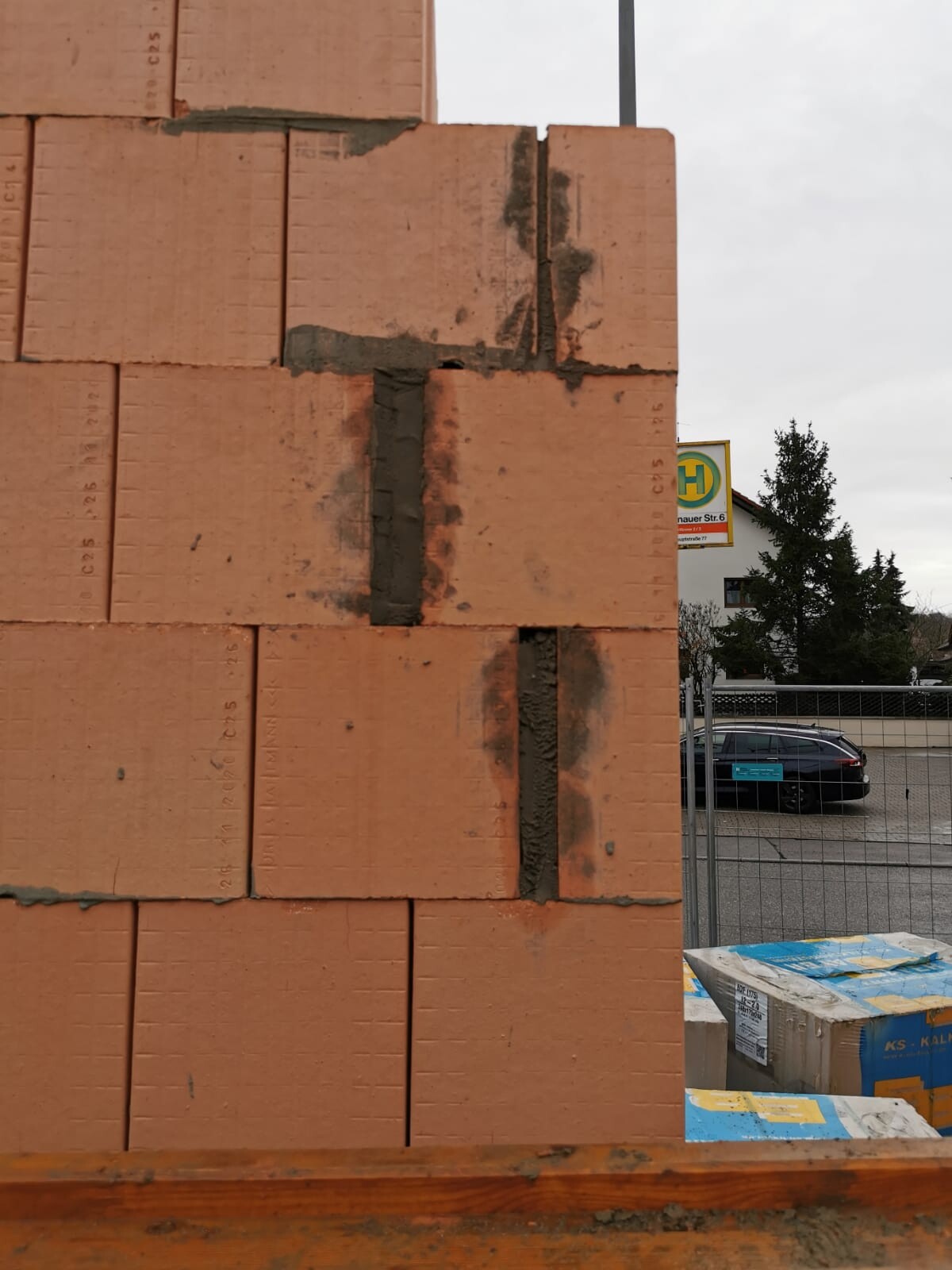
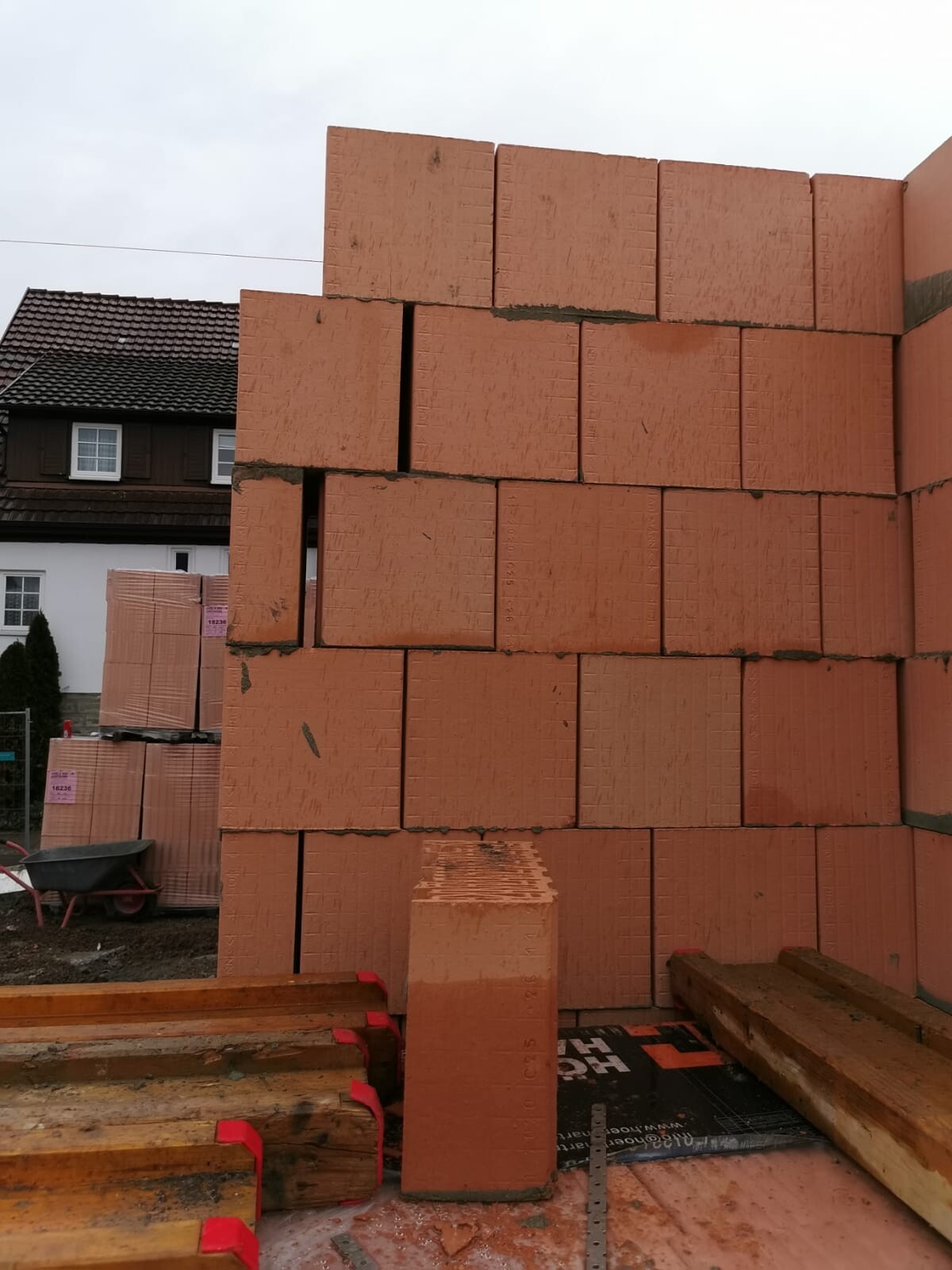
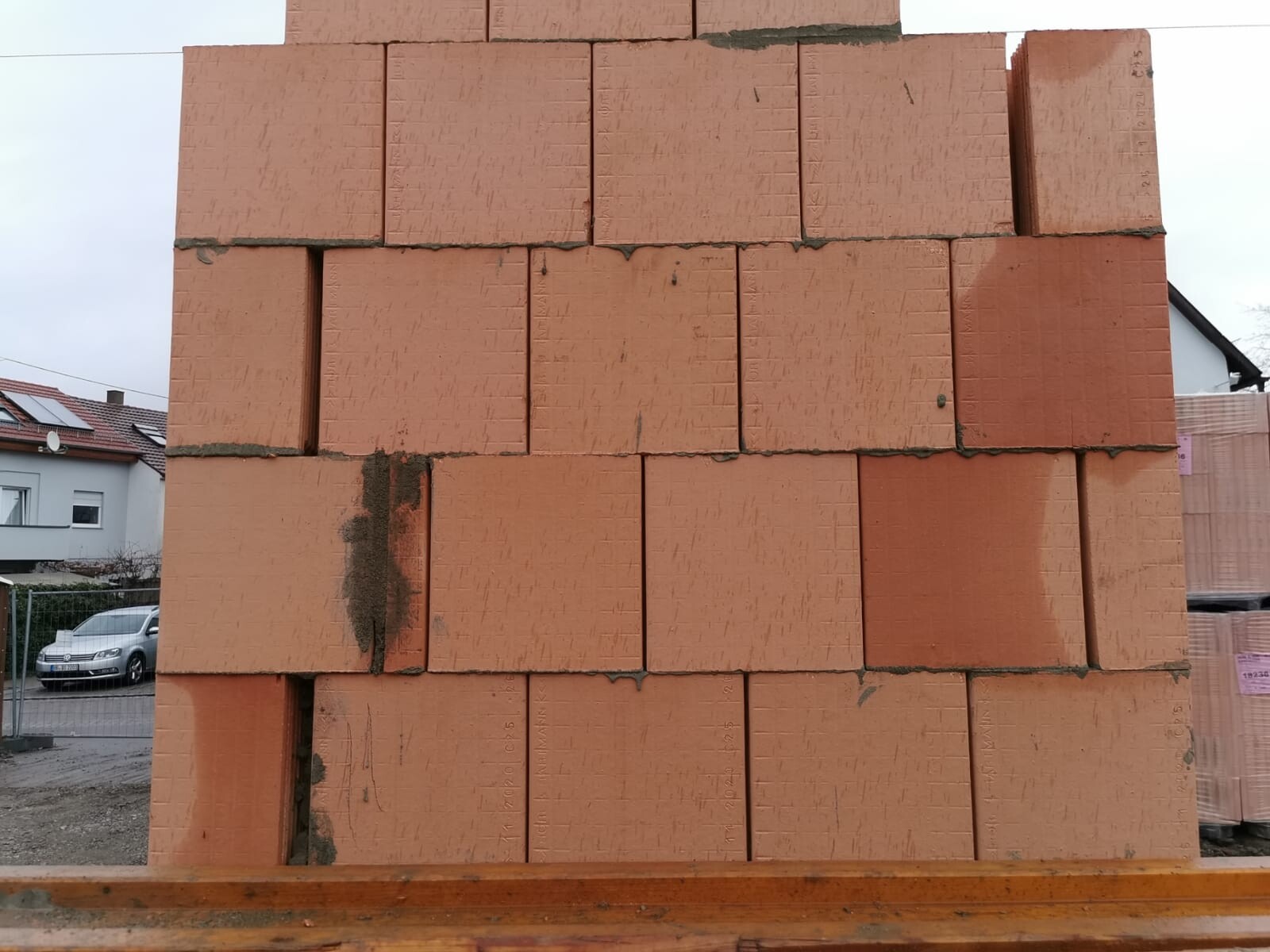
In our house construction project managed by a general contractor, the masonry subcontractor was changed. The previous mason worked very neatly, but was replaced due to the slow pace of work (4 months for building the basement).
The new mason is now working very quickly, but in my opinion also quite roughly. In particular, I have noticed very large joints between the bricks. So my question to the experts is: Are these gaps in the masonry still within acceptable standards or even normal, or should we raise this issue directly with the mason or general contractor while the damage is still limited?
A few additional details:
- The building is a terraced house (row house)
- The walls are built with 36.5cm (14 inches) Poroton clay blocks
If I have forgotten any important information, please ask.
Thanks in advance for your assessment and support.
K
Kishihmen12 Jan 2021 14:2311ant schrieb:
The fool should just rent a stone cutter. With a standard cill course at the bottom, he would have adjusted the height better, but it works at the top as well. But none of this DIY nonsense. Are you really building with the butcher general contractor from @Hausbau0815 – seriously: what does this guy do for a living?
Pretty sure not, I’m building in Baden-Württemberg. The guy even has a master craftsman certificate 🙄
But thanks for the info. I’ll have the expert come back again. As an amateur, I’m not really taken seriously and keep hearing “don’t worry,” “I’ve been building for 20 years,” “I know what I’m doing”...

Kishihmen schrieb:
As a layperson, I’m unfortunately not taken very seriously and regularly get told things like "don’t worry," "I’ve been building for 20 years," "I know what I’m doing"... Tradespeople often like to call what is basically turning things upside down “experience.” But it’s no different in the administrative field, where the "Peter Principle" is often “understood” as a staff development concept :-)
https://www.instagram.com/11antgmxde/
https://www.linkedin.com/company/bauen-jetzt/

11ant schrieb:
I share your concerns. Concrete plus "ETICS" has a different thermal transmittance compared to monolithic porous bricks. Regardless of the fact that this sounds quite unusual and I am not an expert in construction... where exactly is the difference compared to a concrete ring beam? Isn’t it the same principle? Concrete formwork with insulation on top?
face26 schrieb:
Regardless of the fact that this sounds quite risky and I’m not an expert in construction… where is the difference compared to a concrete ring beam? Isn’t it basically the same principle? Concrete poured in formwork with insulation on top? Or even with the insulation integrated into the formwork, yes. I’m not a structural engineer either (and unfortunately Grandpa Willy is no longer available). The main difference I see here is the height: in this case, there are only about two and a half thumb-widths of “colder material” under the ceiling, where condensation moisture can accumulate. A professional—whom I do not consider the general contractor here—might have a different opinion.
https://www.instagram.com/11antgmxde/
https://www.linkedin.com/company/bauen-jetzt/
K
Kishihmen9 Feb 2021 16:26Hello everyone,
for those who might come across this topic again.
Our expert inspected the whole situation and found a few more defects. However, the issue with the 5cm (2 inches) concrete slab thickness does not seem to be a problem, as the concrete is directly connected to the ceiling and will be insulated from the outside.
for those who might come across this topic again.
Our expert inspected the whole situation and found a few more defects. However, the issue with the 5cm (2 inches) concrete slab thickness does not seem to be a problem, as the concrete is directly connected to the ceiling and will be insulated from the outside.
Similar topics