
ᐅ Are large vertical joints in the structural shell still acceptable, or do they count as defects?
Created on: 14 Dec 2020 11:59
K
Kishihmen
Hello everyone,
In our house construction project managed by a general contractor, the masonry subcontractor was changed. The previous mason worked very neatly, but was replaced due to the slow pace of work (4 months for building the basement).
The new mason is now working very quickly, but in my opinion also quite roughly. In particular, I have noticed very large joints between the bricks. So my question to the experts is: Are these gaps in the masonry still within acceptable standards or even normal, or should we raise this issue directly with the mason or general contractor while the damage is still limited?
A few additional details:
- The building is a terraced house (row house)
- The walls are built with 36.5cm (14 inches) Poroton clay blocks
If I have forgotten any important information, please ask.
Thanks in advance for your assessment and support.
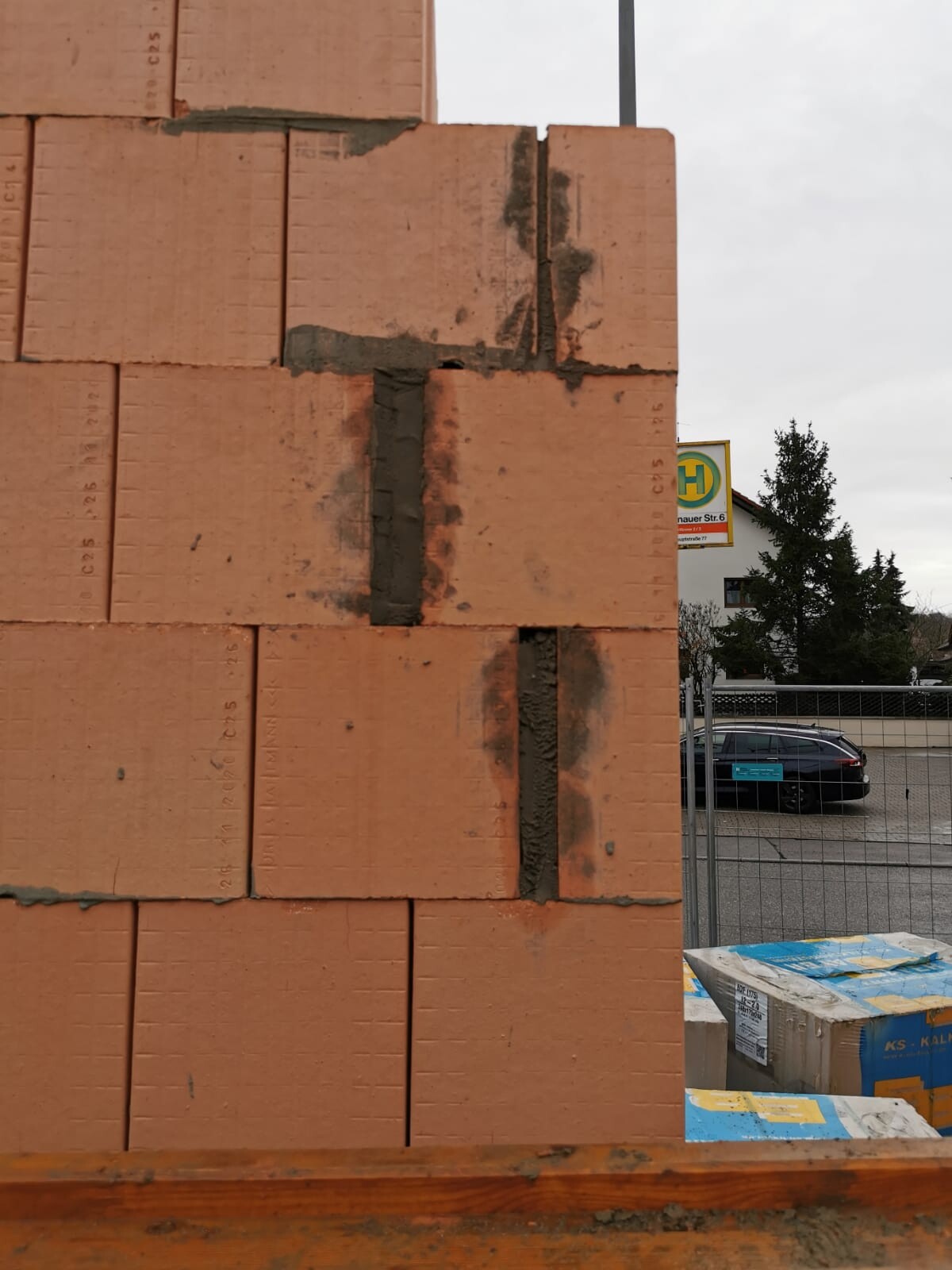
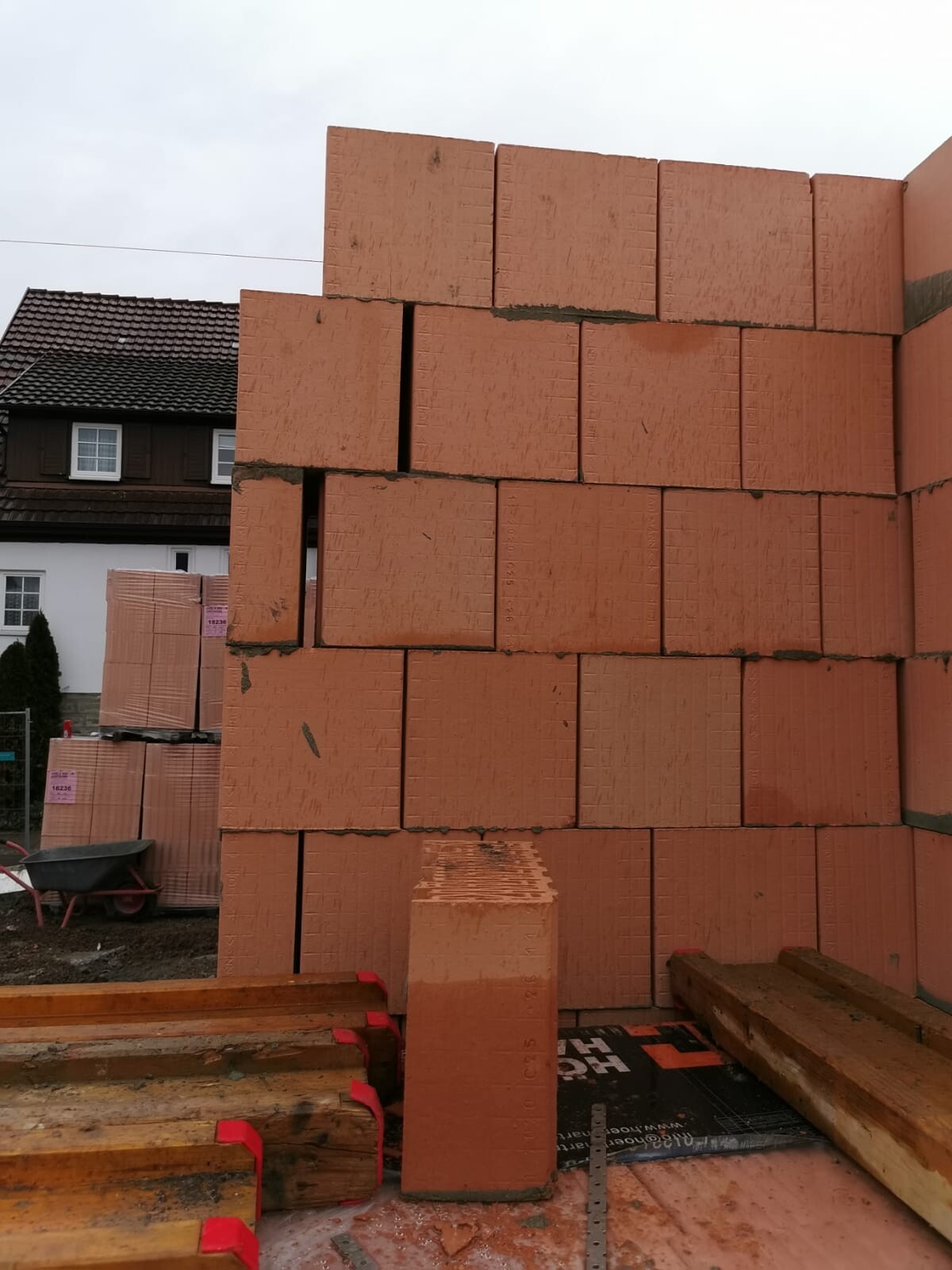
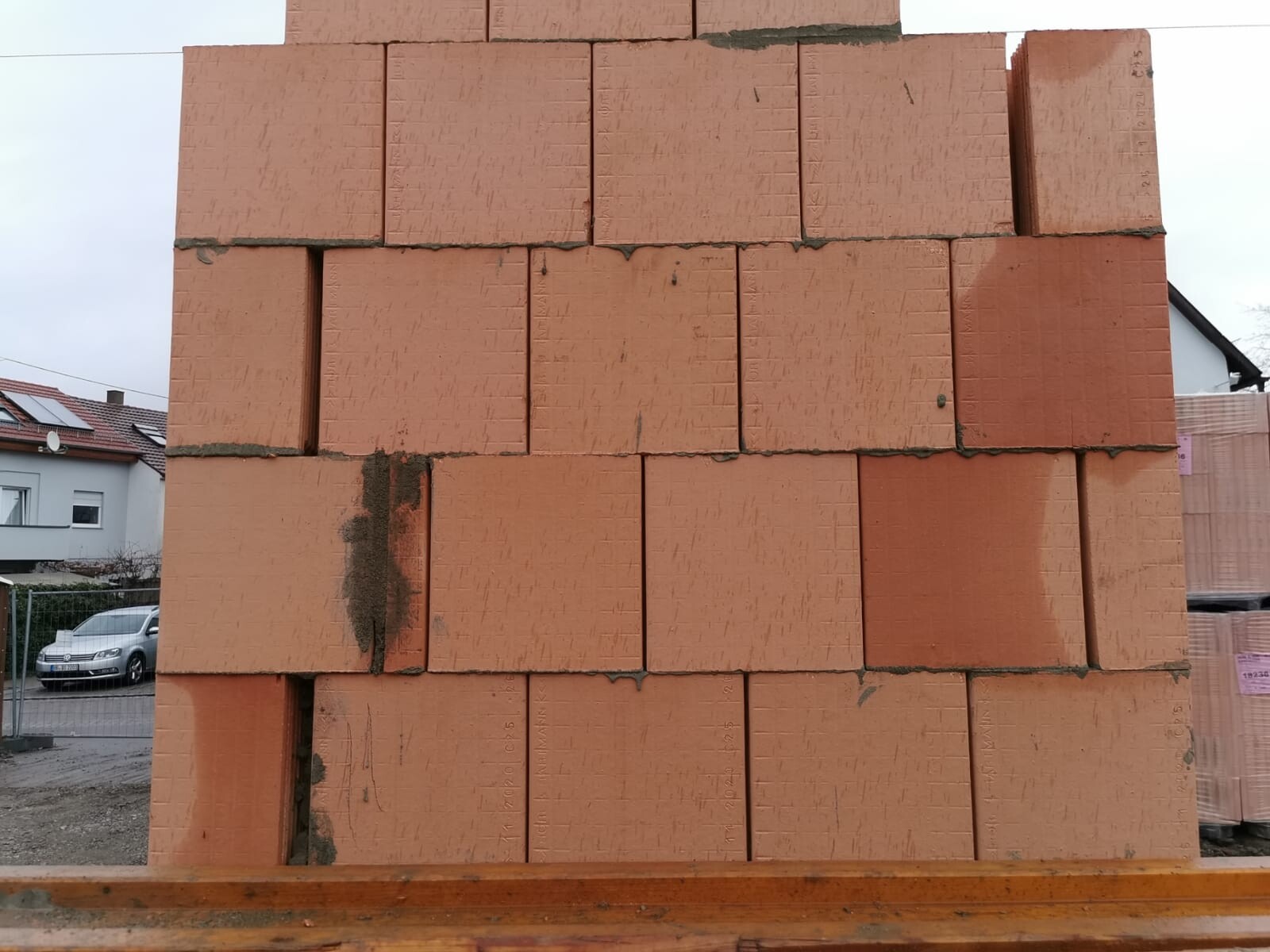
In our house construction project managed by a general contractor, the masonry subcontractor was changed. The previous mason worked very neatly, but was replaced due to the slow pace of work (4 months for building the basement).
The new mason is now working very quickly, but in my opinion also quite roughly. In particular, I have noticed very large joints between the bricks. So my question to the experts is: Are these gaps in the masonry still within acceptable standards or even normal, or should we raise this issue directly with the mason or general contractor while the damage is still limited?
A few additional details:
- The building is a terraced house (row house)
- The walls are built with 36.5cm (14 inches) Poroton clay blocks
If I have forgotten any important information, please ask.
Thanks in advance for your assessment and support.
Kishihmen schrieb:
So the ceilings on both full floors are roughly the same height (2.40 and 2.41 meters (7 ft 10 in and 7 ft 11 in)).Okay, in bedrooms it's possibly acceptable since you mostly just sleep there; with children, though, it’s less ideal... but having only 2.40 meters (7 ft 10 in) ceiling height on the ground floor is really not an option for me—I wouldn’t even consider buying a plot like that (even worse if it’s an open-plan layout). Sorry, maybe I’m just spoiled in that regard...
Having a room with full ceiling height and plenty of natural light makes a big difference.
Is no exception possible?

superzapp schrieb:
Siemens air hooks. Finally, a useful application for them.Better hurry though, their approval expires on February 31st – after that, they won’t be allowed in new buildings anymore :-)https://www.instagram.com/11antgmxde/
https://www.linkedin.com/company/bauen-jetzt/
K
Kishihmen23 Dec 2020 15:28tumaa schrieb:
Okay, in bedrooms it could work if necessary, since that’s where you mainly sleep, but for children it’s not ideal ... and having only 2.40m (7 ft 10 in) ceiling height on the ground floor is definitely not acceptable. I wouldn’t even consider buying the property then (it’s even worse if the layout is open concept), sorry, maybe I’m just spoiled...
Having a floor-to-ceiling room with plenty of natural light really makes a big difference.
Is there absolutely no exception? No, I don’t have a problem with that. If I had complete freedom of choice, I’d probably go for 2.60m (8 ft 6 in), but I think 2.40m (7 ft 10 in) is really okay. It just shouldn’t be any less than that. 😉
Bookstar schrieb:
Is 2.40 meters (7 feet 10 inches) still considered living space? I thought anything under 2.45 meters (8 feet) is legally considered a cellar? Not at all... In Baden-Württemberg, people tend to be shorter, so 2.30 meters (7 feet 7 inches) is often sufficient, but generally 2.40 meters (7 feet 10 inches) is the minimum height.
Ysop*** schrieb:
Not at all... In Baden-Württemberg, people tend to be shorter, so 2.30 m (7 ft 7 in) is usually enough; otherwise, 2.40 m (7 ft 10 in) is generally the minimum.Except in Berlin. There, anything below 2.5 m (8 ft 2 in) is considered a cellar for potatoes.