
ᐅ Are large vertical joints in the structural shell still acceptable, or do they count as defects?
Created on: 14 Dec 2020 11:59
K
Kishihmen
Hello everyone,
In our house construction project managed by a general contractor, the masonry subcontractor was changed. The previous mason worked very neatly, but was replaced due to the slow pace of work (4 months for building the basement).
The new mason is now working very quickly, but in my opinion also quite roughly. In particular, I have noticed very large joints between the bricks. So my question to the experts is: Are these gaps in the masonry still within acceptable standards or even normal, or should we raise this issue directly with the mason or general contractor while the damage is still limited?
A few additional details:
- The building is a terraced house (row house)
- The walls are built with 36.5cm (14 inches) Poroton clay blocks
If I have forgotten any important information, please ask.
Thanks in advance for your assessment and support.
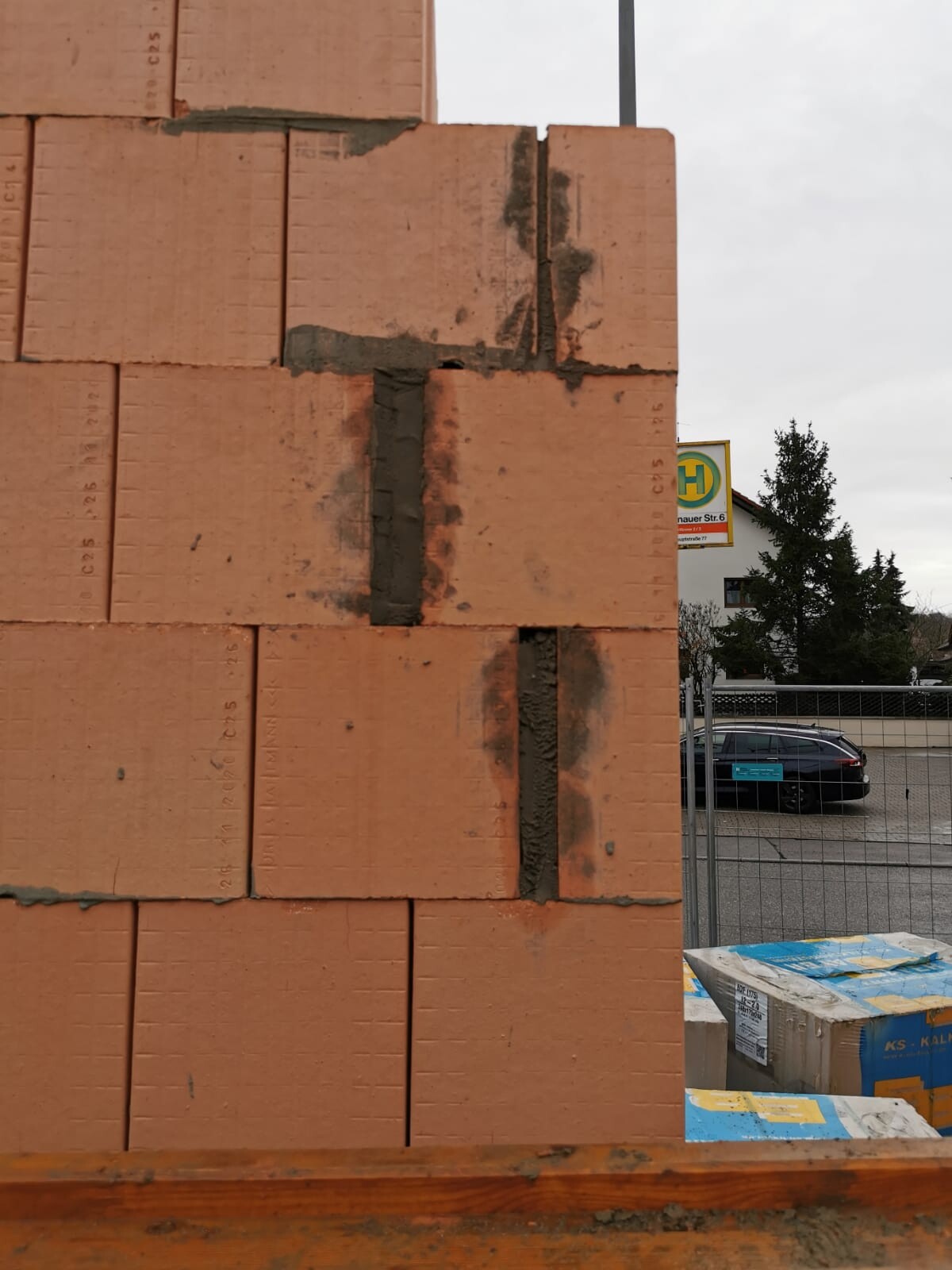
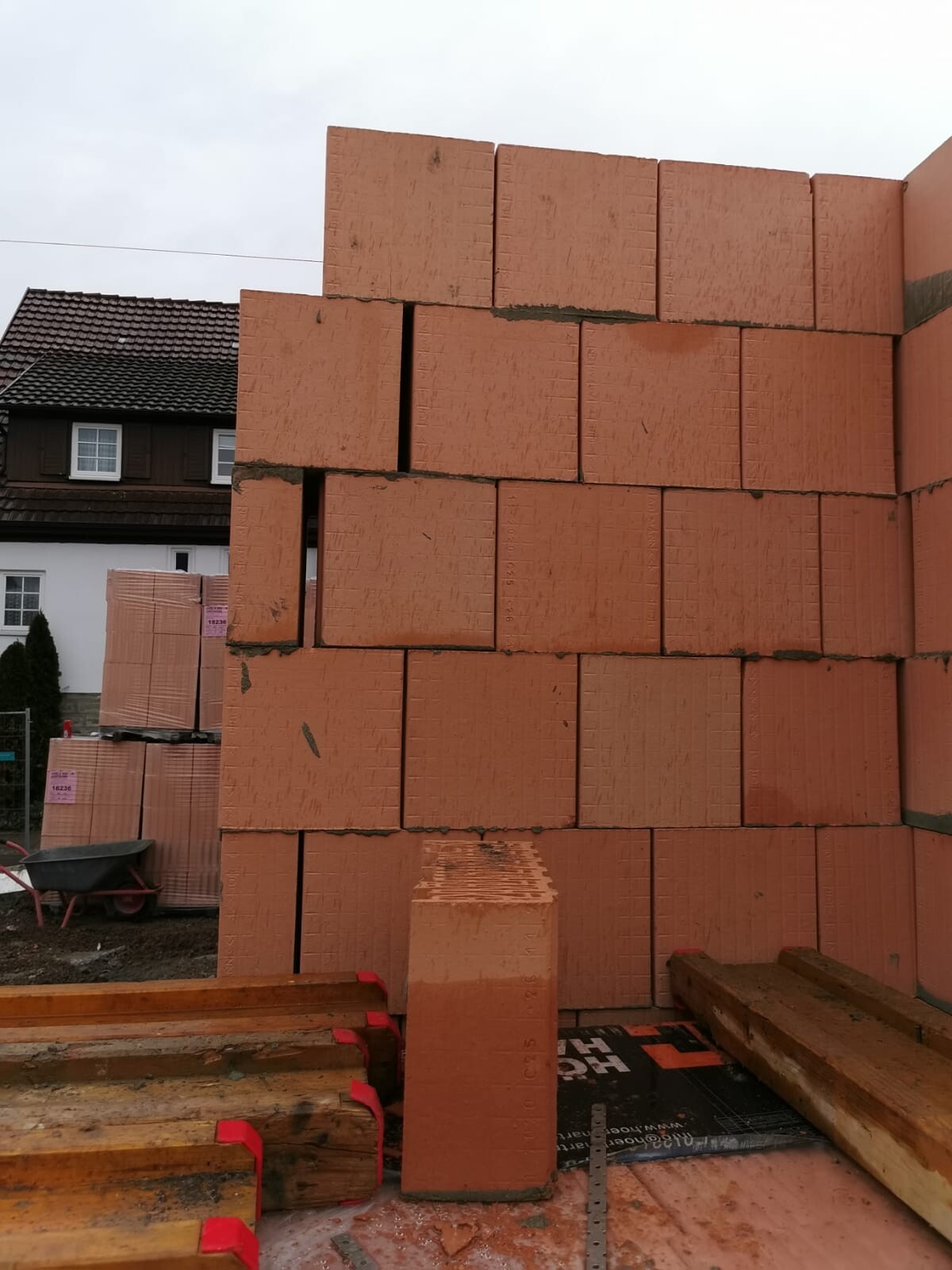
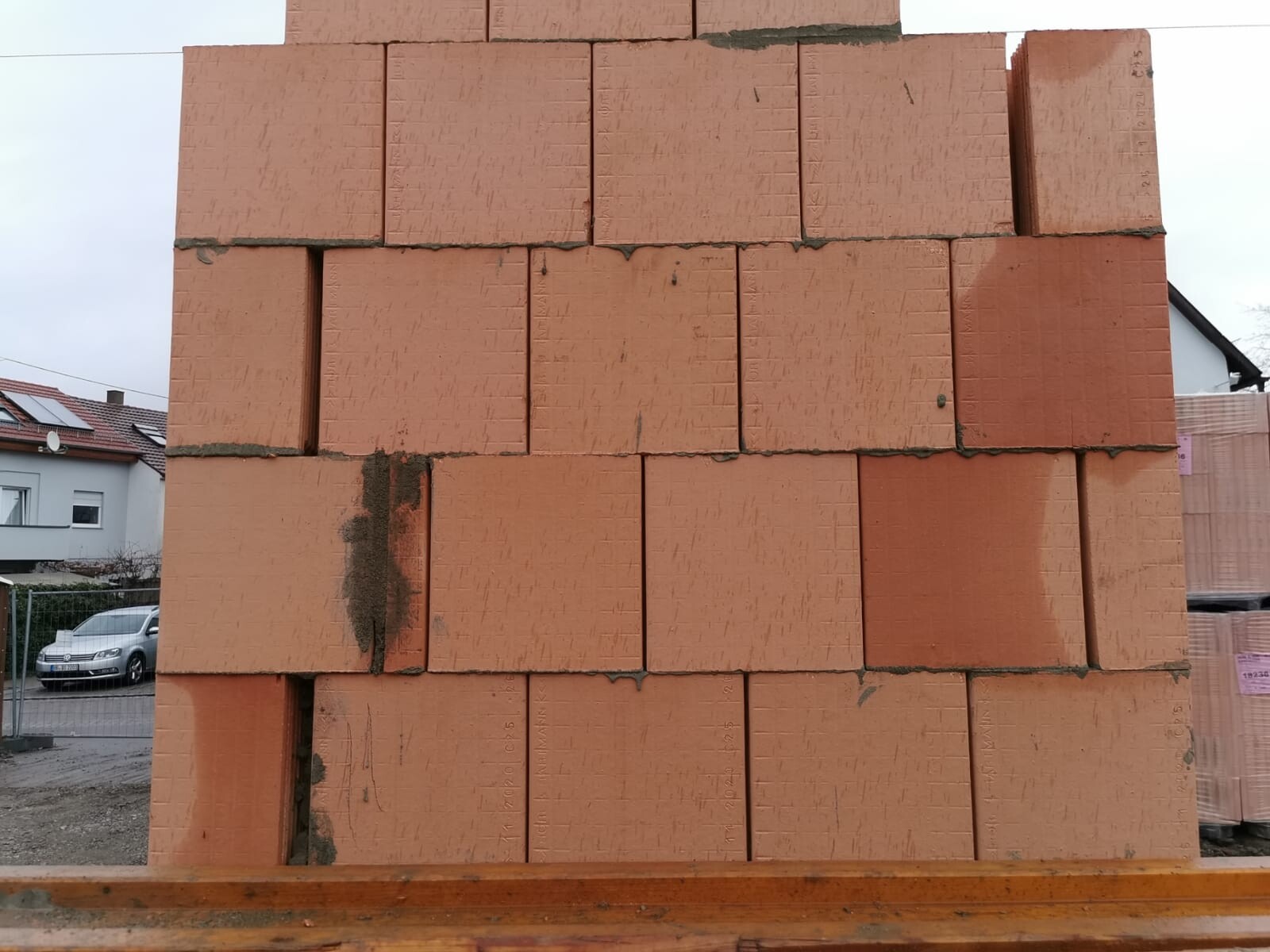
In our house construction project managed by a general contractor, the masonry subcontractor was changed. The previous mason worked very neatly, but was replaced due to the slow pace of work (4 months for building the basement).
The new mason is now working very quickly, but in my opinion also quite roughly. In particular, I have noticed very large joints between the bricks. So my question to the experts is: Are these gaps in the masonry still within acceptable standards or even normal, or should we raise this issue directly with the mason or general contractor while the damage is still limited?
A few additional details:
- The building is a terraced house (row house)
- The walls are built with 36.5cm (14 inches) Poroton clay blocks
If I have forgotten any important information, please ask.
Thanks in advance for your assessment and support.
K
Kishihmen9 Feb 2021 23:37That should actually work. The house will be built according to the Energy Saving Ordinance 2016.
But here I am talking about soundproofing...
As far as I know, hollow bricks are not allowed in multi-story residential buildings...
So my question is: does a row house (REH) count as a multi-family building, or is it more comparable to a semi-detached house where you can basically do whatever you want...? I tend to think it’s the latter...
As far as I know, hollow bricks are not allowed in multi-story residential buildings...
So my question is: does a row house (REH) count as a multi-family building, or is it more comparable to a semi-detached house where you can basically do whatever you want...? I tend to think it’s the latter...
K
Kishihmen10 Feb 2021 11:29Snowy36 schrieb:
I’m specifically talking about soundproofing here...
As far as I know, unfilled bricks are not allowed in multi-story residential buildings...
So my question is: does a REH count as a multi-family house, or is it more comparable to a semi-detached house where you can basically do whatever you want... I’m guessing the latter... It’s the latter. It counts as a semi-detached house.
The party wall should be constructed on both sides (theoretically) with 17.5cm (7 inches) sandstone plus 5cm (2 inches) of mineral wool board. If this was done properly, it should actually provide quite decent sound insulation.
S
Spiderman19822 Jan 2024 22:43Kishihmen schrieb:
- The walls are built with 36.5cm Poroton bricks (14.4 inches)May I ask what happened with your house? Are you satisfied with the thermal insulation, or do you have cold bridges where the joints are too wide?
Similar topics