
Hello everyone,
For some of you, the solution might be obvious, so we would appreciate your help.
We have started the groundwork, and as often happens, we accidentally broke the neighbor’s sewer pipe that runs through our property. We have already created a temporary bypass but now need a reliable and permanent seal by next week.
Since I don’t have much practical experience in this area but want to handle the repair myself, I would like to ask for your opinion on whether our planned approach will work, and we would appreciate practical advice and manufacturer recommendations.
The old pipe is made of asbestos cement (external diameter about 17.5cm (7 inches)) and the “crack” is 7 meters (23 feet) long. The sewer pipe will later run underneath our garage (the garage is built on strip footings).
My plan:
Install hose adapters from Crassus on both ends and use a KG pipe for bridging.
What should I keep in mind? Which type of KG pipe is suitable for the bridging and in what “lengths”? Can you recommend manufacturers for the hose adapters?
I am grateful for any help on how to achieve a secure solution. Best regards!
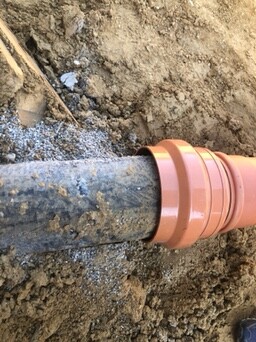
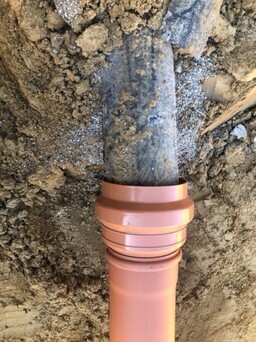
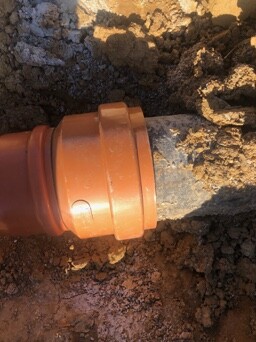
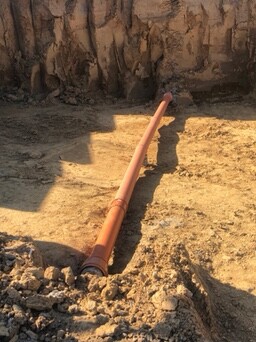
For some of you, the solution might be obvious, so we would appreciate your help.
We have started the groundwork, and as often happens, we accidentally broke the neighbor’s sewer pipe that runs through our property. We have already created a temporary bypass but now need a reliable and permanent seal by next week.
Since I don’t have much practical experience in this area but want to handle the repair myself, I would like to ask for your opinion on whether our planned approach will work, and we would appreciate practical advice and manufacturer recommendations.
The old pipe is made of asbestos cement (external diameter about 17.5cm (7 inches)) and the “crack” is 7 meters (23 feet) long. The sewer pipe will later run underneath our garage (the garage is built on strip footings).
My plan:
Install hose adapters from Crassus on both ends and use a KG pipe for bridging.
What should I keep in mind? Which type of KG pipe is suitable for the bridging and in what “lengths”? Can you recommend manufacturers for the hose adapters?
I am grateful for any help on how to achieve a secure solution. Best regards!

K
knalltüte16 Apr 2020 20:40Steven schrieb:
...But why is your neighbor’s wastewater pipe located on your property? It doesn’t belong there.
...StevenThat was my first thought as well. I always assumed that such pipes would have to be rerouted or redirected at the owner’s expense—or alternatively, a legal easement would need to be registered.
I would first have the legality of the pipe verified.
Of course, initially patching it temporarily and trying to resolve the matter amicably is advisable.
superzapp schrieb:
That was my first thought as well. I always believed that such pipes would have to be rerouted or redirected at the owner’s expense—or a building encumbrance registered?
I would first check (or have checked) the legal status of the pipe.
Of course, initially, patch it temporarily and try to resolve the issue amicably.The neighboring house is at least 40 years old. At that time, all the plots around the neighboring property were part of a single parcel and were only divided later. When the land was divided, the wastewater pipe was not moved onto their property; instead, a sewer easement was registered in the land register (now our property). So, the neighbor currently has a sewer easement on our land and could only reroute the wastewater pipe onto their own property with significant effort. We have a very good neighborly relationship (we’ve known each other for a long time), so we would like to find a simple solution for all parties involved—of course, this is not the ideal situation for us. I have illustrated it in the attachment—the wastewater pipe is shown in blue.
Many thanks for your feedback. We are now in contact with a specialist company again and will probably have it professionally repaired with their support.
H
HilfeHilfe17 Apr 2020 06:21Listhom schrieb:
Thank you for your response. Our neighbor agrees with this. We have already consulted a professional company (plumbing contractor), and they specifically recommended this to us. Therefore, we are now asking for constructive answers. Absolutely not. They wouldn’t provide expertise for your shoddy work.
Listhom schrieb:
. So the neighbor now has a sewer pipe easement on our propertyHello ListhomTo prevent any damage to the wastewater pipes during the garage construction, a small tip:
Get 30 x 30cm (12 x 12 inches) paving slabs. Place paving slabs on both sides of the wastewater pipe, similar to curbstones, set in concrete. Do this along the entire length of the pipe. Then fill the construction with sand, place paving slabs on top. Done. Nothing will ever happen to them again.
This is how I protected all my PVC drainage pipes. It takes some effort, but the weather is good and staying inside isn’t an option.
Steven
Steven schrieb:
Hello Listhom,
to prevent any damage to the wastewater pipes during the garage construction, a quick tip:
get 30 x 30cm (12 x 12 inches) paving slabs. Place these on both sides of the wastewater pipe, similar to curbstones, set in concrete. Do this along the entire length of the pipe. Then fill the structure with sand. Put paving slabs on top. Done. Nothing will ever happen to it again.
That’s how I protected all my PVC sewer pipes. It takes some work, but the weather is nice and you can’t go outside anyway.
Steven Hello Steven,
thank you very much for your reply. We have since resolved the issue. Together with a plumber friend who has experience, we sealed everything properly. Our bricklayer provided concrete on site so we could secure the pipe at the correct slope. So, similar to what you recommended. Then we covered it with sand. Now we can move forward.
Thanks again and best regards,
Listhom
Similar topics