
Hello everyone,
For some of you, the solution might be obvious, so we would appreciate your help.
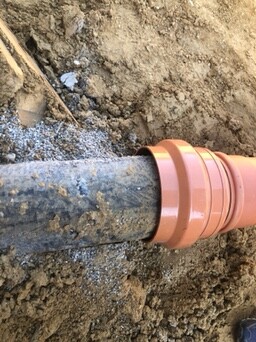
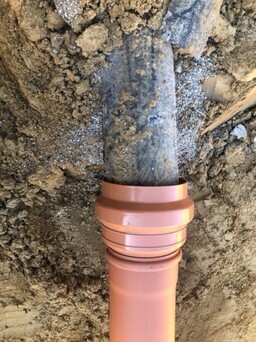
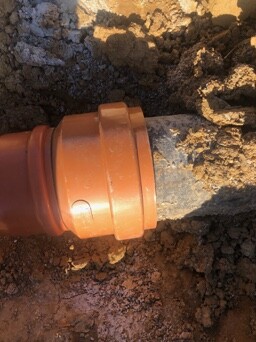
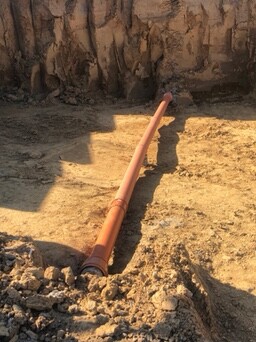
We have started the groundwork, and as often happens, we accidentally broke the neighbor’s sewer pipe that runs through our property. We have already created a temporary bypass but now need a reliable and permanent seal by next week.
Since I don’t have much practical experience in this area but want to handle the repair myself, I would like to ask for your opinion on whether our planned approach will work, and we would appreciate practical advice and manufacturer recommendations.
The old pipe is made of asbestos cement (external diameter about 17.5cm (7 inches)) and the “crack” is 7 meters (23 feet) long. The sewer pipe will later run underneath our garage (the garage is built on strip footings).
My plan:
Install hose adapters from Crassus on both ends and use a KG pipe for bridging.
What should I keep in mind? Which type of KG pipe is suitable for the bridging and in what “lengths”? Can you recommend manufacturers for the hose adapters?
I am grateful for any help on how to achieve a secure solution. Best regards!
For some of you, the solution might be obvious, so we would appreciate your help.
We have started the groundwork, and as often happens, we accidentally broke the neighbor’s sewer pipe that runs through our property. We have already created a temporary bypass but now need a reliable and permanent seal by next week.
Since I don’t have much practical experience in this area but want to handle the repair myself, I would like to ask for your opinion on whether our planned approach will work, and we would appreciate practical advice and manufacturer recommendations.
The old pipe is made of asbestos cement (external diameter about 17.5cm (7 inches)) and the “crack” is 7 meters (23 feet) long. The sewer pipe will later run underneath our garage (the garage is built on strip footings).
My plan:
Install hose adapters from Crassus on both ends and use a KG pipe for bridging.
What should I keep in mind? Which type of KG pipe is suitable for the bridging and in what “lengths”? Can you recommend manufacturers for the hose adapters?
I am grateful for any help on how to achieve a secure solution. Best regards!
Listhom schrieb:
Neighbor’s sewage pipe (running through our property) has cracked. Listhom schrieb:
Since I don’t have much experience in this area yet but want to handle it myself, And what does your neighbor say about your plans?
Listhom schrieb:
For some of you the solution might be obvious, so we would appreciate your help. The obvious solution is to hire a professional company!! After all, this is not your own pipe but your neighbor’s.

Especially because it concerns the neighbor’s pipe, the work must be done by a professional company. You can tinker around like that for yourself, but never for others. By doing so, you take on the "warranty."
If something is wrong and there is a blockage, you will have to open everything up again, as in 99 percent of cases the problem will come from the spot you repaired.
So, hands off.
If something is wrong and there is a blockage, you will have to open everything up again, as in 99 percent of cases the problem will come from the spot you repaired.
So, hands off.
Hello Listhom
your plan is realistic.
Is the pipe diameter really 175 mm (7 inches)?
Two 4-meter (13 feet) sewer pipes. Since you are attaching a sliding sleeve (Crassus hose adapter) on each end, you need to cut one sleeve off the sewer pipe. Do this to the exact length (the closer you get to the old pipe, the less space there is for debris). You have a few millimeters (fraction of an inch) to work with. Now lay the sewer pipe properly on the slope and the issue is resolved.
When pushing the sewer pipes together, use a bit of dish soap as lubricant.
But what is your neighbor’s wastewater pipe doing on your property? It doesn’t belong there.
Further: what is crossing over there? Or will the garage be built exactly on top of the wastewater pipe?
Steven
your plan is realistic.
Is the pipe diameter really 175 mm (7 inches)?
Two 4-meter (13 feet) sewer pipes. Since you are attaching a sliding sleeve (Crassus hose adapter) on each end, you need to cut one sleeve off the sewer pipe. Do this to the exact length (the closer you get to the old pipe, the less space there is for debris). You have a few millimeters (fraction of an inch) to work with. Now lay the sewer pipe properly on the slope and the issue is resolved.
When pushing the sewer pipes together, use a bit of dish soap as lubricant.
But what is your neighbor’s wastewater pipe doing on your property? It doesn’t belong there.
Further: what is crossing over there? Or will the garage be built exactly on top of the wastewater pipe?
Steven
Similar topics