
Hello!
We bought a 10-year-old house and found these three circles or holes about 5 cm (2 inches) in diameter in the basement. Does anyone know what they might be? The previous owner doesn’t have any information about them.
We would be very grateful for any advice.
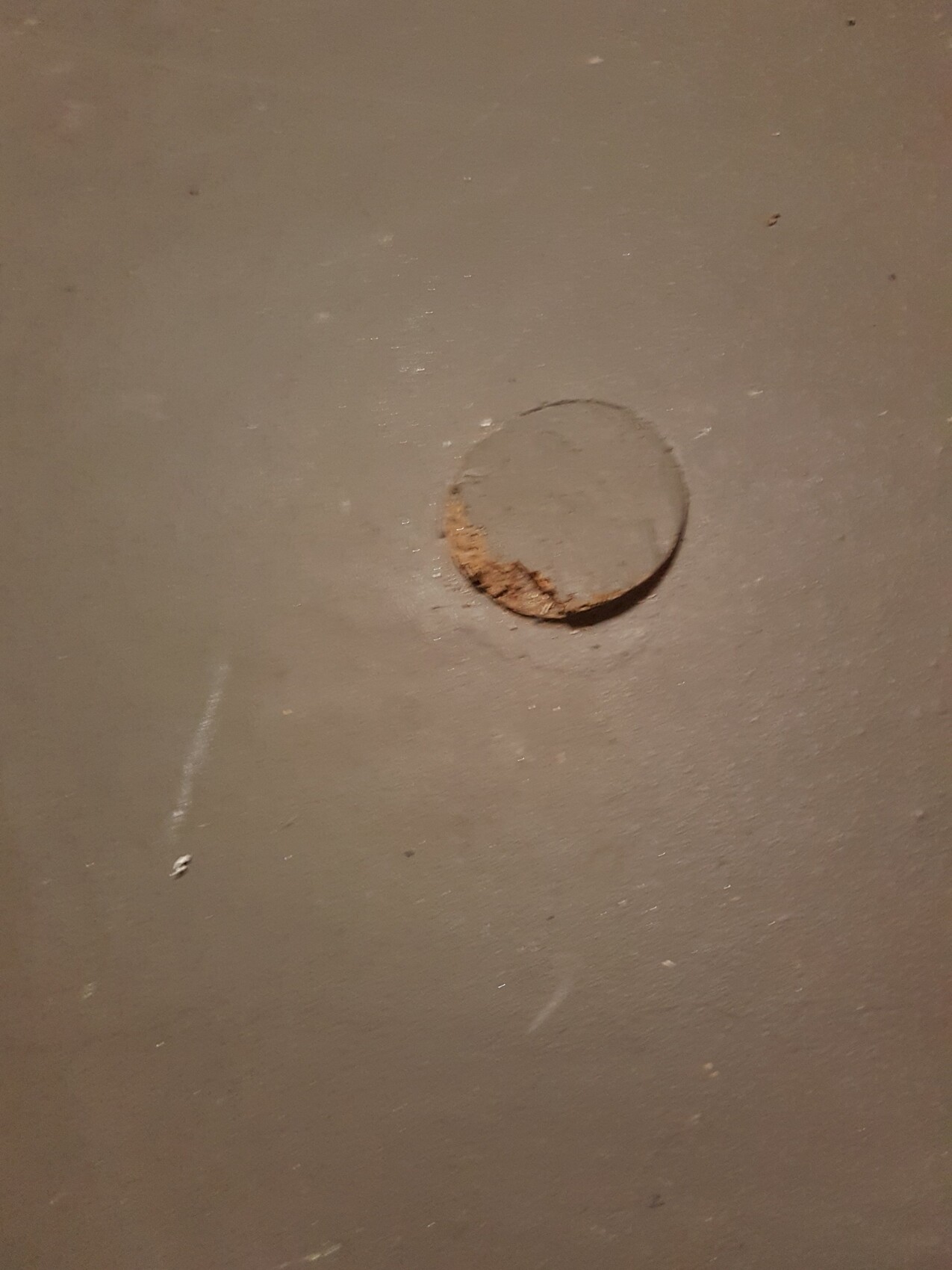
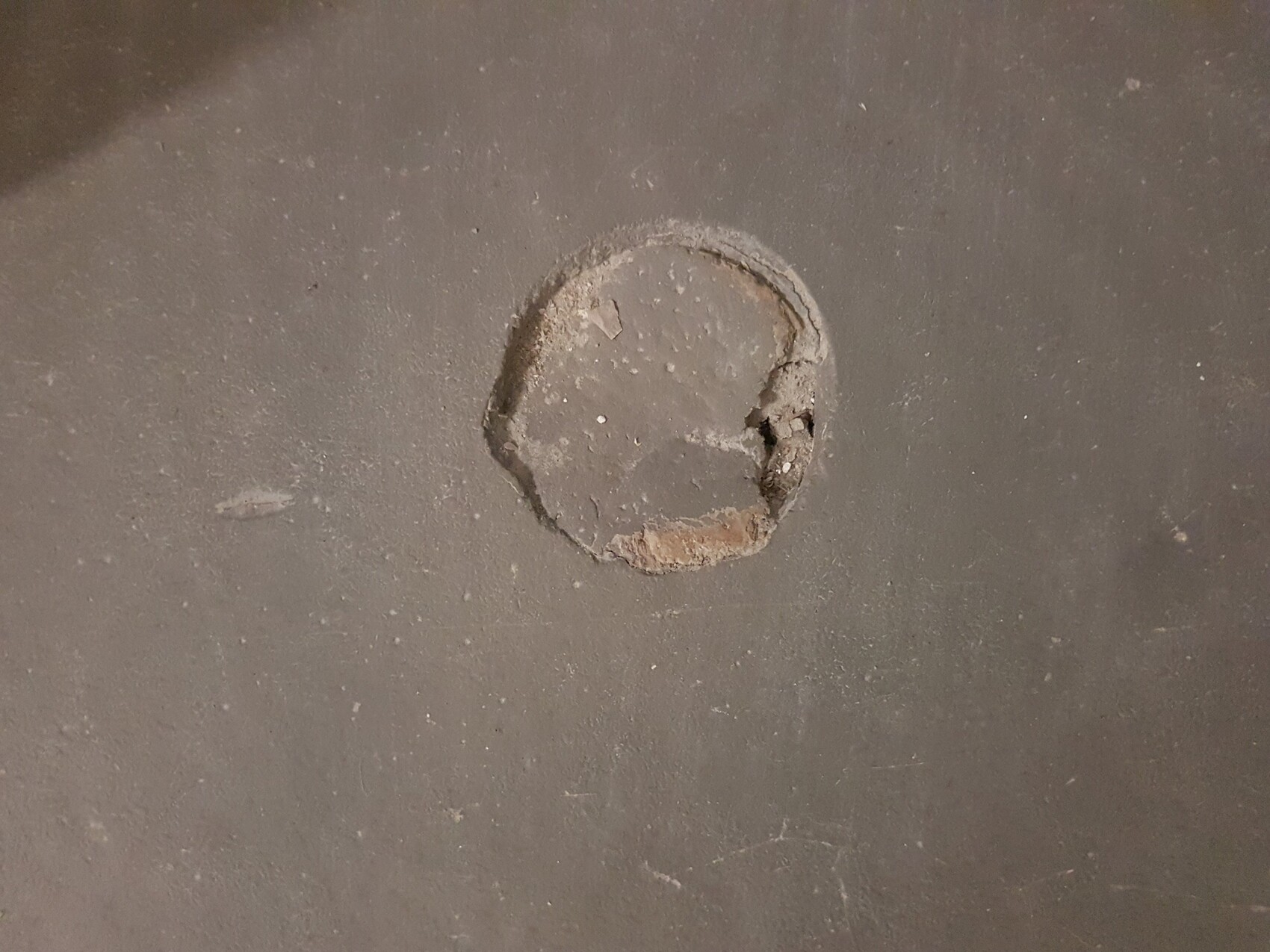
We bought a 10-year-old house and found these three circles or holes about 5 cm (2 inches) in diameter in the basement. Does anyone know what they might be? The previous owner doesn’t have any information about them.
We would be very grateful for any advice.
Snowy36 schrieb:
yes, and if there is any residual moisture, then it is fraudulent misrepresentation if the seller was aware of it.No, not necessarily.
In the case of a house with defects, the seller is not required to disclose issues if they are either obvious or could have been discovered before purchase.
You sell a house with its strengths.
It would be different if asbestos is installed in hidden parts of the house and denied when asked, or if a water damage is concealed by placing a large wardrobe in front of it.
See -> Misrepresentation! Misrepresentation requires intent.
All of this is clarified before buying a house.
Of course, a basement can sometimes be flooded – however, this does not count as a defect if the damage has been repaired.
By the way, moisture can be detected by smell 😉
Terms like "fraudulent misrepresentation," "building stop / work stoppage," "defect," and "fraud" are often used too quickly without a clear understanding of their definitions.
And you know so well when a defect is considered obvious and when it is not?
Did the original poster confront the seller about these holes, do we know that? What was the seller’s response?
If someone aired the house before the viewing, you wouldn’t smell anything at all.
And again the question: according to the original poster, the house had two previous owners, so it is quite old—why was it never tiled after all these years?
That really raises serious suspicion...
Did the original poster confront the seller about these holes, do we know that? What was the seller’s response?
If someone aired the house before the viewing, you wouldn’t smell anything at all.
And again the question: according to the original poster, the house had two previous owners, so it is quite old—why was it never tiled after all these years?
That really raises serious suspicion...
Snowy36 schrieb:
And you are so knowledgeable that you know exactly when a defect is considered obvious and when it is not?That doesn’t really relate to your statement about fraudulent misrepresentation.
I am somewhat familiar (and learning every day) with the interpretation of laws and their violations; otherwise, I wouldn’t have responded here. Apart from that, I once bought an old house myself and eventually sold it again.
In that respect (the first point), I understand the circumstances under which one cannot speak of fraudulent misrepresentation. So I wouldn’t claim such a thing, because it might be interpreted by readers as "false accusation" according to section 164 of the penal code 😉
Snowy36 schrieb:
If someone airs out the place before the viewing, you won’t smell anything at all.
And again the question: the house, according to the original poster, had two previous owners and is therefore quite old—so why was the basement never tiled after all these years????Actually, you would notice! Damp basements have a musty odor that can’t simply be aired out.
Also, not everyone who hasn’t tiled their basement is necessarily trying to hide something. I think that’s a bit of a stretch. My own basement (in a house from the 1950s) is not tiled either. That doesn’t mean I’m trying to conceal anything.
What is somewhat strange is that the previous owners didn’t know what was on the floor.
Regardless: once on site, check if it’s dry—if so, then tiling should definitely be possible. If it’s not dry—then that’s a problem, and the cause needs to be investigated!
There are two legal situations in which the seller has a duty to disclose information, and if they fail to do so, it constitutes fraudulent misrepresentation.
1) Duty to disclose due to a specific question: For example, if the buyer asks, "Has the basement ever been wet?" and the seller answers "no," but this is untrue, then the seller has failed to fulfill their duty to disclose.
2) Duty to disclose without a buyer’s question: Certain issues must be disclosed even if the buyer does not ask. You yourself mentioned asbestos, but this also includes, for example, a damp basement caused by missing waterproofing.
The seller can rescind the purchase contract if they intentionally violate their duty to disclose. In such cases, this constitutes fraudulent misrepresentation.
As a result, the contract is annulled and invalid. The buyer can then demand a refund of the purchase price.
1) Duty to disclose due to a specific question: For example, if the buyer asks, "Has the basement ever been wet?" and the seller answers "no," but this is untrue, then the seller has failed to fulfill their duty to disclose.
2) Duty to disclose without a buyer’s question: Certain issues must be disclosed even if the buyer does not ask. You yourself mentioned asbestos, but this also includes, for example, a damp basement caused by missing waterproofing.
The seller can rescind the purchase contract if they intentionally violate their duty to disclose. In such cases, this constitutes fraudulent misrepresentation.
As a result, the contract is annulled and invalid. The buyer can then demand a refund of the purchase price.
This topic mainly leads to disputes when you are taking opposing sides 😉
The question came up only after the purchase?! But it hardly matters whether the basement has ever been wet. Some basements, just to keep the example going, get wet from time to time. Then they dry out or are dried out and that’s it. Usually, if professionally dried, you have more issues with household goods than with the structure itself.
More interesting is the cause of the moisture that is suspected here. Has it been resolved? Or is there a leak that could cause moisture to keep occurring? If it was something like a washing machine, I would politely dismiss that topic and focus on more important areas.
This issue does not seem to apply here anyway. Because there are signs that something has been done. By the way, these holes could have other causes as well... as said before: you can smell moisture, feel high humidity... if you have a good nose, you can even smell mold if it’s present 🙂
But the seller must first be aware that something is installed or missing in order for this to apply.
If only it were that simple. It’s not. The buyer is expected to exercise due diligence before purchase. That is why contracts usually contain a clause like “sold as seen.”
And yes, fraud and intentional deception are certainly serious offenses, but I do not see that here.
Have a nice weekend
P.S. Regarding these “holes,” I was actually thinking more about impressions left by construction rods.
Snowy36 schrieb:
1) Duty to disclose due to a specific question: here the question was: Has the basement ever been wet? If the seller says no and that is not true, then they have not fulfilled their duty to disclose
The question came up only after the purchase?! But it hardly matters whether the basement has ever been wet. Some basements, just to keep the example going, get wet from time to time. Then they dry out or are dried out and that’s it. Usually, if professionally dried, you have more issues with household goods than with the structure itself.
More interesting is the cause of the moisture that is suspected here. Has it been resolved? Or is there a leak that could cause moisture to keep occurring? If it was something like a washing machine, I would politely dismiss that topic and focus on more important areas.
This issue does not seem to apply here anyway. Because there are signs that something has been done. By the way, these holes could have other causes as well... as said before: you can smell moisture, feel high humidity... if you have a good nose, you can even smell mold if it’s present 🙂
Snowy36 schrieb:
2) Duty to disclose without a question from the buyer: there are certain issues that qualify as such, asbestos you yourself have already mentioned... this also includes a damp basement due to missing basement waterproofing.
But the seller must first be aware that something is installed or missing in order for this to apply.
Snowy36 schrieb:
This results in the contract being canceled and invalid. The buyer can therefore demand the purchase price back.
If only it were that simple. It’s not. The buyer is expected to exercise due diligence before purchase. That is why contracts usually contain a clause like “sold as seen.”
And yes, fraud and intentional deception are certainly serious offenses, but I do not see that here.
Have a nice weekend
P.S. Regarding these “holes,” I was actually thinking more about impressions left by construction rods.
Similar topics