
Hello!
We bought a 10-year-old house and found these three circles or holes about 5 cm (2 inches) in diameter in the basement. Does anyone know what they might be? The previous owner doesn’t have any information about them.
We would be very grateful for any advice.

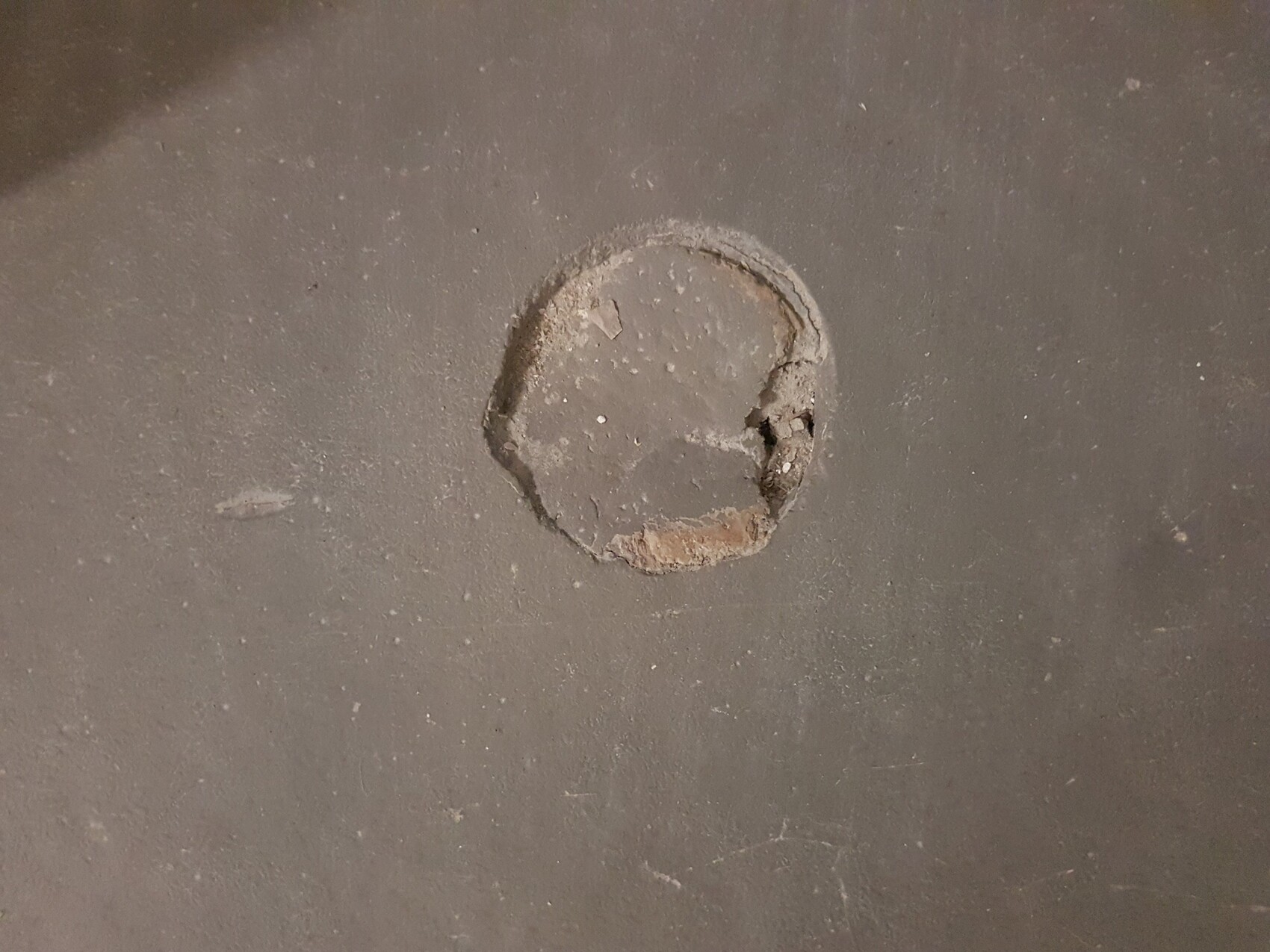
We bought a 10-year-old house and found these three circles or holes about 5 cm (2 inches) in diameter in the basement. Does anyone know what they might be? The previous owner doesn’t have any information about them.
We would be very grateful for any advice.
I would strongly recommend checking the underlying substrate first... if there is still residual moisture and you tile over it, it can really cause problems.
How old is the house, and why hasn’t it been tiled until now after so many years? That alone would make me suspicious.
Get an expert from the list of publicly certified surveyors to measure and inspect the area. It doesn’t cost much—maybe around 200 euros or so if they just take a look.
If the expert finds anything, the previous owner should have told you. Of course, they might not remember now... and usually, if something like that happens, people don’t inform the neighbors either, so you can’t rely on that!
If there is an issue and the seller didn’t inform you, that counts as fraudulent misrepresentation.
How old is the house, and why hasn’t it been tiled until now after so many years? That alone would make me suspicious.
Get an expert from the list of publicly certified surveyors to measure and inspect the area. It doesn’t cost much—maybe around 200 euros or so if they just take a look.
If the expert finds anything, the previous owner should have told you. Of course, they might not remember now... and usually, if something like that happens, people don’t inform the neighbors either, so you can’t rely on that!
If there is an issue and the seller didn’t inform you, that counts as fraudulent misrepresentation.

tomtom79 schrieb:
@Snowy36 In the automotive sector, previous damage must be disclosed to the buyer, but in real estate, if defects have been professionally repaired, I have never heard of such a requirement.I think so, too.
tomtom79 schrieb:
@Snowy36 In the automotive sector, previous damages must be disclosed to the buyer, but in the real estate sector, if defects have been professionally repaired, I have never heard of such a requirement.I had written "if there is something"..... well, if there is something = residual moisture, then it is fraudulent misrepresentation if the seller knew about it.
Similar topics