
ᐅ Waterproof concrete – injection during the construction phase
Created on: 4 Jan 2025 13:51
S
summoner
Hi,
we are currently in the process of building a house with a general contractor who is also responsible for the basement.
The house is a solid masonry structure with a fully basement constructed using a "white tank" (watertight concrete) system. The basement, made of watertight concrete (WU concrete), is completely below ground level and does not protrude on any side. Each room in the basement has waterproof light wells designed to resist groundwater pressure. The soil survey confirmed that there is no hydrostatic groundwater pressure.
The WU construction is or was carried out according to the contract as follows (excerpt):
Approximately 24 cm (9.5 inches) thick reinforced concrete walls cast in place, a 30 cm (12 inches) thick reinforced concrete slab with reinforcement, PE foil as a sliding layer, perimeter insulation with a thickness of 60 mm (2.4 inches), and a 5 cm (2 inch) thick blinding layer. The buried WU basement exterior walls were insulated with 100 mm (4 inches) of perimeter insulation.
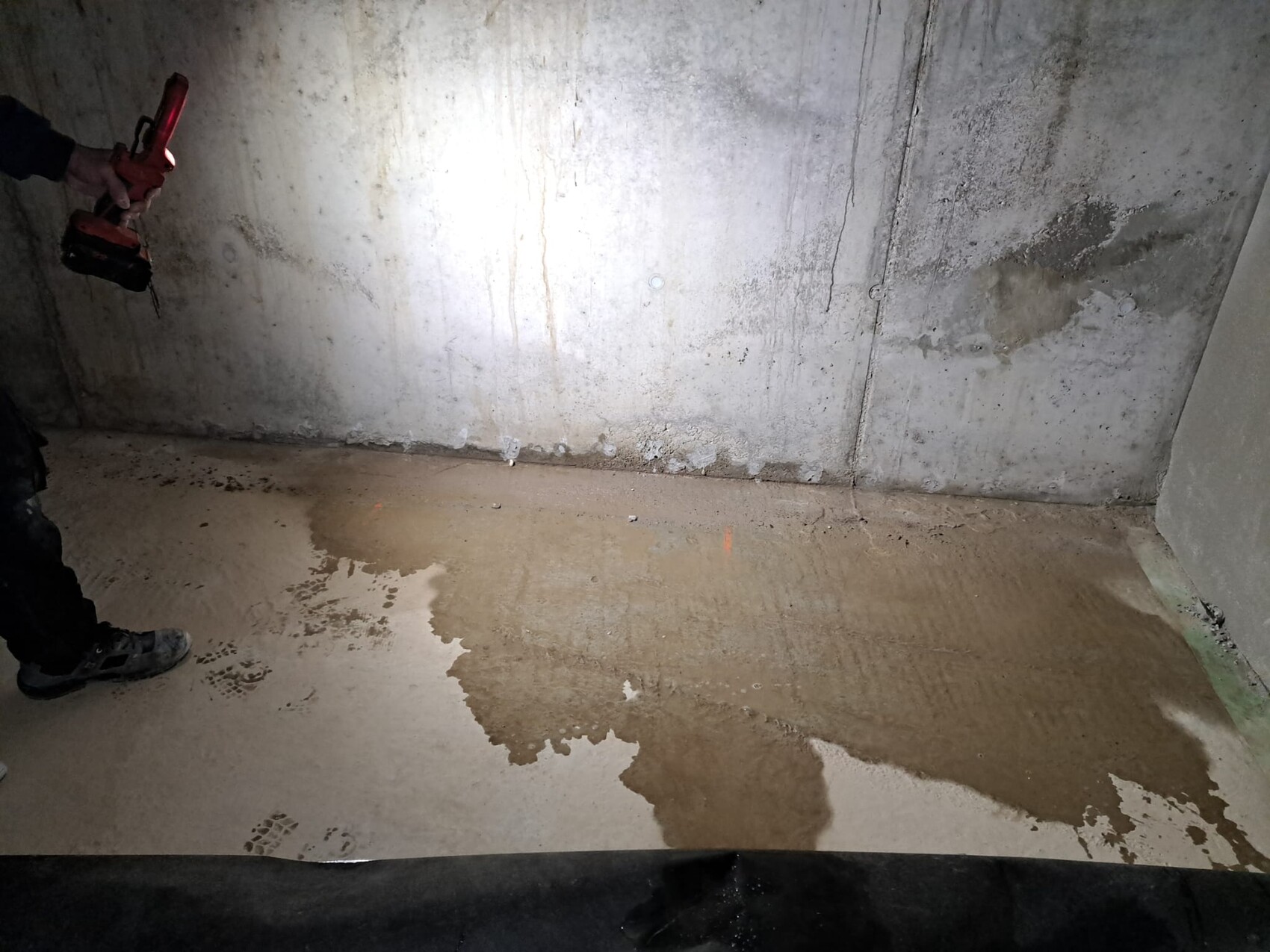
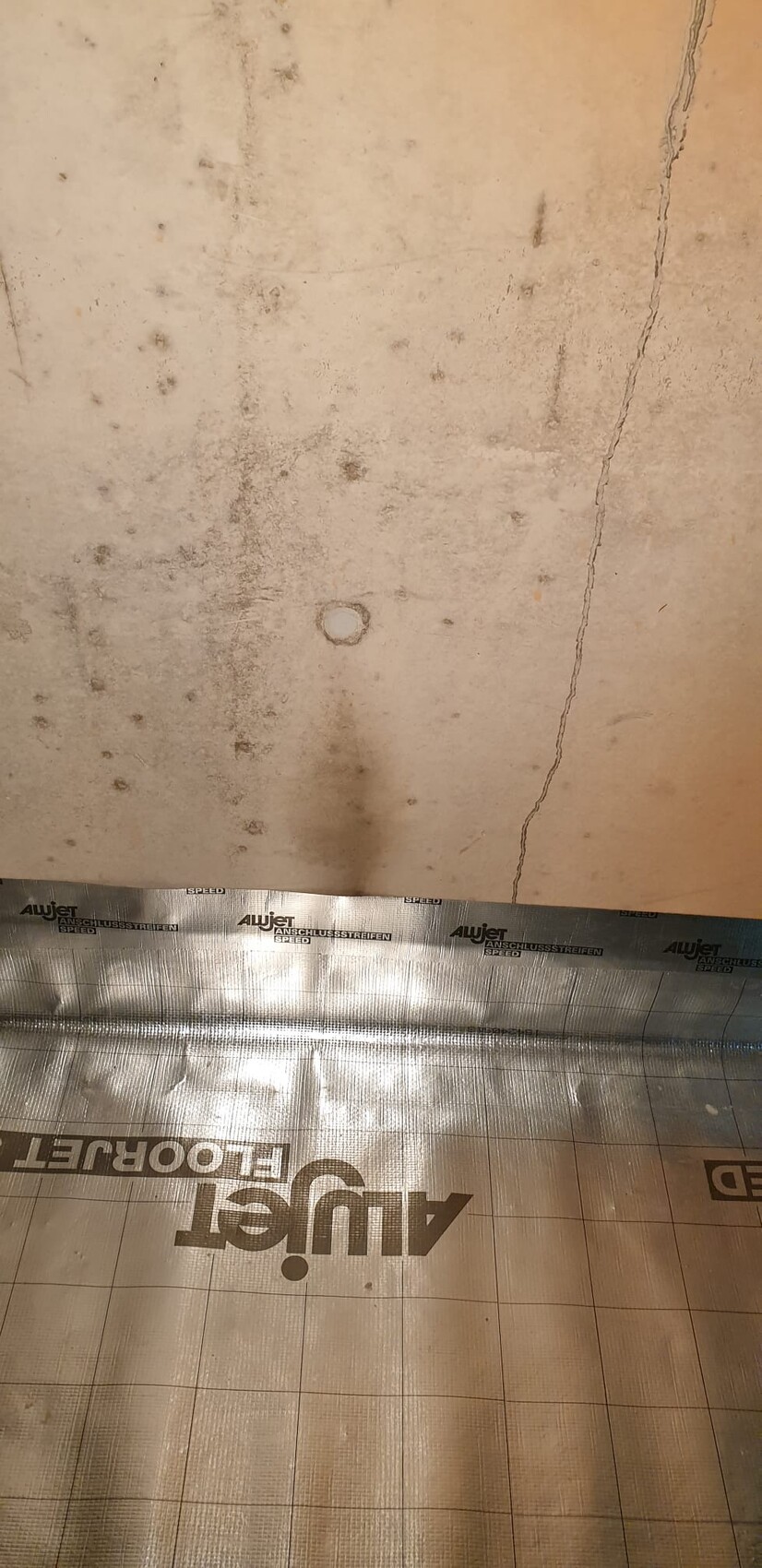
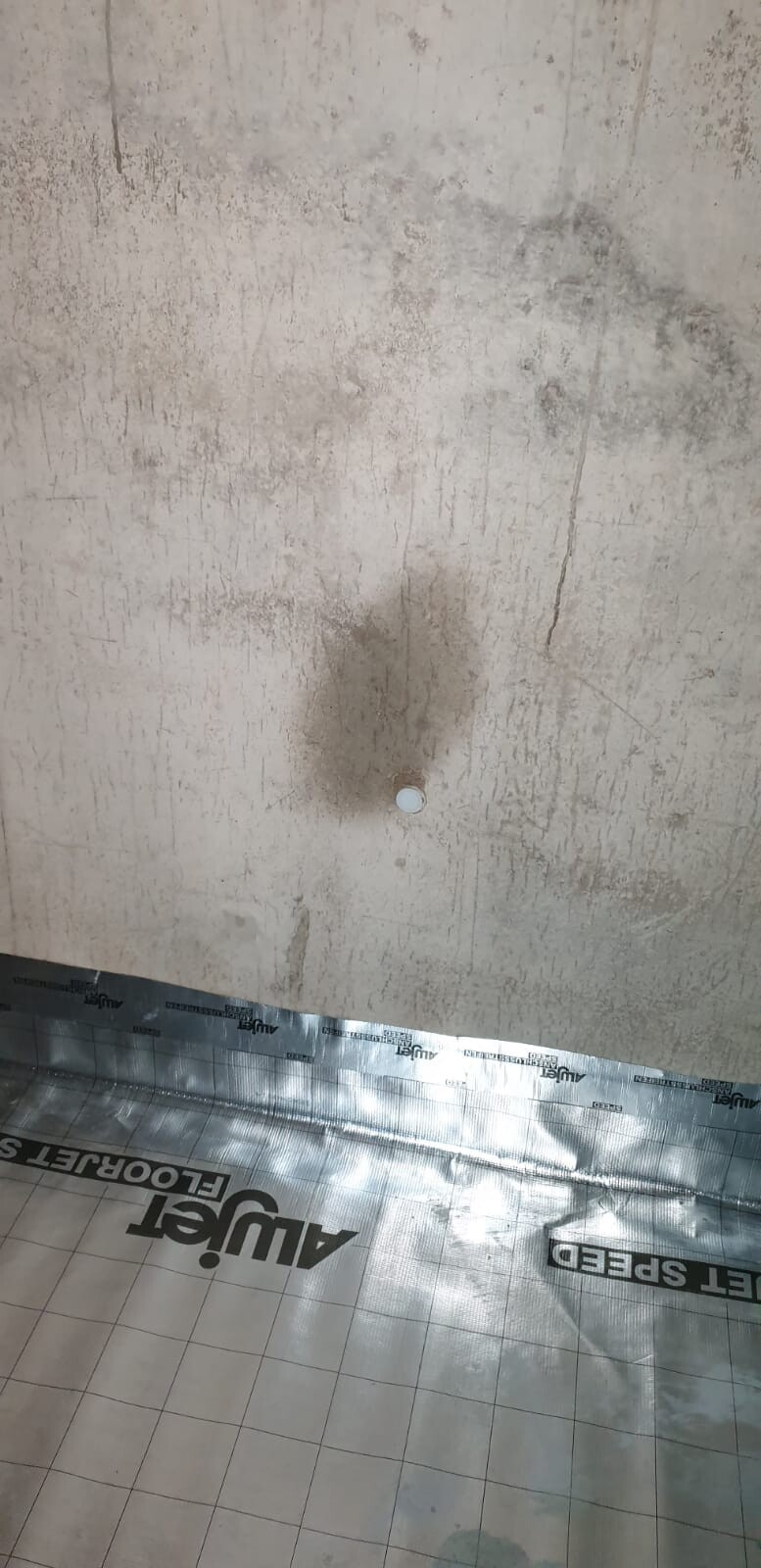
Now, the site manager and we have noticed damp spots on some walls. In one area, water seeped in slightly between the floor slab and the wall, causing a small puddle on the floor. In another area, water penetrated the wall itself (photos attached). Fortunately, the site manager acted quickly and has been following up to ensure “everything is in order.”
These spots were generously injected with sealant by a company responsible for supervising the white tank installation (one site about a month ago, the other about 2–3 months ago) and currently appear to be sealed. In one case, water leaked out during drilling of the wall; according to the employee, they had to drill through the joint protection or membrane (warning: not an expert) to ensure it was fully sealed.
During a recent site inspection, we found new damp areas and are now concerned whether it is normal that multiple injections are needed in different places so early in a new build with a white tank basement. Unfortunately, the basement has already been fully backfilled, and a “foil” (vapor barrier?) has been installed inside the basement, which, however, is only adhered to the wall.
We have already reported the new damp spots to the site manager.
Has anyone had similar experiences? Any feedback would be greatly appreciated.

we are currently in the process of building a house with a general contractor who is also responsible for the basement.
The house is a solid masonry structure with a fully basement constructed using a "white tank" (watertight concrete) system. The basement, made of watertight concrete (WU concrete), is completely below ground level and does not protrude on any side. Each room in the basement has waterproof light wells designed to resist groundwater pressure. The soil survey confirmed that there is no hydrostatic groundwater pressure.
The WU construction is or was carried out according to the contract as follows (excerpt):
Approximately 24 cm (9.5 inches) thick reinforced concrete walls cast in place, a 30 cm (12 inches) thick reinforced concrete slab with reinforcement, PE foil as a sliding layer, perimeter insulation with a thickness of 60 mm (2.4 inches), and a 5 cm (2 inch) thick blinding layer. The buried WU basement exterior walls were insulated with 100 mm (4 inches) of perimeter insulation.
Now, the site manager and we have noticed damp spots on some walls. In one area, water seeped in slightly between the floor slab and the wall, causing a small puddle on the floor. In another area, water penetrated the wall itself (photos attached). Fortunately, the site manager acted quickly and has been following up to ensure “everything is in order.”
These spots were generously injected with sealant by a company responsible for supervising the white tank installation (one site about a month ago, the other about 2–3 months ago) and currently appear to be sealed. In one case, water leaked out during drilling of the wall; according to the employee, they had to drill through the joint protection or membrane (warning: not an expert) to ensure it was fully sealed.
During a recent site inspection, we found new damp areas and are now concerned whether it is normal that multiple injections are needed in different places so early in a new build with a white tank basement. Unfortunately, the basement has already been fully backfilled, and a “foil” (vapor barrier?) has been installed inside the basement, which, however, is only adhered to the wall.
We have already reported the new damp spots to the site manager.
Has anyone had similar experiences? Any feedback would be greatly appreciated.
I have a total of 10 years warranty on the basement. As far as I know, there is no warranty on the "injection sealing."
In my opinion, it is undisputed that it was not carried out properly. The important thing now is to fix the defects or find alternatives to make sure the structure is watertight. A request to the general contractor is being sent out now.
In my opinion, it is undisputed that it was not carried out properly. The important thing now is to fix the defects or find alternatives to make sure the structure is watertight. A request to the general contractor is being sent out now.