
ᐅ Waterproof concrete – injection during the construction phase
Created on: 4 Jan 2025 13:51
S
summoner
Hi,
we are currently in the process of building a house with a general contractor who is also responsible for the basement.
The house is a solid masonry structure with a fully basement constructed using a "white tank" (watertight concrete) system. The basement, made of watertight concrete (WU concrete), is completely below ground level and does not protrude on any side. Each room in the basement has waterproof light wells designed to resist groundwater pressure. The soil survey confirmed that there is no hydrostatic groundwater pressure.
The WU construction is or was carried out according to the contract as follows (excerpt):
Approximately 24 cm (9.5 inches) thick reinforced concrete walls cast in place, a 30 cm (12 inches) thick reinforced concrete slab with reinforcement, PE foil as a sliding layer, perimeter insulation with a thickness of 60 mm (2.4 inches), and a 5 cm (2 inch) thick blinding layer. The buried WU basement exterior walls were insulated with 100 mm (4 inches) of perimeter insulation.
Now, the site manager and we have noticed damp spots on some walls. In one area, water seeped in slightly between the floor slab and the wall, causing a small puddle on the floor. In another area, water penetrated the wall itself (photos attached). Fortunately, the site manager acted quickly and has been following up to ensure “everything is in order.”
These spots were generously injected with sealant by a company responsible for supervising the white tank installation (one site about a month ago, the other about 2–3 months ago) and currently appear to be sealed. In one case, water leaked out during drilling of the wall; according to the employee, they had to drill through the joint protection or membrane (warning: not an expert) to ensure it was fully sealed.
During a recent site inspection, we found new damp areas and are now concerned whether it is normal that multiple injections are needed in different places so early in a new build with a white tank basement. Unfortunately, the basement has already been fully backfilled, and a “foil” (vapor barrier?) has been installed inside the basement, which, however, is only adhered to the wall.
We have already reported the new damp spots to the site manager.
Has anyone had similar experiences? Any feedback would be greatly appreciated.

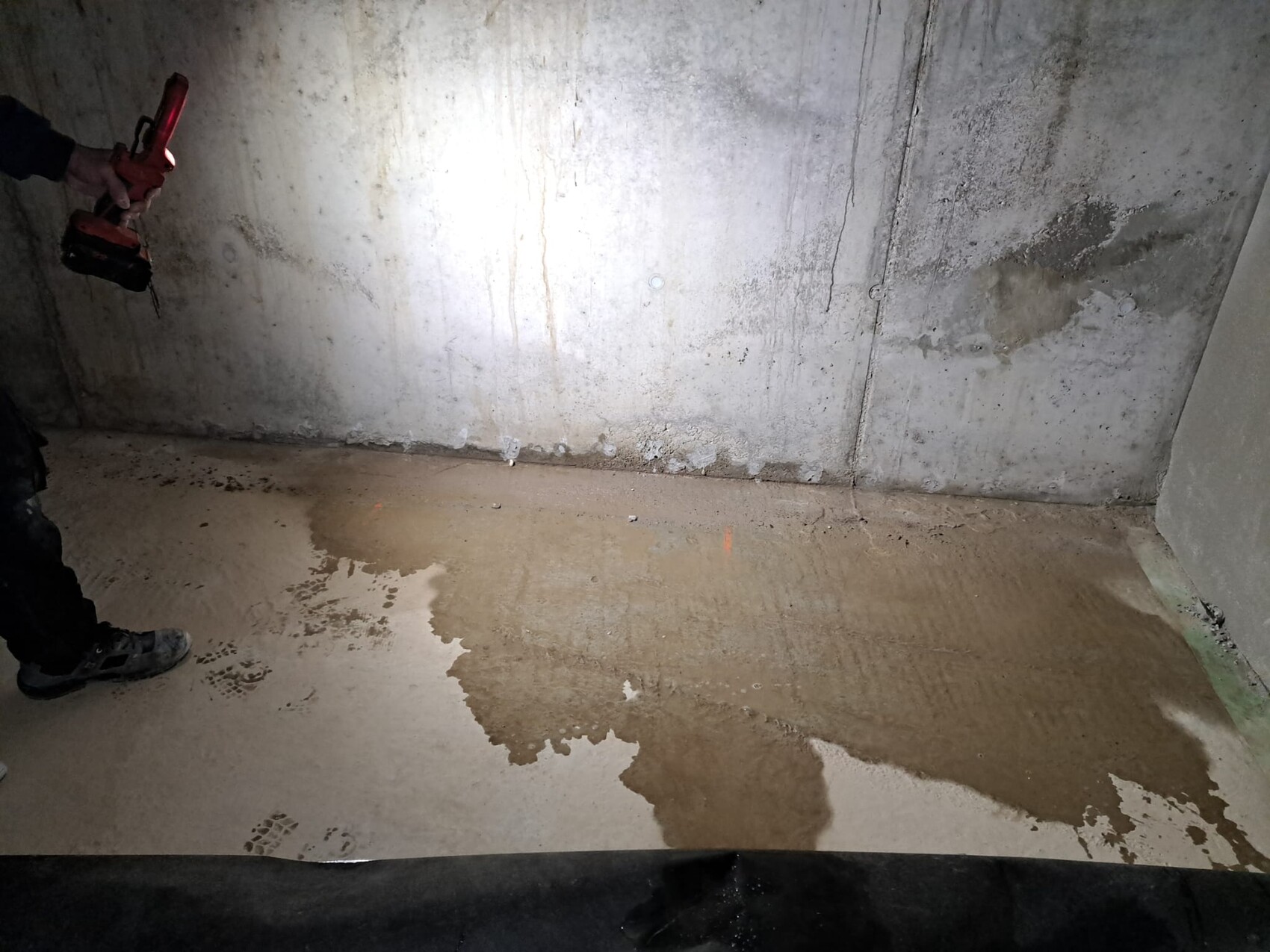
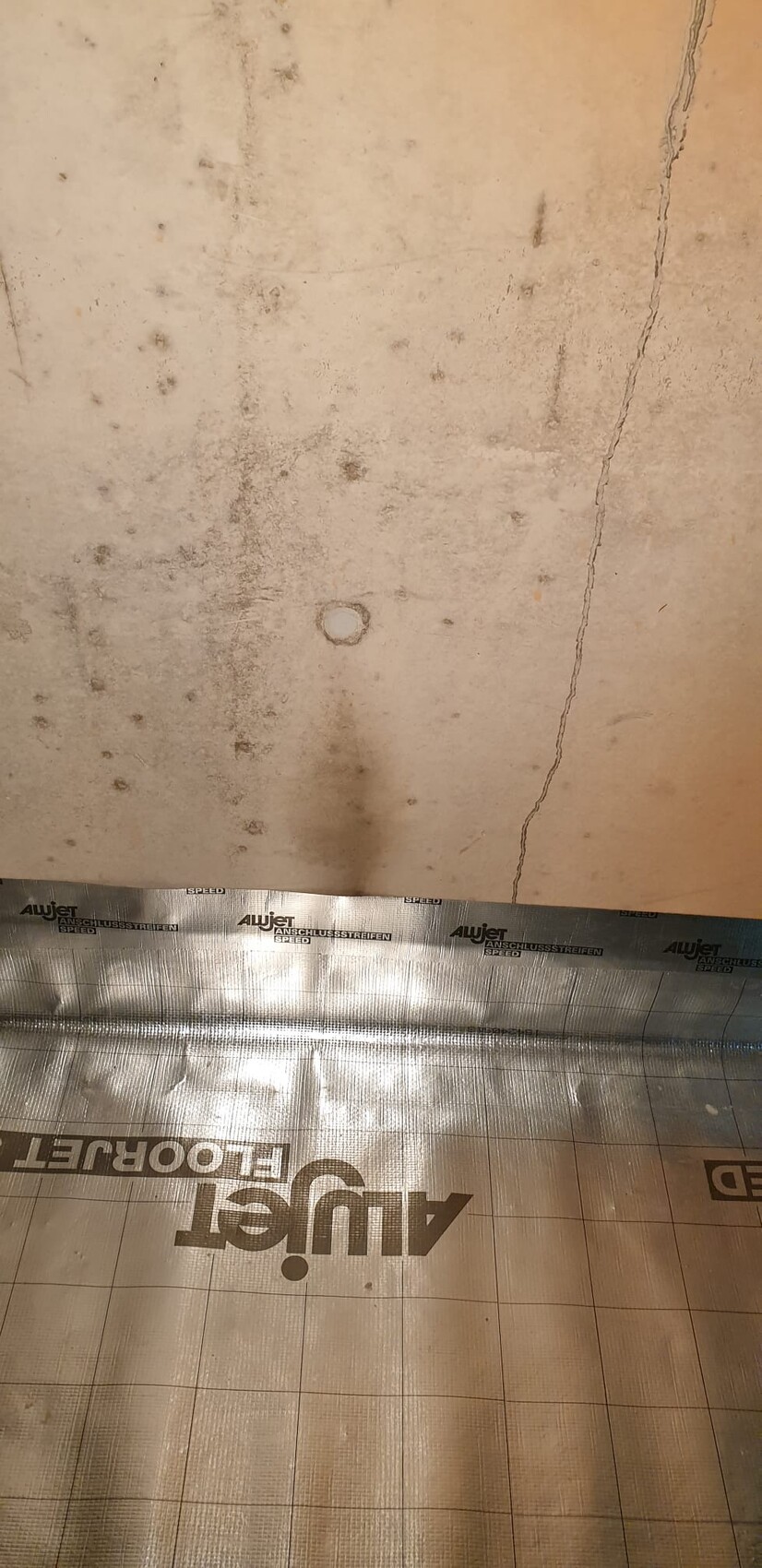
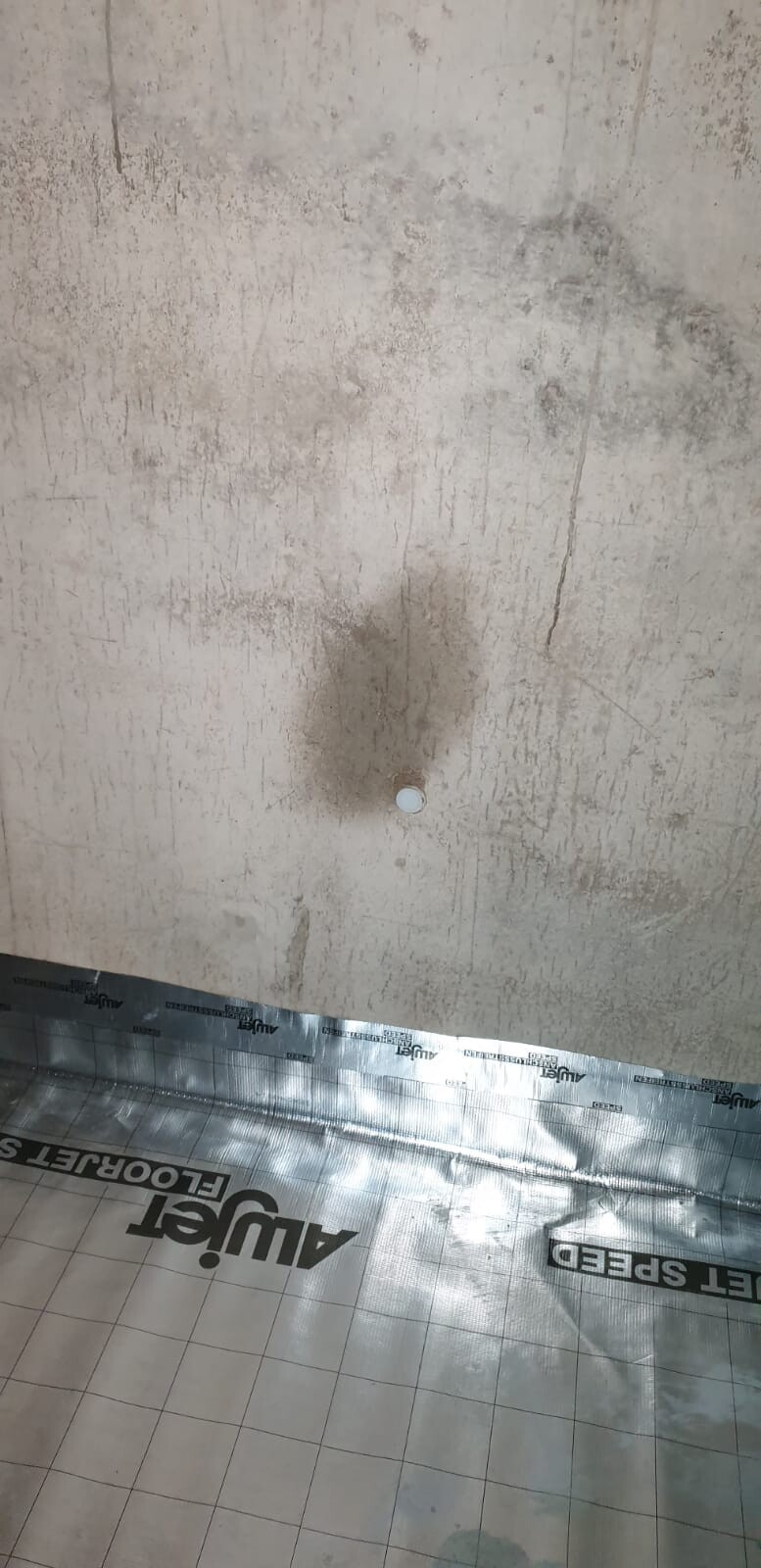
we are currently in the process of building a house with a general contractor who is also responsible for the basement.
The house is a solid masonry structure with a fully basement constructed using a "white tank" (watertight concrete) system. The basement, made of watertight concrete (WU concrete), is completely below ground level and does not protrude on any side. Each room in the basement has waterproof light wells designed to resist groundwater pressure. The soil survey confirmed that there is no hydrostatic groundwater pressure.
The WU construction is or was carried out according to the contract as follows (excerpt):
Approximately 24 cm (9.5 inches) thick reinforced concrete walls cast in place, a 30 cm (12 inches) thick reinforced concrete slab with reinforcement, PE foil as a sliding layer, perimeter insulation with a thickness of 60 mm (2.4 inches), and a 5 cm (2 inch) thick blinding layer. The buried WU basement exterior walls were insulated with 100 mm (4 inches) of perimeter insulation.
Now, the site manager and we have noticed damp spots on some walls. In one area, water seeped in slightly between the floor slab and the wall, causing a small puddle on the floor. In another area, water penetrated the wall itself (photos attached). Fortunately, the site manager acted quickly and has been following up to ensure “everything is in order.”
These spots were generously injected with sealant by a company responsible for supervising the white tank installation (one site about a month ago, the other about 2–3 months ago) and currently appear to be sealed. In one case, water leaked out during drilling of the wall; according to the employee, they had to drill through the joint protection or membrane (warning: not an expert) to ensure it was fully sealed.
During a recent site inspection, we found new damp areas and are now concerned whether it is normal that multiple injections are needed in different places so early in a new build with a white tank basement. Unfortunately, the basement has already been fully backfilled, and a “foil” (vapor barrier?) has been installed inside the basement, which, however, is only adhered to the wall.
We have already reported the new damp spots to the site manager.
Has anyone had similar experiences? Any feedback would be greatly appreciated.
A
Allthewayup21 Jan 2025 14:09summoner schrieb:
Thanks for your feedback. I don’t think demolishing the house and rebuilding will be possible since the structural shell is already completely finished.
We’ll see what happens. We had a very similar problem. In the end, it resulted in a large withholding (a mid five-figure amount) and an extension of the warranty secured by a performance bond.
After all, why should I bear the risk of damage that should have been prevented by construction measures?!
And building a waterproof concrete structure with a fully sealed basement (a so-called white tank) is more expensive than a standard waterproofing approach (a black tank). So why pay more?
It’s best to discuss with your expert how reliable they consider the basement’s waterproofing to be in the long term, and decide together on the next steps.
A
Allthewayup21 Jan 2025 14:22Addendum:
The keyword is "mercantile depreciation."
The keyword is "mercantile depreciation."
A
Allthewayup24 Jan 2025 10:11Please keep us updated!
And keep one thing in mind: defects in the basement (house foundation) usually involve the highest repair costs and efforts. You can't just quickly apply a new waterproofing there on the side.
And keep one thing in mind: defects in the basement (house foundation) usually involve the highest repair costs and efforts. You can't just quickly apply a new waterproofing there on the side.
Hi,
sorry, things are really busy for me right now, not just because of the build, so please don’t be upset if I don’t respond regularly or if it takes me longer. First of all: many thanks to all of you.
Update:
The areas have now been extensively sealed. We have moved the vapor barrier "to the side" everywhere in the basement together with the site manager and the employee from the basement contractor, so we can currently check if anything is wet or becoming wet. We then inspected the basement together.
The site manager and the contractor’s employee will check again to confirm "if everything is fine," with the site manager of course checking more often since he is regularly on site. The underfloor heating is scheduled to be installed in a few weeks, depending on the timing. So until then, it’s check, check, check. It’s currently raining a lot and water is standing at some spots "around the house," so at least there is a small "stress test" happening there.
That’s the update on fixing the damp spots.
The next step is to draft a letter and see "what happens." The basement has already been sealed multiple times by now. It’s obvious that it was not properly executed, so it’s only a matter of time before it will have to be sealed again. Within the first 5–10 years, that’s "not so bad" since technically there is a warranty (though that’s always a bit uncertain...), but I’d rather avoid all the hassle and mess. I would actually prefer an extension of the warranty (+ financial security guarantee), as suggested above, ideally combined with a reduction.
At the moment, I’m not up for a court case... We’ll see what happens.
sorry, things are really busy for me right now, not just because of the build, so please don’t be upset if I don’t respond regularly or if it takes me longer. First of all: many thanks to all of you.
Update:
The areas have now been extensively sealed. We have moved the vapor barrier "to the side" everywhere in the basement together with the site manager and the employee from the basement contractor, so we can currently check if anything is wet or becoming wet. We then inspected the basement together.
The site manager and the contractor’s employee will check again to confirm "if everything is fine," with the site manager of course checking more often since he is regularly on site. The underfloor heating is scheduled to be installed in a few weeks, depending on the timing. So until then, it’s check, check, check. It’s currently raining a lot and water is standing at some spots "around the house," so at least there is a small "stress test" happening there.
That’s the update on fixing the damp spots.
The next step is to draft a letter and see "what happens." The basement has already been sealed multiple times by now. It’s obvious that it was not properly executed, so it’s only a matter of time before it will have to be sealed again. Within the first 5–10 years, that’s "not so bad" since technically there is a warranty (though that’s always a bit uncertain...), but I’d rather avoid all the hassle and mess. I would actually prefer an extension of the warranty (+ financial security guarantee), as suggested above, ideally combined with a reduction.
At the moment, I’m not up for a court case... We’ll see what happens.
A
Allthewayup30 Jan 2025 07:27Thank you for the update. A lawsuit is not necessary, that’s true. However, as you have correctly pointed out, you will bear the risk of any damage occurring in the future, and the constructed building (the basement) does not meet the contractually agreed quality if the construction company actually built it that way, as it would not comply with the current applicable rules of technology.
I’m not sure which expert you have hired, but you should discuss the matter directly with them and go through the criteria catalog for the commercial depreciation.
The warranty extension to 10, or possibly even 15 years, along with a performance bond for the basement, should be demanded anyway.
I’m not sure which expert you have hired, but you should discuss the matter directly with them and go through the criteria catalog for the commercial depreciation.
The warranty extension to 10, or possibly even 15 years, along with a performance bond for the basement, should be demanded anyway.
D
derdietmar30 Jan 2025 08:29Hello,
excavate and create a waterproof basement, including drainage systems. This is the only effective way to prevent water ingress, as it must be assumed that the concrete will not be fully watertight anywhere.
Kind regards
excavate and create a waterproof basement, including drainage systems. This is the only effective way to prevent water ingress, as it must be assumed that the concrete will not be fully watertight anywhere.
Kind regards
Similar topics