
ᐅ Waterproof concrete – injection during the construction phase
Created on: 4 Jan 2025 13:51
S
summoner
Hi,
we are currently in the process of building a house with a general contractor who is also responsible for the basement.
The house is a solid masonry structure with a fully basement constructed using a "white tank" (watertight concrete) system. The basement, made of watertight concrete (WU concrete), is completely below ground level and does not protrude on any side. Each room in the basement has waterproof light wells designed to resist groundwater pressure. The soil survey confirmed that there is no hydrostatic groundwater pressure.
The WU construction is or was carried out according to the contract as follows (excerpt):
Approximately 24 cm (9.5 inches) thick reinforced concrete walls cast in place, a 30 cm (12 inches) thick reinforced concrete slab with reinforcement, PE foil as a sliding layer, perimeter insulation with a thickness of 60 mm (2.4 inches), and a 5 cm (2 inch) thick blinding layer. The buried WU basement exterior walls were insulated with 100 mm (4 inches) of perimeter insulation.
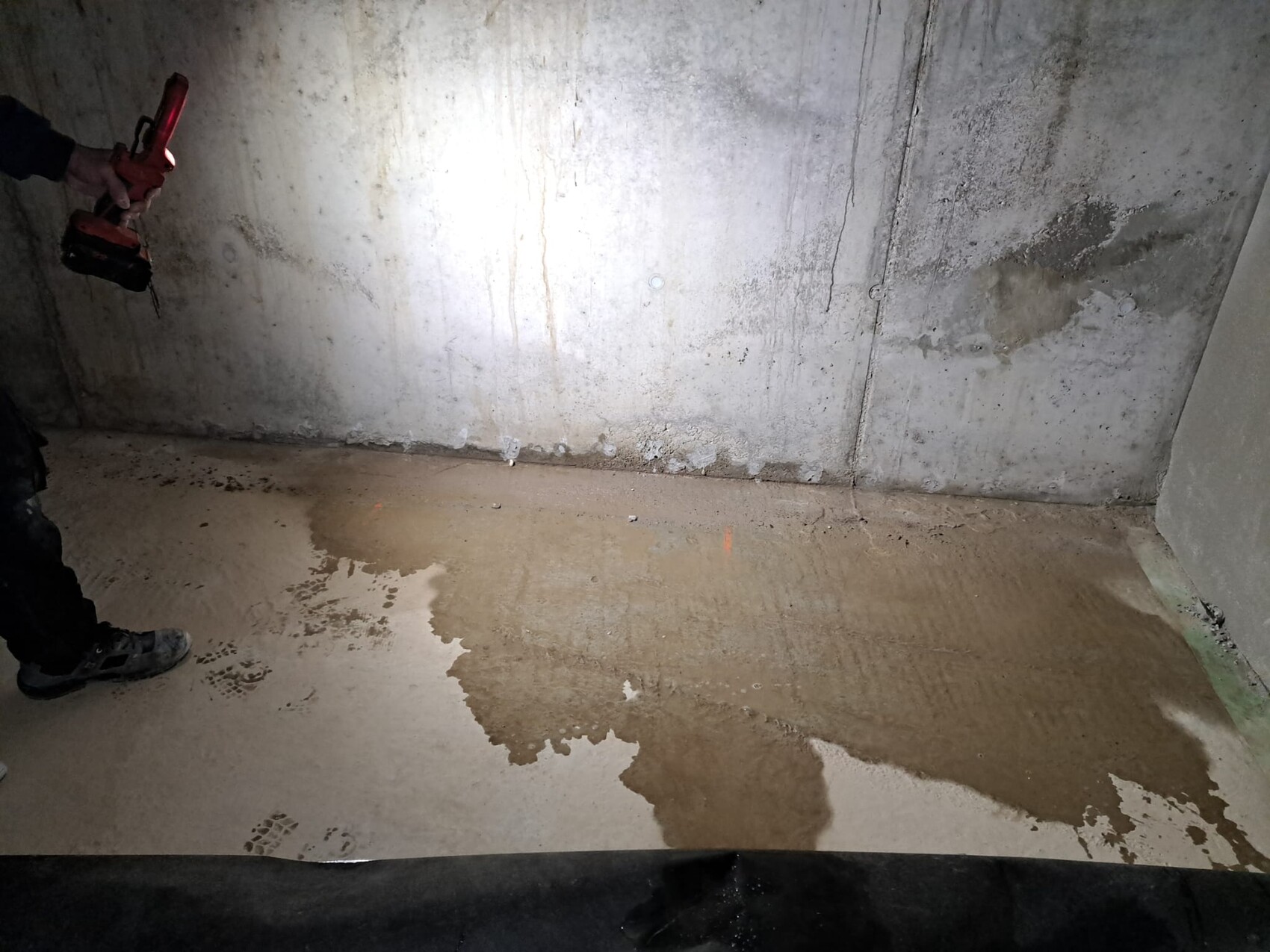
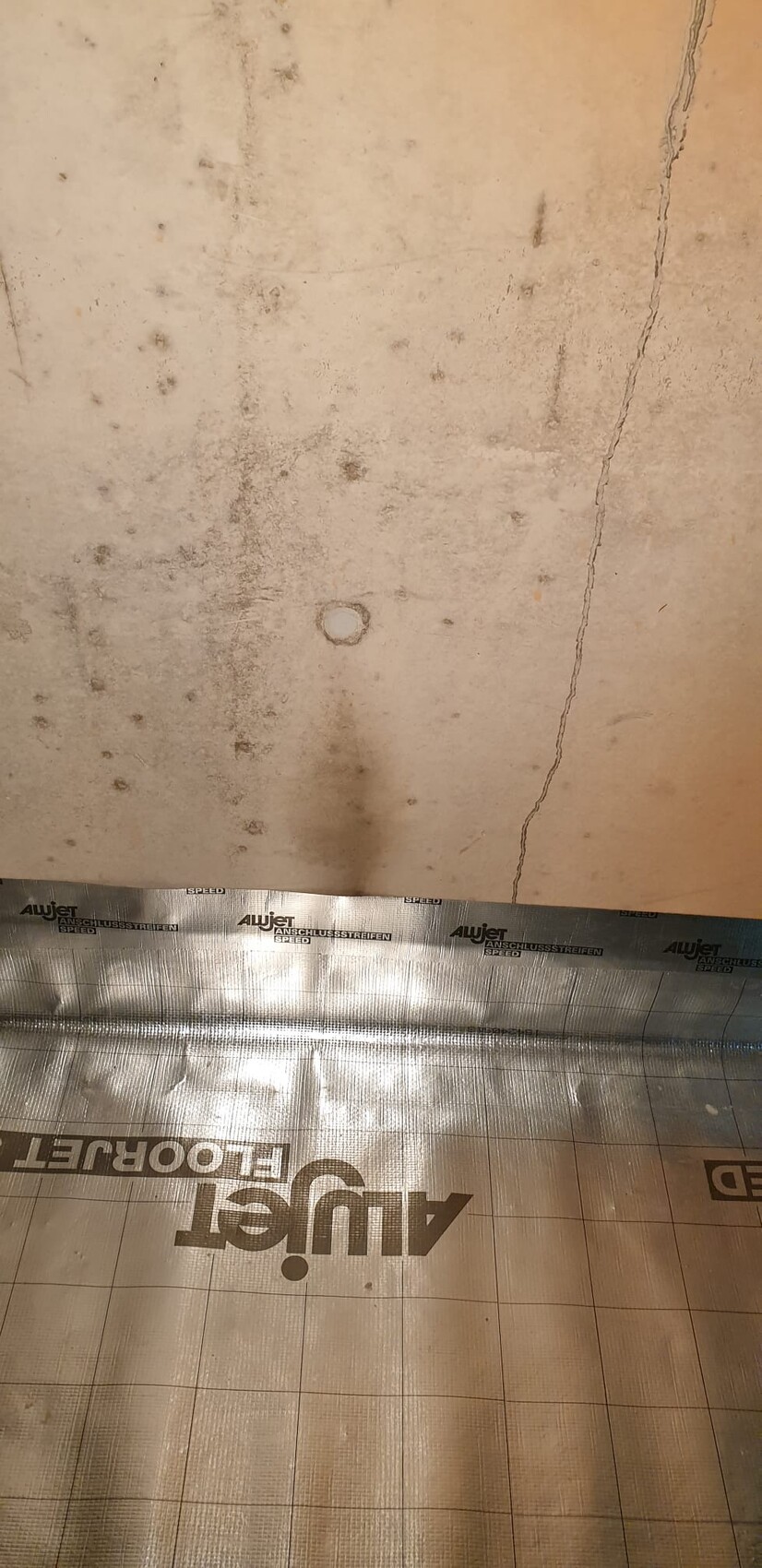
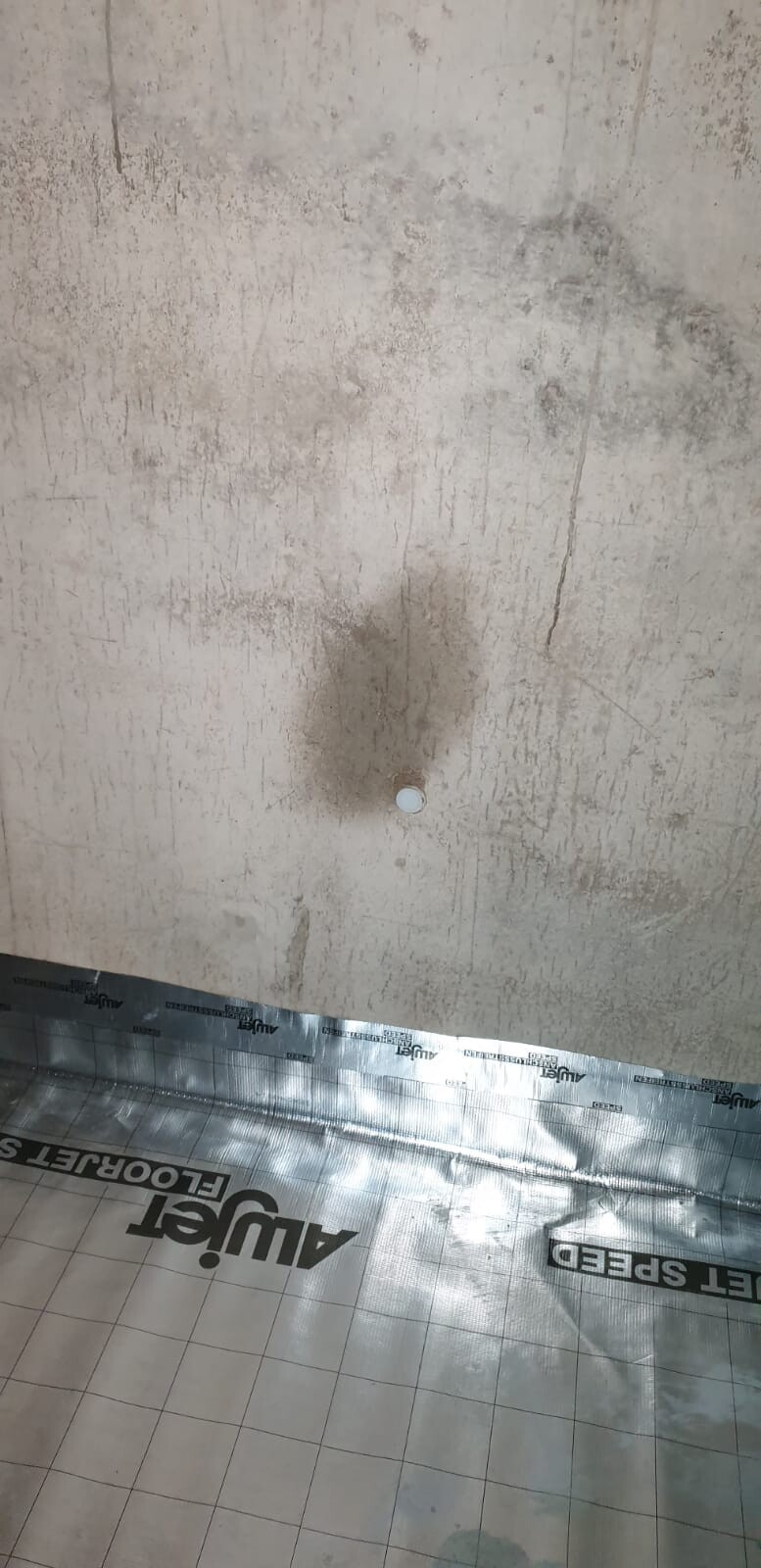
Now, the site manager and we have noticed damp spots on some walls. In one area, water seeped in slightly between the floor slab and the wall, causing a small puddle on the floor. In another area, water penetrated the wall itself (photos attached). Fortunately, the site manager acted quickly and has been following up to ensure “everything is in order.”
These spots were generously injected with sealant by a company responsible for supervising the white tank installation (one site about a month ago, the other about 2–3 months ago) and currently appear to be sealed. In one case, water leaked out during drilling of the wall; according to the employee, they had to drill through the joint protection or membrane (warning: not an expert) to ensure it was fully sealed.
During a recent site inspection, we found new damp areas and are now concerned whether it is normal that multiple injections are needed in different places so early in a new build with a white tank basement. Unfortunately, the basement has already been fully backfilled, and a “foil” (vapor barrier?) has been installed inside the basement, which, however, is only adhered to the wall.
We have already reported the new damp spots to the site manager.
Has anyone had similar experiences? Any feedback would be greatly appreciated.

we are currently in the process of building a house with a general contractor who is also responsible for the basement.
The house is a solid masonry structure with a fully basement constructed using a "white tank" (watertight concrete) system. The basement, made of watertight concrete (WU concrete), is completely below ground level and does not protrude on any side. Each room in the basement has waterproof light wells designed to resist groundwater pressure. The soil survey confirmed that there is no hydrostatic groundwater pressure.
The WU construction is or was carried out according to the contract as follows (excerpt):
Approximately 24 cm (9.5 inches) thick reinforced concrete walls cast in place, a 30 cm (12 inches) thick reinforced concrete slab with reinforcement, PE foil as a sliding layer, perimeter insulation with a thickness of 60 mm (2.4 inches), and a 5 cm (2 inch) thick blinding layer. The buried WU basement exterior walls were insulated with 100 mm (4 inches) of perimeter insulation.
Now, the site manager and we have noticed damp spots on some walls. In one area, water seeped in slightly between the floor slab and the wall, causing a small puddle on the floor. In another area, water penetrated the wall itself (photos attached). Fortunately, the site manager acted quickly and has been following up to ensure “everything is in order.”
These spots were generously injected with sealant by a company responsible for supervising the white tank installation (one site about a month ago, the other about 2–3 months ago) and currently appear to be sealed. In one case, water leaked out during drilling of the wall; according to the employee, they had to drill through the joint protection or membrane (warning: not an expert) to ensure it was fully sealed.
During a recent site inspection, we found new damp areas and are now concerned whether it is normal that multiple injections are needed in different places so early in a new build with a white tank basement. Unfortunately, the basement has already been fully backfilled, and a “foil” (vapor barrier?) has been installed inside the basement, which, however, is only adhered to the wall.
We have already reported the new damp spots to the site manager.
Has anyone had similar experiences? Any feedback would be greatly appreciated.
A
Allthewayup30 Jan 2025 08:46Neither a bituminous tank waterproofing system nor drainage is a permanent, practical solution against hydrostatic pressure.
The soil report usually includes a recommendation for the type of basement construction. No engineer will consider a bituminous tank waterproofing system sufficient in cases of standing or pressing water, whether it is groundwater, stratified water, or seepage water. Modern solid concrete houses are designed for a service life of over 80 years. There is no room for improvisation in the basement. Every geologist, architect, expert, and engineer plays it safe and recommends a waterproof concrete basement shell.
The soil report usually includes a recommendation for the type of basement construction. No engineer will consider a bituminous tank waterproofing system sufficient in cases of standing or pressing water, whether it is groundwater, stratified water, or seepage water. Modern solid concrete houses are designed for a service life of over 80 years. There is no room for improvisation in the basement. Every geologist, architect, expert, and engineer plays it safe and recommends a waterproof concrete basement shell.
Without knowing the soil report, I would assume this is a case of "temporarily pressing water," meaning water accumulating due to rainfall events. If I’m mistaken, please feel free to share the relevant section from the report.
Different options can be chosen for waterproofing...
1: If a perimeter drainage system following DIN 4095 is planned, all components in contact with the ground must be sealed according to DIN 18533-1:2017-07 to standard W1.2-E (soil moisture). The long-term functionality of the drainage system must be ensured at all times.
- So, drainage combined with a bitumen coating. The tricky part is that this only works as long as the drainage system functions without interruption. I would generally recommend this only in certain cases and on sloped sites.
2: Alternatively, DIN 18533-1 W2-E is referenced. This depends on the maximum embedding depth of the bottom edge of the basement slab:
If the bottom edge of the basement slab is less than 3 m (10 feet) deep, DIN 18533-1 W2.1-E for "moderate exposure to pressing water" applies; situation 1 as groundwater accumulation – "temporarily pressing water."
- Waterproofing under W2.1-E can be done with bitumen and polymer bitumen sheets, plastic and elastomer membranes, or PMBC (polymer-modified bituminous coatings).
3: Alternatively, a watertight concrete construction according to the DAfStb guideline (WU guideline, German Committee for Reinforced Concrete) is possible. Here, at least stress class 1 (pressing water) must be applied.
- This refers to the white/gray tank method. When properly executed, it is the most reliable solution over the long term.
Since option 3 was poorly executed in this case, I could imagine adding drainage as well to prevent water from reaching the house wall. As mentioned, insisting on an extended warranty in such cases is advisable.
Different options can be chosen for waterproofing...
1: If a perimeter drainage system following DIN 4095 is planned, all components in contact with the ground must be sealed according to DIN 18533-1:2017-07 to standard W1.2-E (soil moisture). The long-term functionality of the drainage system must be ensured at all times.
- So, drainage combined with a bitumen coating. The tricky part is that this only works as long as the drainage system functions without interruption. I would generally recommend this only in certain cases and on sloped sites.
2: Alternatively, DIN 18533-1 W2-E is referenced. This depends on the maximum embedding depth of the bottom edge of the basement slab:
If the bottom edge of the basement slab is less than 3 m (10 feet) deep, DIN 18533-1 W2.1-E for "moderate exposure to pressing water" applies; situation 1 as groundwater accumulation – "temporarily pressing water."
- Waterproofing under W2.1-E can be done with bitumen and polymer bitumen sheets, plastic and elastomer membranes, or PMBC (polymer-modified bituminous coatings).
3: Alternatively, a watertight concrete construction according to the DAfStb guideline (WU guideline, German Committee for Reinforced Concrete) is possible. Here, at least stress class 1 (pressing water) must be applied.
- This refers to the white/gray tank method. When properly executed, it is the most reliable solution over the long term.
Since option 3 was poorly executed in this case, I could imagine adding drainage as well to prevent water from reaching the house wall. As mentioned, insisting on an extended warranty in such cases is advisable.
The black tank waterproofing is permitted according to DIN 18533, and there are plenty of products approved for W2.1E.
The statement in such absolute terms is nonsense.
At least the engineers from Weber, PCI & Co will recommend their products to you.
Whether it is the best solution can certainly be debated. However, it is definitely better than a leaking waterproof concrete basement.
The statement in such absolute terms is nonsense.
At least the engineers from Weber, PCI & Co will recommend their products to you.
Whether it is the best solution can certainly be debated. However, it is definitely better than a leaking waterproof concrete basement.
D
derdietmar30 Jan 2025 10:02Hello,
we have already discussed this in the thread. Of course, a white tank (watertight concrete structure) is the right solution, but it is flawed in this case, and no one is going to demolish the house anymore.
Therefore, the black tank (bituminous waterproofing system) could be the solution. It is also permitted for occasionally positive water pressure.
Best regards
we have already discussed this in the thread. Of course, a white tank (watertight concrete structure) is the right solution, but it is flawed in this case, and no one is going to demolish the house anymore.
Therefore, the black tank (bituminous waterproofing system) could be the solution. It is also permitted for occasionally positive water pressure.
Best regards
A
Allthewayup30 Jan 2025 10:57All the praise for the great products and their building regulation approvals. But how long do the manufacturers guarantee them (and how long does the house last), and what is the risk of faulty installation, etc.? Installing drainage in cohesive soils like clay is difficult to impossible, since the house basically has to be surrounded by a gravel layer from beneath the foundation slab up to ground level. Over the years, this gravel will gradually be washed away. A geotextile membrane may slow this process somewhat, but compacting and building over it is then no longer an option. In this region, a weir was built many years ago. The groundwater level rose slightly, and hundreds of basements have been damp ever since, including several houses less than 20 years old where a tanking system was installed. Some remained dry (probably due to flawless execution), but many were unlucky.
Under the given circumstances for the original poster, a tanking system would be a no-go for me. Hopefully, the injection of the waterproof concrete (WU concrete) will succeed, and only a settlement compensation will need to be negotiated. An alternative waterproofing method using a tanking system will likely cause more problems than the injected WU concrete.
Under the given circumstances for the original poster, a tanking system would be a no-go for me. Hopefully, the injection of the waterproof concrete (WU concrete) will succeed, and only a settlement compensation will need to be negotiated. An alternative waterproofing method using a tanking system will likely cause more problems than the injected WU concrete.
How long does the concrete plant guarantee their product?
And how long does the manufacturer of the injection material provide a warranty?
It may not be the ideal solution, but a concrete basement with professionally applied PMBC (polymer-modified bituminous coating) will last a very long time. In this case, the waterproofing is further protected by the insulation.
If the load case is W2.1E, a drainage system is not necessary.
And how long does the manufacturer of the injection material provide a warranty?
It may not be the ideal solution, but a concrete basement with professionally applied PMBC (polymer-modified bituminous coating) will last a very long time. In this case, the waterproofing is further protected by the insulation.
If the load case is W2.1E, a drainage system is not necessary.
Similar topics