

Hello,
As mentioned above, we need to level our concrete stair treads by about 4cm (1.5 inches) each. Plus a bit more on the tread depth. There are 45 steps in total! Vinyl planks will be glued onto the steps.
The site manager says that a screed would be ideal, but that is probably also the most expensive option. A friend who works with screed, but not on stairs, said this could also be done using a quartz sand leveling compound, and then I read online that cement mortar can also be used. I also came across the term “synthetic resin mortar.”
Now, to the experts on this forum: what is the correct approach and method?
We already have a quote for screed: €3000 plus an accelerator at €10 per step.
Thank you very much in advance.
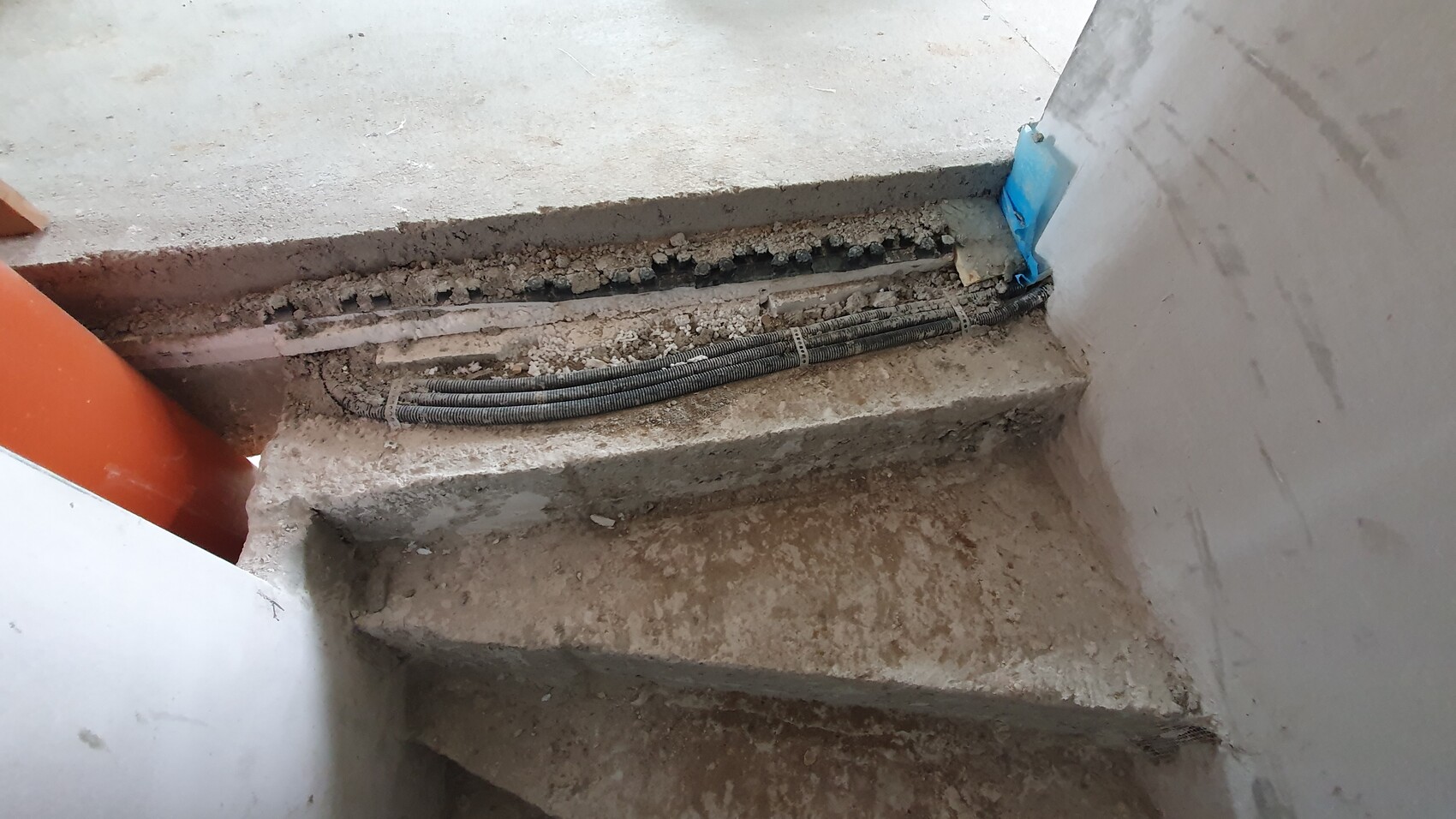
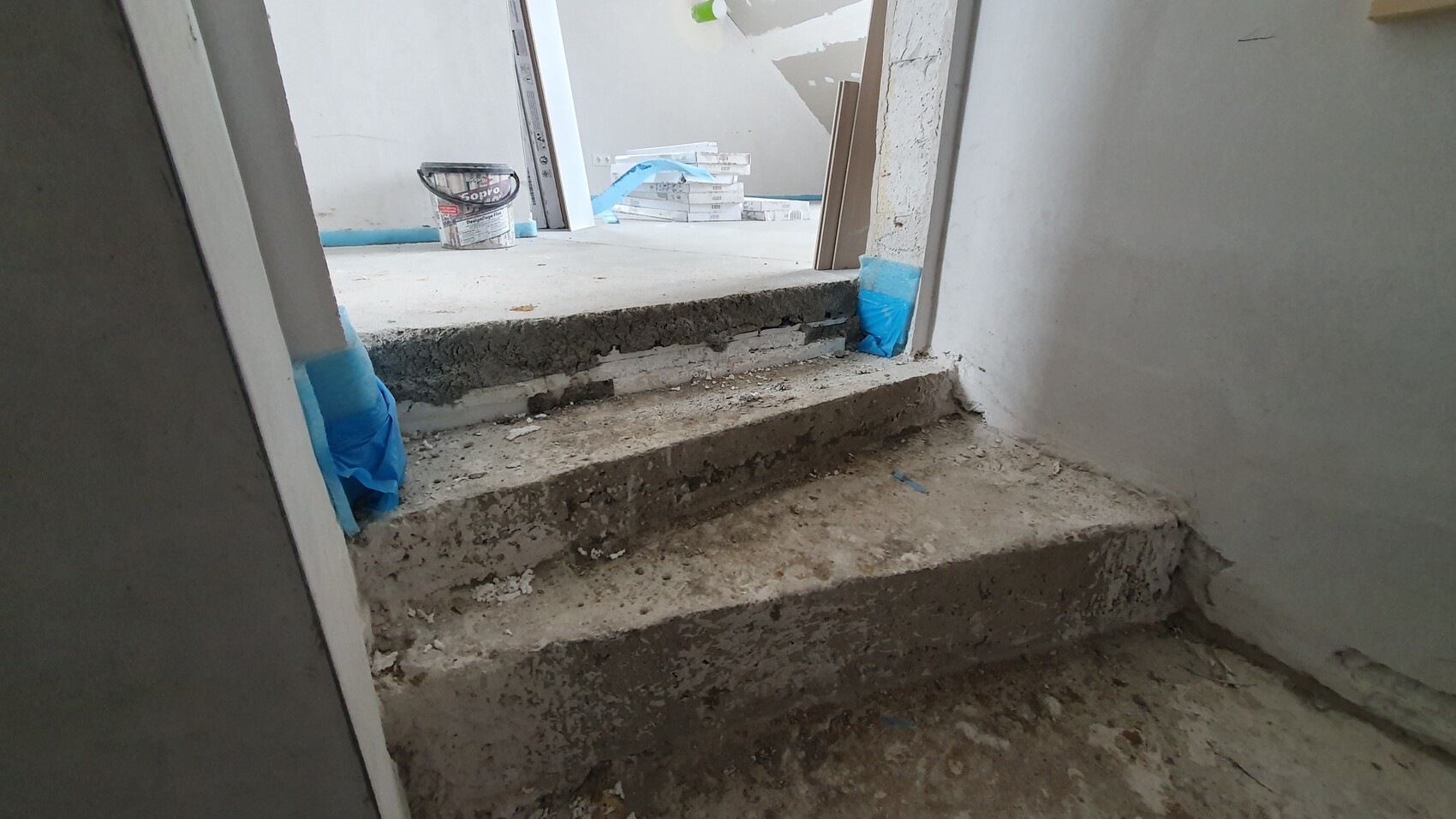
As mentioned above, we need to level our concrete stair treads by about 4cm (1.5 inches) each. Plus a bit more on the tread depth. There are 45 steps in total! Vinyl planks will be glued onto the steps.
The site manager says that a screed would be ideal, but that is probably also the most expensive option. A friend who works with screed, but not on stairs, said this could also be done using a quartz sand leveling compound, and then I read online that cement mortar can also be used. I also came across the term “synthetic resin mortar.”
Now, to the experts on this forum: what is the correct approach and method?
We already have a quote for screed: €3000 plus an accelerator at €10 per step.
Thank you very much in advance.
M
Mottenhausen1 Nov 2019 12:36We had a height adjustment done elsewhere using manually mixed screed, so that should definitely work.
I believe I once heard that if tiles are an option, you could lay Styrodur boards of the appropriate thickness and tile over them. This would be a very cost-effective solution. Steps in front of bathtubs and similar areas are often made this way. However, there is no guarantee if this method would work for entire staircases.
I believe I once heard that if tiles are an option, you could lay Styrodur boards of the appropriate thickness and tile over them. This would be a very cost-effective solution. Steps in front of bathtubs and similar areas are often made this way. However, there is no guarantee if this method would work for entire staircases.
The idea of using Styrodur sounds good, but it becomes difficult to impossible on uneven substrates.
At 3000€ (this is how much the screed for the entire house cost here), it’s clear that the expenses are mostly for labor, not material. Doing it yourself?
Who messed up the height and has to cover the costs?
At 3000€ (this is how much the screed for the entire house cost here), it’s clear that the expenses are mostly for labor, not material. Doing it yourself?
Who messed up the height and has to cover the costs?
Unfortunately, this is stipulated in our contract with the construction company. The adjustment of the stair step, including the covering, is the homeowner’s responsibility.
The final inspection of the house has already taken place, so it has to be paid out of pocket.
Our floor installer, who is also our current neighbor, charges only 20€ per step for sand and stable filler/putty. We also have a warranty for that.
But what is the best approach, if there is only one?
The final inspection of the house has already taken place, so it has to be paid out of pocket.
Our floor installer, who is also our current neighbor, charges only 20€ per step for sand and stable filler/putty. We also have a warranty for that.
But what is the best approach, if there is only one?
You’ve definitely chosen a challenging project with vinyl. A neighbor also covered his concrete staircase himself and was busy for at least a week with about half as many steps. Formwork, pouring leveling compound that seeped everywhere, and so on... a huge amount of work. Plus cutting and embedding strips on every step, etc.
Similar topics