
Hello forum,
After the plastering (2 weeks drying time with tilted windows) and without any problems, mold or, according to the site manager, mildew stains appeared very suddenly after the screed was applied. However, I am quite surprised by the large black spots (see photos) and would prefer to consult a mold expert. Does anyone have experience with this? I would rather have the material replaced. Although the spots have decreased after increasing ventilation, in my experience mold can also hide.
Thanks and regards
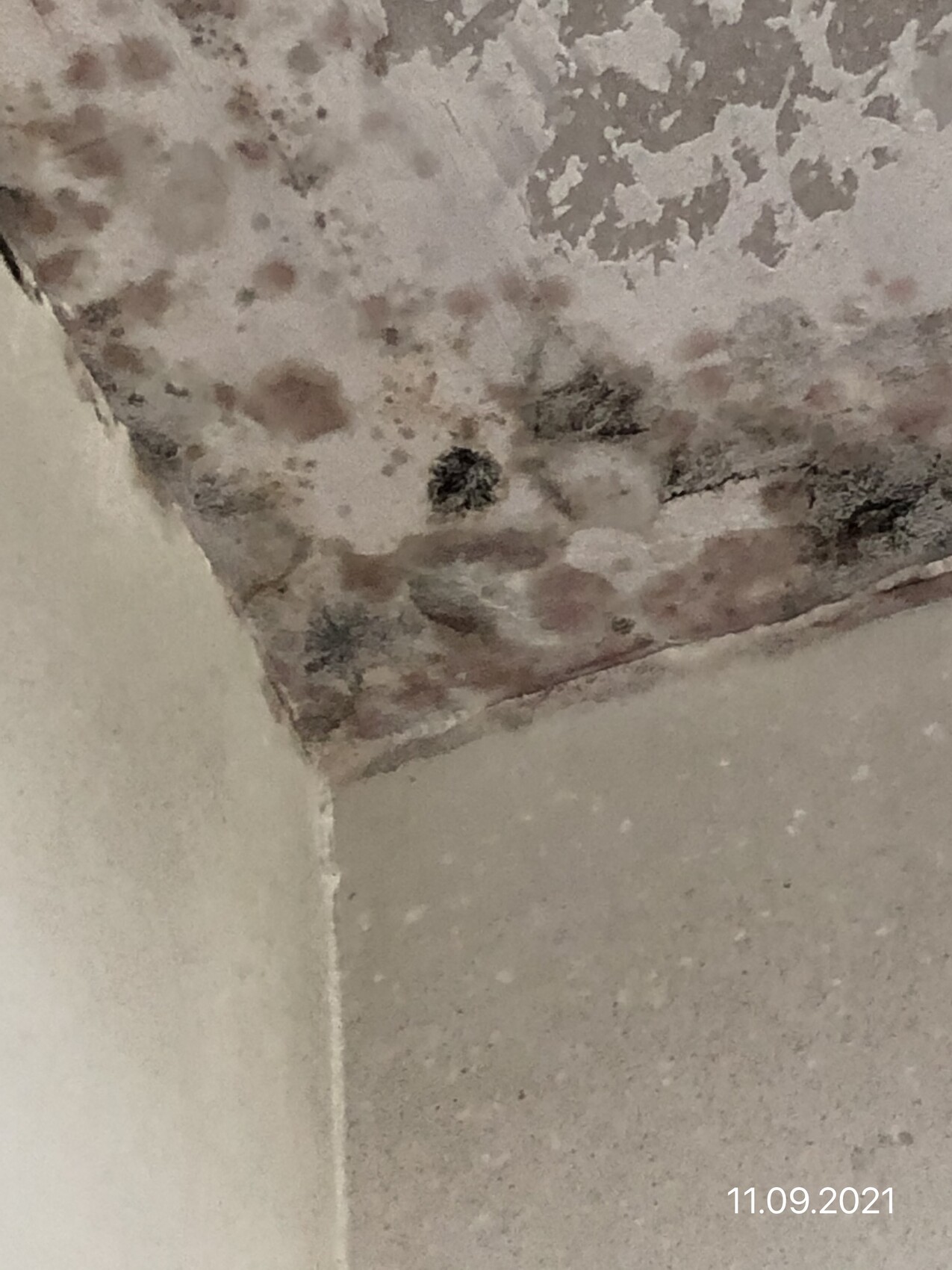
After the plastering (2 weeks drying time with tilted windows) and without any problems, mold or, according to the site manager, mildew stains appeared very suddenly after the screed was applied. However, I am quite surprised by the large black spots (see photos) and would prefer to consult a mold expert. Does anyone have experience with this? I would rather have the material replaced. Although the spots have decreased after increasing ventilation, in my experience mold can also hide.
Thanks and regards
Heikolademm schrieb:
Pitch black and really formed within one night.Nothing happens there overnight at all!I
Interrupt14 Sep 2021 13:11Hmm... I still don't quite understand the site manager’s statement, but he must know what he’s talking about.
I would still recommend keeping an eye on the situation. You can easily get a small hygrometer for little money and place it in a spot under the ceiling that is less favorable for air circulation. The goal is to keep the relative humidity permanently below 70%. Once doors and furniture are in, it should be no more than 60%. At 90% relative humidity, mold growth is almost certain. Wooden components are often the first to be affected. So make sure to check regularly.
Usually, you develop a sense for how well the drying process is working and how much moisture accumulates when the windows are closed. If you feel it’s too humid, it’s better to ventilate once more—even if the site manager disagrees. It can’t cause any harm.
I would still recommend keeping an eye on the situation. You can easily get a small hygrometer for little money and place it in a spot under the ceiling that is less favorable for air circulation. The goal is to keep the relative humidity permanently below 70%. Once doors and furniture are in, it should be no more than 60%. At 90% relative humidity, mold growth is almost certain. Wooden components are often the first to be affected. So make sure to check regularly.
Usually, you develop a sense for how well the drying process is working and how much moisture accumulates when the windows are closed. If you feel it’s too humid, it’s better to ventilate once more—even if the site manager disagrees. It can’t cause any harm.

Perhaps the original poster is confusing the recommendation for the first few days with a general guideline? In the beginning, you should avoid ventilating too much (and definitely not cross-ventilating) so that the screed does not dry too quickly on the surface. This can lead to curling and/or capillary breakage (the top layer no longer allows moisture to pass through, preventing the lower layers from drying properly).
M
meisterbauer9623 Sep 2021 09:12A mold expert is the solution
D
drjack200010 Nov 2021 20:18Hello,
what was the outcome in the end? We had a similar issue. After the screed was laid, mold spots appeared overnight under the roof (OSB boards). This was dried out over several weeks, and then hydrogen peroxide was vaporized by the "mold expert." This is supposed to kill the mold. The ceiling was then insulated and sealed with an airtight membrane. After that, drywall was installed. According to all the experts, everything is fine now. Still, I remain worried. I find mold to be a troublesome subject.
what was the outcome in the end? We had a similar issue. After the screed was laid, mold spots appeared overnight under the roof (OSB boards). This was dried out over several weeks, and then hydrogen peroxide was vaporized by the "mold expert." This is supposed to kill the mold. The ceiling was then insulated and sealed with an airtight membrane. After that, drywall was installed. According to all the experts, everything is fine now. Still, I remain worried. I find mold to be a troublesome subject.
Similar topics