
ᐅ Water Stain in the Basement: Should I Seal the Waterproof Membrane and Perimeter Insulation?
Created on: 26 Jun 2020 07:31
S
Stefan2.84S
Stefan2.8426 Jun 2020 07:31Hello everyone,
Last week, during heavy rain, I noticed a small water stain in our basement. A primer and bituminous waterproofing membrane as well as perimeter insulation have been installed. However, the backfill has only been filled up to about halfway so far. This small water stain is located roughly at the same level as the currently backfilled soil. What could have gone wrong here? Presumably, water has gotten between the masonry and the bituminous membrane, right? How is something like this professionally sealed? I hope the pictures make clear what I mean! Is it possible that water has gotten between the individual layers? In one of the photos, waterproofing slurry has already been partially applied, but other areas are still untreated. Are finishing strips usually installed in this area?
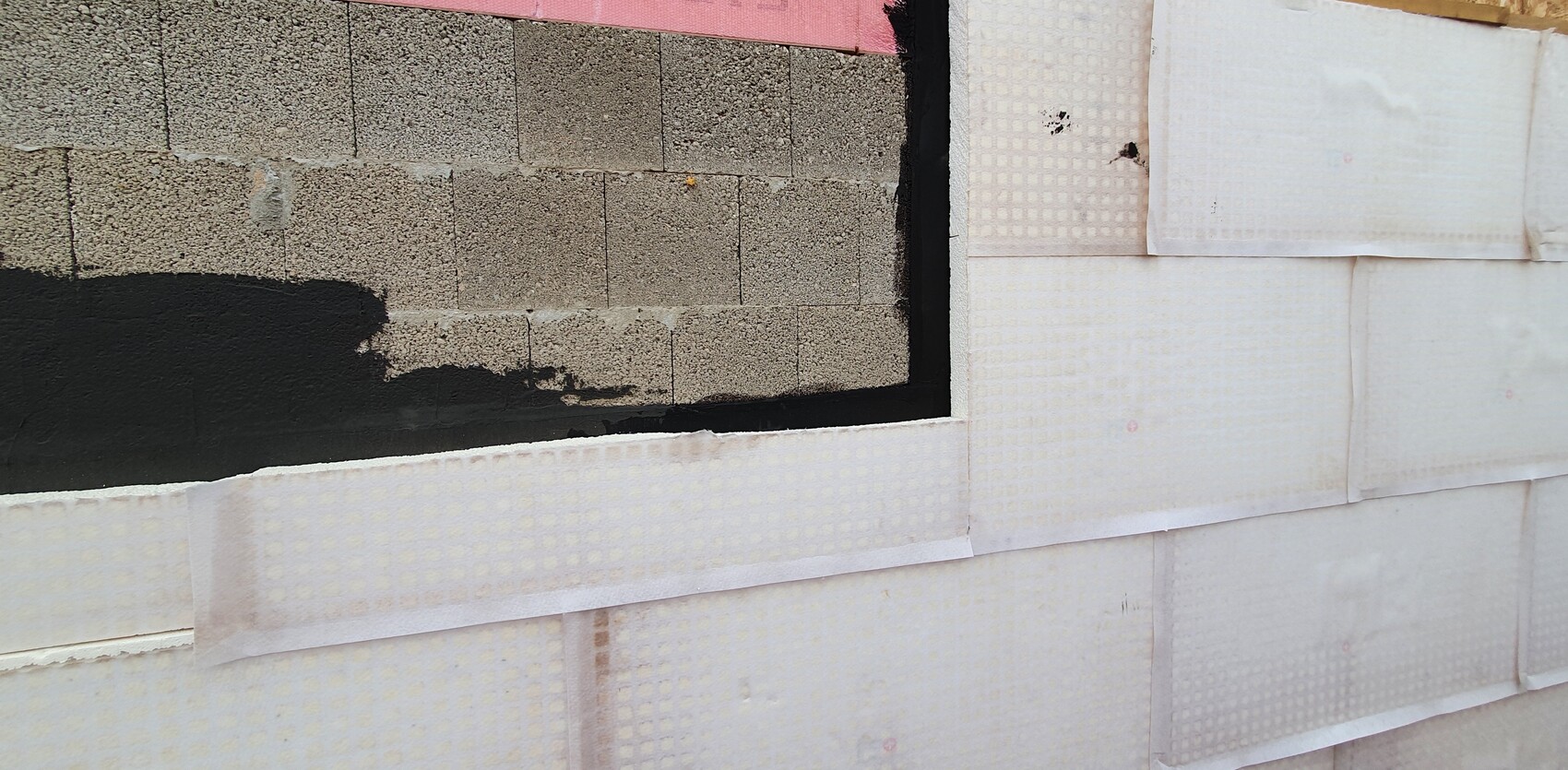
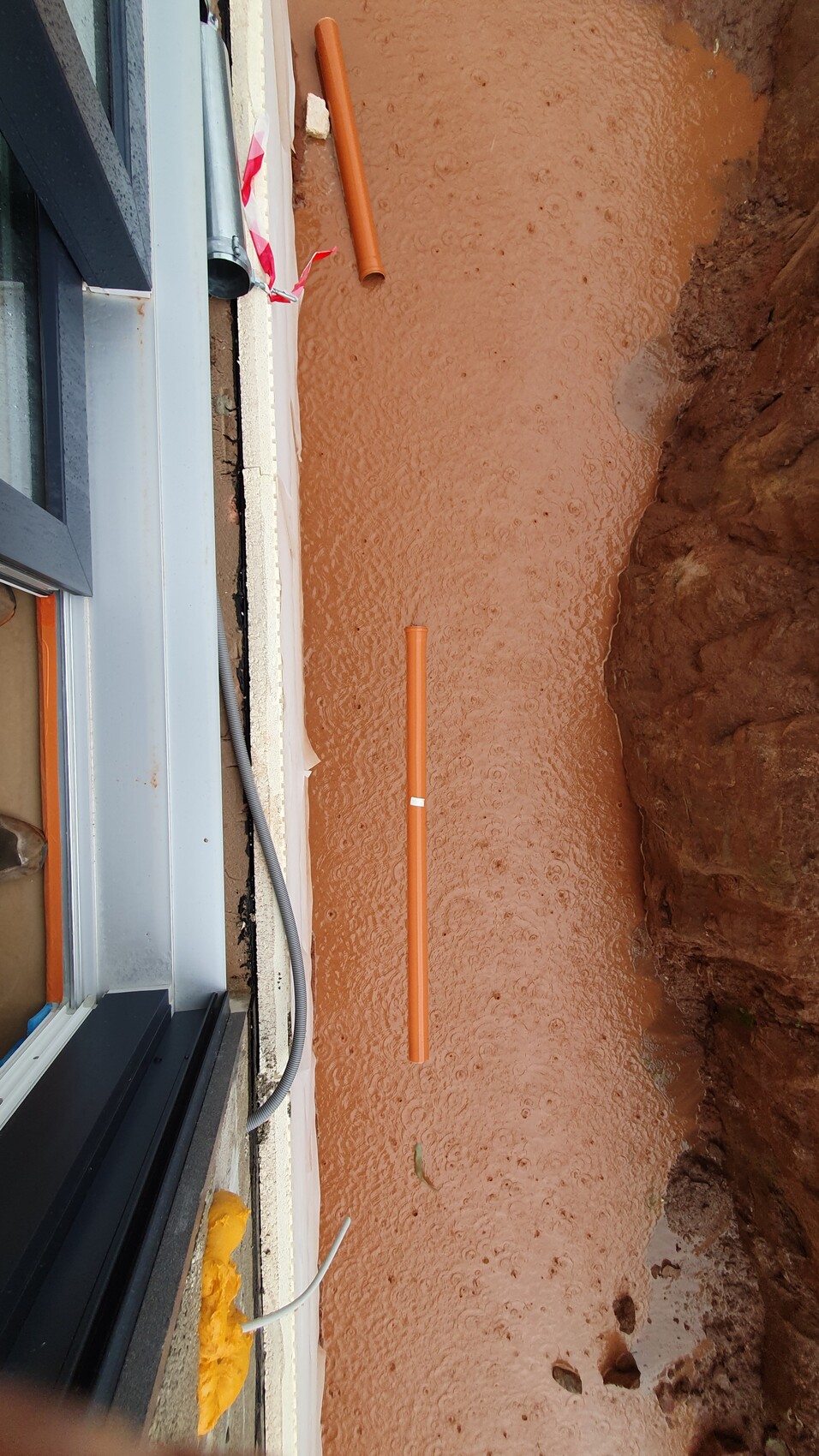
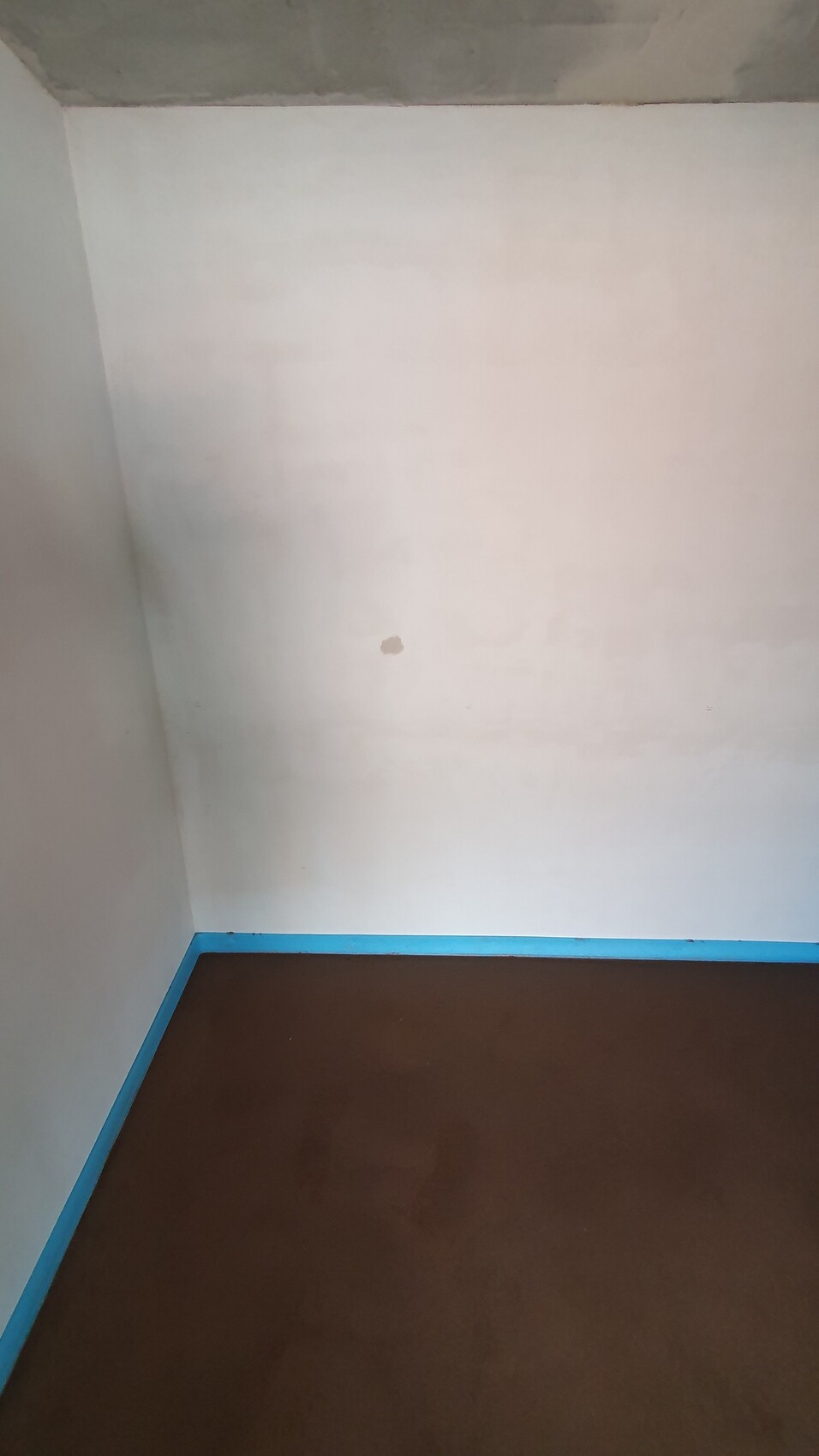
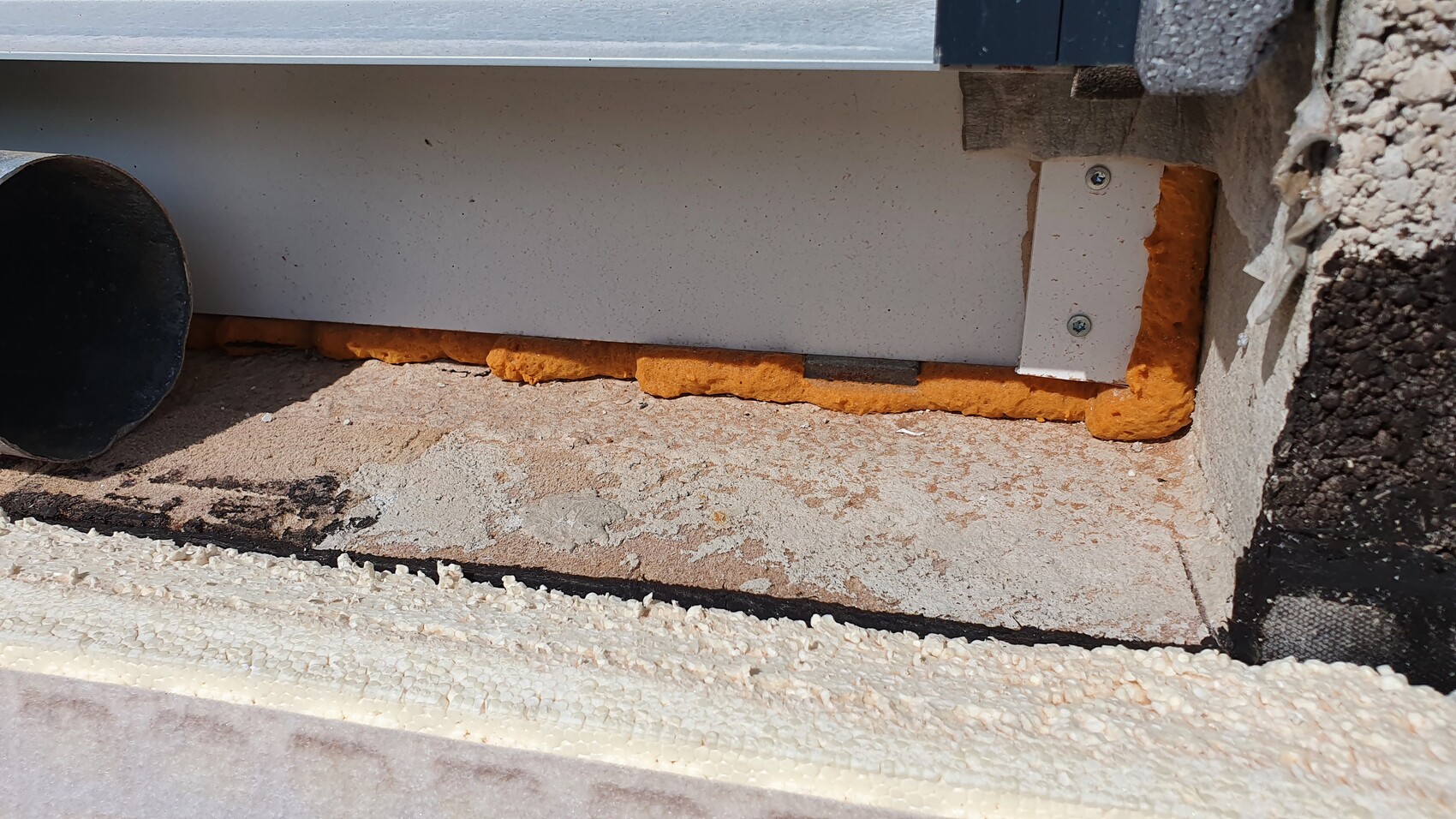
Last week, during heavy rain, I noticed a small water stain in our basement. A primer and bituminous waterproofing membrane as well as perimeter insulation have been installed. However, the backfill has only been filled up to about halfway so far. This small water stain is located roughly at the same level as the currently backfilled soil. What could have gone wrong here? Presumably, water has gotten between the masonry and the bituminous membrane, right? How is something like this professionally sealed? I hope the pictures make clear what I mean! Is it possible that water has gotten between the individual layers? In one of the photos, waterproofing slurry has already been partially applied, but other areas are still untreated. Are finishing strips usually installed in this area?
Hello,
to answer your question, some basic points need to be clarified first:
1. Which waterproofing membrane was used and by what method was it applied? Was it fully bonded or spot-bonded? (We can discuss right or wrong afterwards.)
2. What were the requirements? Is the water level expected to be like this regularly? In other words, is the basement supposed to be "temporarily" submerged as shown here? Probably yes.
3. What about the areas that have no waterproofing or insulation yet? Will something still be added there, or does that still need to be waterproofed?
Assuming that 1. a waterproofing membrane was used and not a cold self-adhesive bitumen sheet, and that the remaining area will still be waterproofed and insulated, I would conclude that the work was not done properly, which can allow water to get behind the bitumen membrane.
Why is that?
Bitumen membranes must be installed with sufficient overlap at both vertical and horizontal joints. I cannot assess the vertical overlap, but the horizontal overlap cannot be achieved here due to the existing insulation. If it is a bitumen membrane that is torch-applied, the connection to the insulation cannot be made without either damaging the insulation or compromising the bond to the wall. In that case, the membrane has only been heated and stuck on. A reliable sign of good adhesion is bitumen seeping out along the edges, indicating it was heated enough and pressed on firmly. This is not visible here.
If it is a cold self-adhesive membrane (CSM), the points mentioned above must be considered slightly differently, except for the overlaps. However, I am personally very cautious about using CSM. I have an expert report stating that the specialist could not reliably prove that a CSM can permanently prevent water ingress behind the membrane. This would deny equivalence between CSM and torch-applied bitumen membranes. If I have the choice, I would opt against using a CSM.
But to respond more specifically here, I will first wait for your answers to the three questions above. I can then gladly show you photos of how a waterproofing system that resists hydrostatic pressure is properly installed using bitumen, if that is the required standard here.
Until then, good luck,
Jann
to answer your question, some basic points need to be clarified first:
1. Which waterproofing membrane was used and by what method was it applied? Was it fully bonded or spot-bonded? (We can discuss right or wrong afterwards.)
2. What were the requirements? Is the water level expected to be like this regularly? In other words, is the basement supposed to be "temporarily" submerged as shown here? Probably yes.
3. What about the areas that have no waterproofing or insulation yet? Will something still be added there, or does that still need to be waterproofed?
Assuming that 1. a waterproofing membrane was used and not a cold self-adhesive bitumen sheet, and that the remaining area will still be waterproofed and insulated, I would conclude that the work was not done properly, which can allow water to get behind the bitumen membrane.
Why is that?
Bitumen membranes must be installed with sufficient overlap at both vertical and horizontal joints. I cannot assess the vertical overlap, but the horizontal overlap cannot be achieved here due to the existing insulation. If it is a bitumen membrane that is torch-applied, the connection to the insulation cannot be made without either damaging the insulation or compromising the bond to the wall. In that case, the membrane has only been heated and stuck on. A reliable sign of good adhesion is bitumen seeping out along the edges, indicating it was heated enough and pressed on firmly. This is not visible here.
If it is a cold self-adhesive membrane (CSM), the points mentioned above must be considered slightly differently, except for the overlaps. However, I am personally very cautious about using CSM. I have an expert report stating that the specialist could not reliably prove that a CSM can permanently prevent water ingress behind the membrane. This would deny equivalence between CSM and torch-applied bitumen membranes. If I have the choice, I would opt against using a CSM.
But to respond more specifically here, I will first wait for your answers to the three questions above. I can then gladly show you photos of how a waterproofing system that resists hydrostatic pressure is properly installed using bitumen, if that is the required standard here.
Until then, good luck,
Jann
Similar topics