
ᐅ Waterproofing on Extruded Polystyrene (XPS) Insulation?
Created on: 21 Jul 2016 23:21
G
GerdBuchholzG
GerdBuchholz21 Jul 2016 23:21Hello everyone,
Our shell builder installed the perimeter insulation (Styrodur) directly into the formwork (see photos), which caused the concrete and Styrodur to bond.
Now we are about to start plastering (exterior), and I’m hearing from different sources that this might cause issues with waterproofing. Normally, the concrete is waterproofed with bitumen first, and then the Styrodur is applied afterward. Bitumen reportedly does not adhere well to the outside of Styrodur.
Another plasterer suggests that using a waterproof slurry (WeberSuperflex D2) would be the correct solution here.
Since I couldn’t find any information about this online, I’m wondering if you might have some advice. Does anyone have experience with this?
How do people handle this, for example, when using prefabricated formwork from manufacturers like Lohrelemente?
Details: slab foundation with strip footings, no basement. No water pressure. Masonry made of Ytong.
Best regards, Gerd
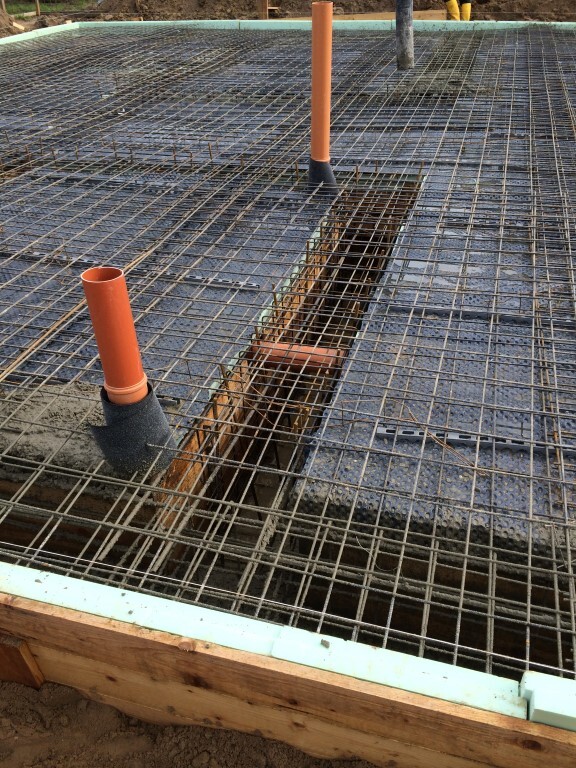
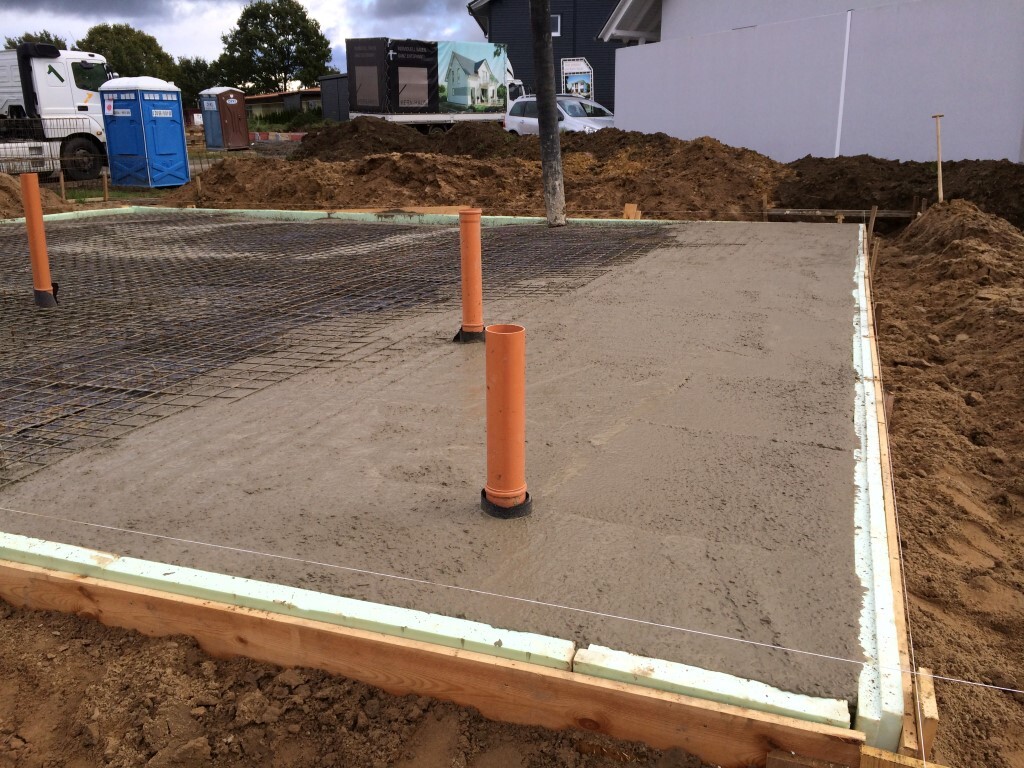
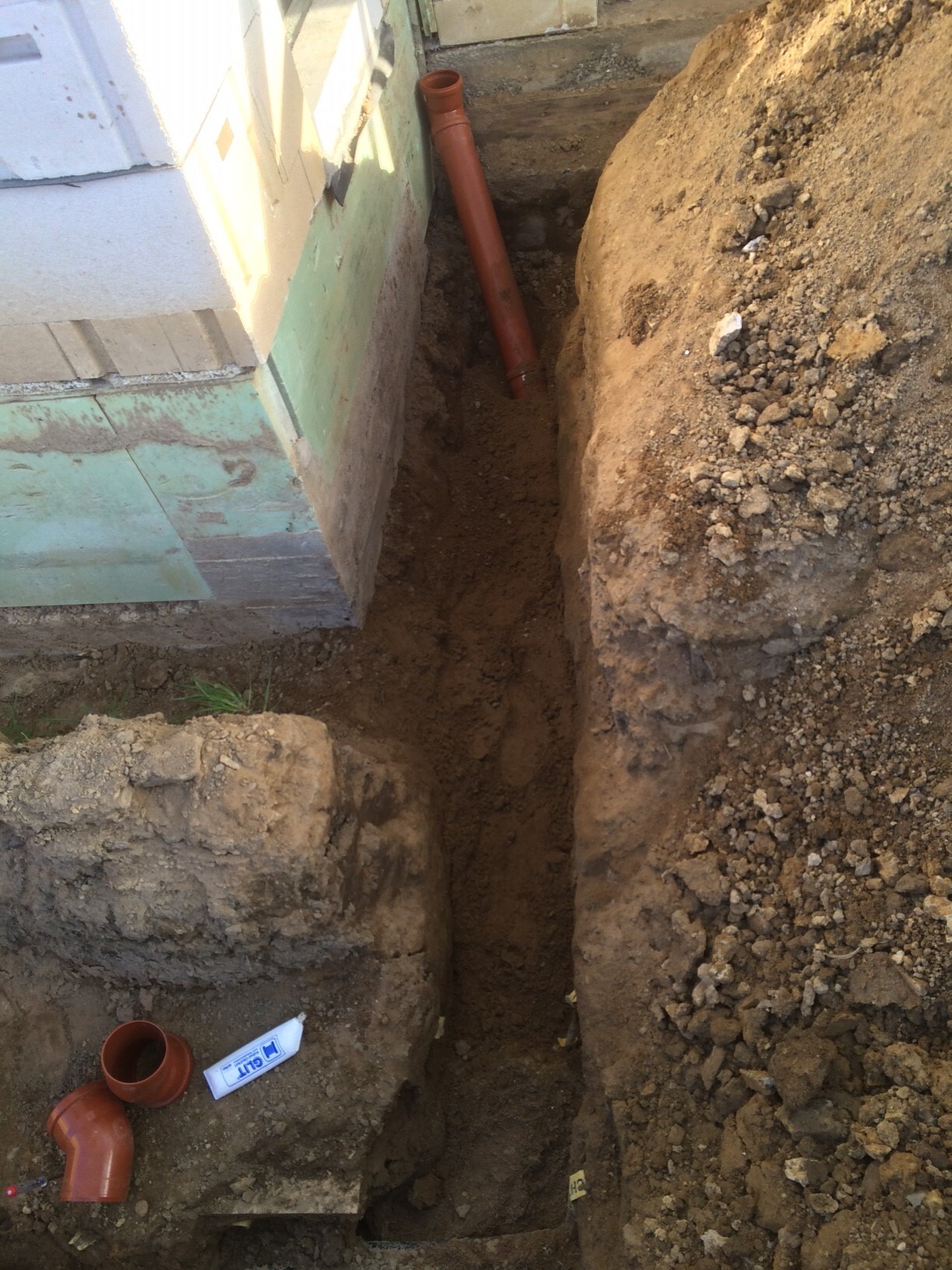
Our shell builder installed the perimeter insulation (Styrodur) directly into the formwork (see photos), which caused the concrete and Styrodur to bond.
Now we are about to start plastering (exterior), and I’m hearing from different sources that this might cause issues with waterproofing. Normally, the concrete is waterproofed with bitumen first, and then the Styrodur is applied afterward. Bitumen reportedly does not adhere well to the outside of Styrodur.
Another plasterer suggests that using a waterproof slurry (WeberSuperflex D2) would be the correct solution here.
Since I couldn’t find any information about this online, I’m wondering if you might have some advice. Does anyone have experience with this?
How do people handle this, for example, when using prefabricated formwork from manufacturers like Lohrelemente?
Details: slab foundation with strip footings, no basement. No water pressure. Masonry made of Ytong.
Best regards, Gerd
That claim that the waterproofing does not adhere to the extruded polystyrene (XPS) is obviously incorrect. If that were true, it wouldn’t be possible to bond the XPS insulation to the concrete using the waterproofing layer. I suspect the real issue is that bare concrete does not stick well to the XPS, which could cause the insulation boards to come loose. It’s likely that insulation anchors could help secure the boards. However, capillary water might still penetrate between the insulation and the concrete. This is just an educated guess, though.
If a waterproof slurry is only applied on the outside, it must form a completely watertight seal to the exterior, including at the joints.
If a waterproof slurry is only applied on the outside, it must form a completely watertight seal to the exterior, including at the joints.
There are self-adhesive bitumen sheets that can be used for this purpose. Just search for "self-adhesive sealing membrane for foundation slab" and you will find various suppliers with examples.
Otherwise, I don’t see the moisture issue as critical since your bricklayer has also installed a damp-proof course between the foundation slab and the masonry. Inside, a waterproof membrane or vapor barrier must be installed anyway, as there is no basement. So, nothing should happen in that regard.
Otherwise, I don’t see the moisture issue as critical since your bricklayer has also installed a damp-proof course between the foundation slab and the masonry. Inside, a waterproof membrane or vapor barrier must be installed anyway, as there is no basement. So, nothing should happen in that regard.
I would do that if there was a basement, but since there isn’t one, it doesn’t really matter. The slab is already in contact with the ground, so it shouldn’t make a difference if or where you add something there. The important thing is to install an internal barrier that connects to the barrier in the masonry, so that any moisture present does not reach the insulation.
U
Ulrich Fuckert22 Jul 2016 23:26Applying the waterproofing membrane directly onto the insulation is not permitted. The DIN 18195 standard explicitly states that the waterproofing must be applied to the concrete floor slab. This is also clearly emphasized by the manufacturers of waterproofing products in their technical datasheets. Anyone who has performed a peel test of a self-adhesive waterproofing membrane on, for example, Styrodur insulation will notice that the membrane does not adhere properly. If this issue were examined by an expert in a technical report, the waterproofing would be rated as "deficient." According to the aforementioned standard, the insulation is intended to protect the waterproofing, not the other way around.
Another important aspect is the structural stability. Generally, the full width of the masonry unit is used for load transfer. If the edge of the insulation (Styrodur) is flush with the masonry unit, this area is missing for load transfer.
Another important aspect is the structural stability. Generally, the full width of the masonry unit is used for load transfer. If the edge of the insulation (Styrodur) is flush with the masonry unit, this area is missing for load transfer.
Similar topics